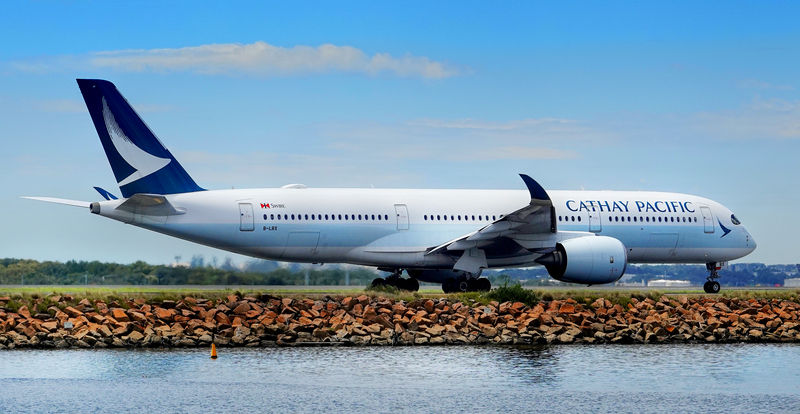
A Cathay Pacific flight from Brisbane Airport (BNE) to Hong Kong International Airport (HKG) was struck by severe turbulence on approach to Hong Kong, injuring 10 people and sending eight to hospital after landing.

The flight, CX156, landed safely in Hong Kong at about 6:45 a.m. local time. Cathay said the injured included six cabin crew members and four passengers, and that all injuries were considered minor. Emergency medical personnel boarded the aircraft immediately after arrival, and eight of those affected were later taken to North Lantau Hospital for further treatment.
For aviation readers, the most important detail is not just the turbulence itself. It is that the incident occurred while cabin service was active or just about to begin, which is exactly when crew are most exposed.
Read our stories in your inbox
Two aviation newsletters. Zero fluff.
The Turbulence Hit In The Final Part Of The Flight
Cathay has said the aircraft encountered turbulence during the latter stages of the Brisbane–Hong Kong sector.
That matters because turbulence close to arrival can be especially disruptive. Cabin crew are often moving through the cabin, service items are unsecured, and passengers may already be loosening seatbelts or preparing for landing. When a sudden violent movement happens at that point, the injury risk rises sharply.
This appears to have been that kind of event.
Cabin Crew Took The Brunt Of The Injuries
The injury breakdown is telling: six of the ten injured were cabin crew.
That is not unusual in serious turbulence incidents. Passengers who remain seated with seatbelts fastened are generally much better protected than crew members who are standing, lifting service items, or working in the aisle. That is one reason turbulence can be so much more dangerous for flight attendants than for travelers in their seats.
The Cathay incident is another reminder of that basic reality.
Passengers Described A Sudden Drop
Public passenger accounts described the motion as abrupt and intense, with one traveler comparing it to a “drop tower” or a sudden freefall sensation.
Those descriptions are consistent with the kind of severe turbulence event that throws unsecured items into the air and leaves the cabin in visible disarray. Images shared after the flight showed food trays, containers, and loose items scattered across the floor, which strongly suggests the disturbance hit during a meal-service window or immediately around it.
That kind of cabin aftermath usually points to a short, sharp, and violent event rather than a long period of ordinary rough air.
The Aircraft Landed Safely, And There Was No Structural Damage Reported
One encouraging point is that the aircraft itself landed normally and there were no public reports of structural damage or wider operational disruption to the airplane.
That matters because turbulence can look terrifying inside the cabin while leaving the aircraft fully airworthy. Modern airliners are designed to withstand significant turbulence loads. The greater risk in many cases is not to the aircraft, but to the people inside it, especially anyone not securely seated.
That appears to be the case here.
This Fits A Broader Pattern In Turbulence Safety
The Cathay incident also reinforces a broader lesson airlines repeat constantly but passengers often ignore: keep the seatbelt fastened whenever seated, even if the sign is off.
Sudden turbulence is often the most dangerous kind because there may be no meaningful warning before it hits. Pilots can route around forecast rough air and can ask crew to take seats when they see trouble ahead, but the worst turbulence events are often the ones that arrive too fast for a full cabin lockdown.
That is why even “minor” injuries after turbulence can still be numerous, especially when service is underway.
Bottom Line
Cathay Pacific flight CX156 from Brisbane to Hong Kong was hit by severe turbulence on approach, injuring 10 people — six cabin crew and four passengers — with eight taken to hospital after landing. The Airbus A350 landed safely, but the event is another reminder that the real danger in turbulence is often not to the aircraft, but to anyone in the cabin who is not securely restrained.
For passengers, the lesson is familiar but important: if you are in your seat, keep the belt on. For crew, incidents like this show why turbulence remains one of the most persistent occupational hazards in airline operations.
Keep reading FlyMag
Get the Daily Brief in the morning or the Route Watch weekly recap on Fridays. Or both.