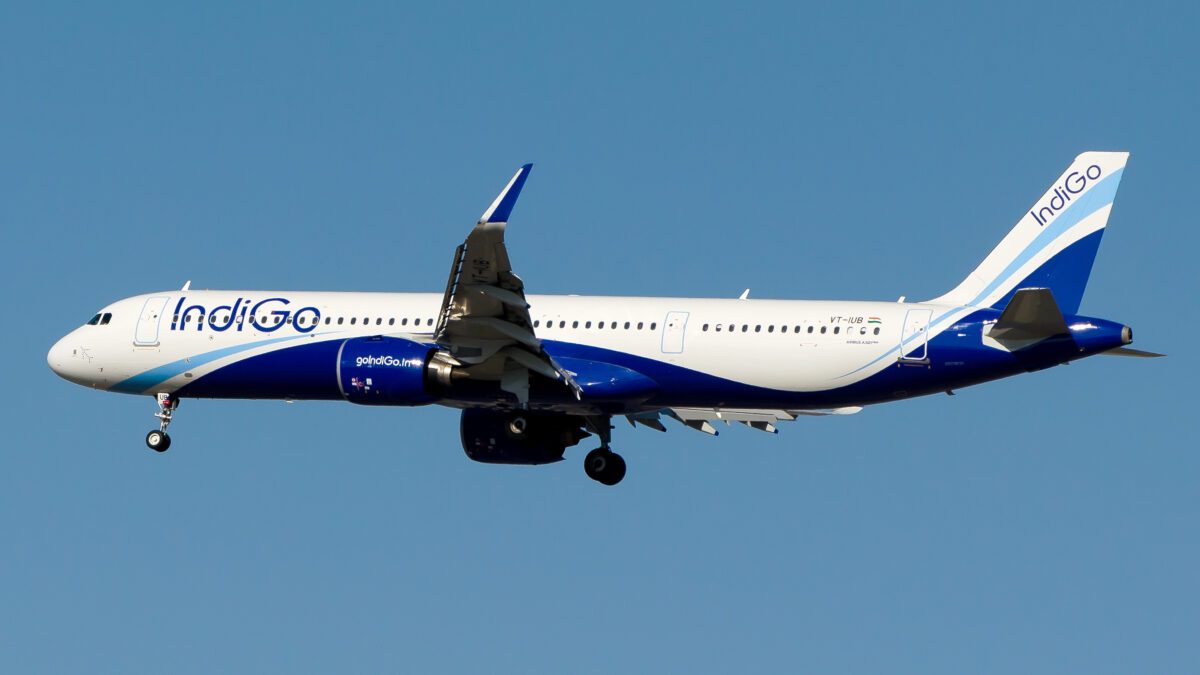
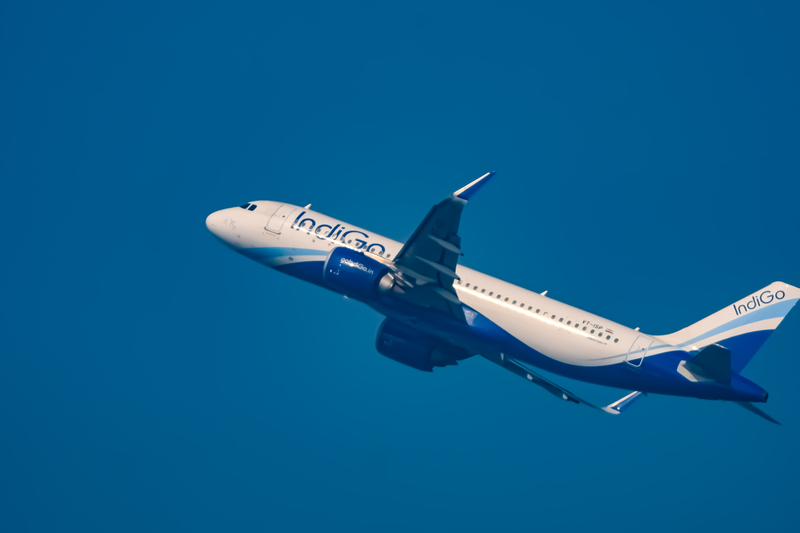
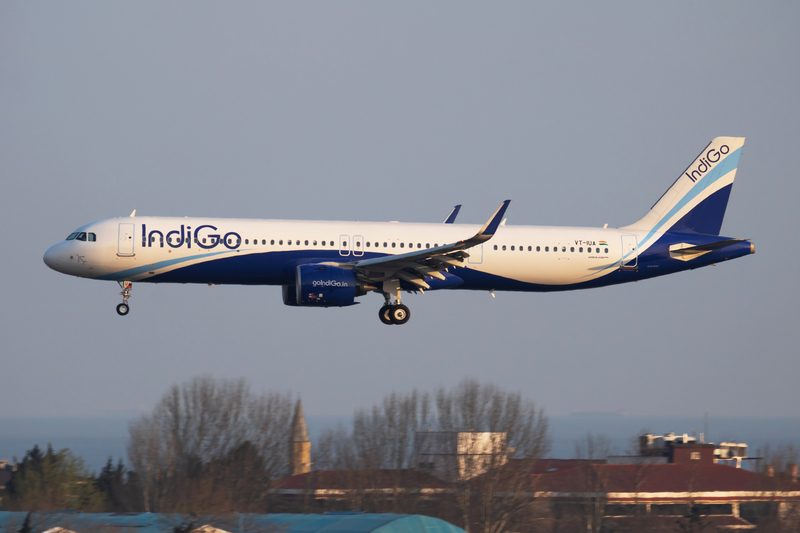
An IndiGo Airbus A321neo operating from Delhi (DEL) to Chennai (MAA) diverted to Hyderabad (HYD) on Sunday after smoke was detected from a passenger’s electronic device stowed in an overhead bin.
IndiGo said the cabin crew responded promptly and brought the situation under control aboard flight 6E6115. The pilots then diverted to Hyderabad, where the aircraft landed safely. The airline arranged another aircraft to carry the passengers onward to Chennai.
The carrier described the source of the smoke as a customer’s personal electronic device. It did not identify the device as a power bank in its statement, although accounts of the incident and video circulating from the cabin have attributed the event to one.
Read our stories in your inbox
Two aviation newsletters. Zero fluff.
Overhead-Bin Stowage Complicated the Response
The location of the device is central to the incident. IndiGo’s published baggage policy permits power banks and spare lithium batteries only in hand baggage, but it also requires passengers to keep them within reach. Acceptable locations include beneath the seat, in the seat pocket or on the passenger’s person.
The policy explicitly prohibits placing power banks in overhead compartments as well as checked baggage. IndiGo also says passengers must not recharge a power bank or use it to charge another electronic device during flight.
Those restrictions are intended to make an overheating battery visible and accessible before it develops into a larger event. A device beneath a seat or in a seat pocket is more likely to be noticed when it becomes unusually hot, emits an odor or starts producing smoke. Inside a closed overhead bin, the initial warning signs can remain hidden while the heat affects surrounding baggage.
Access also becomes more difficult once smoke or flames appear. Cabin crew must reach the affected compartment, identify the source and move nearby passengers while controlling the fire. Passengers standing in the aisle or attempting to remove their own bags can obstruct that response and expose themselves to smoke, heat and falling objects.
Cooling Is Critical After the Flames Are Out
A lithium-ion battery event is not necessarily over when visible flames disappear. Damage inside a cell can trigger thermal runaway, allowing heat to propagate through adjacent cells and creating a risk of reignition.

The initial use of an onboard extinguisher can suppress flames and protect the cabin while the crew gains access to the device. The next priority is cooling. ICAO’s amplified procedures for portable electronic device fires call for a damaged device to be placed in a suitable container and completely submerged in water or another nonflammable liquid when it can be moved safely. The device and surrounding area must then be monitored for the remainder of the flight.
That cooling step is important because an extinguisher may stop combustion around the battery without arresting the chain reaction inside its cells. Water absorbs heat and reduces the chance that additional cells will enter thermal runaway. Protective breathing equipment and gloves are also part of the response because battery failures can release hot material and hazardous fumes.
A diversion remains prudent even after the immediate threat has been controlled. The crew must continue monitoring the device, while maintenance personnel need to inspect the overhead compartment, its fittings and the surrounding cabin before the aircraft returns to service. The damaged device must also be removed and handled as dangerous goods after landing.
A High-Capacity Aircraft on a Trunk Route
Flight 6E6115 was operated by an Airbus A321neo, the largest member of the A320neo family. The type is well suited to dense domestic sectors such as Delhi-Chennai because it combines narrowbody operating economics with substantially more seats than an A320.

IndiGo’s published fleet information lists A321 cabins with 220, 222 and 232 seats. The airline’s newer 220-seat aircraft carry 12 IndiGoStretch seats and 208 economy seats, while the higher-density versions use all-economy layouts. The carrier does not identify the cabin configuration involved in Sunday’s flight.
Airbus lists the A321neo with capacity for as many as 244 passengers in a high-density layout and a range of up to 4,000 nautical miles. On Indian trunk routes, the more relevant capability is its ability to absorb high passenger volumes without moving to a widebody, while retaining fleet commonality with IndiGo’s large A320neo operation.
That capacity also raises the stakes during a cabin event. More passengers and more carry-on baggage can make aisle control and access to an affected overhead compartment harder. Crew instructions to remain seated are therefore operationally important, not simply a means of maintaining order.
Bottom Line
The Hyderabad diversion demonstrates why airlines increasingly distinguish between carrying a power bank in the cabin and placing it in an overhead bin. Cabin carriage allows a battery event to be detected and managed; personal-reach rules go further by keeping the device visible and accessible. A rule that passengers treat as a minor stowage instruction can determine how quickly the crew reaches a failing battery.
The next challenge is enforcement. Airlines can repeat the restriction during booking, check-in and the safety briefing, but a power bank inside a backpack is difficult to police once passengers begin loading overhead bins. More explicit gate messaging, cabin checks and consistent intervention when crews see battery-equipped bags being stowed overhead are likely to receive closer attention after this event.
For operators, the incident also reinforces the need to treat suppression and cooling as separate phases of the response. Fire extinguishers, protective equipment, suitable containers and ready access to nonflammable liquid all matter, as does keeping the aisle clear for trained crew. Regulators and airlines will now be watching whether existing personal-reach rules are being followed in practice or require stronger controls.
Keep reading FlyMag
Get the Daily Brief in the morning or the Route Watch weekly recap on Fridays. Or both.