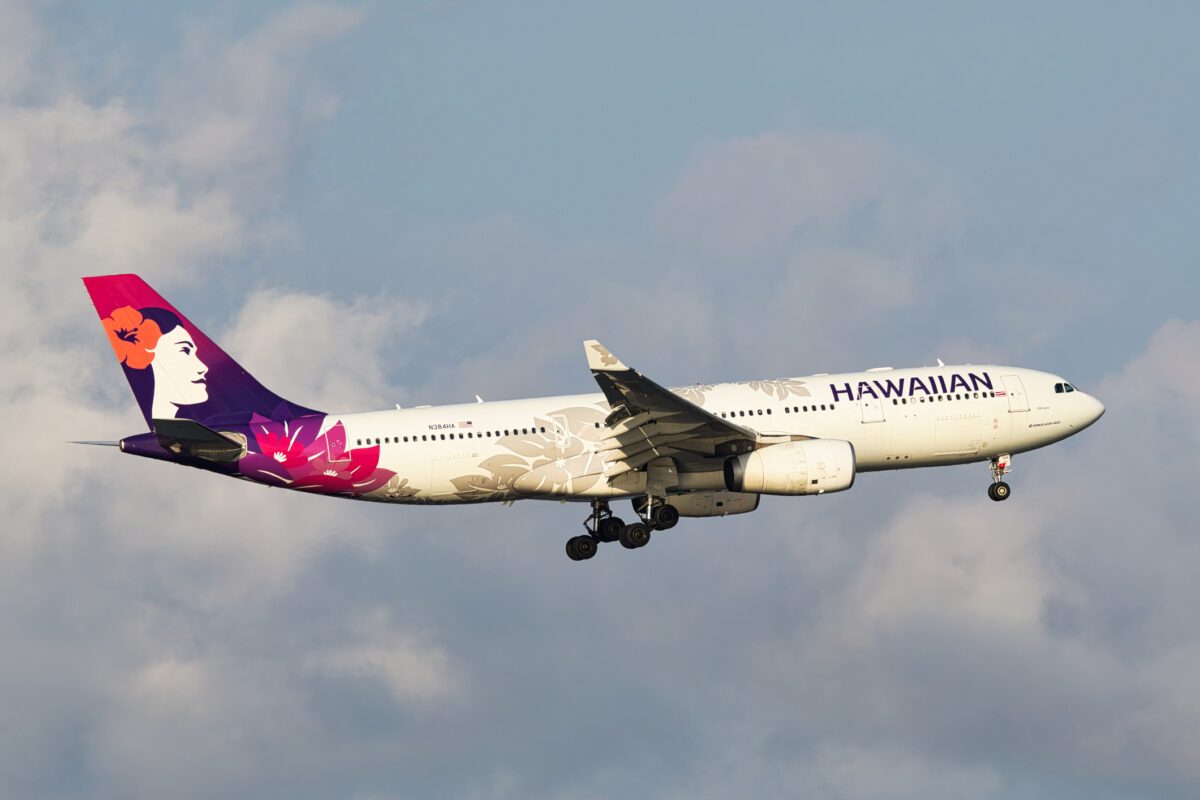
A Hawaiian Airlines Airbus A330-200 returned to passenger service the same night that seven flight attendants became ill after an odor was reported in its cabin.

The incident occurred September 24 aboard Alaska Airlines Flight 803 from Los Angeles (LAX) to Honolulu (HNL). Alaska said the aircraft was carrying 252 passengers and nine crew members and landed without incident.
Seven Hawaiian flight attendants were evaluated and released by medical personnel after arrival. Honolulu Emergency Medical Services said the crew members reported nausea and headaches and declined transportation to a hospital. The airline said no passengers required medical attention.
Read our stories in your inbox
Two aviation newsletters. Zero fluff.
Alaska said the aircraft would undergo an inspection before returning to service. The carrier has not announced what produced the odor.
The Aircraft Returned to Service That Night
Alaska’s archived record for Flight 803 identifies the aircraft as N375HA, an Airbus A330-200 named Humu. The flight was scheduled to arrive in Honolulu at 12:58 p.m. local time and was recorded by the airline as arriving on time.
The same aircraft was subsequently assigned to Flight 808 from Honolulu to Las Vegas, scheduled to leave HNL at 11:15 p.m. with no seats remaining. Independent ADS-B records captured N375HA operating as AS808 at flight level 289 shortly before midnight in Hawaii, confirming that the aircraft had departed for Las Vegas (LAS).
That put the A330 back in the air about 11 hours after it reached Honolulu. The interval included the medical response, passenger unloading, the airline’s inspection and preparation for the overnight departure.
A same-day return to service indicates that the airline’s maintenance organization released the aircraft after its inspection. It does not, on its own, establish what caused the odor or whether technicians replaced a component, isolated a system or found no repeatable fault.
Why the Flight Carried an Alaska Number
Although the aircraft, cabin product and flight attendants were Hawaiian-branded, the service operated with an Alaska flight number. That reflects the companies’ integration rather than a change of aircraft operator during the trip.
Alaska and Hawaiian moved to a common passenger service system on April 22, 2026. The airlines explained that Hawaiian-branded flights would receive Alaska carrier codes while appearing to customers as “operated by Alaska as Hawaiian Airlines”. The wording appears on the archived records for both AS803 and AS808.
Alaska and Hawaiian have also operated under a single Federal Aviation Administration certificate since October 2025, while Hawaiian remains a distinct customer-facing brand. The arrangement means an incident involving a Hawaiian aircraft and crew may now appear in flight databases under an AS number.
A330 Remains Central to Hawaiian’s Network
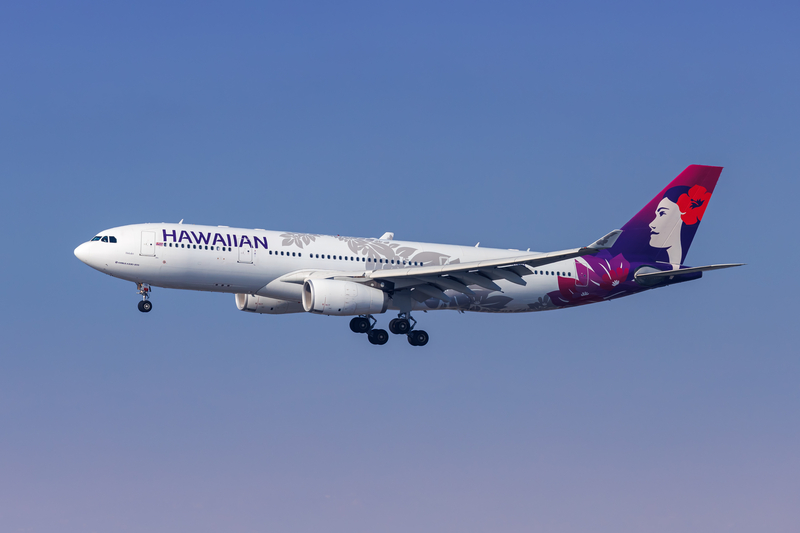
N375HA belongs to the widebody fleet that supports Hawaiian’s highest-capacity mainland and international flying. Alaska Air Group’s 2025 annual report listed 24 Airbus A330-200s, each configured for 278 passengers, with an average fleet age of 12.5 years at the end of that year.
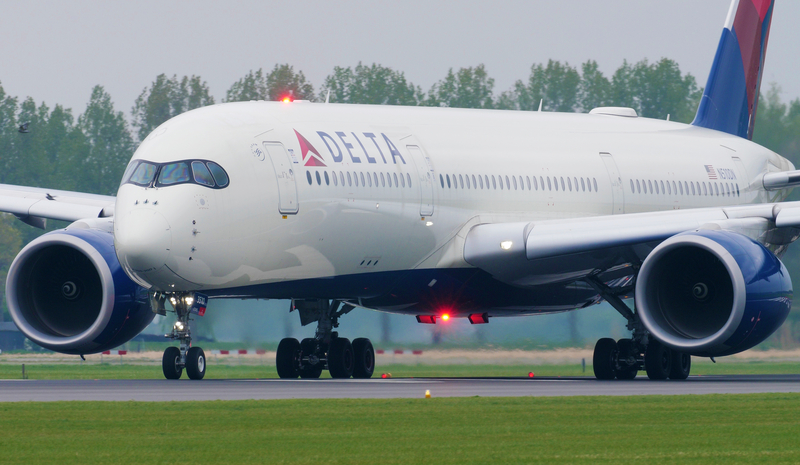
The type combines a twin-aisle cabin with substantial belly capacity, making it useful on Hawaii routes where passenger volume and cargo demand can justify more capacity than a narrowbody provides. Its range is not the limiting factor on Los Angeles-Honolulu: Airbus lists the A330-200 with long-haul capability far beyond the roughly five- to six-hour mainland sector.
That makes an A330 substitution difficult on short notice. Replacing one with a smaller aircraft can require reaccommodating passengers and removing cargo, while bringing in another widebody may disrupt several later rotations. Returning N375HA for the overnight Las Vegas flight preserved a large block of capacity from Hawaiian’s principal operating base.
Odor Events Carry Reporting and Maintenance Requirements
Cabin odors can originate from several aircraft and non-aircraft sources, and an odor alone does not identify the affected system. Determining the source can involve inspections of the environmental control system, engines, auxiliary power unit, electrical equipment, galleys and cabin furnishings.
The FAA’s cabin-air guidance says airlines must file Service Difficulty Reports when smoke, vapor or noxious odors enter a cockpit or passenger cabin. The agency also provides reporting and training material for pilots, flight attendants and maintenance technicians responding to smoke and fume events.
In this case, the operational sequence is clear: AS803 completed its transpacific sector, emergency medical personnel evaluated seven flight attendants at HNL, and N375HA underwent an inspection before flying another passenger service that night. Any further finding will depend on the airline’s maintenance records and required regulatory reporting.
Bottom Line
Keeping N375HA in service prevented a late aircraft change or cancellation on a heavily booked Honolulu-Las Vegas departure. For an airline whose A330 fleet carries 278 passengers per aircraft, losing one widebody can affect several routes as planners move aircraft and crews around the Honolulu schedule.
The more consequential question is whether the odor was traced to a specific and correctable source. A successful inspection and subsequent flight show that Hawaiian’s maintenance organization considered the aircraft airworthy, but a recurrence would put greater weight on the tail’s troubleshooting history and any components or systems common to the events.
The incident also illustrates how Alaska and Hawaiian’s integrated operation now appears publicly: an Alaska flight number, a Hawaiian-branded A330 and Hawaiian cabin crews operating within one certificate. Regulators, employees and passengers will be watching whether that combined structure produces clear reporting and follow-through when operational events cross the two brands.
Keep reading FlyMag
Get the Daily Brief in the morning or the Route Watch weekly recap on Fridays. Or both.