Delta Air Lines has five new regular long-haul routes scheduled to begin between October 2026 and March 2027, adding service from Atlanta, Minneapolis, Seattle, Austin and Los Angeles.


The program spans several distinct markets rather than a single geographic expansion. It includes Delta’s first Saudi Arabian destination, a new Upper Midwest-Hawaii link, additional Tokyo capacity and two intercontinental routes from growing coastal and secondary gateways.
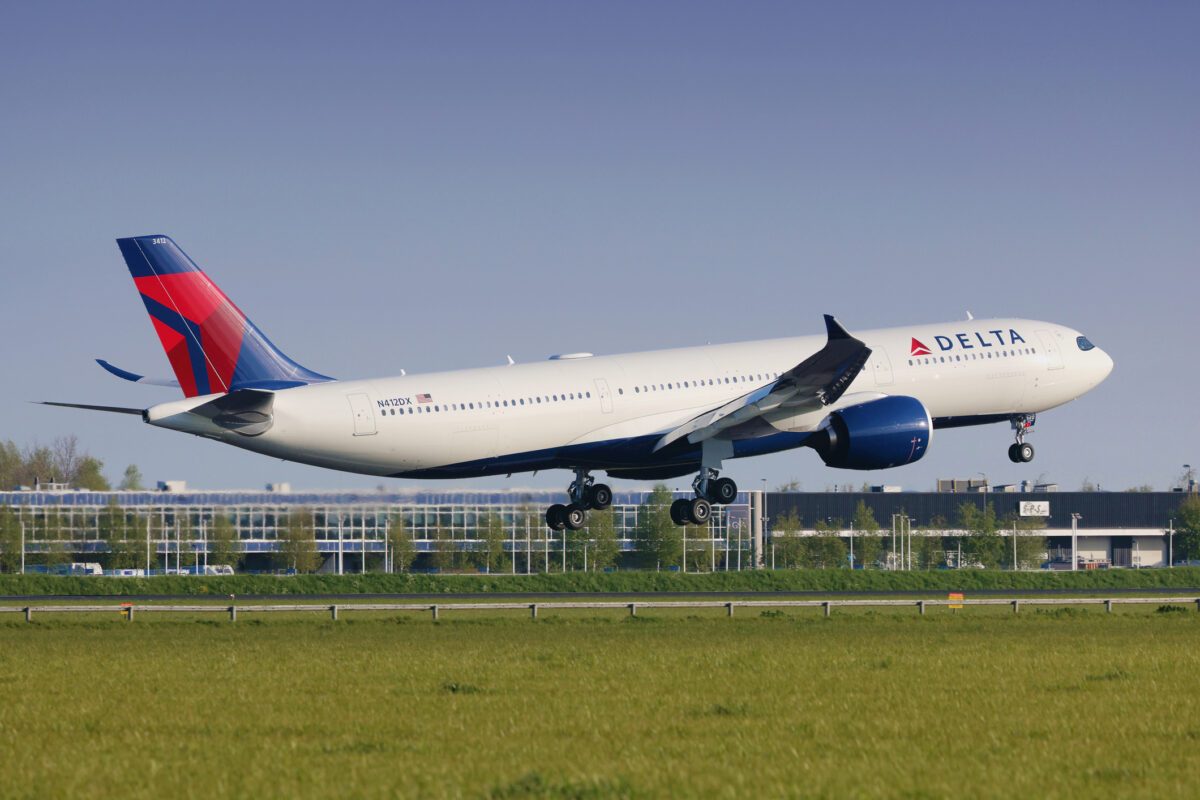
All five flights will use Airbus widebody aircraft. The Airbus A350-900 will operate Delta’s longest additions, while the Airbus A330-900neo and A330-300 will cover the remaining routes.
Read our stories in your inbox
Two aviation newsletters. Zero fluff.
Atlanta to Riyadh Opens the Program
The first route starts October 23, when Delta connects Atlanta (ATL) with Riyadh (RUH). The airline’s published launch schedule calls for daily service from October 23 through October 30, followed by three weekly flights.
Delta will use the Airbus A350-900, offering Delta One, Delta Premium Select, Delta Comfort and Delta Main. The aircraft gives the airline the range and cargo capacity required for a route of more than 7,000 miles while placing its principal long-haul product in a market likely to depend heavily on corporate, government and connecting traffic.
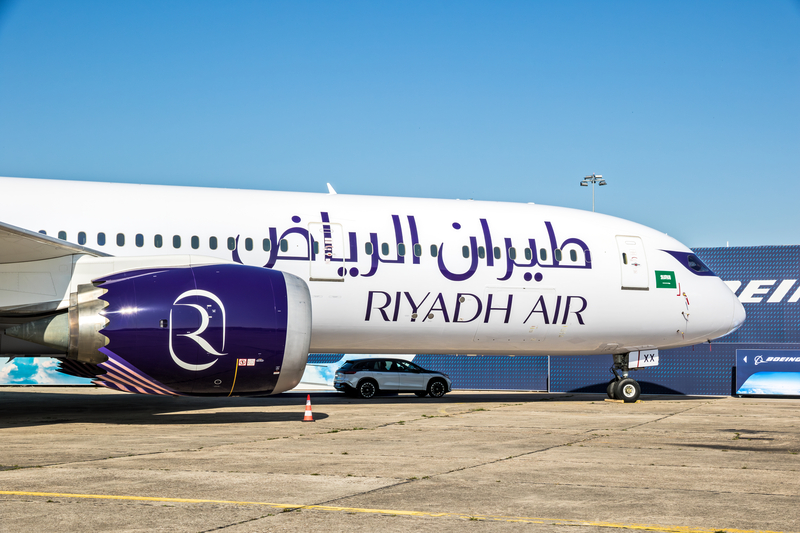
The service will be Delta’s first to Saudi Arabia and the first nonstop between the United States and Riyadh operated by a U.S. airline. ATL’s domestic feed is central to the route’s design: Delta can assemble traffic from across its network rather than relying solely on local demand between Georgia and Saudi Arabia.
The three-weekly pattern after the initial launch period limits capacity while preserving connectivity over Atlanta. It also distinguishes Riyadh from Delta’s mature daily trunk routes to established European and Asian hubs.
Minneapolis Gains Its First Maui Nonstop
Delta will add Minneapolis-St. Paul (MSP)-Maui (OGG) on December 19 as part of its expanded winter Hawaii schedule. The new seasonal route will operate daily around peak holiday and spring-break periods and five times weekly during the core winter schedule.
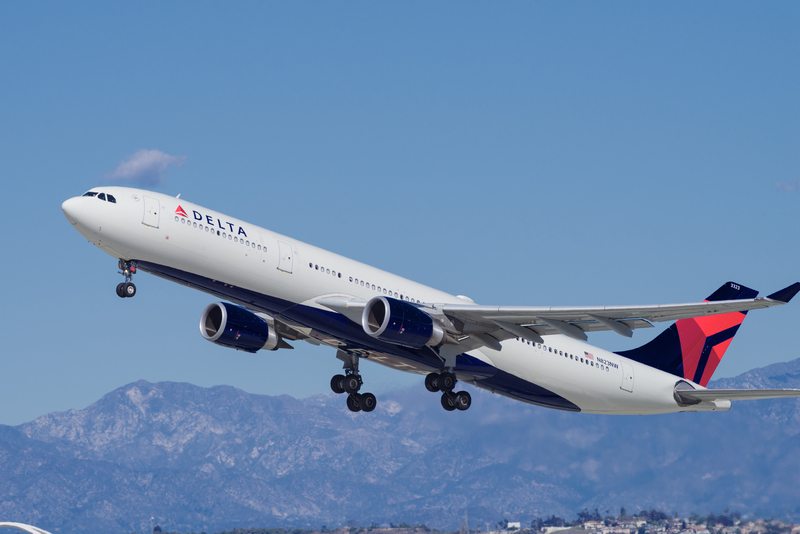
The airline has assigned the Airbus A330-300, configured with 282 seats: 34 in Delta One, 21 in Delta Premium Select, 24 in Delta Comfort and 203 in Delta Main. Although the aircraft is an older widebody than the A330neo and A350, its lie-flat business cabin and substantial economy capacity suit a long domestic leisure sector with pronounced seasonal peaks.
MSP-OGG also shows Delta using its interior hubs to build Hawaii flying beyond the largest West Coast gateways. Minneapolis provides connections across the Upper Midwest, reducing the need for passengers to transfer in Los Angeles, Seattle or Salt Lake City.
Seattle Gets a Second Tokyo Airport
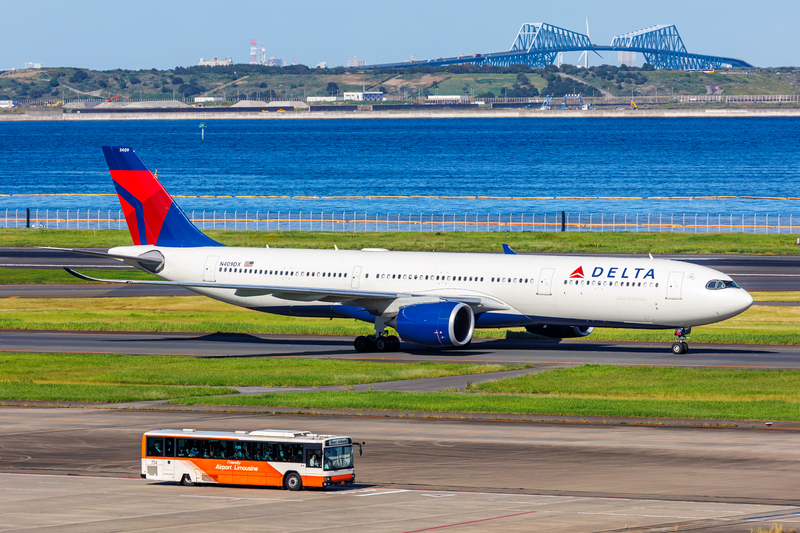
On March 27, 2027, Delta will begin daily service from Seattle (SEA) to Tokyo Narita (NRT) with the Airbus A330-900neo. The flight will supplement, rather than replace, Delta’s existing Seattle-Tokyo Haneda (HND) service.
According to Delta’s route announcement, the A330-900neo will carry Delta One, Delta Premium Select, Delta Comfort and Delta Main. Delta’s standard 281-seat layout includes 29 Delta One suites with doors, 28 premium-economy seats, 56 extra-legroom economy seats and 168 main-cabin seats.
The additional airport changes the shape of Delta’s Tokyo offering from Seattle. Haneda remains better positioned for central Tokyo, while Narita adds capacity and stronger cargo infrastructure. Operating both also gives Delta more scheduling flexibility in a market where airport access and slot availability strongly influence network planning.
Unlike Delta’s former Narita hub, the new flight is designed around Seattle-originating and connecting traffic. Broader Asian connections remain concentrated at Seoul Incheon (ICN) through Delta’s joint venture with Korean Air.
Austin-Paris Adds a Long-Haul Route Outside a Core Hub
Delta will also launch daily summer-season service between Austin (AUS) and Paris Charles de Gaulle (CDG) on March 27. The first Austin-Paris nonstop will use an Airbus A330-900neo.
The route is notable because Austin is not one of Delta’s traditional fortress hubs. Delta has nevertheless built a larger local operation there, and by summer 2027 it expects to operate more than 70 peak-day departures to approximately 30 destinations.
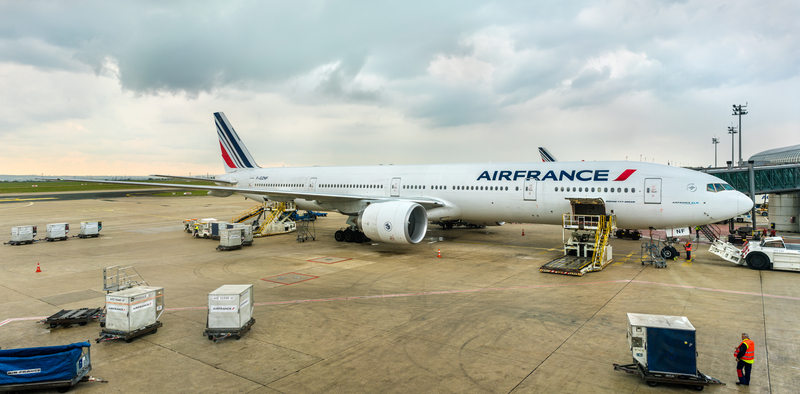
Paris gives that domestic network a long-haul outlet while feeding Air France’s CDG hub. Delta, Air France and KLM expect to offer as many as 10 weekly Austin-Europe departures during the peak summer period across Paris and KLM’s Amsterdam service.
The 281-seat A330-900neo provides enough scale for the local market and connecting flows without requiring the capacity of an A350. Its premium-economy cabin and enclosed Delta One suites also align with Delta’s strategy of adding premium seats as it expands internationally.
Los Angeles-Manila Starts Three Times Weekly
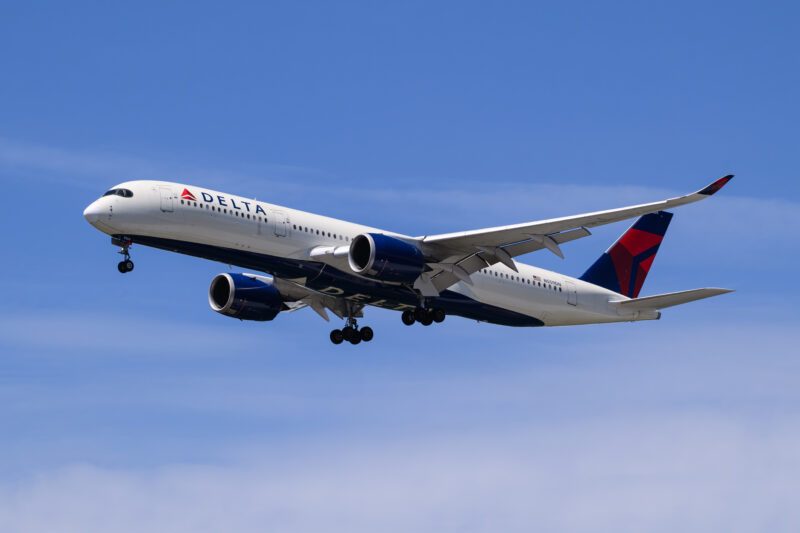
Delta’s fifth route begins March 28, connecting Los Angeles (LAX) and Manila (MNL). Service will initially operate three times weekly before increasing to daily on June 7, 2027.
The new Manila flight will use an Airbus A350-900 and will make Delta the only U.S. carrier operating nonstop between LAX and the Philippine capital. It also returns the Philippines to Delta’s own network rather than serving the country solely through partner connections.
Los Angeles-Manila combines a large visiting-friends-and-relatives market with business, leisure and cargo demand. The A350’s range and fuel efficiency make it the logical aircraft for the transpacific sector, while its four-cabin interior lets Delta segment a market that ranges from price-sensitive economy passengers to premium corporate traffic.
The route complements Korean Air’s service between Seoul Incheon and Manila. Delta can therefore sell both its own LAX nonstop and connecting itineraries over ICN, broadening the joint venture’s coverage without making Manila dependent on a single connecting gateway.
Bottom Line
The five routes show Delta allocating new long-haul capacity selectively rather than concentrating it in one large seasonal announcement. Atlanta-Riyadh relies on the depth of the airline’s largest hub, while Minneapolis-Maui uses domestic connections to support a winter leisure market. Seattle-Narita adds capacity to an established transpacific gateway without rebuilding the connecting complex Delta once maintained in Tokyo.
Austin-Paris and Los Angeles-Manila carry the greater network-development risk, but they also offer more strategic upside. Austin tests whether Delta can support a daily European widebody outside its core hubs by combining a growing local operation with Air France-KLM connectivity. Manila gives LAX a major new Asia market with substantial local ties and strengthens Delta’s position as it adds more transpacific flying from Southern California.
The aircraft assignments are equally revealing. Delta is reserving the A350-900 for the longest missions to Riyadh and Manila, using the A330-900neo where premium cabins and efficient midsize capacity matter, and retaining the A330-300 for high-volume seasonal leisure flying. Frequency changes after launch—particularly Riyadh’s reduction to three weekly flights and Manila’s June increase to daily—will provide the first clear indications of how aggressively Delta intends to build each market.
Keep reading FlyMag
Get the Daily Brief in the morning or the Route Watch weekly recap on Fridays. Or both.