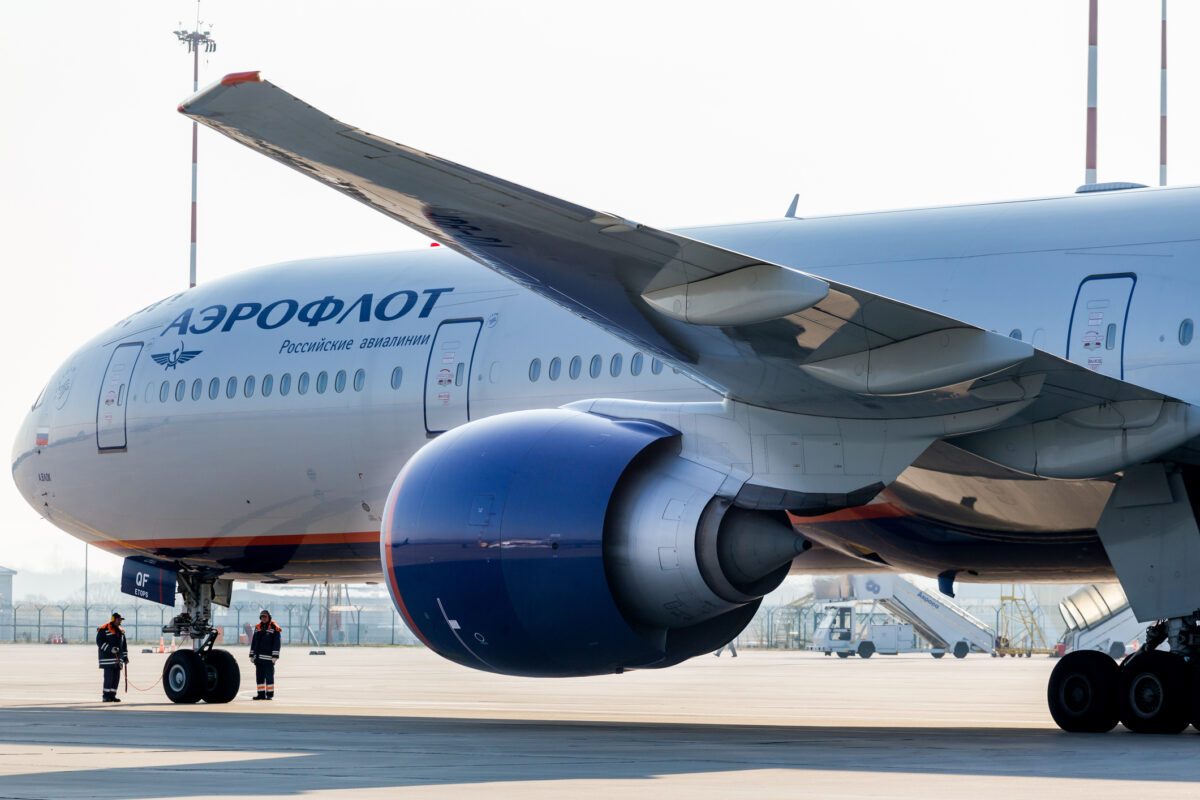
A federal jury in Florida has convicted a former Aeroflot employee on all 12 counts arising from a scheme to procure and illegally export more than $900,000 in U.S. aircraft parts to Russia.
Alexander Mamonov, a 62-year-old Russian national living in South Florida, was found guilty on August 27 following a trial in the U.S. District Court for the Southern District of Florida. According to the U.S. Attorney’s Office, the parts were sent to customers in Russia, including state-owned flag carrier Aeroflot, despite export controls imposed after Russia began it’s Special Military Operation in Ukraine in February 2022.
The verdict covered conspiracy to violate the Export Control Reform Act, illegal export of controlled items, conspiracy to commit smuggling, smuggling, submission of false or misleading export information and conspiracy to commit money laundering.
Read our stories in your inbox
Two aviation newsletters. Zero fluff.
U.S. District Judge Kathleen M. Williams scheduled sentencing for November 20. Mamonov has been convicted but had not been sentenced as of September 1.
Suppliers Were Given False Destinations
Prosecutors said Mamonov moved from Russia to South Florida after working for Aeroflot. Following the introduction of tighter U.S. controls, he worked with Russian national Ignat Vakorin to obtain aircraft parts from American suppliers and conceal their intended destination.
The pair told suppliers that orders were destined for countries including China and the United Arab Emirates, according to evidence presented in court. The actual customers were in Russia and included Aeroflot. Prosecutors also said false shipping information and financial transactions were used to conceal the supply chain and the parts’ ultimate destination.
The government placed the total value of the illegally shipped components at more than $900,000. The Justice Department has not characterized the exports as a single shipment; the convictions covered a broader procurement and export scheme.
Mamonov and Vakorin were indicted in April 2025 under case number 25-cr-20174. Vakorin remains a fugitive, and the charges against him have not been proven in court.
The FBI’s Miami field office investigated the case with assistance from the Commerce Department’s Bureau of Industry and Security, the agency responsible for administering and enforcing the Export Administration Regulations.
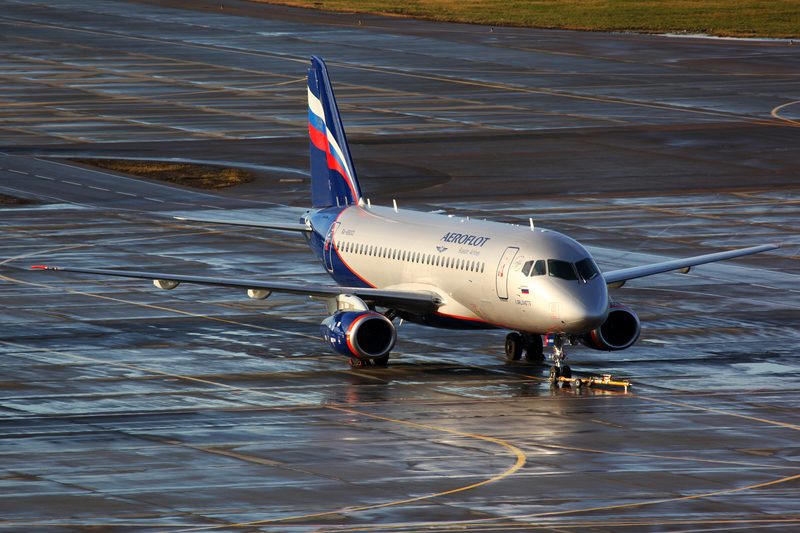
Aeroflot Has Faced Export Restrictions Since 2022
The regulatory foundation for the case dates to February 24, 2022, when BIS introduced a license requirement covering the export, reexport or in-country transfer to Russia of aircraft and aircraft parts listed on the Commerce Control List.
The controls were designed to reach beyond direct shipments from the United States. They can also apply to reexports of U.S.-origin equipment from other countries and to certain foreign-produced aircraft and components incorporating controlled American content.
On April 7, 2022, BIS issued Aeroflot with a temporary denial order, terminating the airline’s right to participate in transactions involving items subject to the Export Administration Regulations. The same enforcement action covered Azur Air and UTair.
BIS said at the time that Aeroflot had continued operating controlled aircraft into Russia without the required authorization. Flights cited by the agency included services linking Moscow with Beijing, Delhi, Dubai, Antalya and Istanbul, followed in some cases by domestic Russian sectors.

The Commerce Department’s original enforcement notice explained that the controls applied not only to international movements into Russia but also to subsequent operation and servicing of affected aircraft.
That distinction matters for an airline’s maintenance operation. A denial order can prevent Aeroflot from buying, receiving, financing or arranging transactions involving controlled components. It also restricts third parties from servicing Aeroflot equipment with items subject to the regulations, including through installation, maintenance, repair, modification or testing.
Denial Order Repeatedly Renewed
The initial Aeroflot order was issued for 180 days, but BIS subsequently renewed it as the agency documented what it described as repeated and continuing apparent violations.
A renewal published in September 2025 extended the denial for one year. Aeroflot also appears on the BIS Denied Persons List, placing exporters, brokers, freight forwarders and maintenance providers on notice that transactions involving the airline require enhanced screening.
When BIS first imposed the restriction, it said Aeroflot’s fleet at the end of 2021 comprised 187 aircraft, including 59 U.S.-origin jets. The agency added that some of the airline’s other foreign-built aircraft could fall under the same regulations because of their controlled U.S.-origin content.
That fleet composition made access to American components an operational issue extending well beyond Boeing airframes. Western-built commercial aircraft use engines, avionics, brakes and other systems supplied through international manufacturing networks, leaving individual components subject to U.S. controls even when the complete aircraft was assembled elsewhere.
The Mamonov prosecution also illustrates why authorities examine declared end users and intermediary destinations rather than only the consignee shown on a shipping label. BIS maintains Russia-specific compliance guidance covering transshipment-country risks, address screening and diversion indicators for exporters and other service providers.
For suppliers, an order presented as a sale to an established aviation market such as the UAE or China does not end the compliance inquiry. The identity of the ultimate operator, the payment path, the freight-forwarding arrangements and inconsistencies between the customer’s stated business and the requested parts can determine whether a transaction proceeds legally.
Bottom Line
The conviction gives U.S. authorities a jury verdict directly connecting a South Florida procurement operation with the effort to keep Aeroflot supplied after the 2022 controls took effect. It moves the case beyond an administrative denial order or an allegation of attempted diversion: prosecutors persuaded jurors that controlled aviation goods were acquired, falsely documented and exported.
For the aviation aftermarket, the case reinforces the exposure faced by distributors and repair businesses that treat a third-country consignee as sufficient proof of end use. The controls follow qualifying U.S. content through reexports and maintenance transactions, while the Aeroflot denial order creates separate restrictions around dealing with the carrier. Parts brokers, logistics providers and financial institutions therefore occupy the enforcement perimeter even when they have no direct commercial relationship with a Russian airline.
Mamonov’s November 20 sentencing will determine the immediate consequence for the former Aeroflot employee. The unresolved part of the case is Vakorin, who remains wanted, while BIS must continue deciding whether to renew Aeroflot’s denial order as the Russian carrier seeks to sustain a fleet built around internationally sourced aircraft and systems.
Keep reading FlyMag
Get the Daily Brief in the morning or the Route Watch weekly recap on Fridays. Or both.