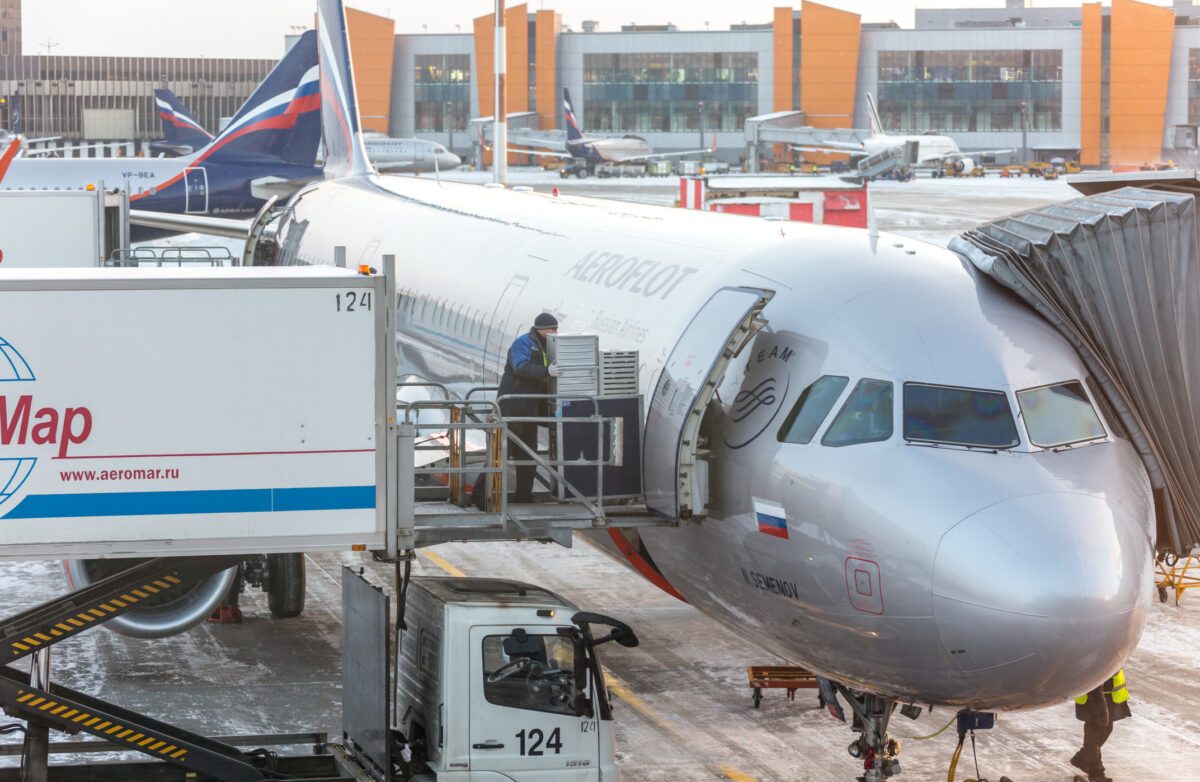
Aeroflot has acquired the remaining 49% of Russian aviation caterer Aeromar, raising its holding from 51% to 100% and ending Lufthansa’s long-standing participation in the business.
An Aeroflot corporate disclosure said the acquired shares were credited to the airline on September 1, 2026. The filing confirms that Aeroflot now owns all of Aeromar’s capital and voting shares. It did not disclose the purchase price.
The transaction follows Aeroflot’s earlier acquisition of AeroMIL, a smaller catering company serving Krasnoyarsk (KJA). Together, the deals give the Russian airline group full ownership of catering businesses at Moscow Sheremetyevo (SVO) and one of its most important regional bases.
Read our stories in your inbox
Two aviation newsletters. Zero fluff.
Presidential Order Cleared the Aeromar Transaction
Aeroflot required a specific Russian government authorization to purchase the foreign-owned holding. Presidential Order No. 74-rp, signed on March 16, permitted the airline to buy 4,900 ordinary Aeromar shares from Truffle 2 GmbH.
The officially published order was issued under Russia’s August 2022 special economic measures governing transactions involving assets connected with companies from states designated as unfriendly by Moscow.
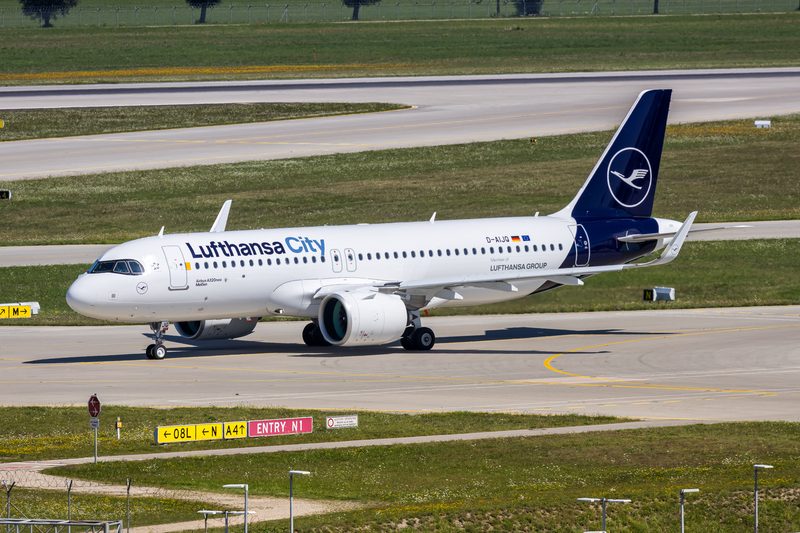
Truffle 2 was linked to Lufthansa’s former catering interests. Lufthansa’s own 2022 financial statements listed a 49% interest in Aeromar alongside full ownership of AO AeroMEAL, the company subsequently identified in Russian filings as AeroMIL.
The Aeromar transaction had been under preparation since at least 2025, when Aeroflot management said the relevant Russian government commission had approved the proposed purchase. Presidential authorization removed the final regulatory barrier, although the shares did not transfer until nearly six months later.
Aeromar Extends Beyond Meal Production
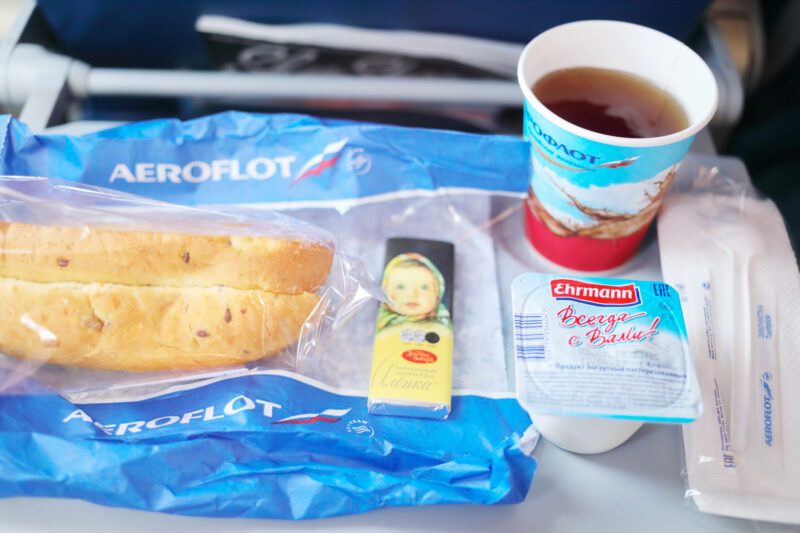
Aeromar is more than a conventional flight kitchen. Its work for Aeroflot includes producing and loading meals, supplying beverages and service equipment, cleaning and equipping aircraft cabins, and managing onboard retail inventory.
That breadth makes the company part of Aeroflot’s operational infrastructure rather than simply an outside food supplier. Aeroflot already controlled Aeromar through its 51% stake, but sole ownership removes the minority shareholder from decisions covering investment, procurement, capacity and the development of passenger-service products.
Aeromar traces its origins to a Soviet-American joint venture established in 1989. Aeroflot’s international division held 51%, while Marriott In-Flight Services supplied the remaining 49% and brought catering technology and operating expertise to the venture. LSG Sky Chefs replaced Marriott as the foreign partner in 1996, according to Aeromar’s corporate history.
The partnership therefore survived multiple restructurings of Aeroflot and Lufthansa’s catering operations before the political and commercial rupture between Russia and Western Europe changed the position of foreign aviation investors.
Aeromar remains centered on SVO, Aeroflot’s principal base, but it has developed a broader Russian network. Its published regional footprint includes operations in St. Petersburg, Vladivostok, Sochi and Ufa, as well as southern Russian locations where some activity has been affected by airspace restrictions.
The St. Petersburg operation at Pulkovo (LED) grew from the former catering department of Pulkovo Airlines and later Rossiya. Aeromar’s Vladivostok business serves flights at VVO through a subsidiary formed from the catering operation of Vladivostok Avia. Those units give the company a role in several parts of the Aeroflot Group’s network beyond Moscow.
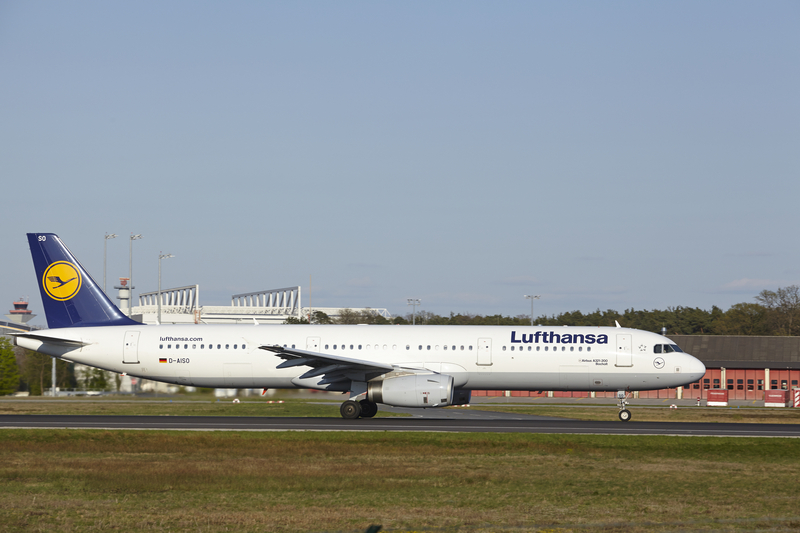
Krasnoyarsk Purchase Preceded the Final Deal
The Aeromar acquisition follows Aeroflot’s takeover of AeroMIL, a catering operation at KJA. Lufthansa’s 2022 and 2023 accounts identified the business as a wholly owned Russian investment under the name AO AeroMEAL.
Aeroflot subsequently recorded the acquisition in its financial reporting. The Krasnoyarsk company is considerably smaller than Aeromar, but its location gives it strategic importance. Aeroflot has built KJA into a connecting base for domestic services linking Siberia, the Russian Far East and other regions without requiring passengers to travel through Moscow.
Owning the local caterer gives the group direct control over a service that must scale with banked departures and connecting schedules. Catering capacity, vehicle availability and loading times become particularly important when several aircraft are prepared within a short departure window.
The two transactions are different in structure. Lufthansa held a minority position in Aeromar, where Aeroflot had remained the controlling shareholder. AeroMIL was previously listed as wholly owned within Lufthansa’s corporate structure. Their transfer to Aeroflot nevertheless produces the same result: the German group no longer retains an ownership position in either of the catering companies associated with Aeroflot’s Moscow and Krasnoyarsk operations.
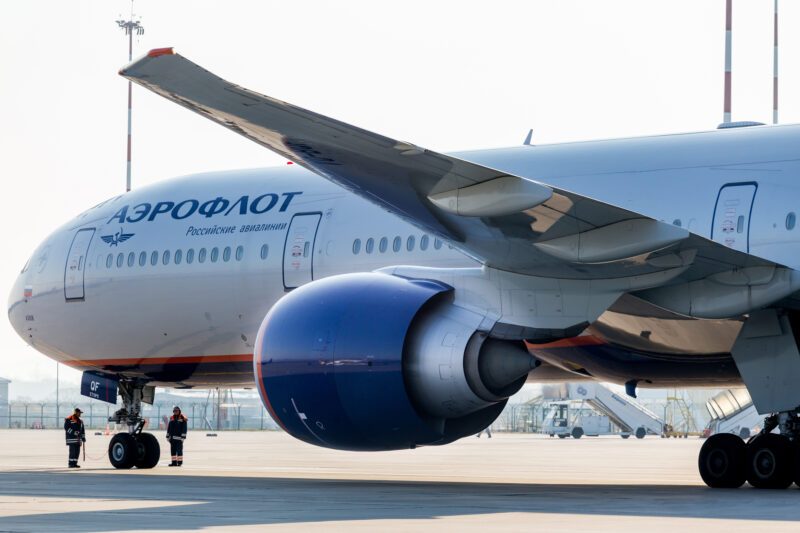
A Long Partnership Reaches Its End
Lufthansa had already reduced the carrying value of its Aeromar interest to zero in 2022. Its annual report for that year attributed the impairment to economic restrictions connected with the Russia-Ukraine conflict.
That accounting treatment did not itself transfer the shares. Aeromar continued to have two shareholders until the September 2026 closing, leaving Aeroflot to complete a regulatory process designed specifically for transactions involving foreign-owned Russian assets.
The completion is unlikely to produce an immediate visible change for passengers. Aeroflot already controlled Aeromar, and the caterer was deeply integrated into the airline’s service operation. The more consequential change is at shareholder level: investment decisions and any reorganization of the catering network can now proceed without a foreign minority partner.
Bottom Line
Full ownership gives Aeroflot a cleaner structure around one of its largest recurring operational contracts. Catering combines labor, food procurement, specialized vehicles, security controls and time-critical ramp activity. Bringing the shareholder and principal customer under the same group does not automatically reduce those costs, but it gives Aeroflot greater freedom to decide where capacity is added and how service specifications are standardized.
The parallel consolidation at SVO and KJA also reflects Aeroflot’s two-level network strategy. Sheremetyevo remains the group’s dominant international and domestic gateway, while Krasnoyarsk supports an expanding set of regional connections. Direct control of catering at both bases reduces dependence on externally controlled suppliers at airports where disruption could affect multiple waves of departures.
For Lufthansa, the transfer closes another remaining corporate connection with Russian commercial aviation. The Aeromar partnership dated from the 1990s and outlasted several changes in the global catering sector. Its end is less a change in Aeromar’s day-to-day control than confirmation that the cross-border ownership structures built during an earlier period of Russian-European airline cooperation have now been dismantled.
Keep reading FlyMag
Get the Daily Brief in the morning or the Route Watch weekly recap on Fridays. Or both.