Delta Air Lines is returning to the nonstop market between Raleigh-Durham International Airport (RDU) and Southwest Florida International Airport in Fort Myers (RSW), restoring a route it last operated shortly before the COVID-19 pandemic.

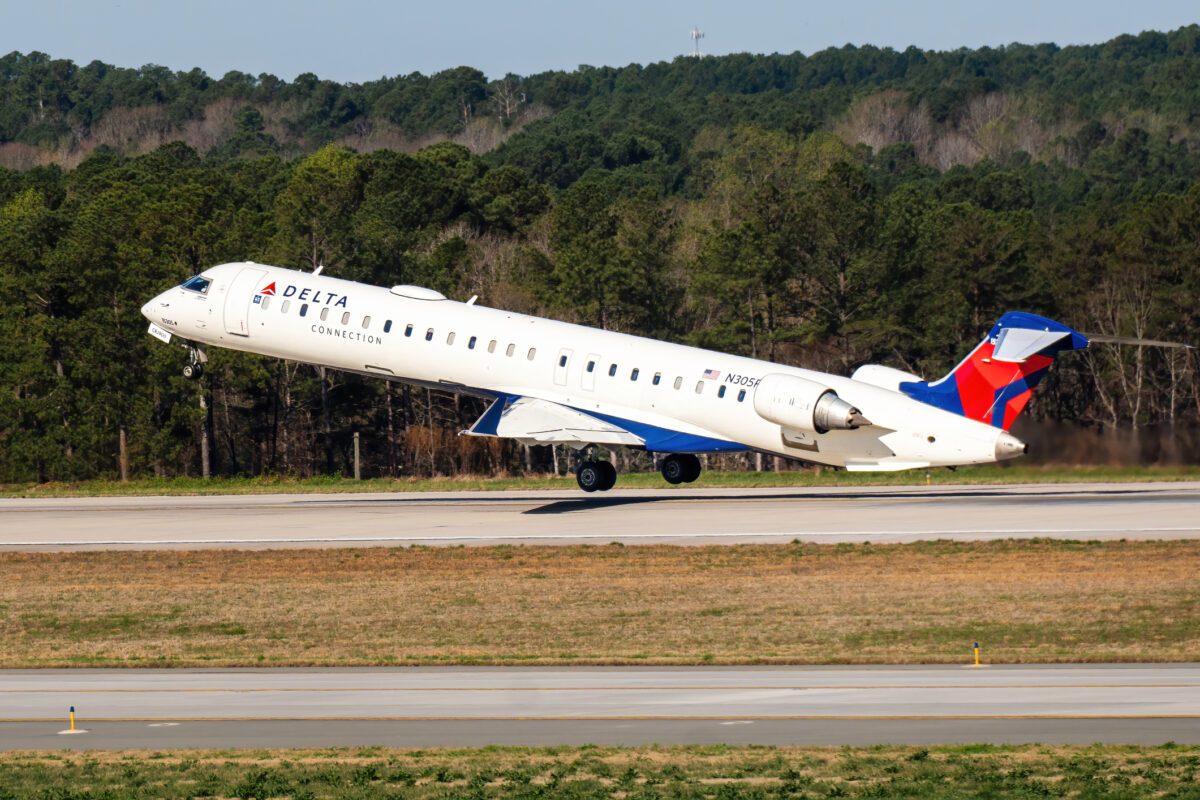
The seasonal service is scheduled to begin on November 21, 2026, with one daily round trip operated by a Delta Connection Bombardier CRJ-900. The route will continue through the winter travel period and is currently scheduled to end in April 2027.
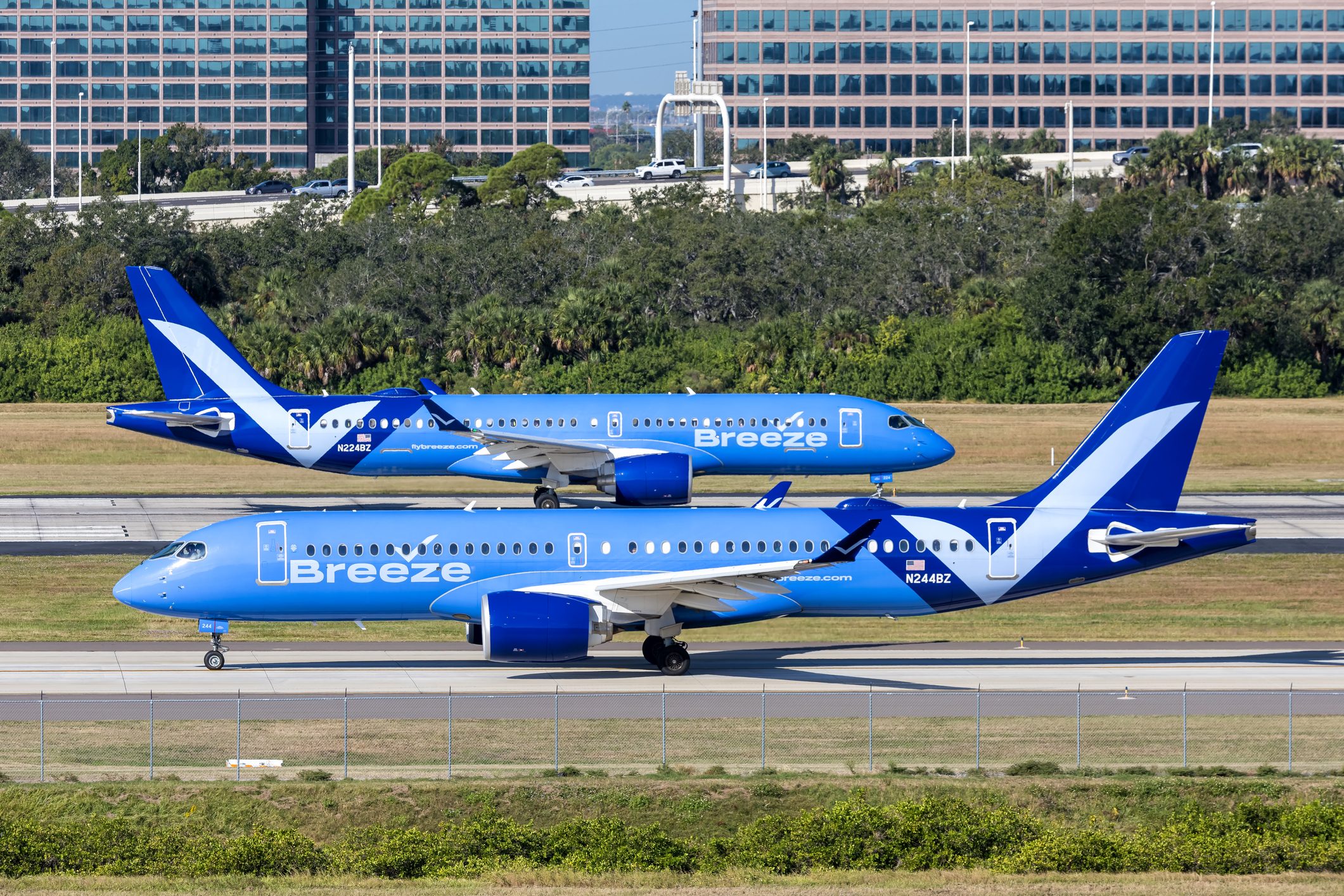
Delta’s return will create direct competition with Breeze Airways, which is presently the only airline operating nonstop flights between Raleigh-Durham Airport (RDU) and Fort Myers Airport (RSW).
Read our stories in your inbox
Two aviation newsletters. Zero fluff.
At approximately the same time, Delta is removing three recently introduced routes from John F. Kennedy International Airport (JFK) to George Bush Intercontinental Airport in Houston (IAH), Memphis International Airport (MEM) and St. Louis Lambert International Airport (STL).
The two developments are part of Delta’s wider domestic schedule management, but they are not directly connected. Ending flights at JFK frees airport slots and aircraft time in New York; it does not create the aircraft or operating authority used for the new Raleigh service.
Delta Returns to a Route Last Operated in 2020
Delta previously operated between Raleigh-Durham Airport (RDU) and Fort Myers Airport (RSW), but the route disappeared from the carrier’s schedule in early January 2020.
Historical schedule records show that the last Delta flight from Fort Myers to Raleigh was scheduled for January 5, 2020. The service therefore ended before the pandemic caused widespread airline network reductions across the United States.
The November 2026 return will come almost seven years after Delta last served the market.
Current schedules show one daily departure in each direction beginning November 21. The service is seasonal, with flights appearing through the winter and into April 2027.
The timing is designed around peak demand between North Carolina and Southwest Florida. Fort Myers attracts substantial winter leisure traffic, seasonal residents, golfers and travelers visiting communities along Florida’s Gulf Coast.
Demand is typically strongest from November through the Easter and spring-break periods, making a winter-only schedule less risky than committing to year-round service.
Delta Will Use the Bombardier CRJ-900
Delta is scheduling the route with a Bombardier CRJ-900 operated by one of its Delta Connection regional partners.
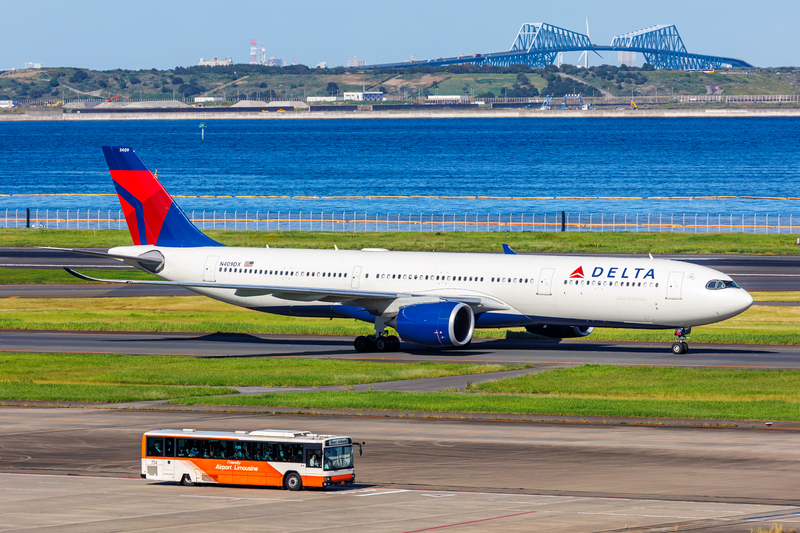
The CRJ-900 is a twin-engine regional jet with a two-by-two cabin, meaning there are no middle seats. Delta’s aircraft are configured with either 70 or 76 seats and include First Class, Delta Comfort and Main Cabin.
The airline’s CRJ-900 seating configurations vary slightly depending on whether the aircraft is operated by Endeavor Air or SkyWest Airlines.
A typical 76-seat aircraft has:
- 12 First Class seats
- 20 Delta Comfort seats
- 44 Main Cabin seats
Some Endeavor Air aircraft have been reduced to 70 seats, providing additional space or accommodating specific pilot-contract requirements.
The CRJ-900 is powered by two General Electric CF34-8C turbofan engines and cruises at approximately 515 to 528 mph. It has sufficient range to operate the 668-mile Raleigh–Fort Myers route without difficulty.
Using a regional jet allows Delta to offer daily frequency without placing the capacity of an Airbus A319, Airbus A320 or Boeing 737 into a seasonal market.
The smaller aircraft will also help Delta compete with Breeze while limiting the number of seats it must sell each day.
Raleigh–Fort Myers Is a Natural Winter Market
The nonstop flight covers approximately 668 miles and is scheduled for around two hours in each direction.
Driving between the Research Triangle and Fort Myers generally requires more than 12 hours before accounting for fuel, meals or traffic. The nonstop flight therefore has a clear time advantage for vacation travelers and seasonal residents.
Southwest Florida International Airport (RSW) serves Fort Myers, Cape Coral, Naples, Bonita Springs, Sanibel Island and other communities throughout Lee and Collier counties.
The Raleigh-Durham region, meanwhile, has grown into one of the largest and most economically dynamic metropolitan areas in the southeastern United States. Its population includes a significant number of retirees, remote workers, university employees and residents with family connections in Florida.
The route may also attract passengers traveling between North Carolina’s technology and life-sciences industries and Southwest Florida’s growing business community, although leisure traffic will remain the primary source of demand.
The current Raleigh–Fort Myers nonstop market is served by Breeze Airways, which operates the approximately two-hour flight using Airbus A220-300 aircraft.
Delta’s arrival gives travelers a network-airline alternative with access to SkyMiles, corporate contracts and premium seating.
Breeze Will Have the Larger Aircraft
The two competitors will approach the market with very different aircraft.
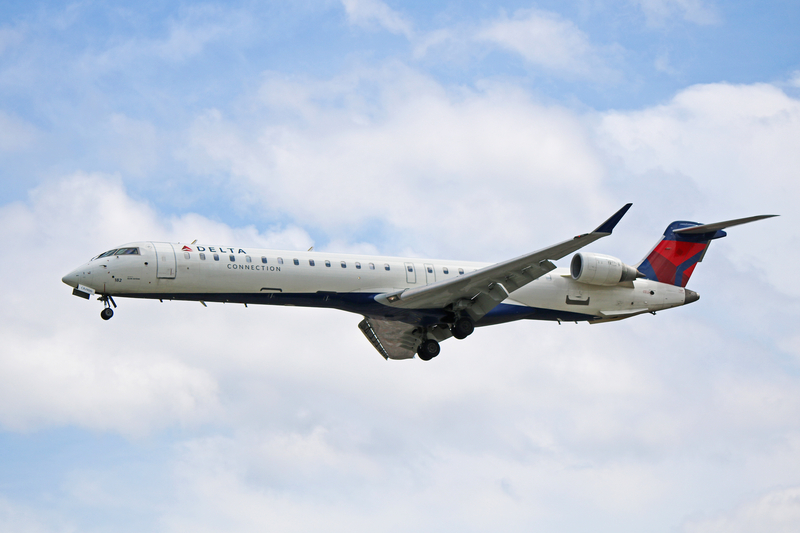
Breeze Airways generally uses the Airbus A220-300, an aircraft carrying considerably more passengers than Delta’s CRJ-900. Depending on configuration, Breeze’s A220s accommodate approximately 126 to 137 passengers.
The Airbus has a five-abreast Economy Class layout and offers Breeze’s premium “Ascent” seats at the front of the cabin on equipped aircraft.
Delta’s CRJ-900 will have fewer total seats but a more conventional network-airline product, including a dedicated First Class cabin, Delta Comfort seating and connectivity with the airline’s broader loyalty and corporate-sales programs.
Delta may not need to carry as many passengers as Breeze to maintain commercially acceptable load factors. A 76-seat regional jet requires approximately 50 fewer passengers to operate at the same percentage load as a 126-seat A220.
Breeze may retain a unit-cost advantage because it can spread the cost of each flight across more seats. Delta will instead rely on frequency, brand loyalty, premium fares and its established customer base at Raleigh-Durham Airport (RDU).
Fort Myers Becomes Delta’s 10th Planned Nonstop Market
Delta currently operates nonstop flights from Southwest Florida International Airport (RSW) to eight destinations:
Atlanta Hartsfield-Jackson International Airport (ATL), Boston Logan International Airport (BOS), Cincinnati/Northern Kentucky International Airport (CVG), Detroit Metropolitan Airport (DTW), Minneapolis-St. Paul International Airport (MSP), New York John F. Kennedy International Airport (JFK), New York LaGuardia Airport (LGA) and Salt Lake City International Airport (SLC).
Delta’s own Fort Myers destination information identifies those existing nonstop markets.
The airline is also adding seasonal service between Fort Myers Airport (RSW) and Austin-Bergstrom International Airport (AUS) on November 21, the same date as the Raleigh launch.
Austin and Raleigh will increase Delta’s planned nonstop network at RSW to 10 destinations.
The additions show Delta looking beyond its largest hubs for opportunities to connect growing focus markets directly with major leisure destinations.
Austin Airport (AUS) has become one of Delta’s most important expansion markets, while Raleigh-Durham Airport (RDU) remains a significant station with an established Delta Connection operation.
Raleigh Is Important to Delta’s Regional Network
Delta no longer publicly emphasizes the “focus city” designation it once used for Raleigh-Durham, but RDU remains an important airport within its domestic network.
Endeavor Air, Delta’s wholly owned regional subsidiary, maintains a hub operation at Raleigh-Durham Airport (RDU). The carrier operates CRJ-700 and CRJ-900 aircraft on Delta Connection routes throughout the eastern United States.
Endeavor Air currently operates 145 regional jets and identifies Raleigh-Durham as one of its principal operating bases.
That local infrastructure makes the CRJ-900 a logical aircraft for the Fort Myers route. Delta can integrate the flight into existing crew and aircraft rotations rather than positioning a regional jet from another hub solely for the service.
The aircraft could arrive at Raleigh Airport (RDU) from another city, operate the round trip to Fort Myers Airport (RSW) and then continue elsewhere within the Delta Connection network.
That flexibility reduces the operational burden of adding a single daily seasonal route.
Three JFK Routes Are Being Removed
While Delta is adding Raleigh–Fort Myers, it has removed flights from John F. Kennedy International Airport (JFK) to Houston Airport (IAH), Memphis Airport (MEM) and St. Louis Airport (STL) from its currently published schedule.
The changes were first identified through Delta’s schedule filings rather than a formal airline announcement.
Delta has not provided a detailed public explanation for ending the three routes. The airline also has not confirmed which services will replace them at JFK.
The three flights were relatively recent additions to Delta’s New York network. Memphis and St. Louis service began in September 2025 after initially being announced as daily routes.
Memphis International Airport promoted the launch of Delta’s JFK service as an important connection to New York and Delta’s international network.
However, Delta repeatedly adjusted the routes before and after launch, including removing service during lower-demand periods.
The latest schedule change suggests Delta has concluded that the JFK flights cannot justify the slots, aircraft or operating costs required to maintain them.
The JFK Cuts Are Not Funding the Raleigh Route
Describing Raleigh–Fort Myers as being added “at the expense” of the three JFK routes is misleading.
A Delta slot at John F. Kennedy International Airport (JFK) cannot be transferred to Raleigh-Durham Airport (RDU). JFK slots authorize takeoffs and landings at JFK, while RDU is not subject to the same slot controls.
Aircraft are also unlikely to be transferred directly between the two decisions.
The Raleigh–Fort Myers route will use a Delta Connection CRJ-900. The JFK routes have used a combination of regional and mainline aircraft depending on the city and schedule period.
The changes may be part of the same network-planning update, but the commercial logic is separate.
Raleigh–Fort Myers is a winter leisure route using a small regional jet. The JFK services were domestic feeder routes competing for scarce operating capacity at one of Delta’s most valuable hubs.
JFK Slots Are Too Valuable for Marginal Routes
John F. Kennedy International Airport (JFK) is a heavily constrained airport where the number of scheduled operations is limited.
The Federal Aviation Administration manages operating limits at JFK to prevent airlines from scheduling more flights than the runway and air traffic control system can accommodate.
A flight to Memphis, St. Louis or Houston uses the same departure or arrival opportunity as a transatlantic flight, a premium transcontinental service or a larger domestic aircraft.
The revenue generated by a regional or smaller domestic flight may not be enough to justify that slot when Delta has other opportunities at JFK.
Delta has been expanding internationally from JFK, including new and returning service to destinations in Europe and other long-haul markets. It has also invested heavily in premium transcontinental routes and its Terminal 4 complex.
Removing lower-performing domestic flights could allow Delta to add international service, increase frequencies on stronger routes or create more operational recovery space in its schedule.
However, Delta has not disclosed what will directly replace the Houston, Memphis or St. Louis flights. Any specific claim about how those slots will be reused remains analysis rather than confirmed airline planning.
LaGuardia Remains Delta’s Primary Domestic Airport
Delta will continue serving Houston Airport (IAH), Memphis Airport (MEM) and St. Louis Airport (STL) from New York LaGuardia Airport (LGA).
LaGuardia is generally better positioned for short- and medium-haul domestic travel because it is closer to Manhattan and is heavily oriented toward business markets within the eastern and central United States.
All three cities fall within LaGuardia’s traditional perimeter rules, which generally restrict most nonstop flights to destinations within 1,500 statute miles.
Delta can therefore concentrate local New York demand at LGA while reserving more of its JFK operation for international services, long-haul domestic flights and passengers making global connections.
This does not mean the two airports are interchangeable.
A passenger traveling from Memphis Airport (MEM) to Europe through JFK previously could remain within one airport. After the route ends, the traveler may need to connect through Atlanta Airport (ATL), Detroit Airport (DTW) or another Delta hub, or travel between LaGuardia Airport (LGA) and JFK by ground transportation.
That airport transfer can take more than an hour depending on traffic and is generally unsuitable for a normal connecting itinerary.
The JFK cuts therefore reduce Delta’s international connecting convenience from Houston, Memphis and St. Louis even though nonstop New York service remains available at LaGuardia.
JetBlue Will Still Connect JFK and Houston
Houston is different from Memphis and St. Louis because another airline will continue operating between JFK and George Bush Intercontinental Airport (IAH).
JetBlue launched daily nonstop service between JFK and Houston in May 2026, restoring its presence in the market with Airbus narrowbody aircraft.
The airline initially published up to two daily round trips, although frequencies can vary by date.
Delta’s withdrawal will leave JetBlue as the principal nonstop operator between JFK and IAH. United Airlines will continue dominating the broader New York-Houston market through its Newark Liberty International Airport (EWR) hub, while Delta and United also serve LaGuardia Airport (LGA).
Memphis and St. Louis travelers will have fewer JFK-specific options. Both cities retain multiple flights to LaGuardia, but direct access to JFK will become considerably more limited.
Delta Is Matching Each Airport to a Different Role
The changes illustrate how Delta assigns distinct roles to airports within its network.
At Raleigh-Durham Airport (RDU), Delta can add a seasonal leisure route using a relatively low-capacity CRJ-900 without needing a scarce slot.
At LaGuardia Airport (LGA), it can concentrate high-frequency domestic service to cities such as Houston, Memphis and St. Louis.
At John F. Kennedy International Airport (JFK), Delta can prioritize long-haul international flights, premium transcontinental service and selected domestic routes that generate enough connecting or local demand to justify the airport’s constrained capacity.
That strategy is not unusual. Large airlines continuously compare the revenue produced by each route with the aircraft, crew time, gates and airport slots it consumes.
A route can carry a respectable number of passengers and still be removed if another service produces a better return using the same resources.
Bottom Line
Delta Air Lines will restore daily seasonal service between Raleigh-Durham International Airport (RDU) and Southwest Florida International Airport (RSW) on November 21, 2026.
The route will use a 70- or 76-seat Bombardier CRJ-900 operated by Delta Connection and will compete directly with Breeze Airways’ Airbus A220 service.
It is Delta’s first return to the market since January 2020 and will give Raleigh-area travelers another nonstop option to Southwest Florida during the peak winter season.
Separately, Delta is removing three routes from John F. Kennedy International Airport (JFK) to Houston Airport (IAH), Memphis Airport (MEM) and St. Louis Airport (STL).
Those cuts should not be described as financing or enabling the Raleigh route. JFK slots cannot be moved to RDU, and the markets use different network strategies and potentially different aircraft resources.
The more meaningful connection is Delta’s continuing effort to place capacity where it can generate the strongest return.
At Raleigh, that means testing winter demand to Fort Myers with a regional jet. At JFK, it means questioning whether short domestic routes can justify slots that may be more valuable for international, premium or higher-capacity flying.
Keep reading FlyMag
Get the Daily Brief in the morning or the Route Watch weekly recap on Fridays. Or both.