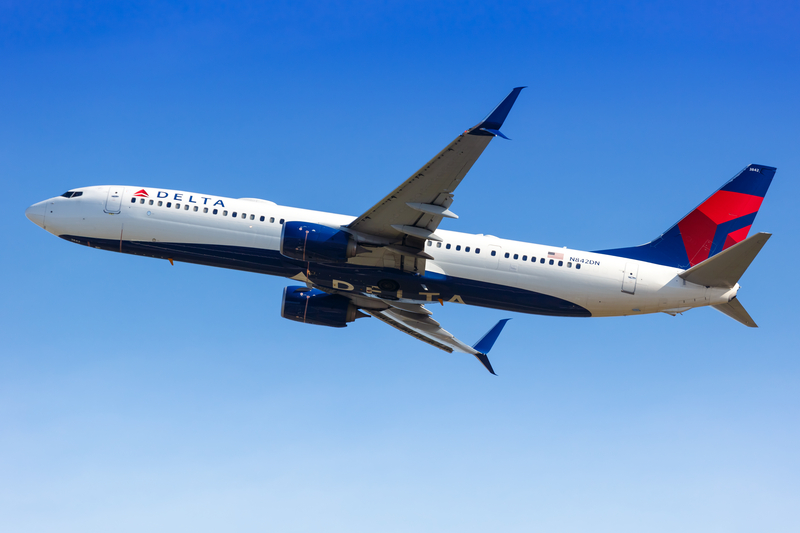
A routine Delta Air Lines flight from Hartsfield-Jackson Atlanta International Airport (ATL) to Portland International Airport (PDX) became a remarkable airborne medical emergency on April 24 when a passenger gave birth shortly before landing.

The baby girl was delivered onboard Delta flight DL478 with the help of medical volunteers, flight attendants, and the operating crew, turning an ordinary domestic sector into the kind of flight few passengers or crew members will ever forget. For Delta, it was a reminder that even on a standard U.S. route, the cabin can become an emergency-response environment in seconds.
What makes the story especially striking is how late in the flight the birth happened. The aircraft was already nearing Portland International Airport (PDX), which meant there was no realistic option to divert and no time to wait for the ground. The delivery had to happen onboard.
Read our stories in your inbox
Two aviation newsletters. Zero fluff.
The Birth Happened Just Before Landing In Portland
According to the accounts that have emerged, the situation developed quickly in the cabin as the flight approached Oregon.
A flight attendant asked over the public-address system whether any medical personnel were onboard, prompting two emergency medical technicians to step forward and assist. By the time they reached the passenger, labor was already well underway, with contractions reportedly coming only minutes apart.
That timing matters. In aviation medical events, the crew’s first decision is often whether the situation can be managed until landing or whether a diversion is necessary. In this case, the baby arrived before that question could really become operationally useful. The flight was already too close to Portland, and labor had progressed too far.
The Delivery Was Improvised With Limited Equipment
Commercial aircraft carry medical kits, but they are not flying maternity wards.
That is why this delivery depended so heavily on improvisation. The medical volunteers reportedly worked with whatever was available in the cabin, including blankets from passengers and a shoelace that was used as part of the emergency response. In other words, this was not a controlled hospital environment. It was an improvised delivery room at cruise and descent, managed by people responding in real time with limited tools.
For aviation professionals, that is one of the most revealing parts of the story. Airlines prepare for onboard medical emergencies, but births remain among the rarest and least predictable events the cabin crew can face.
The Cabin Crew’s Role Was Critical
The volunteers understandably received much of the attention, but the cabin crew were just as important to the outcome.
On any in-flight medical emergency, the flight attendants become the coordinators of the response. They secure the space, manage the passengers nearby, retrieve the onboard medical equipment, communicate with the cockpit, and help the medical volunteers work in conditions that are noisy, confined, and highly time-sensitive.
That is especially true in an onboard birth, where the event is emotionally charged as well as medically urgent. Keeping the cabin calm, creating room to work, and supporting the mother all matter enormously. Even when off-duty medical professionals are present, the cabin crew remain the operational backbone of the response.
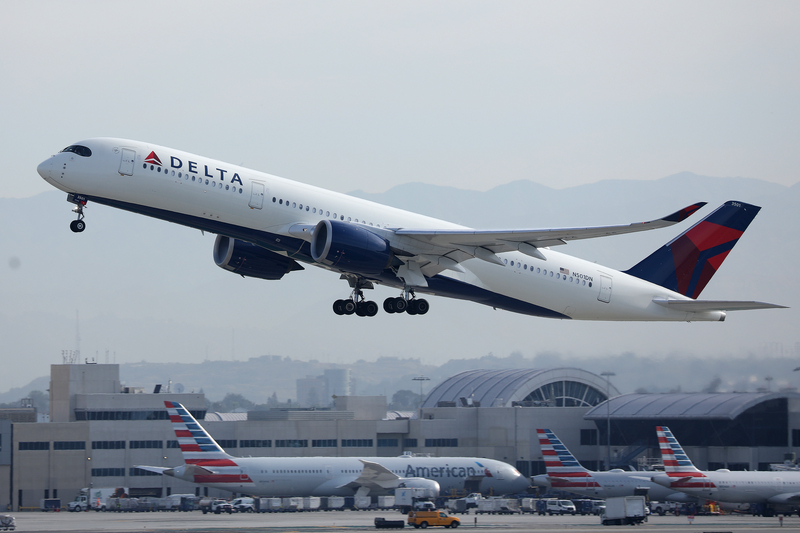
Delta’s Crew Landed With A New Passenger Onboard
The baby was delivered roughly half an hour before the aircraft landed at Portland International Airport (PDX).
That meant the crew had to shift immediately from delivery support to landing preparation. The newborn had to be stabilized, the mother had to be monitored, the cabin had to be secured for arrival, and emergency medical services had to be arranged on the ground.
That sequence is worth noting because it shows how quickly airline crews must pivot in rare events like this. There is no pause between the crisis and the next phase. Once the baby is born, the aircraft still has to land safely and the passenger still has to be handed over to paramedics and airport responders without delay.
Mother And Baby Were Reportedly Stable After Landing
The most important part of the story is the simplest one: both mother and baby were reported to be stable after arrival.
Emergency responders met the aircraft at Portland International Airport (PDX), and the pair were taken to a local hospital for observation and follow-up care. That is the outcome everyone in the cabin was working toward, and it is why the event, while dramatic, is being remembered more as a remarkable success than as a tragedy narrowly avoided.
Passengers reportedly cheered after the delivery, which is hardly surprising. Commercial flights produce plenty of stories. Very few end with a newborn arriving before the wheels touch down.
This Is The Second Reported U.S.-Bound Midair Birth This Month
The Delta birth also stands out because it followed another reported onboard delivery earlier in April on a Caribbean Airlines flight bound for New York John F. Kennedy International Airport (JFK).
That does not make onboard births common in any meaningful operational sense, but it does highlight a reality many travelers do not think about: airlines can and do face labor emergencies in flight, even though they remain rare. When they happen, the outcome depends on a mix of timing, onboard medical help, cabin crew performance, and a fair amount of improvisation.
Airline Pregnancy Policies Still Vary Widely
One reason these incidents often prompt broader discussion is that there is no single universal U.S. rule that sets one fixed airline cutoff for pregnant travelers.
Airlines set their own policies, and those policies can vary significantly. Delta is generally considered one of the more permissive U.S. carriers in this area, while some other airlines impose medical documentation rules or discourage travel later in pregnancy. That means the practical framework around pregnancy and flying often depends more on carrier policy than on a single blanket standard.
For readers in the aviation space, this is a useful reminder that onboard births are not just human-interest stories. They also bring attention to the operational and policy side of passenger travel late in pregnancy.
Bottom Line
Delta flight DL478 from Atlanta (ATL) to Portland (PDX) became an unforgettable flight for everyone onboard when a baby girl was delivered in the cabin shortly before landing. With the help of medical volunteers, flight attendants, and the operating crew, the mother gave birth safely in an improvised environment far removed from a hospital setting.
For passengers, it was a once-in-a-lifetime moment. For Delta, it was a powerful example of how quickly routine flying can turn into a full-scale onboard medical emergency — and how much depends on training, calm decision-making, and the strangers willing to step in when it matters most.
Keep reading FlyMag
Get the Daily Brief in the morning or the Route Watch weekly recap on Fridays. Or both.