American Airlines plans to resume passenger service between Miami (MIA) and Caracas (CCS) on September 3, restoring a route suspended after two major earthquakes struck northern Venezuela on June 24.


The airline is again selling travel on the route through its Miami-Caracas booking page. The September 3 restart comes 10 weeks and one day after the earthquakes, which damaged buildings and transport infrastructure across Caracas, La Guaira and surrounding areas.
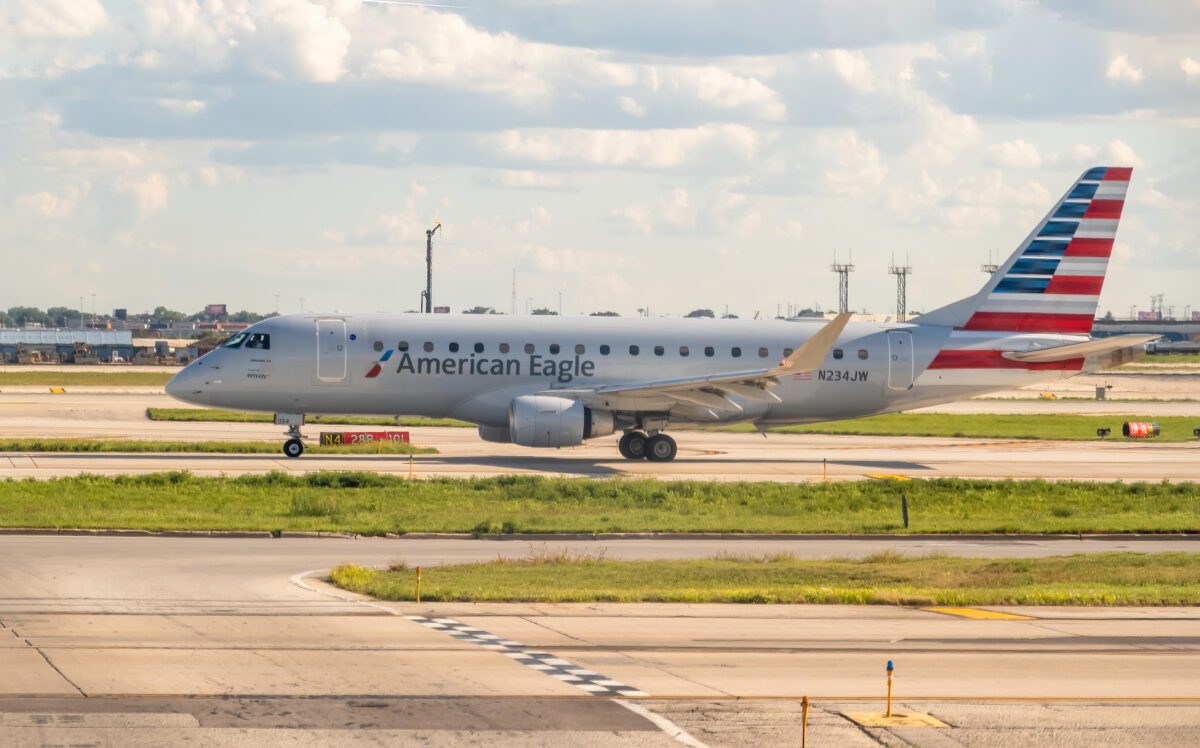
American’s return schedule calls for two daily round trips. One will be flown by Envoy Air with an Embraer E175, while the other will use a mainline Boeing 737-800. The combination restores the frequency American had built up before the disaster while placing substantially more seats on one of the two rotations.
Read our stories in your inbox
Two aviation newsletters. Zero fluff.
Two Daily Flights From Miami
The published schedule for AA3759 shows the Envoy-operated E175 leaving MIA at 8:46 a.m. and arriving at CCS at 12:15 p.m. The aircraft returns as AA3688, departing Caracas at 1 p.m. and reaching Miami at 4:31 p.m.
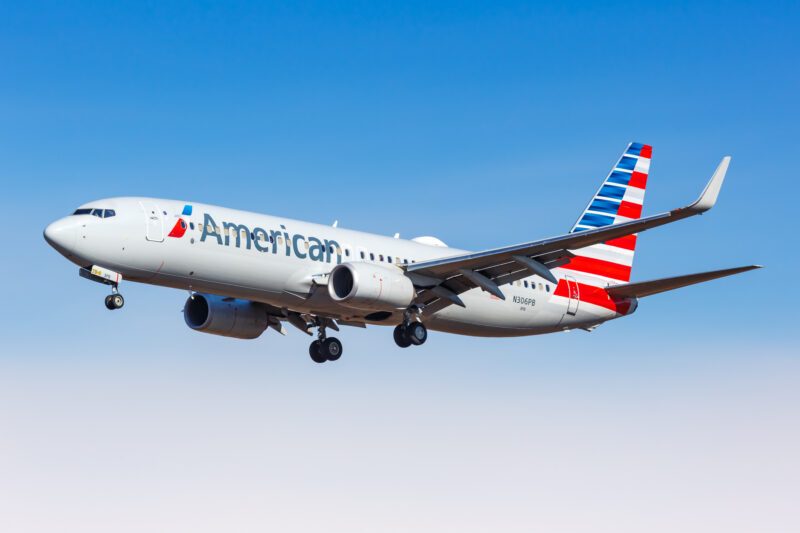
American’s mainline flight, AA2215, is scheduled to leave Miami at 10 a.m. and arrive in Caracas at 1:36 p.m. The return, AA2216, departs at 2:40 p.m. and arrives at MIA at 6:13 p.m. All times are local; Miami and Caracas are both on UTC-4 during September.
The two aircraft provide different capacity levels. The route-specific schedule lists 73 seats on the E175, including 12 in First and 61 across the economy cabins. The 737-800 carries 172 passengers, with 16 First Class seats and 156 economy seats.
That produces 245 seats in each direction per day, or 1,715 weekly seats each way. The 737 accounts for about 70% of the route’s scheduled capacity, allowing American to add volume without committing two mainline aircraft to Caracas each day.
American’s fleet specifications show both types as two-class aircraft. Its 737-800 has 16 First Class seats, 24 Main Cabin Extra seats and 132 standard Main Cabin seats. The E175 is well suited to the thinner of the two frequencies: its four-abreast cabin preserves a premium section while limiting the number of seats American must fill outside the strongest departure period.
Earthquakes Interrupted a Newly Restored Route
The suspension came less than two months after American had re-established scheduled service between the United States and Venezuela. The carrier launched its first post-suspension Miami-Caracas flight on April 30, ending a seven-year absence from the Venezuelan market.
The U.S. Department of Transportation described that April flight as the first commercial service between the two countries in seven years. American initially returned with one daily Envoy E175 rotation before expanding the market to as many as two daily flights.
That rebuilding effort stopped when magnitude 7.2 and 7.5 earthquakes struck northern Venezuela within seconds of each other on June 24. The U.S. Geological Survey placed both earthquakes west of Caracas and documented landslide damage around Catia La Mar, Playa Grande and the coastal mountains above La Guaira.
The Pan American Health Organization said the disaster caused widespread damage to homes, health facilities, essential services and transport infrastructure. Its earthquake response portal estimates that more than 700,000 people lived in municipalities exposed to the highest seismic intensity.
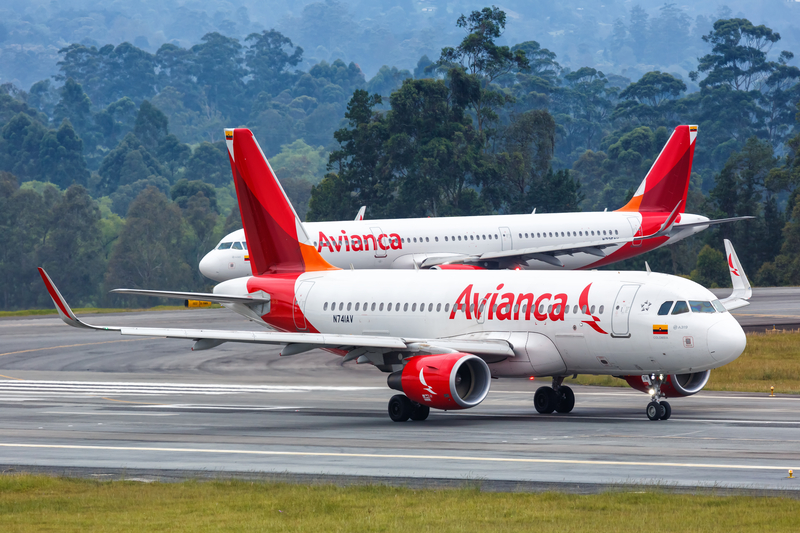
Avianca Shifts Venezuela Lifeline To Valencia As Caracas Airport Disruption Continues
American suspended its scheduled CCS operation after the airport closed. The airline initially expected a short interruption, saying in late June that it intended to return once commercial operations could restart. The eventual September date extended that absence to more than two months.
American Maintained a Relief Role
Although scheduled passenger flights remained suspended, American operated a special relief flight from Miami to Caracas. The airline said the Boeing 737 carried more than 9,000 pounds of water, food, baby formula, diapers, hygiene products and other supplies.
In its account of the relief operation, American said it had capped fares on direct CCS services and introduced flexible rebooking, cancellation and refund arrangements for affected passengers.
The disruption interrupted one of American’s most significant recent Latin American restorations. Caracas was the airline’s first South American destination when service began in 1987, and American later became the largest U.S. airline serving Venezuela before withdrawing in 2019.
Its April 2026 return therefore carried importance beyond a single route. The service reconnected a large Venezuelan community in South Florida with nonstop U.S. flights and gave passengers beyond Miami access through American’s principal Latin American gateway.
Bottom Line
The two-frequency restart gives American more than a symbolic presence in Caracas. Using a 172-seat 737-800 alongside the smaller E175 lets the airline restore meaningful capacity while retaining flexibility if demand or operating conditions change. The split also separates the operation between American mainline and Envoy rather than relying entirely on the regional subsidiary that reopened the market in April.
Miami is the clear beneficiary. Both Caracas departures leave during the morning, while the return flights reach Florida in the late afternoon and early evening, positioning the route to draw on American’s connecting network as well as South Florida’s local market. That structure is more useful commercially than a token daily flight and indicates that American sees Caracas as part of its wider MIA schedule rather than an isolated diplomatic restoration.
The immediate test will be operational consistency at CCS after a prolonged disaster-related interruption. If the twice-daily schedule holds, attention will turn to whether American proceeds with further Venezuelan growth and whether other U.S. carriers follow. For now, the September 3 return re-establishes American as the principal nonstop operator between Venezuela and the United States.
Keep reading FlyMag
Get the Daily Brief in the morning or the Route Watch weekly recap on Fridays. Or both.