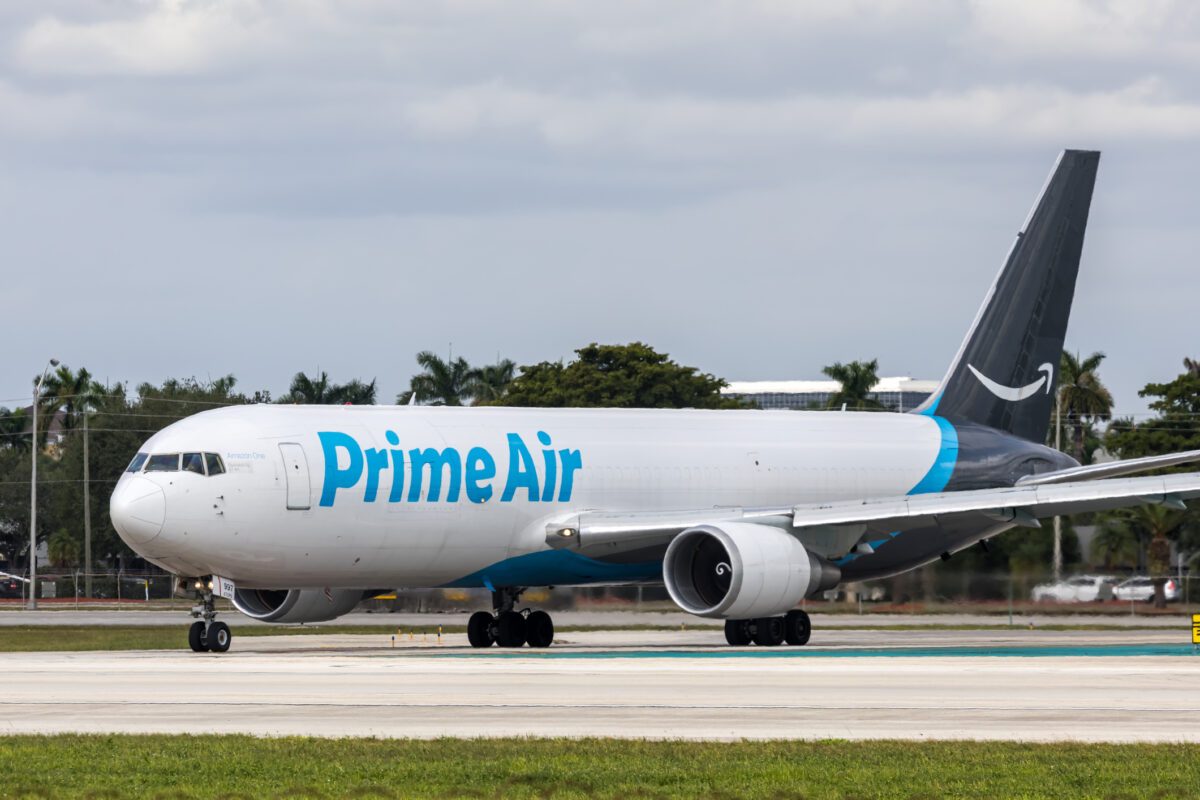
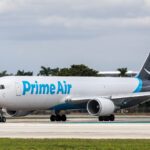
Five people were killed and five others injured after an Amazon Air-branded Boeing 767-300 freighter overran Runway 30 at Miami International Airport (MIA) on Sunday, September 6.
The aircraft, operating as 21 Air Flight 7598 from San Juan (SJU), continued beyond the airport’s operational boundary and struck multiple vehicles before coming to rest in a field northwest of the airfield. A fire developed after the overrun, sending a column of black smoke above the airport.
Miami-Dade County officials said three of the injured were in critical condition. Authorities had not established Sunday evening whether the fatalities were aboard the aircraft or in vehicles on the ground.
Read our stories in your inbox
Two aviation newsletters. Zero fluff.
The Federal Aviation Administration identified the flight as a 21 Air-operated Boeing 767-300 cargo aircraft that had departed from Luis Muñoz Marín Airport in San Juan. The agency placed the landing at approximately 2 p.m. local time and said it would investigate.
Freighter Crossed the Airport Boundary
Miami-Dade County Sheriff Rosie Cordero-Stutz said the aircraft overran Runway 30 at approximately 1:58 p.m. and came to rest in a field adjacent to the airport. Runway 30 is MIA’s northwest-facing diagonal runway, paired with Runway 12.
Miami-Dade Fire Rescue received the first report at 1:55 p.m. More than 60 units and approximately 200 personnel responded, finding the freighter beyond the airport boundary with heavy flames and smoke visible.
Firefighters used foam from specialized airport firefighting vehicles against what the department described as a complex engine-compartment fire. Technical rescue personnel extricated one person trapped beneath a vehicle, while hazardous-materials teams shut down an aircraft engine and worked to contain a fuel leak. Five patients were transported to hospitals.
The accident initially closed every runway and taxiway at MIA. An FAA traffic-management advisory shows a ground stop beginning at 1:43 p.m. and initially scheduled to remain in place until 4:30 p.m.
At 2:38 p.m., the FAA calculated more than 3,000 minutes of aggregate delay, with a maximum individual delay of 141 minutes. The agency told operators to expect a low-rate ground-delay program when the airport reopened, reflecting the reduced airfield capacity and the need to protect the emergency scene.
Footage of the plane crash from earlier today | #ONLYinDADE pic.twitter.com/iGoOtnd6cD
— ONLY in DADE (@ONLYinDADE) September 6, 2026
Daily San Juan-Miami Cargo Flight
Flight 7598 was a regular daytime cargo sector between Puerto Rico and South Florida. The schedule published by 21 Air lists a daily 11:40 a.m. Atlantic Standard Time departure from SJU, arriving at MIA at 2:36 p.m. Eastern time.
The route links Amazon’s Puerto Rico operation with one of the largest international freight gateways in the United States. MIA’s cargo infrastructure is concentrated around the northern, western and northeastern portions of the airfield, including areas beside the diagonal runway.
21 Air has an operations center at MIA and is included by the airport among its U.S. all-cargo carriers. The carrier operates Boeing 767 freighters on scheduled and charter missions, with a network that includes Miami, San Juan, Cincinnati, Baltimore, Bogotá and Quito.
Although the airplane carried Amazon Air colors and operated within Amazon’s logistics network, 21 Air was the certificated airline operating the flight and supplying the crew. Amazon confirmed that distinction in its initial statement, saying it was working with local authorities and placing priority on the care of those affected.
Aircraft Identified as N1997A
The aircraft was identified as N1997A, a converted Boeing 767-33A freighter. The FAA aircraft registry records manufacturer serial number 27310 as a 1994-built airframe powered by General Electric CF6-80C2B6F engines.
The airplane began life as a passenger 767-300ER before receiving a main-deck cargo door, reinforced floor and freight-handling system during conversion. That process has supplied a large share of the 767 freighters used by express carriers and e-commerce networks, allowing passenger aircraft to continue in service on medium- and long-range cargo sectors.
21 Air describes the Boeing 767-300 converted freighter as a 55-ton-payload aircraft suited to time-critical schedules. Its combination of wide-body container capacity, twin-engine economics and established maintenance support has made the type a central platform for overnight parcel networks.
N1997A’s age alone does not indicate its mechanical condition. Transport-category freighters remain subject to continuing airworthiness programs, scheduled structural inspections and maintenance requirements based on cycles, flight hours and calendar limits.
Investigation Begins
The FAA’s announcement did not identify a cause for the overrun. Investigators will document the aircraft, runway and debris field before the wreckage is moved, while operational records and recorded data will establish the sequence from touchdown through the aircraft’s departure from the paved surface.
The location of the wreckage beyond the airport boundary also makes the inquiry broader than an airfield-only event. Authorities must account for the vehicles struck, the post-accident fire, the fuel release and the emergency access required around an active international airport.
MIA is a major passenger hub but also a specialized cargo gateway, particularly for freight moving between the United States, Latin America and the Caribbean. The airport’s cargo carrier directory includes 21 Air alongside operators such as Amerijet, Atlas Air, FedEx, UPS, LATAM Cargo and Avianca Cargo.
The airport’s role increases the operational impact of losing runway or taxiway capacity. Passenger banks, freighter arrivals and time-sensitive warehouse transfers all compete for recovery slots once traffic resumes, leaving disruption well beyond the immediate closure period.
Bottom Line
The accident puts the operating structure behind Amazon Air into sharp focus. The aircraft’s branding identifies the logistics customer, but responsibility for flight operations rests with the contracted air carrier. For investigators, regulators and the industry, 21 Air’s procedures, training, maintenance oversight and operational control will matter more than the name painted on the fuselage.
MIA now faces two parallel tasks: preserving a complex accident scene outside the normal airfield boundary and restoring capacity at a cargo gateway built around tightly timed connections. The pace of aircraft recovery, runway access and roadway repairs will determine how quickly the airport can clear the operational backlog.
The next material information should come from investigators after they verify the registration, crew details, recorder recovery and initial damage evidence. Until then, the confirmed sequence remains limited but serious: a 767 freighter landed on Runway 30, continued beyond the airport boundary, struck vehicles and caught fire, with fatal consequences.
Keep reading FlyMag
Get the Daily Brief in the morning or the Route Watch weekly recap on Fridays. Or both.