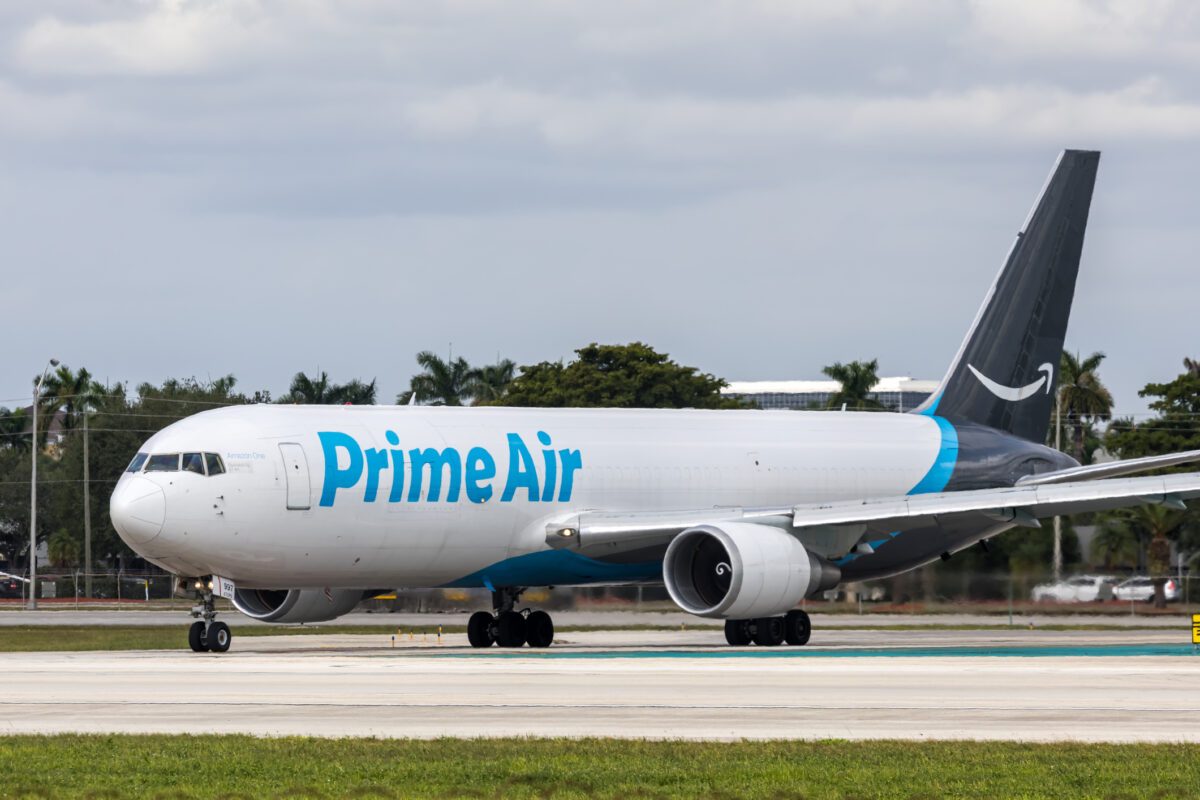
Amazon has paused its cargo operations with 21 Air following the fatal runway overrun involving one of the carrier’s Boeing 767 freighters at Miami International Airport (MIA).
The company announced the decision on September 13, one week after 21 Air Flight 7598 overran Runway 30 while arriving from San Juan (SJU). In an update published by Amazon, spokesperson Kelly Nantel said the company had reviewed circumstances surrounding the accident while supporting the investigation and had decided to pause its operations with 21 Air.
Amazon did not give a timetable for restoring the relationship. The action concerns Amazon’s contracted flying with 21 Air, rather than a regulatory suspension announced by the Federal Aviation Administration.
Read our stories in your inbox
Two aviation newsletters. Zero fluff.
Five people were killed in the September 6 accident. Amazon said it would continue supporting those affected and cooperating with investigators.
Investigators Focus on the Final Approach
Flight 7598 was a Part 121 cargo service from SJU to MIA. The FAA identified the aircraft as a Boeing 767-300 cargo jet and said it overran the runway at about 2 p.m. local time.
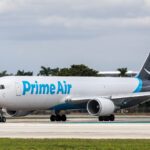
The National Transportation Safety Board has classified the event as an accident and opened investigation DCA26MA352. Its initial recorder update describes an approach that remained fast into the final stages, followed by a touchdown, an attempted go-around and a return to braking before the aircraft left the paved surface.
According to the cockpit voice recorder summary, one pilot cautioned that the aircraft was too fast when flaps 20 was selected about one minute and 42 seconds before the recording ended. The same pilot made further comments about excessive speed, without a consistent verbal response from the other crewmember.
The recorder subsequently captured automated sink-rate and terrain warnings. Flaps 30 was called for roughly 10 seconds before sounds consistent with touchdown. A pilot called for a go-around approximately 16 seconds after touchdown, according to the NTSB’s preliminary timing.
Flight data showed the nose and right main landing gear contacting the runway at a groundspeed of 158 knots. Braking began at 146 knots, while the left main gear touched down later at 134 knots.
At 120 knots, the brakes were released and the throttles advanced to a setting consistent with go-around thrust. Four seconds later, with the aircraft still traveling at 117 knots, the throttles returned to idle and the brakes were reapplied.
The 767 was moving at 96 knots when recorded acceleration values changed sharply, consistent with the aircraft leaving the runway environment or striking obstacles. The flight data recorder stopped with a final groundspeed of 65 knots. Investigators found no recorded indication that the speed brakes or thrust reversers had deployed.
Those findings are preliminary. The NTSB has not assigned a probable cause, and the recorder timelines had not been precisely synchronized when the agency issued its September 9 update.
Amazon’s Contracted Operating Model
Amazon Air controls its package network and aircraft capacity but relies on certificated airlines to operate much of the fleet. Amazon has used a combination of leased and company-owned aircraft, with third-party carriers supplying crews, maintenance and operational control.
When Amazon purchased its first Boeing 767s directly in 2021, it said the aircraft would continue to be flown by outside carriers. That structure gives Amazon access to dedicated lift without holding its own airline operating certificate, but it also makes operator selection and oversight central to the resilience of the network.
21 Air describes itself as a Greensboro, North Carolina-based Part 121 all-cargo airline offering aircraft, crew, maintenance and insurance services, as well as crew, maintenance and insurance contracts and charter operations. The carrier maintains an operations center in Miami and stations pilots and loadmasters there.
In its public response to the accident, 21 Air chief executive Keith Winters said the airline was cooperating with the NTSB, FAA and local authorities. The carrier has not announced that it is suspending its wider flying program.
Amazon’s pause therefore removes one customer’s work rather than automatically grounding 21 Air’s remaining fleet. The commercial effect will depend on how much of the airline’s capacity had been allocated to Amazon and whether aircraft used for that work can be reassigned.
A Core Express-Freight Aircraft
The accident aircraft, N1997A, was a Boeing 767-33A built in 1994 and powered by GE Aerospace CF6-80C2 engines, according to the FAA aircraft registry. It had been converted from passenger to freighter service.
The 767-300 conversion platform is widely used in express logistics because it combines main-deck container capacity with lower-hold volume and can serve both regional and medium-haul sectors. That makes it suitable for a route such as SJU-MIA while retaining enough payload-range capability for longer domestic and international assignments.
21 Air says its 767-300 converted freighters can carry approximately 55 tons. Boeing lists a maximum structural payload of about 57 tonnes and range of roughly 3,300 nautical miles for the broader 767-300 freighter family, although an individual aircraft’s operating capability depends on its conversion, weight specification and mission.
The type has become a foundation of dedicated e-commerce fleets because it occupies the capacity tier between narrowbody freighters and larger long-haul aircraft. Its broad operator base should give Amazon options for replacing the lift withdrawn from 21 Air, although substitutions may require moving aircraft, crews and maintenance support among gateways.
Investigation Remains at an Early Stage
The NTSB has recovered both recorders and reported good-quality cockpit audio covering more than two hours. The flight data recorder retained approximately 54 hours of information across more than 400 parameters.
A cockpit voice recorder group will review the complete accident-flight recording and prepare a transcript. Investigators are also expected to examine operational procedures, crew training, aircraft condition, landing performance and the decisions made during the approach, touchdown and attempted go-around.
Miami-Dade County said fire crews reached the scene in less than 30 seconds. Two of MIA’s four runways remained closed the following day while investigators worked at the site, disrupting operations at one of the country’s largest cargo gateways.
Amazon’s decision adds an immediate commercial consequence before the safety investigation reaches any findings. Whether 21 Air returns to the Amazon network will now depend on the investigative record and Amazon’s own review of the operator.
Bottom Line
Amazon gains operational flexibility from using several certificated carriers, and that structure should help it replace the capacity removed from 21 Air. The harder task is preserving aircraft and crew coverage at the right gateways without weakening schedule reliability as the parcel network moves toward its busiest quarter. The 767-300 is common in U.S. express freight, but spare aircraft with crews, maintenance coverage and compatible customer configurations are not interchangeable at short notice.
For 21 Air, the stakes extend beyond the loss of individual flights. Large e-commerce contracts provide steady utilization for widebody freighters, while a pause of undefined length leaves aircraft owners, employees and other customers waiting for clarity. The carrier can continue pursuing charter and third-party cargo work, but rebuilding Amazon’s confidence may depend on issues that will only become clear as the NTSB develops the operational record.
The next important milestones will be the NTSB’s preliminary report, any FAA action and Amazon’s decision on whether the pause becomes permanent. The recorder data already places the approach, touchdown sequence and rejected go-around at the center of the inquiry, but it does not yet explain why the flight continued or why the aircraft’s principal deceleration systems were not recorded as deployed.