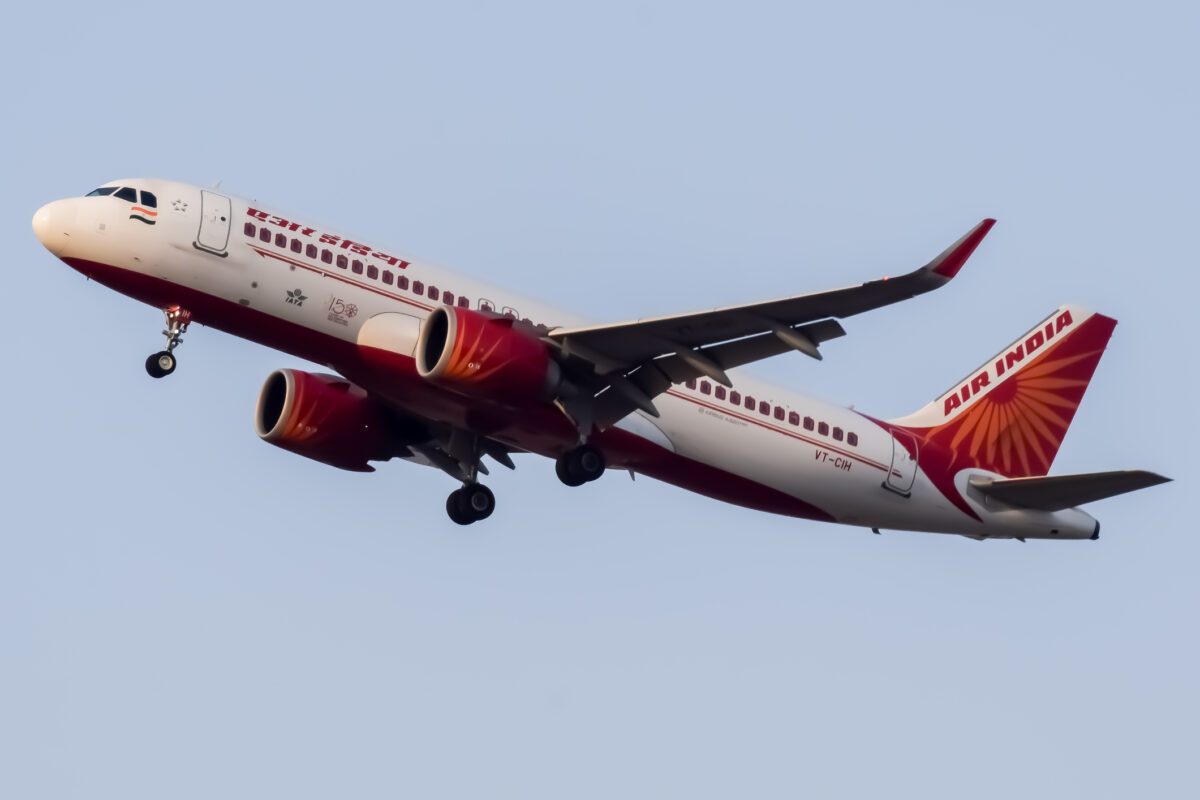
Indian investigators are examining an Air India Airbus A320 after the aircraft lost about 300 feet during a sudden in-flight event, injuring 24 passengers and crew before continuing to Delhi.

Flight AI2379 was operating from Phuket (HKT) to Delhi (DEL) on August 4, 2026, with 137 passengers, including three infants, and eight crew members. India’s Ministry of Civil Aviation identified the aircraft as VT-EXO and said the altitude loss occurred during cruise. The aircraft stabilized and landed safely at Delhi. The ministry subsequently classified the occurrence as a serious incident.
The government’s first statement said eight passengers and four cabin crew members were admitted to hospitals for evaluation and treatment. An August 11 update raised the total number of reported injuries to 20 passengers and four cabin crew. There were two pilots and six cabin crew aboard.
Read our stories in your inbox
Two aviation newsletters. Zero fluff.
AAIB Takes Control of the Investigation
The aircraft was moved to a hangar after landing, while its flight data recorder and cockpit voice recorder were secured for examination. The inquiry initially began under the Directorate General of Civil Aviation before the Aircraft Accident Investigation Bureau took responsibility.
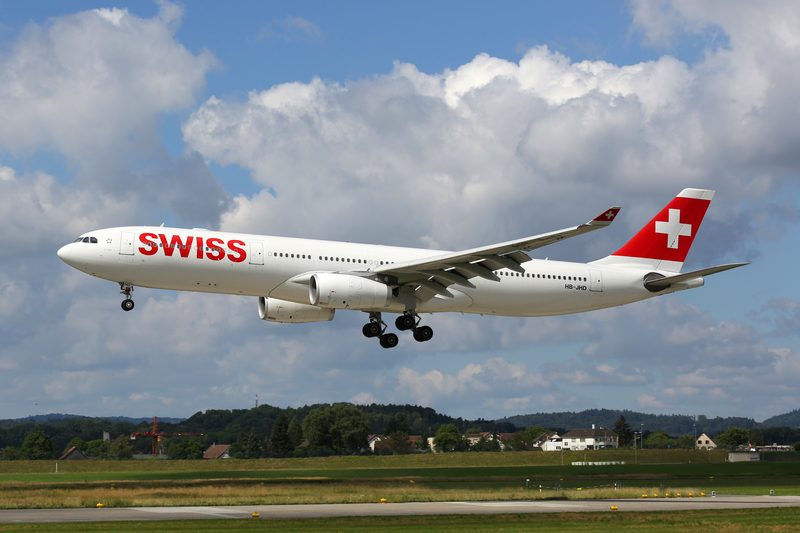
The AAIB has notified the International Civil Aviation Organization and the relevant states under the international framework for serious-incident investigations. France’s Bureau of Enquiry and Analysis for Civil Aviation Safety, representing the aircraft’s state of design and manufacture, is participating alongside Airbus technical representatives.
According to the AAIB’s public account of the investigation, the work covers the aircraft and its systems, recorded flight data, operational and maintenance records, medical evidence, human factors and interviews. Airbus is supplying technical information and design documentation.
The bureau has not issued a preliminary report or determined the cause. Its August 11 statement specifically cautioned against drawing conclusions from isolated technical information while evidence was still being collected and examined.
A320 Hydraulic Redundancy Will Be Central to the Technical Work
The A320’s primary flight controls use Airbus’ digital fly-by-wire architecture. Pilot and autopilot commands pass through flight-control computers, which then command hydraulically powered actuators connected to the aircraft’s control surfaces.
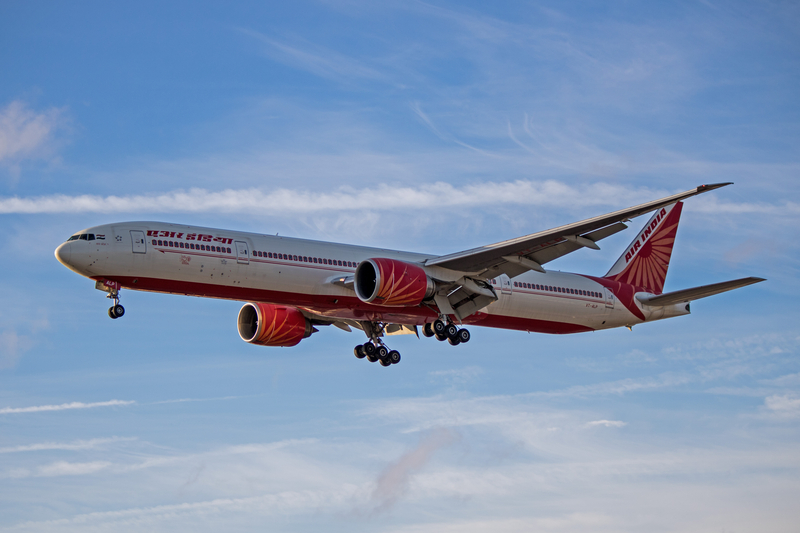
Airbus technical material describes three separate hydraulic circuits on the A320 family: Green, Yellow and Blue. Control-system users are divided between them so that the aircraft remains controllable following the loss of one system. The Green and Yellow systems normally receive pressure from engine-driven pumps, with a power transfer unit able to transfer hydraulic power between them without exchanging fluid. The Blue system normally uses an electric pump and has a ram air turbine as an emergency source.
That segregation is a fundamental part of the A320’s system design. It also explains why the investigators’ examination must extend beyond pumps and fluid quantity to pressure sensing, electrical supply, wiring, system logic and the recorded status seen by the flight-control computers. A sequence recorded as multiple low-pressure conditions does not, by itself, establish whether the initiating event was a physical pressure loss, an indication problem or another common factor.
Airbus has previously described the A320 family’s Green, Yellow and Blue circuits as “different and fully independent,” with flight-control functions distributed between them to retain control after a single-system failure. The manufacturer’s current A320 family material also notes that the type introduced full digital fly-by-wire controls to commercial service.
The AAIB’s evidence-led process will have to reconstruct the order of system messages and aircraft movement, compare those events with crew inputs, and determine which indications represented actual system conditions. Investigators will also examine the aircraft after the abrupt altitude change and review recent maintenance affecting relevant systems.
Air India Continues to Sell the Phuket Route
Air India uses the A320 family extensively on domestic and short-haul international sectors. Its upgraded A320neo cabin has 164 seats across three classes: eight in Business, 24 in Premium Economy and 132 in Economy. The airline markets the aircraft for regional flying, with its combination of single-aisle capacity and new-generation engine efficiency well suited to a sector of roughly five hours.
The airline’s A320neo fleet page lists a 40-inch pitch in Business, 32 inches in Premium Economy and 29 inches in Economy on the upgraded layout. Air India has been refitting older A320neos as part of a broader effort to standardize its narrowbody product, although cabin configurations have varied across the fleet.
Phuket–Delhi remains in Air India’s schedule. The carrier’s current route listing shows two nonstop flights on operating days and gives a scheduled duration of four hours and 55 minutes over 3,199 kilometers, or 1,988 miles.
Preliminary Findings Are Still Pending
The AAIB said it would publish preliminary findings within the period set by the applicable investigation rules. Until then, the confirmed sequence remains limited: VT-EXO lost approximately 300 feet during cruise, stabilized, continued to Delhi and landed safely, while 24 occupants were reported injured.
The investigation’s next public document should provide the first authoritative chronology drawn from the recorders, aircraft examination and maintenance evidence. That chronology will determine whether the event began with an aircraft-system malfunction, an external disturbance, or a combination of factors—and whether any corrective action is required beyond VT-EXO.
Bottom Line
The immediate operational question is whether the occurrence was confined to one aircraft or points to a component, maintenance or system-monitoring issue that could affect other A320-family operators. Airbus’ participation gives the AAIB direct access to design data and engineering support, but any wider fleet action would normally depend on a repeatable failure mechanism rather than a single set of recorded messages.
For Air India, the investigation carries particular weight because the A320 family is central to its domestic and regional network. A finding that requires additional inspections could affect aircraft availability even without a formal airworthiness directive, while confirmation of an isolated defect would sharply limit the operational consequences.
The AAIB’s preliminary report is now the document to watch. The most consequential details will be the exact timing of hydraulic indications, flight-control availability, crew commands and aircraft response, followed by the results of component and wiring inspections. Those findings will show whether the event challenges the aircraft’s redundancy assumptions or demonstrates the importance of identifying a single-aircraft fault before it becomes a fleet issue.
Keep reading FlyMag
Get the Daily Brief in the morning or the Route Watch weekly recap on Fridays. Or both.