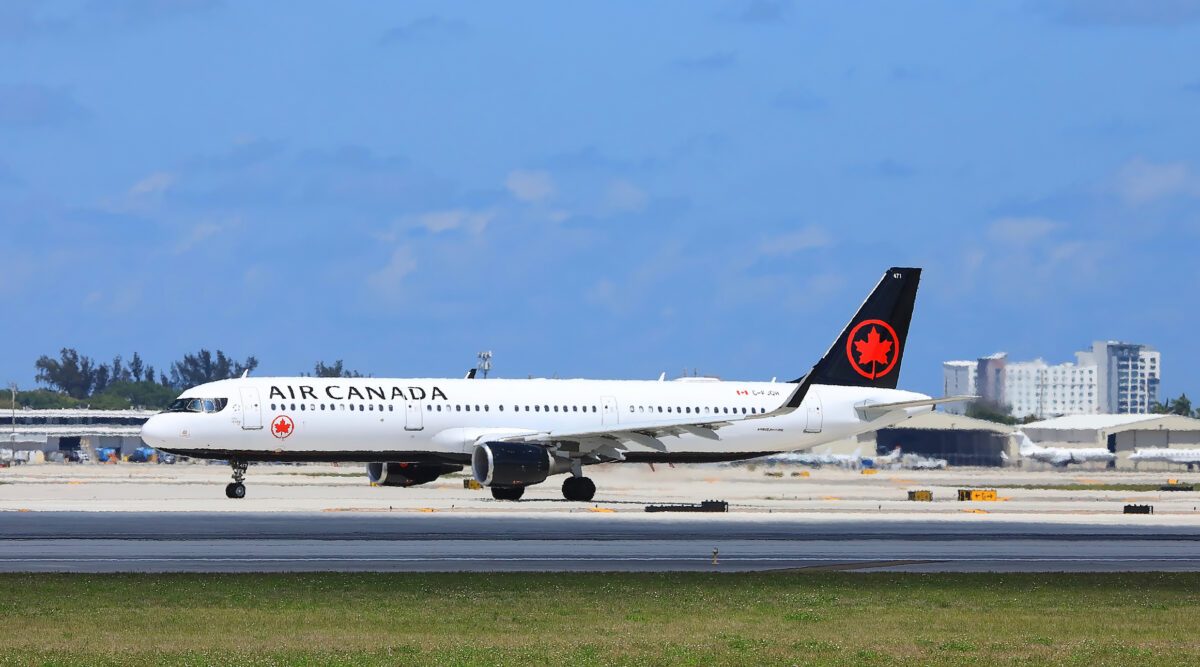
Air Canada has abandoned plans to place the Airbus A321XLR on one of its daily flights between Toronto Pearson (YYZ) and London Heathrow (LHR), keeping widebody capacity on the route through the end of the 2026 summer season.

Schedule records reviewed by FlyMag show that flight AC852 from Toronto, returning as AC855 from London, had been assigned the A321XLR from August 31 through October 23, 2026. The airline subsequently removed the type before the first planned departure.
The revised schedule uses the Boeing 777-200LR during September, followed by Boeing 787-8 and Boeing 787-9 Dreamliners in October. Air Canada continues to sell multiple daily flights through its Toronto–London booking page.
Read our stories in your inbox
Two aviation newsletters. Zero fluff.
The change is therefore an aircraft reassignment, not a route cancellation. Nor did the A321XLR fail in service on the route: no passenger flight between Toronto and Heathrow operated with the type under the discarded plan.
A Short-Lived Widebody Substitution
The original assignment stood out because YYZ–LHR is not the kind of thin, developing market usually associated with long-range narrowbody deployment. London is one of Air Canada’s largest international stations, while Toronto–Heathrow supports substantial local demand, connecting traffic and freight in both directions.
AC852 was only one of several daily Air Canada departures between the cities. That made a limited A321XLR deployment operationally plausible: the airline could test a smaller gauge on one rotation while retaining widebodies elsewhere in the schedule.
The capacity difference was still substantial. Air Canada’s A321XLR carries 182 passengers, comprising 14 Signature Class lie-flat seats and 168 Economy seats. The aircraft has no Premium Economy cabin. By contrast, the 777 and 787 aircraft returning to AC852 offer three cabins and significantly more total seats.
Restoring widebodies also preserves considerably more lower-deck freight capacity. Air Canada has not publicly attributed the equipment change to any single commercial factor, but the resulting schedule provides more passenger inventory, a separate Premium Economy product and greater cargo lift on every affected departure.

That combination carries particular weight in the current market. Air Canada’s second-quarter management report showed Atlantic passenger revenue rising 11% year over year even as capacity fell 2%. Atlantic cargo revenue increased 19% to C$106 million during the quarter.
Those figures do not explain an individual fleet assignment, but they show why reducing the gauge on a major Atlantic trunk route involves more than comparing fuel consumption per seat. A smaller aircraft must also compensate for the passenger and freight revenue displaced from the larger jet.
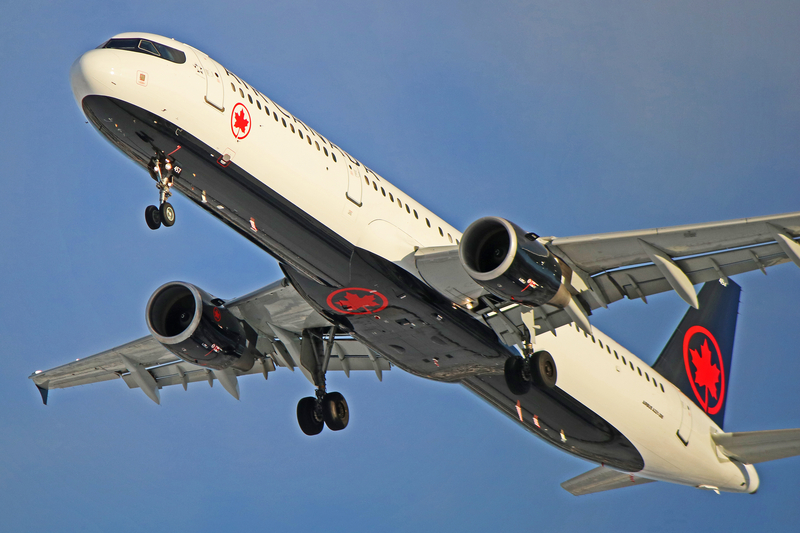
The A321XLR Remains Central to Air Canada’s Plans
The Heathrow revision does not represent a retreat from the A321XLR. Air Canada received its first aircraft on April 24 and introduced the type to scheduled passenger service on June 9 between Montréal and Toronto. Its first international flight followed from Montréal to Toulouse.
Air Canada is acquiring 30 A321XLRs, split evenly between leased aircraft and direct purchases from Airbus. Two had been delivered by June 30, according to the airline’s second-quarter filing, with nine expected in the operating fleet by the end of 2026 and 19 by the end of 2027.

The aircraft has the technical capability to operate Toronto–London without difficulty. Airbus gives the A321XLR a range of up to 4,700 nautical miles, well beyond the distance between YYZ and LHR. Air Canada projects that its version can burn up to 23% less fuel per seat than previous-generation widebodies on a transatlantic flight.
Its cabin also avoids several compromises found on earlier long-range narrowbodies. Signature Class uses a 1-1 layout with direct aisle access and fully flat seats. Economy has 4K OLED seatback screens, Bluetooth audio and larger overhead bins. The product was designed to make the aircraft viable on missions lasting well beyond a typical transcontinental flight.
Range and onboard product, however, do not determine whether a particular route is the best use of a scarce new aircraft. Air Canada has consistently presented the A321XLR primarily as a growth platform capable of opening routes that cannot support a widebody throughout the year.
Its network planners described that strategy before delivery, saying the type would support international growth and allow the airline to match capacity more closely with seasonal demand. Air Canada’s initial deployment plan emphasized Montréal services to Toulouse, Dublin, Edinburgh and Palma de Mallorca rather than the airline’s highest-volume European corridors.
Toronto Base Has Other Work for the XLR
Air Canada is building an A321XLR base at Toronto as deliveries increase. The airline has already identified routes where the aircraft’s capacity and range offer a clearer fit than they do on Heathrow.
Toronto–Manchester and Toronto–Copenhagen are scheduled to become year-round services in October 2026 using the A321XLR. Air Canada said those extensions were made possible by the new Toronto base when it announced its winter network.
The aircraft is also scheduled between Toronto and Tenerife during winter 2026-27. Those markets illustrate the XLR’s intended role more clearly: maintaining nonstop links across lower-demand periods, adding service where a widebody would be difficult to fill, and creating routes whose economics depend on a smaller long-range aircraft.
Heathrow presents the opposite problem. Air Canada does not need the A321XLR’s lower trip cost to establish a marginal nonstop market; it needs enough capacity to accommodate a dense mix of local passengers, connections and cargo. On such a route, the higher trip cost of a widebody can be supported by more seats, more cabin segmentation and more freight volume.
Bottom Line
Air Canada’s decision is a reminder that the A321XLR is not an automatic replacement for every widebody crossing the North Atlantic. Its strongest use case remains a route that benefits from long range but cannot consistently support 250 to 300 seats. Toronto–Heathrow can support that capacity, and Air Canada has enough daily frequency to sell several departure times without reducing one flight to 182 seats.
The more consequential test will come on Manchester, Copenhagen, Tenerife and similar markets from Toronto. Success there would let Air Canada extend seasons, maintain year-round links and add frequencies without committing a Dreamliner. That is where the XLR can expand the network rather than merely redistribute capacity on an established trunk route.
As the fleet grows from its initial handful of aircraft, assignments will remain fluid. The routes that keep the A321XLR will reveal more about Air Canada’s long-term strategy than the high-profile routes on which it briefly appears in advance schedules.
Keep reading FlyMag
Get the Daily Brief in the morning or the Route Watch weekly recap on Fridays. Or both.