Ryanair will add five routes to its Swedish network for the 2026-27 winter season, supported by another aircraft at Stockholm Arlanda (ARN).
The airline’s winter schedule announcement lists new winter services from ARN to Rabat (RBA), Warsaw Modlin (WMI) and Wrocław (WRO). It will also add Gothenburg (GOT)-Budapest (BUD) and retain Malmö (MMX)-London Stansted (STN) in its winter program.
Ryanair plans to operate 43 routes from six Swedish airports and carry 4.6 million passengers annually, a 16% increase by the airline’s measure. Its Swedish base fleet will total eight aircraft, one more than in winter 2025, with the additional jet assigned to ARN.
Read our stories in your inbox
Two aviation newsletters. Zero fluff.
Arlanda Gains Three Winter Routes
The three ARN additions cover distinct traffic flows. Warsaw and Wrocław reinforce Ryanair’s substantial Sweden-Poland network, while Rabat gives the airline another longer north-south sector linking Scandinavia with North Africa.
The Warsaw service will use WMI, Ryanair’s principal base in the Polish capital region. The carrier’s booking system shows ARN-WMI service, and Ryanair is separately expanding at Modlin under a winter program that will place eight aircraft at the airport.
Ryanair describes Warsaw as a new winter route from Stockholm, although the ARN-WMI market is not new to the airline. It appeared in Ryanair’s original Arlanda base network and was operating before the winter timetable began. In this context, the announcement identifies routes being added to or retained in the winter program rather than five markets receiving their first Ryanair flight.
Wrocław likewise returns a link that Ryanair has operated in previous Arlanda schedules. The Polish airport is receiving two more based aircraft for winter 2026, taking its Ryanair base to nine jets. The carrier expects its Wrocław winter capacity to reach 1.3 million seats, 35% more than in winter 2025.
Rabat is the most distinctive addition. Ryanair is opening a base at RBA, its fifth in Morocco, as part of a 156-route Moroccan winter operation. Stockholm is among 17 new routes in that program. The Rabat base gives Ryanair an aircraft and crew platform at the southern end of the route rather than relying entirely on ARN-based capacity.
Budapest and London Join Regional Winter Program
Outside Stockholm, Ryanair will connect Gothenburg with Budapest and include its Malmö-Stansted route in the winter schedule.
Budapest adds another Central European market to the two-aircraft Ryanair base at GOT. The airport also gained Malta and Porto in Ryanair’s summer 2026 expansion, reflecting a strategy of broadening Gothenburg’s international network with a mixture of leisure destinations and large European city markets.
Malmö-London is a seasonal extension rather than an entirely new route. Swedavia announced the service in October 2025, with twice-weekly MMX-STN flights beginning April 1, 2026. Keeping it through winter gives southern Sweden a year-round Ryanair link to its largest London base.
The five additions sit within a narrower but more heavily resourced winter network. Ryanair announced 48 Swedish routes and seven based aircraft for winter 2025. For winter 2026, the route count falls to 43, but the base fleet rises to eight and the airline is forecasting higher traffic. That points to capacity being concentrated on fewer markets through stronger frequencies, longer seasonal operation or both.
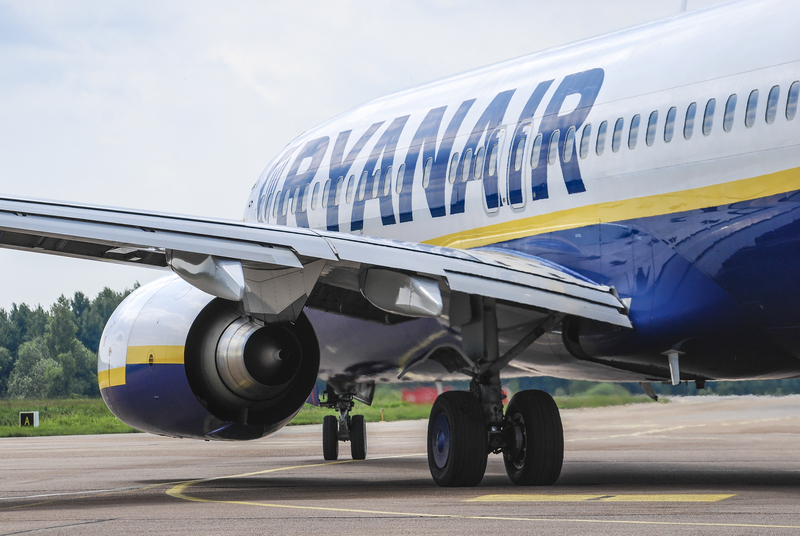
Another Boeing 737 for Stockholm
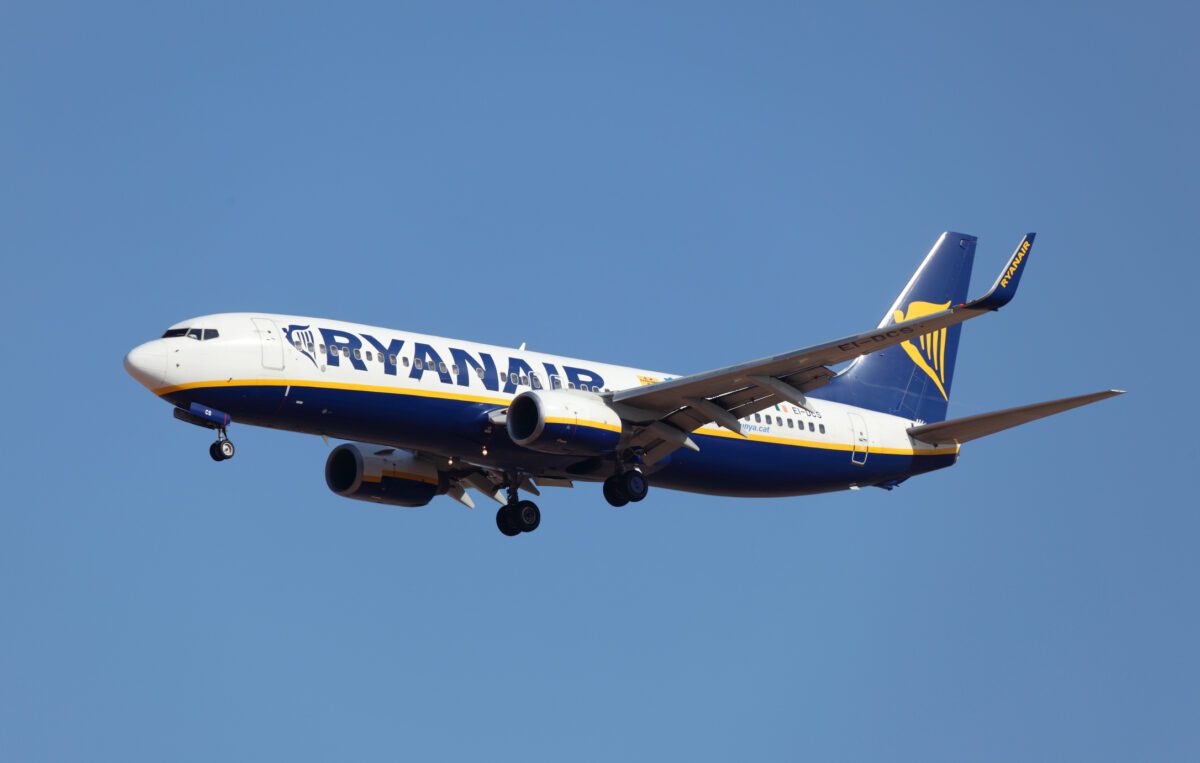
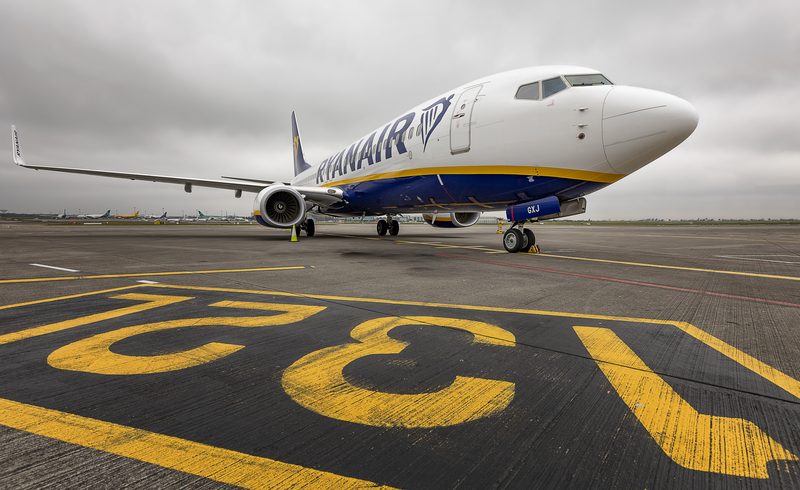
Ryanair has not separated the new Stockholm aircraft from the wider Boeing 737 fleet in its announcement. The group’s short- and medium-haul operation is built around the 189-seat Boeing 737-800 and the 197-seat Boeing 737-8200.
The higher-density 737-8200 carries eight more passengers than the 737-800. Ryanair says the type uses 16% less fuel while providing 4% more seats, giving the airline lower unit costs on both short sectors such as Stockholm-Warsaw and longer flights such as Stockholm-Rabat. As of September 2, 2026, the group’s fleet included 210 Boeing 737-8200s and 411 Boeing 737-800s.
The extra ARN aircraft restores the carrier’s winter base strength to the eight-aircraft level already planned for summer 2026. Ryanair’s summer schedule placed six aircraft at ARN and two at GOT, operating 83 routes during the broader peak-season program.
Costs Remain Central to Ryanair’s Sweden Strategy
Ryanair linked its recent Swedish expansion to the government’s abolition of the country’s aviation tax from July 2025. The airline has added three based aircraft and 760,000 annual passengers across six Swedish airports since that policy change, according to its latest figures.
The carrier is simultaneously pressing the government and airport operator Swedavia over access costs. Ryanair said the national aviation security fee is scheduled to rise 67% in March 2027 and criticized increases in Swedavia’s airport charges.
Swedavia’s 2026 charging decision raised its average charge level by SEK15.30 per departing passenger, to SEK185.60. It also introduced new incentives and differentiated charges, including a lower passenger fee for ARN’s satellite terminal and a flight-volume incentive across its airport network.
Ryanair says it wants to double Swedish traffic to eight million passengers annually by 2030 and add five more based aircraft. It has made further growth conditional on lower airport and security costs as it allocates incoming aircraft among competing European markets.
Bottom Line
The additional ARN aircraft is more consequential than the headline route count. A permanently based jet supports early departures, late arrivals and higher daily utilization, giving Ryanair more control over schedule design than routes flown only by aircraft based at the opposite end. Stockholm passengers gain a more varied winter network, while Rabat, Warsaw and Wrocław receive additional inbound access from Sweden’s largest metropolitan market.
The program also shows Ryanair shifting from rapid network proliferation toward denser use of its Swedish bases. Operating fewer winter routes than a year earlier while adding an aircraft suggests that frequency and year-round continuity are taking priority over maintaining every thin seasonal market. Malmö-Stansted is a clear example: carrying a summer launch into winter can make the route more useful without requiring a new base commitment at MMX.
The next decision point will be summer 2027, when Ryanair must determine where to place further Boeing 737 capacity. Sweden’s removal of its aviation tax produced the response the government sought, but the dispute over airport and security charges leaves the next phase less certain. Traffic performance on Rabat and the regional winter extensions will matter, but the cost of operating from Swedavia airports may have more influence over whether Sweden receives the next aircraft.
Keep reading FlyMag
Get the Daily Brief in the morning or the Route Watch weekly recap on Fridays. Or both.