Delta’s 10-Route Long-Haul Expansion Puts Its Widebody Fleet to Work
Delta Air Lines is expanding its intercontinental network in 2026 with a carefully balanced mix of major business markets, long-range strategic routes, and lower-frequency leisure destinations. The result is 10 new or returning long-haul routes linking 15 airports across Europe, Asia, and the Middle East.

Cirium Diio schedules cited in the original network analysis show Delta averaging approximately 113 daily long-haul departures from the United States between August and December 2026. That represents a 4% year-over-year increase, with 118 routes appearing in the carrier’s published schedule.
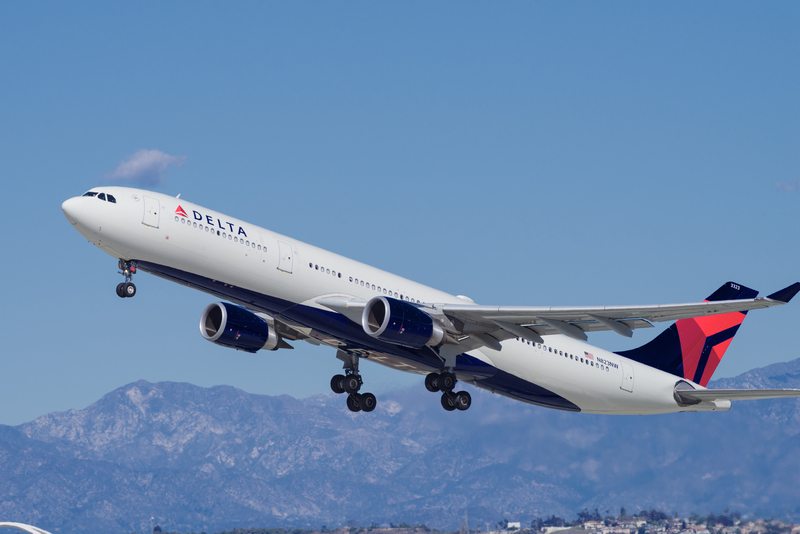
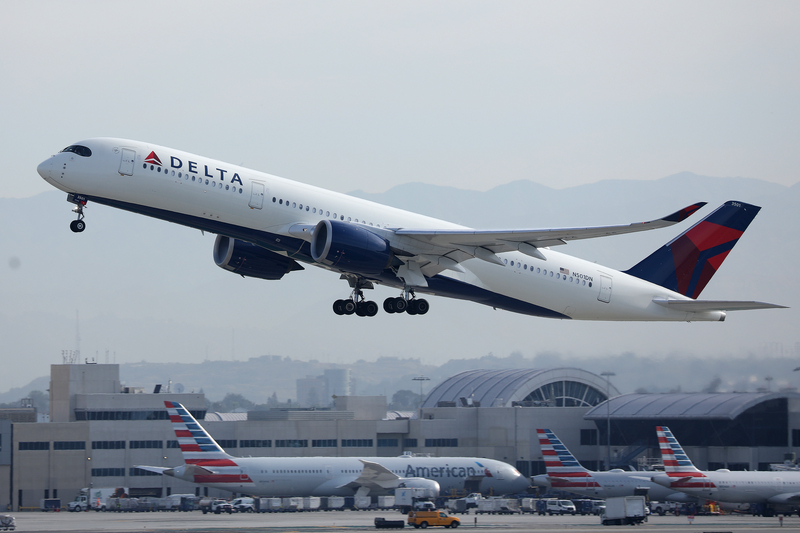
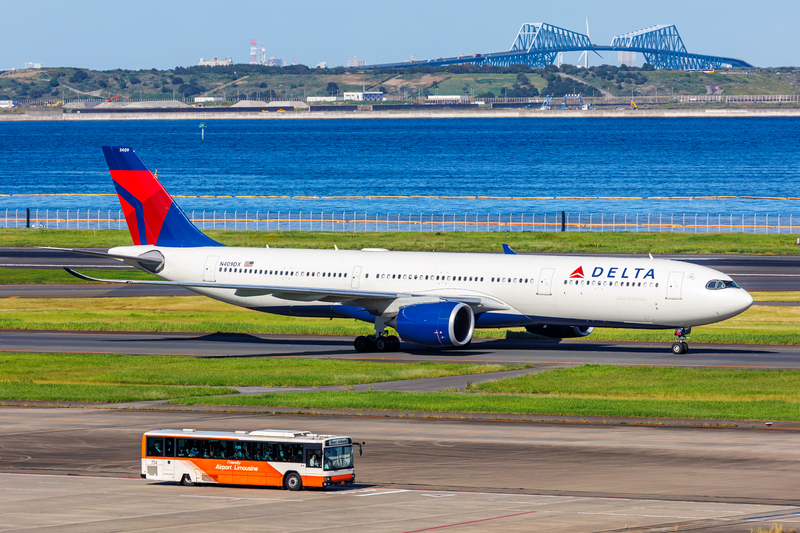
The headline numbers tell only part of the story. Delta is using three distinct widebody strategies: Airbus A350-900s for its longest and most commercially important additions, Airbus A330s for larger transatlantic markets, and Boeing 767-300ERs to test thinner destinations without adding excessive capacity.
Delta has separately described summer 2026 as its largest transatlantic schedule to date, with more than 650 weekly flights to nearly 30 European destinations.
ID 150771935 © Colicaranica | Dreamstime.com
Delta’s 10 New and Returning Long-Haul Routes
| Route | 2026 Start or Restart | Published Frequency | Aircraft |
|---|---|---|---|
| Boston Logan International Airport (BOS)–Adolfo Suárez Madrid-Barajas Airport (MAD) | May 6 | Daily | Airbus A330-900neo |
| Seattle-Tacoma International Airport (SEA)–Rome Fiumicino Airport (FCO) | May 6 | Four weekly | Airbus A330-900neo |
| Seattle-Tacoma International Airport (SEA)–Barcelona-El Prat Airport (BCN) | May 7 | Three weekly | Airbus A330-900neo |
| Boston Logan International Airport (BOS)–Nice Côte d’Azur Airport (NCE) | May 16 | Three weekly | Airbus A330-300 |
| John F. Kennedy International Airport (JFK)–Olbia Costa Smeralda Airport (OLB) | May 20 | Four weekly | Boeing 767-300ER |
| John F. Kennedy International Airport (JFK)–Porto Airport (OPO) | May 21 | Up to daily | Boeing 767-300ER |
| Los Angeles International Airport (LAX)–Hong Kong International Airport (HKG) | June 6 | Daily | Airbus A350-900 |
| John F. Kennedy International Airport (JFK)–Malta International Airport (MLA) | June 7 | Three weekly | Boeing 767-300ER |
| Hartsfield-Jackson Atlanta International Airport (ATL)–King Khalid International Airport (RUH) | October 23 | Daily initially, then three weekly | Airbus A350-900 |
| Hartsfield-Jackson Atlanta International Airport (ATL)–Ben Gurion International Airport (TLV) | Planned for December 19 | Three weekly | Airbus A350-900 |
Delta’s official announcements and published May schedule confirm the start dates and initial operating patterns for the seven European additions. One noteworthy change involves Boston Logan International Airport (BOS)–Nice Côte d’Azur Airport (NCE). Delta originally announced the route with the newer A330-900neo, but the service entered operation with a 282-seat A330-300.
Europe Provides the Volume, but Niche Markets Deliver the Intrigue
Seven of Delta’s 10 additions are European routes, reflecting the continued strength of premium and leisure demand across the Atlantic. The expansion also illustrates how Delta is moving beyond the largest capital-city markets to pursue destinations that would once have been considered too specialized for nonstop U.S. service.
The most historically significant addition is John F. Kennedy International Airport (JFK)–Olbia Costa Smeralda Airport (OLB). The four-times-weekly flight gives Sardinia its first scheduled nonstop passenger service from the United States and establishes Olbia Costa Smeralda Airport (OLB) as a transatlantic gateway.
Delta operates the route with a Boeing 767-300ER, which provides a more manageable number of seats than an A330 or A350. That matters in a seasonal market driven heavily by luxury tourism and travelers visiting Sardinia’s Costa Smeralda.
Olbia Costa Smeralda Airport (OLB) also becomes Delta’s sixth Italian destination, joining Rome Fiumicino Airport (FCO), Milan Malpensa Airport (MXP), Venice Marco Polo Airport (VCE), Naples International Airport (NAP), and Catania Fontanarossa Airport (CTA). Delta describes itself as the largest U.S. airline serving Italy.
John F. Kennedy International Airport (JFK)–Malta International Airport (MLA) follows a similar formula. The three-times-weekly Boeing 767-300ER service gives Delta access to a destination with strong leisure appeal, limited nonstop competition, and substantial connecting potential through its New York hub.
The new flights to Olbia and Malta are not traditional high-volume transatlantic routes. Instead, they represent disciplined capacity deployment: operate a smaller widebody several times per week, concentrate demand onto specific departure days, and charge a premium for the convenience of avoiding a European connection.
Porto Airport (OPO) is a broader opportunity. Delta’s John F. Kennedy International Airport (JFK)–Porto Airport (OPO) service operates up to daily with a Boeing 767-300ER. It complements the carrier’s established service to Lisbon Airport (LIS) and addresses growing demand for northern Portugal, the Douro Valley, and Portugal’s increasingly important inbound tourism market.
Boston Gains Two More European Markets
Boston Logan International Airport (BOS) is one of the clearest beneficiaries of Delta’s 2026 expansion.
Daily service to Adolfo Suárez Madrid-Barajas Airport (MAD) is operated by the Airbus A330-900neo, giving the route Delta One suites, Delta Premium Select, Delta Comfort, and Main Cabin seating. The A330-900neo is well suited to a market such as Boston–Madrid: it offers a competitive premium cabin and modern operating economics without the capacity of the larger A350-900.
The three-times-weekly flight to Nice Côte d’Azur Airport (NCE) is more leisure-oriented. It operates on Tuesdays, Thursdays, and Saturdays, allowing Delta to concentrate demand while serving the French Riviera during the peak summer season.
At the height of the summer schedule, Delta offers 12 European destinations from Boston Logan International Airport (BOS). Those destinations include Amsterdam Airport Schiphol (AMS), Athens International Airport (ATH), Barcelona-El Prat Airport (BCN), Dublin Airport (DUB), Edinburgh Airport (EDI), Lisbon Airport (LIS), London Heathrow Airport (LHR), Madrid-Barajas Airport (MAD), Milan Malpensa Airport (MXP), Nice Côte d’Azur Airport (NCE), Paris-Charles de Gaulle Airport (CDG), and Rome Fiumicino Airport (FCO).
Cirium’s August-through-December comparison shows Delta’s Boston long-haul departures increasing by approximately 15% from the corresponding 2025 period. That growth allows Boston Logan International Airport (BOS) to move ahead of both Minneapolis-St. Paul International Airport (MSP) and Seattle-Tacoma International Airport (SEA) in Delta’s long-haul departure ranking for the period.
Boston’s value to Delta extends beyond local demand. The airport provides access to a large corporate travel base, affluent leisure passengers, major universities, and substantial transatlantic visiting-friends-and-relatives traffic. It also gives Delta another East Coast gateway through which it can distribute international capacity instead of placing nearly all of that growth at John F. Kennedy International Airport (JFK).
ID 331014192 © Boarding1now | Dreamstime.com
Seattle Receives Two More A330neo Routes
Seattle-Tacoma International Airport (SEA) gained two European routes within 24 hours of each other.
Four-times-weekly service to Rome Fiumicino Airport (FCO) began on May 6, followed by three-times-weekly service to Barcelona-El Prat Airport (BCN) on May 7. Both operate with Airbus A330-900neos.
The additions strengthen Delta’s ability to connect passengers from the Pacific Northwest to southern Europe without routing them through an East Coast hub. They also reinforce Seattle-Tacoma International Airport (SEA) as a long-haul gateway at a time when competition for international passengers in Seattle is intensifying.
Using the same aircraft on both routes provides operational advantages. Delta can support the flights with a common pilot group, maintenance program, cabin configuration, and spare-aircraft strategy. The combined seven weekly frequencies also amount to approximately one daily aircraft movement to southern Europe, even though the capacity is split between Rome Fiumicino Airport (FCO) and Barcelona-El Prat Airport (BCN).
Los Angeles-Hong Kong Restores a Major Transpacific Link
The most strategically important Asian addition is Delta’s daily flight from Los Angeles International Airport (LAX) to Hong Kong International Airport (HKG).
Launched on June 6, the route is operated with an Airbus A350-900, Delta’s flagship long-haul aircraft. The A350 provides Delta One suites, Premium Select, Comfort, and Main Cabin seating, while also offering the range and cargo capability required for a lengthy transpacific operation.
Delta says the aircraft can carry more than 20 tons of cargo per flight on the Hong Kong route. That is commercially important because Hong Kong International Airport (HKG) is not simply a passenger market. It is one of the world’s major airfreight gateways, allowing Delta to supplement passenger revenue with high-value cargo moving between Asia and North America.
The Los Angeles–Hong Kong launch also benefits from more than 30 potential one-stop connections over Los Angeles International Airport (LAX). Delta can feed the service from cities across the United States while distributing passengers in Asia through its partnership with Korean Air.
According to the Cirium comparison, Delta’s long-haul departures from Los Angeles International Airport (LAX) are approximately 41% higher than during the same August-through-December period in 2025, making LAX the fastest-growing long-haul airport in Delta’s network.
Hong Kong International Airport (HKG) joins Delta’s existing long-haul destinations from Los Angeles International Airport (LAX), including Auckland Airport (AKL), Brisbane Airport (BNE), Melbourne Airport (MEL), Paris-Charles de Gaulle Airport (CDG), Shanghai Pudong International Airport (PVG), Sydney Airport (SYD), and Tokyo Haneda Airport (HND).
Delta’s wider Los Angeles operation now reaches approximately 151 departures on peak days to 50 destinations. The airline has also completed much of its $2.3 billion Sky Way investment at Los Angeles International Airport (LAX), including a consolidated Terminal 3 complex and a dedicated Delta One Lounge.
Riyadh Becomes One of Delta’s Longest Routes
Delta’s first nonstop route to Saudi Arabia will connect Hartsfield-Jackson Atlanta International Airport (ATL) with King Khalid International Airport (RUH), beginning October 23.
The airline plans to operate the service daily from October 23 through October 30 before transitioning to three weekly flights. The route will use an Airbus A350-900 and cover more than 7,000 miles, making it one of the longest services in Delta’s network.
The initial week of daily flying should not be interpreted as the route’s permanent pattern. It gives Delta additional capacity around the launch period before the service settles into its planned three-times-weekly schedule.
That frequency is logical for a developing ultra-long-haul market. Rather than filling a large A350 every day from the outset, Delta can concentrate corporate, government, connecting, and visiting-friends-and-relatives demand onto three weekly departures. The schedule also supports Delta’s broader commercial relationship with Riyadh Air and gives King Khalid International Airport (RUH) its first Delta-operated connection to the United States.
Delta’s Atlanta–Riyadh announcement confirms that the A350 will carry all four of the airline’s principal long-haul cabin products.
Delta’s Tel Aviv Return Remains Subject to Change
The final route in the group is the planned return of service between Hartsfield-Jackson Atlanta International Airport (ATL) and Ben Gurion International Airport (TLV).
Delta previously intended to resume the route earlier in 2026, but changing security conditions led the airline to suspend Atlanta–Tel Aviv flights through December 18. The current plan calls for three weekly Airbus A350-900 flights beginning December 19.
Delta also plans to resume service between John F. Kennedy International Airport (JFK) and Ben Gurion International Airport (TLV) on September 6. However, the proposed return of Boston Logan International Airport (BOS)–Ben Gurion International Airport (TLV) has been delayed until further notice.
These dates should be treated differently from the launches in Europe and Hong Kong. Delta has already started those routes, while its Tel Aviv schedule remains dependent on security assessments, government guidance, airspace conditions, crew considerations, and operational feasibility.
Delta maintains a dedicated page for its latest Tel Aviv flight updates, and additional adjustments remain possible before September or December.
The Aircraft Assignments Reveal Delta’s Strategy
Delta’s equipment choices are as important as the destinations themselves.
The Airbus A350-900 is being reserved for the highest-stakes additions: Los Angeles International Airport (LAX)–Hong Kong International Airport (HKG), Hartsfield-Jackson Atlanta International Airport (ATL)–King Khalid International Airport (RUH), and the planned Atlanta–Tel Aviv service. These routes require substantial range, premium seating, belly-cargo capacity, and strong operating performance on long sectors.
The Airbus A330-900neo is handling larger but less extreme transatlantic markets from Boston Logan International Airport (BOS) and Seattle-Tacoma International Airport (SEA). It gives Delta a modern, premium-heavy aircraft without introducing as many seats as an A350.
The Boeing 767-300ER remains useful for thinner routes such as Olbia Costa Smeralda Airport (OLB), Porto Airport (OPO), and Malta International Airport (MLA). Although the 767 is an older aircraft, its relatively modest capacity makes it valuable for opening destinations that might not support a larger widebody. It allows Delta to offer nonstop service while reducing the number of seats that must be sold on each departure.
Boston Logan International Airport (BOS)–Nice Côte d’Azur Airport (NCE) occupies the middle ground. Its Airbus A330-300 provides more capacity than the 767 while allowing Delta to preserve its newer A330-900neos for Madrid, Rome, and Barcelona.
Bottom Line
Delta’s 10-route long-haul expansion is not simply a race to add destinations. It is a coordinated effort to strengthen Los Angeles International Airport (LAX) and Boston Logan International Airport (BOS), deepen the airline’s European network, reestablish a presence in Hong Kong, enter Saudi Arabia, and cautiously rebuild service to Israel.
The seven European additions demonstrate how Delta can use Boeing 767-300ERs and Airbus A330s to pursue seasonal and niche destinations without overwhelming them with capacity. Los Angeles–Hong Kong and Atlanta–Riyadh represent a different strategy, placing the Airbus A350-900 into long-distance markets where premium demand, connecting traffic, and cargo revenue can support a much larger investment.
Not every route will carry equal strategic weight, and the Tel Aviv schedule remains especially vulnerable to further changes. Taken together, however, the additions show an airline using its widebody fleet with increasing precision: A350s for flagship growth, A330neos for important transatlantic markets, and 767s for destinations where the nonstop itself is the product.