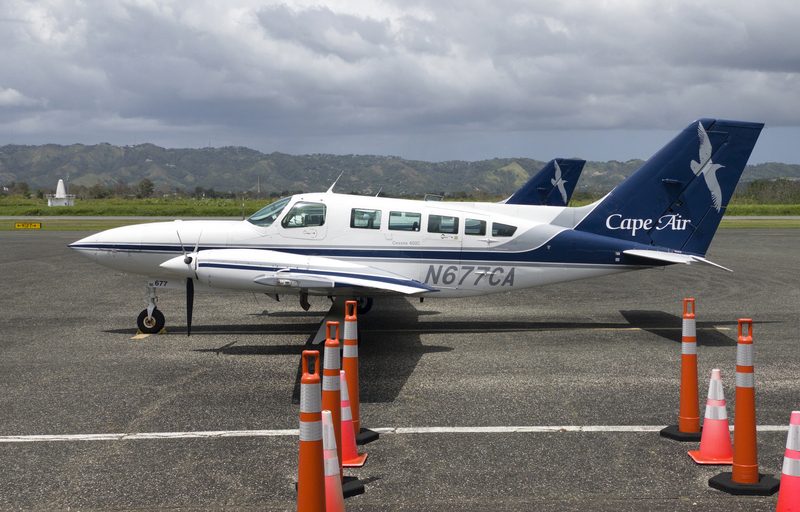
A routine Cape Air flight from Nantucket Memorial Airport (ACK) to Boston Logan International Airport (BOS) was forced to return shortly after takeoff when the upper portion of the aircraft’s main cabin door opened in flight.
That detail matters, because the incident has been described online as a “window popping open,” which makes for a dramatic headline but is not the clearest description of what Cape Air itself says happened. The airline’s wording points to the upper section of the main cabin door opening, rather than a standalone cabin window failure.
For passengers, the distinction may not have made the moment feel any less unsettling. But for aviation readers, precision matters. This was a door-related event on a small commuter aircraft, not a pressurized jet suffering a blowout-style failure.
Read our stories in your inbox
Two aviation newsletters. Zero fluff.
The Flight Returned Safely to ACK
The flight involved was Cape Air 5001, operating one of the airline’s best-known short sectors between ACK and BOS. Shortly after departure, the crew turned the aircraft back toward Nantucket and landed without further incident.
Cape Air said the aircraft remained stable and continued operating normally throughout the event. No injuries were reported, and passengers were later moved to another aircraft to continue their journey to Boston.

That is an important operational point. A return to the departure airport after a door issue is serious, but the available reporting suggests this was handled as a controlled precautionary return rather than a deteriorating emergency.
The Aircraft Was a Cessna 402, Not a Turboprop
The aircraft involved was a Cessna 402, one of the long-serving types that has defined Cape Air’s commuter network for decades.
That is worth highlighting because some draft coverage of the incident muddies the aircraft description. The Cessna 402 is not a turboprop and it is certainly not a jet. It is an unpressurized, twin-engine piston aircraft typically configured for nine passengers. In Cape Air service, it has long functioned as the workhorse of the airline’s short-haul operation in New England and beyond.
That operating profile helps explain why the flight could return quickly and why the event looked so visually dramatic from inside the cabin. A small, low-flying, unpressurized commuter aircraft presents incidents very differently from a larger regional jet or mainline narrowbody.
Why This Aircraft Still Matters to Cape Air
Cape Air occupies a very specific niche in the U.S. airline market. It specializes in short, thin routes linking small communities to larger hubs, especially in places where larger aircraft would not make economic sense.
The ACK-BOS corridor is one of the clearest examples of that model. It is less about onboard comfort or scale than about frequency, speed, and utility. Travelers use it because it functions as an air bridge, giving Nantucket quick access to Boston and the wider network beyond.
That is why the Cessna 402 remains so relevant, even as Cape Air gradually introduces more Tecnam P2012 Traveller aircraft. The 402 is old, basic, and noisy by modern standards, but it still does a job that many larger airlines would not attempt with this kind of frequency or efficiency.
The Bigger Aviation Lesson
Events like this are rare, but they tend to attract outsized attention because they are so visible. A partially open door on a nine-seat commuter aircraft is immediately alarming to the people onboard, and passenger video naturally spreads quickly.

For aviation professionals, the more meaningful takeaway is the response. The aircraft remained controllable, the crew returned safely, no injuries were reported, and the airplane was removed from service for inspection. That is exactly the sequence you want to see after an unusual airworthiness event on a small regional aircraft.
It is also a reminder that small commuter operations, while routine, demand the same discipline in abnormal situations as larger airline operations do. The scale is different. The stakes are not.
Bottom Line
Cape Air Flight 5001 from Nantucket Memorial Airport (ACK) to Boston Logan International Airport (BOS) returned safely after the upper portion of the main cabin door opened shortly after departure.
The aircraft, a Cessna 402, remained stable, the crew landed safely back at ACK, and passengers were later re-accommodated on another flight. For industry readers, the real story is not the viral “window popped open” framing. It is that a highly visible cabin-door event on a small commuter aircraft was handled without injury and without escalation.
Keep reading FlyMag
Get the Daily Brief in the morning or the Route Watch weekly recap on Fridays. Or both.