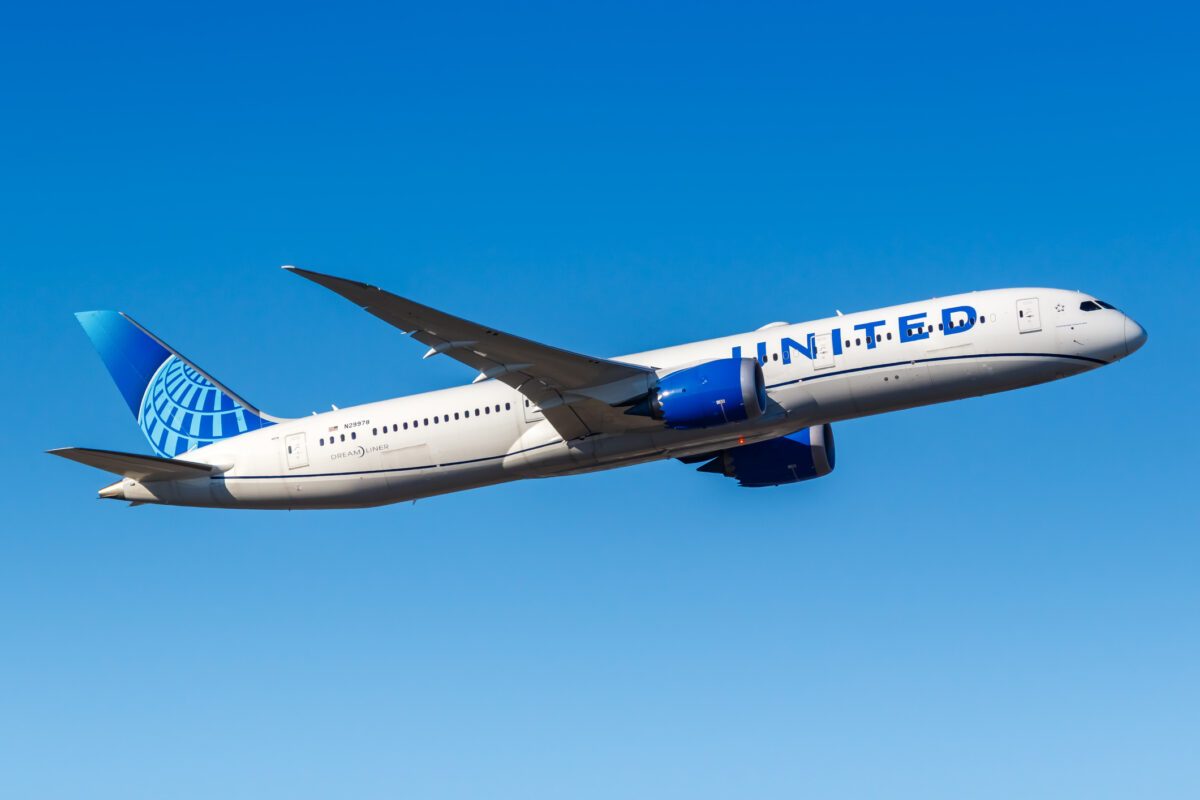
United Airlines has added another layer to its digital recovery system, allowing customers displaced onto a later flight to seek an earlier departure without surrendering the confirmed itinerary they already hold.

Under the feature announced by United on September 1, an eligible customer can use the airline’s mobile app to join the standby lists for as many as three earlier United flights to the same destination. The system monitors those flights and sends a text message when a seat becomes available.
The traveler can then decide whether to take the earlier option. Until that choice is made, the later confirmed booking remains intact, removing the risk of giving up a protected seat merely to pursue a potentially faster recovery.
Read our stories in your inbox
Two aviation newsletters. Zero fluff.
Three Standby Options With a Confirmed Flight in Reserve
The new process applies after a disruption has already resulted in the customer being rebooked onto a later departure. From the app, the traveler selects up to three eligible earlier flights and leaves the availability monitoring to United’s systems rather than repeatedly refreshing flight information or asking an agent to check each departure.
The distinction between a confirmed recovery and an earlier standby request is important. A passenger retains a firm way forward while simultaneously gaining access to several possible improvements. That makes the tool more useful than an ordinary one-flight standby request, particularly in markets where United operates multiple departures over the course of a day.
It also takes advantage of the fluid inventory that characterizes irregular operations. Seats can appear as other customers change plans, miss connections or move to different flights. Monitoring several departures in the background gives United another opportunity to place a disrupted traveler into capacity that might otherwise become visible only shortly before departure.
The feature does not create additional seats or guarantee an earlier journey. United specifies that it is available for eligible earlier flights operated by the airline to the same destination. Its practical value will therefore be greatest where the schedule provides enough frequency for multiple alternatives and where the traveler can remain positioned to board on short notice.
United Extends Its Self-Service Recovery Platform
The standby function builds on a recovery platform United introduced in 2023. That earlier update began automatically displaying disruption tools in the app when a flight was canceled or delayed by more than 60 minutes. Customers could review personalized rebooking choices, follow checked baggage and retrieve eligible meal, hotel or ground-transportation vouchers.
The 2023 recovery system also provided access to remote agents by call, text or video chat. United said at the time that almost half of affected customers were already using the app or its website to manage disruptions, giving the airline a substantial base on which to expand automated reaccommodation.

Earlier-flight standby was already part of some missed-connection workflows. When United expanded its connection tools in June 2025, it said customers who missed a connection could receive a confirmed replacement or join standby for an earlier flight. The latest change broadens and formalizes that capability by letting an eligible disrupted passenger select three alternatives that United monitors automatically.
Those connection tools also show how the carrier is linking customer-facing functions with its operational systems. The app provides gate-to-gate directions, estimated walking times, boarding countdowns and notifications when ConnectionSaver has identified a departing flight that can be held for connecting passengers without compromising its scheduled arrival.
United said ConnectionSaver had protected more than 3.3 million connections between its 2019 introduction and June 2025. During a spring 2025 test of the customer-facing connection functions, more than 350,000 passengers used them and 98% made their onward flights.
Digital Recovery Is Becoming the Default Channel
The airline’s adoption figures explain why the latest standby feature is centered on the app. United expects more than 85% of its customers to use the app on the day they travel. That is no longer a secondary service channel: for most passengers, it is the principal interface for check-in, boarding, flight status, baggage information and recovery from disruption.
United’s full-year 2025 results showed that more than half of customers affected by a fourth-quarter cancellation resolved the problem through self-service or automated tools. Day-of-travel app use had reached 85% by the end of that year.
Adoption continued to rise in 2026. United reported an 87.7% digital check-in rate during the second quarter, while 48.7% of customers bypassed the airport lobby. Its second-quarter results also highlighted a mobile tracker providing estimated Transportation Security Administration wait times at the airline’s U.S. hubs.
Other recent additions include displaying the inbound aircraft directly on the flight-status page, Apple Wallet Digital ID integration for TSA PreCheck Touchless ID enrollment and support for sharing an AirTag or another Find My network accessory’s location with United when baggage is mishandled.
Labor Day Provides the First Large-Scale Test
The standby function is arriving immediately before a heavy operating period. United expects to carry more than 3.4 million passengers from September 3 through September 8, approximately 300,000 more than during the comparable 2025 Labor Day period.
That volume will give the airline an early test of how effectively the new workflow absorbs demand during disruption. Each successful self-service move can shorten a traveler’s delay without requiring an agent to search the same inventory manually. At scale, that leaves airport and contact-center staff with more time for itineraries that cannot be resolved through standard automated options.
The operational gain is not limited to shorter customer-service lines. A centralized system monitoring several flights can react to inventory changes as they occur, rather than waiting for a customer or employee to initiate another search. For United, the feature turns standby from a largely customer-driven process into an active recovery tool connected to the airline’s live availability.
Bottom Line
Passengers with several United departures available stand to gain the most. Keeping a confirmed seat while pursuing three earlier flights removes much of the downside from standby and gives disrupted travelers a better chance of converting late-breaking availability into a shorter delay. The feature should be especially valuable in high-frequency business markets and across United’s hub network, where multiple same-day options are more common.
For the airline, the development signals that digital recovery is moving beyond displaying alternatives and into continuous management of a disrupted itinerary. United’s app is increasingly acting as an automated operations intermediary: it identifies choices, watches inventory, communicates changes and lets the customer complete a transaction that once required repeated contact with an agent.
The Labor Day operation will show whether the three-flight model can reduce manual rebooking work when passenger volumes and disruption demand rise together. The next measure of success will not be app engagement alone, but how often the monitoring produces an earlier confirmed journey and whether it reduces the time customers spend waiting for conventional service channels.
Keep reading FlyMag
Get the Daily Brief in the morning or the Route Watch weekly recap on Fridays. Or both.