One of the most historically significant fleets in modern commercial aviation is approaching the end of the line.

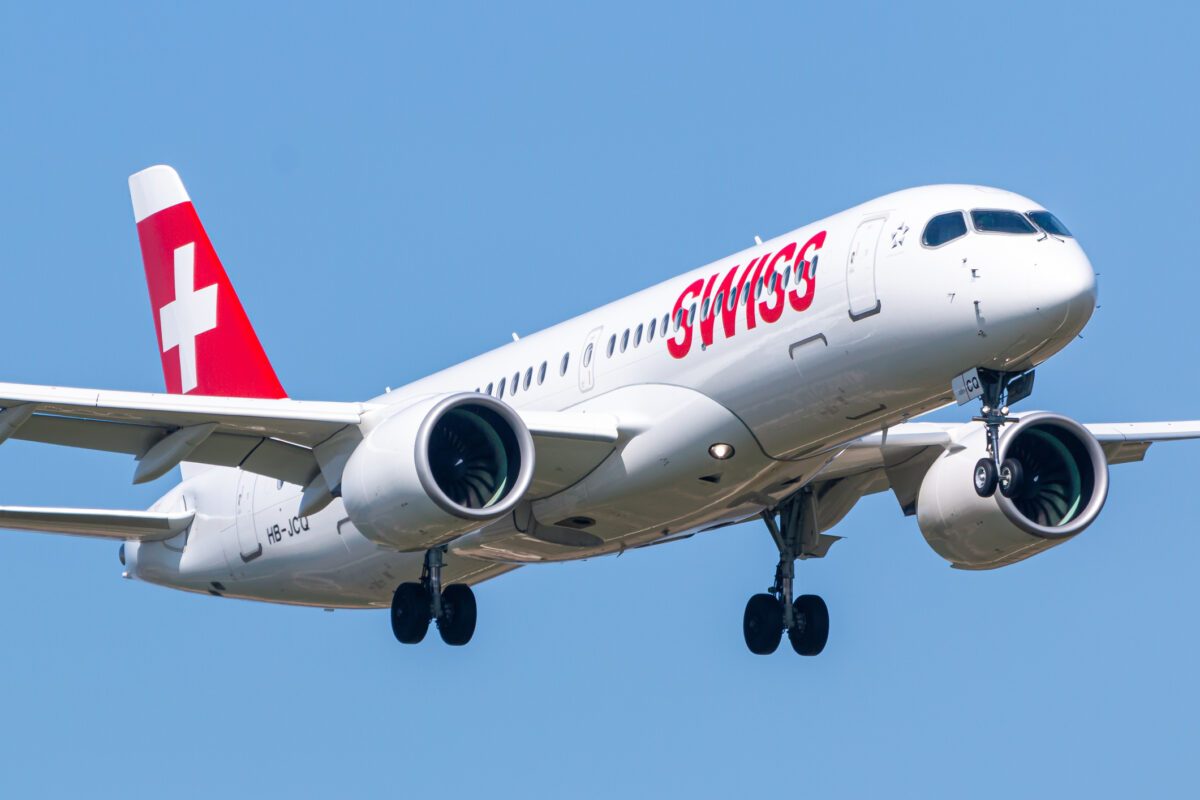
SWISS International Air Lines plans to permanently retire its remaining Airbus A220-100s by the end of 2027, only a little more than a decade after becoming the first airline in the world to put the type into commercial service.
The decision marks a change from SWISS’s previous plan. In October 2025, the airline intended to temporarily withdraw its nine A220-100s as it dealt with shortages and maintenance problems involving their Pratt & Whitney PW1500G geared turbofan engines. SWISS has now decided that the smaller A220 variant does not have a place in its medium- and long-term fleet.
Read our stories in your inbox
Two aviation newsletters. Zero fluff.
The airline will retain its 21 larger Airbus A220-300s, which provide 20 more seats per aircraft and better economics for most of the missions SWISS operates.
For aviation enthusiasts hoping to fly the smaller model before it disappears from SWISS, the clock is now running.

SWISS Made Aviation History With The A220-100
SWISS has a particularly important connection to the A220 program.
On July 15, 2016, the airline operated the world’s first commercial flight with what was then known as the Bombardier CS100, flying from Zurich Airport (ZRH) to Paris Charles de Gaulle Airport (CDG).
Airbus acquired control of the CSeries program several years later and renamed the CS100 the Airbus A220-100, while the larger CS300 became the A220-300.
SWISS eventually built a fleet of nine A220-100s and 21 A220-300s, for 30 A220s in total. The airline configures its A220-100 with 125 seats and the longer A220-300 with 145 seats. SWISS confirmed those fleet numbers when it received its 30th A220 in 2021.
The A220 replaced SWISS’s aging Avro RJ100 fleet and gave the carrier a much more efficient aircraft for European routes where an Airbus A320 was unnecessarily large.
The smaller A220 also became especially valuable at London City Airport (LCY), where steep-approach requirements and the airport’s short runway place unusual restrictions on aircraft operations.
Pratt & Whitney Engine Problems Changed The Plan
The retirement is not happening because the A220-100 itself has reached the end of its useful life.
In fact, SWISS’s oldest examples are only around 10 years old.
The much larger issue is the Pratt & Whitney PW1500G geared turbofan engine used by both A220 variants. Operators around the world have faced engine availability problems, lengthy shop visits and a shortage of replacement engines and components.
SWISS has been particularly affected. Aviation Week reported that A220 operators including SWISS, airBaltic and Delta have continued to experience PW1500G availability constraints.
That created an unusual fleet-planning decision.
Because the A220-100 and A220-300 use engines from the same PW1500G family, SWISS could remove its smaller aircraft from service and use engines and other components to improve the availability of its larger and more productive A220-300 fleet.
SWISS initially announced in October 2025 that all nine A220-100s would be withdrawn for approximately 18 months. The airline said the move would make 18 engines available to support its 21 A220-300s.
What began as a temporary measure has now effectively become permanent.
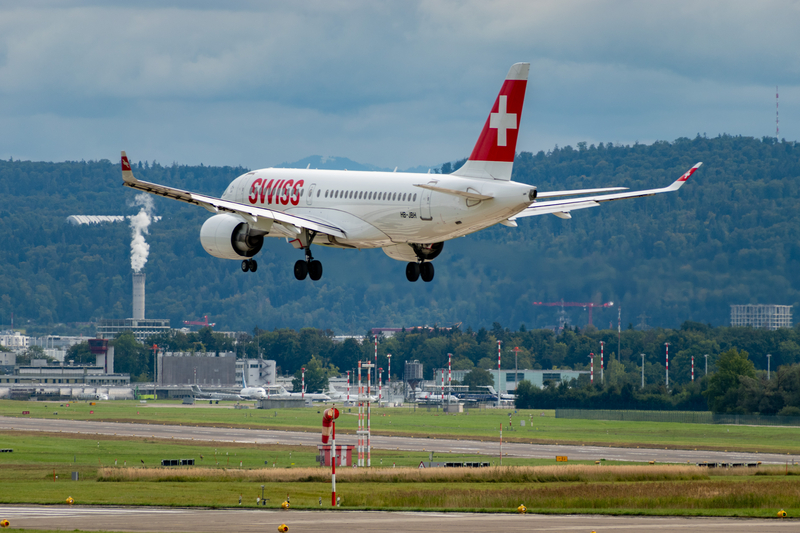
Two A220-100s Are Already Being Dismantled
For two SWISS A220-100s, retirement is no longer a future event.
Aircraft HB-JBC and HB-JBD have already been permanently decommissioned and are being dismantled for parts in Toulouse, France.
SWISS confirmed earlier this year that the two aircraft would not return to service. Components recovered from the relatively young jets can instead support the airline’s remaining A220 fleet. Aviation Week reported the decision to dismantle HB-JBC and HB-JBD in May.
It is an extraordinary outcome for aircraft delivered only about a decade ago.
SWISS originally operated A220-100 registrations HB-JBA through HB-JBI. By mid-August, only a small number remained in active service while others were stored or undergoing the withdrawal process.
Recent flight-tracking data showed HB-JBA, HB-JBF and HB-JBI operating regular SWISS flights from Zurich Airport (ZRH), although aircraft assignments can change from day to day. HB-JBF, for example, recently flew from ZRH to destinations including Rome Fiumicino Airport (FCO), Athens International Airport (ATH), Amsterdam Airport Schiphol (AMS), Bologna Airport (BLQ) and Palma de Mallorca Airport (PMI).
Where To Find A SWISS A220-100 Before It Disappears
There is no single dedicated route on which SWISS guarantees the A220-100.
Instead, the remaining aircraft move around the airline’s European network, primarily from Zurich Airport (ZRH).
Recent operations have included:
- Amsterdam Airport Schiphol (AMS)
- Athens International Airport (ATH)
- Brussels Airport (BRU)
- Frankfurt Airport (FRA)
- Milan Malpensa Airport (MXP)
- Nice Côte d’Azur Airport (NCE)
- Paris Charles de Gaulle Airport (CDG)
- Prague Václav Havel Airport (PRG)
- Rome Fiumicino Airport (FCO)
- Palma de Mallorca Airport (PMI)
The aircraft also continue to appear on domestic positioning and scheduled flights between Zurich (ZRH) and Geneva Airport (GVA).
For enthusiasts specifically trying to book the A220-100, looking only at the route is not enough. SWISS can swap between the A220-100, A220-300 and other narrowbody aircraft depending on operational requirements.
The better approach is to look for aircraft type BCS1, the ICAO designator used for the A220-100, and then monitor the individual registrations.
Flightradar24 currently provides individual flight histories for SWISS A220-100 aircraft, making it possible to see which remaining airplanes are flying and where they have been deployed.
Even then, anyone planning a trip specifically to fly the type should expect last-minute equipment substitutions.
Why SWISS Prefers The Larger A220-300
The A220-100 and A220-300 share most of their fundamental design.
Both use Pratt & Whitney PW1500G engines, have the same five-abreast 2-3 cabin layout and provide unusually wide Economy seats for a narrowbody aircraft. Pilots can operate both variants under the same type rating.
The primary difference is size.
SWISS’s A220-100 carries 125 passengers, while its A220-300 accommodates 145, giving the larger aircraft 16% more seats on each departure.
For an airline operating into slot-constrained European hubs, that additional capacity matters.
If the operating cost of flying an A220-300 is only modestly higher while the aircraft generates revenue from another 20 seats, the larger variant can produce substantially better economics on routes where demand supports it.
Airbus currently lists the A220-100 with a maximum range of approximately 3,600 nautical miles, compared with around 3,450 nautical miles for the A220-300. Both are capable of flying much farther than the majority of SWISS’s European A220 missions. Airbus lists the specifications for both A220 variants.
That means the A220-100’s range advantage provides relatively little benefit to SWISS on a typical one- or two-hour European flight.
The A220-300 simply provides more seats while retaining nearly all of the smaller aircraft’s operational flexibility.
The A220-100 Is Still An Unusually Comfortable Small Jet
For passengers, the departure of the A220-100 is less welcome.
The A220 cabin remains one of the more passenger-friendly designs among current narrowbody aircraft.
Instead of the six-abreast 3-3 configuration found on an Airbus A320 or Boeing 737, the A220 uses a 2-3 layout. That means only one passenger in every five-seat row receives a middle seat.
The aircraft also has exceptionally large windows, high cabin ceilings and large overhead bins for an airplane designed around the 100- to 150-seat market.
Airbus says the A220 offers the widest Economy seats in its class and uses approximately 40% advanced materials in its structure. The aircraft’s PW1500G engines and clean-sheet aerodynamic design also provide substantial fuel and noise improvements compared with the previous generation of small narrowbody aircraft. Airbus provides detailed technical information on the A220 family.
SWISS’s A220-100 is 114 feet 9 inches long, compared with 127 feet for the stretched A220-300.
For passengers sitting inside, however, the two aircraft are much more difficult to distinguish.
The A220-100 Is Not Disappearing Globally
SWISS’s retirement does not mean the end of the Airbus A220-100.
The world’s dominant operator remains Delta Air Lines, which has built a substantial A220 operation in the United States. Airbus’s June 2026 order data showed Delta with 45 A220-100s ordered, in addition to 100 A220-300 orders.
The smaller variant also has an interesting future in Europe.
LOT Polish Airlines has ordered 20 A220-100s and 20 A220-300s, which will create a significant new European fleet of the type. Air Niugini, meanwhile, holds orders for eight A220-100s.
According to Airbus’s latest customer data, total firm orders stood at 108 A220-100s and 1,001 A220-300s at the end of May 2026.
Those numbers reveal the broader market reality.
The A220 program itself has attracted considerable airline interest, but customers overwhelmingly prefer the larger A220-300. The same seat-mile economics that make the -300 more attractive to SWISS have pushed most A220 customers toward the stretched model.
SWISS’s A220-300 Fleet Is Staying
The important distinction is that SWISS is not abandoning the Airbus A220.
Its 21 A220-300s remain a key part of the airline’s European fleet.
In fact, removing the A220-100 is intended partly to make those aircraft more reliable by increasing the availability of engines and spare components.
SWISS’s continued commitment to the -300 demonstrates that the retirement is less an indictment of the A220 program than a fleet simplification decision made worse by the current Pratt & Whitney engine situation.
The airline essentially has two closely related aircraft doing similar jobs. With limited engine availability, keeping the 145-seat version flying produces more capacity than preserving the 125-seat variant.
That calculation has ultimately put the aircraft that launched the entire A220 program on borrowed time.
Bottom Line
SWISS plans to retire its remaining Airbus A220-100 fleet by the end of 2027, bringing an unusually short but historically important chapter of its fleet history to a close.
The airline was the worldwide launch operator of the aircraft, then known as the Bombardier CS100, and operated the type’s first commercial flight from Zurich Airport (ZRH) to Paris Charles de Gaulle Airport (CDG) on July 15, 2016.
Only a decade later, two of SWISS’s nine A220-100s — HB-JBC and HB-JBD — are already being dismantled for parts, while only a handful of the remaining aircraft continue to appear regularly in scheduled service.
The retirement is being driven largely by fleet economics and the ongoing shortage of Pratt & Whitney PW1500G engines. Removing the smaller 125-seat A220-100 allows SWISS to concentrate scarce engines and components on its 21 larger, 145-seat A220-300s.
For anyone hoping to log a SWISS A220-100 before it disappears, Zurich (ZRH) remains the place to look. The remaining aircraft are moving between numerous European destinations rather than operating one dedicated route, making tracking individual registrations — particularly HB-JBA, HB-JBF and HB-JBI based on recent operations — considerably more useful than simply booking a particular city pair.
The A220 will remain an important part of SWISS for years to come. The smaller aircraft that introduced the world to the CSeries, however, is preparing to leave the airline that launched it.