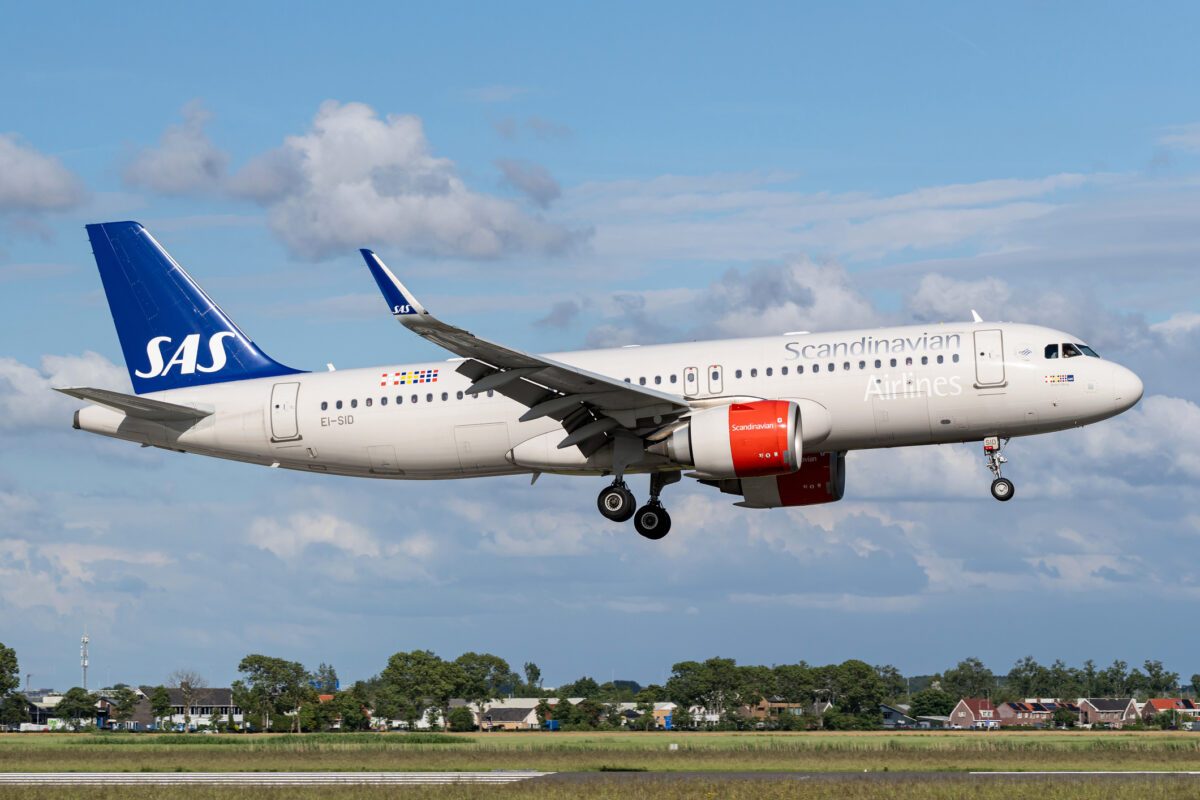
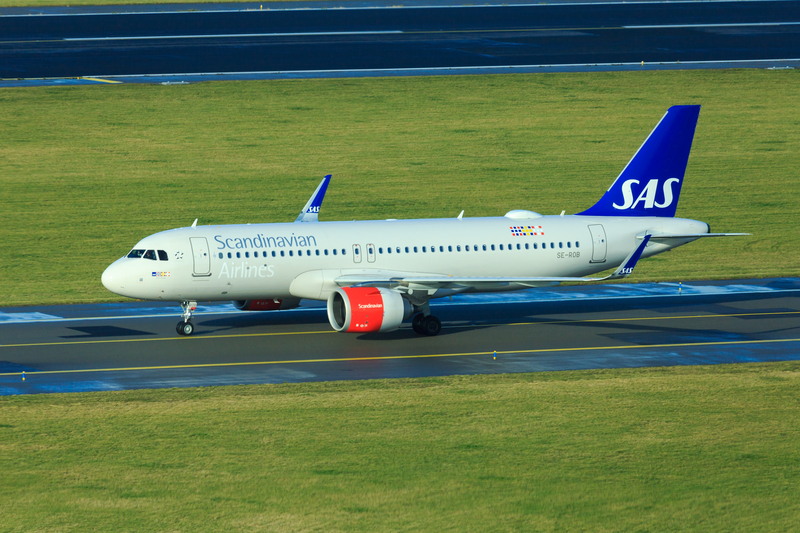
SAS has completed the installation of Starlink connectivity across all 81 of its Airbus A320neo aircraft, making the narrowbody the first aircraft type in the airline’s fleet to be fully equipped with the satellite-based internet system.

The airline confirmed the completion on September 1, six months after activating its passenger service in March. The rollout gives SAS broad Starlink coverage within its short- and medium-haul operation: the carrier says A320neos account for roughly 70% of its fleet and operate a large share of its flying within Scandinavia and across Europe.
Each aircraft underwent installation, testing and approval before returning to service. SAS carried out the work alongside its normal flight schedule rather than withdrawing the full subfleet for a separate modification program.
Read our stories in your inbox
Two aviation newsletters. Zero fluff.
Six-Month Retrofit Covers the Core European Fleet
SAS switched on Starlink for passengers on March 24, initially concentrating installations on the Airbus A320 fleet. At launch, it expected to connect a substantial portion of its aircraft before the summer season, followed by additional types later in 2026, subject to regulatory approvals.
Finishing 81 aircraft by the beginning of September represents an average pace of more than three installations per week from the service launch, although the physical retrofit program may have begun earlier. The airline has not described the precise maintenance inputs used, but said the process included installation, system testing and aircraft approval before release to the operating fleet.

That sequencing matters for an airline whose A320neos perform multiple sectors per day. Connectivity retrofits compete for hangar capacity and aircraft downtime with scheduled maintenance, cabin work and defect rectification. Completing the program during regular operations allowed SAS to expand coverage without waiting for a fleetwide heavy-maintenance cycle.
The A320neo is particularly important to SAS because it combines high utilization with broad network reach. The aircraft can seat up to 180 passengers in the airline’s short-haul configuration and has the range to cover domestic Scandinavian services as well as longer European and North African sectors. SAS describes the type, which uses CFM International LEAP engines, as the backbone of its network.
The airline’s concentration of capacity in one modern narrowbody type also made the A320neo a logical first target. Completing a large, operationally central subfleet produces a more consistent passenger proposition than spreading early installations across several smaller fleets.
Free Access Is Tied to EuroBonus Membership
Starlink is available without charge to EuroBonus members on equipped flights, including passengers who enroll as new members. Customers of Scandinavian mobile operator 3 also receive access under a commercial agreement announced shortly before the service went live.

SAS and 3 outlined their wider connectivity partnership in March. In addition to sponsoring passenger access, 3 is managing mobile communications supporting SAS operations worldwide. The arrangement places onboard internet within the airline’s loyalty ecosystem rather than treating it solely as a separately purchased ancillary.
The service is available across the cabin rather than being restricted by travel class. SAS says passengers can use it for browsing, communications, work and streaming, with connections available from boarding through arrival. Gate-to-gate operation is a material change from older airborne connectivity systems that are activated only after departure and switched off again during descent.
At its March launch, SAS advertised potential speeds above 500 Mbps. Actual performance will depend on factors including simultaneous demand, coverage and the connection between the aircraft and the satellite network, but the low-Earth-orbit architecture is intended to provide lower latency than traditional geostationary satellite systems.
Northern coverage is especially relevant to SAS. Its aircraft regularly cross the North Sea and operate at high Scandinavian latitudes, while its long-haul network includes North Atlantic and polar routings. When it selected the system in January 2025, SAS identified coverage over remote and northerly regions as one of the principal reasons for adopting Starlink.
Other SAS Aircraft Are Next
The completion milestone does not yet give SAS a uniform fleetwide product. The airline operates additional narrowbody, regional and long-haul aircraft, and some aircraft continue to use earlier onboard internet systems. Its passenger information directs customers to check the SAS app on the day of travel to determine whether a flight has the new equipment.
SAS said preparations are advancing for the remaining aircraft types, with further installations planned before the end of 2026. The next phase will broaden coverage beyond the high-frequency A320neo operation and determine how quickly the carrier can deliver the same service on intercontinental flights, where reliable connectivity has greater passenger value but certification and installation requirements differ by airframe.
The airline originally announced Starlink in January 2025 as a program for its entire fleet, with a phased introduction planned from the end of that year. The first passenger service ultimately began in March 2026. With the A320neo work now finished, the focus shifts from proving installation volume on a relatively standardized fleet to managing approvals and modification work across several different aircraft families.
Bottom Line
SAS gains most immediately from product consistency. Because the A320neo carries such a large share of its European schedule, the airline can now market high-speed connectivity as a normal feature on much of its core operation rather than an occasional benefit dependent on an individual tail assignment. Linking free access to EuroBonus also gives SAS a low-friction way to recruit members and collect a larger share of its customer relationships directly.
The six-month retrofit demonstrates that a substantial connectivity modification can be folded into an active narrowbody operation without a prolonged fleetwide disruption. The more revealing test will come with the remaining types. Installing Starlink on long-haul aircraft would extend the product to routes where passengers spend far more time online and where SAS has emphasized the limitations of older satellite coverage over the Atlantic and far north.
What follows will show whether the A320neo pace can be repeated across a less uniform fleet. Certification timing, maintenance access and the sequencing of regional and widebody installations will determine when SAS can move from strong Starlink coverage in Europe to the genuinely fleetwide proposition it announced in 2025.
Keep reading FlyMag
Get the Daily Brief in the morning or the Route Watch weekly recap on Fridays. Or both.