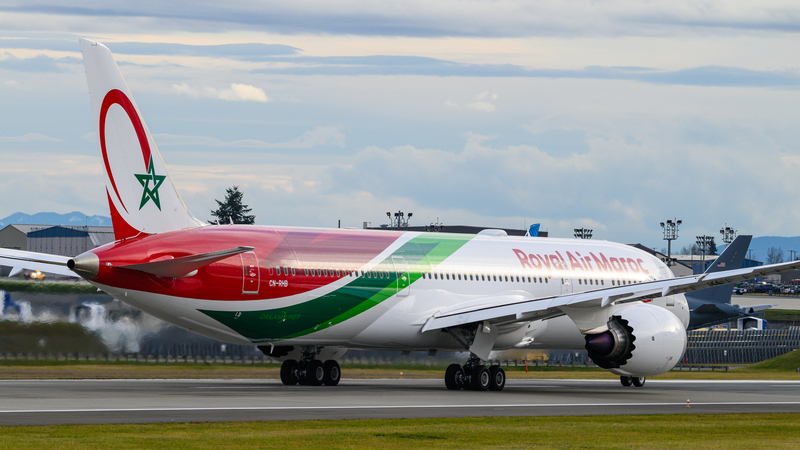
Royal Air Maroc has temporarily suspended a noticeable chunk of its international network, including Brussels–Marrakech and a series of routes to France, Spain, and Central and West Africa, as soaring jet fuel prices and weaker demand on some sectors make parts of the schedule harder to justify.
That matters because this is not a small seasonal airline or a purely low-cost operator pulling back. Royal Air Maroc is Morocco’s flag carrier and a major connector between Europe and Africa. When an airline like that starts suspending multiple international routes at once, it is a sign that the current fuel shock is biting much harder than routine airline volatility.
For aviation readers, the key point is not only which routes are disappearing. It is what the route list reveals about where the pressure is strongest.
Read our stories in your inbox
Two aviation newsletters. Zero fluff.
The Cuts Hit Both Europe And Africa
The suspended routes include:
From Marrakech:

- Brussels
- Marseille
- Lyon
- Bordeaux
From Tangier:
- Barcelona
- Málaga
From Casablanca:
- Bangui
- Brazzaville
- Kinshasa
- Douala
- Yaoundé
- Libreville
That is a meaningful set of cuts, and it shows that Royal Air Maroc is not making one isolated adjustment. It is trimming in multiple directions at once, affecting European city pairs and important African links.
The Fuel Story Is Real — But Demand Matters Too
Royal Air Maroc has tied the decision to two pressures at the same time:
- sharply higher jet fuel prices
- weaker demand on some affected routes
That combination matters. Airlines can often survive one of those problems by offsetting it with the other. High fuel prices are painful, but manageable if demand and fares remain strong enough. Softer demand can be tolerated if fuel is stable. When both move the wrong way at once, route economics can deteriorate very quickly.
That appears to be what is happening here.
The Middle East Crisis Is Reaching Deep Into European Airline Economics
One of the more important parts of the airline’s explanation is the link it draws between its route suspensions and the broader crisis in the Middle East.
Royal Air Maroc says the surge in kerosene prices is tied to disruption in supply flows connected to the Strait of Hormuz, one of the world’s most important energy corridors. That is significant because it shows how geopolitical shocks far from Morocco can still force immediate network changes inside a North African carrier’s system.
For aviation professionals, this is another reminder that airline network planning is never just about local demand. Global fuel supply can redraw route maps very quickly.
These Are Temporary Suspensions — But That Does Not Make Them Minor
Royal Air Maroc has said the route suspensions are temporary and that service will return gradually when economic and operational conditions improve.
That is an important qualifier. The airline is not presenting these as permanent exits from the markets. But temporary suspensions still matter a great deal, especially in international aviation. When a carrier pulls a route, even for a limited period, it affects booking confidence, airport relationships, local tourism flows, and the airline’s own market position.
In other words, “temporary” does not mean insignificant.
The European Cuts Reflect Route Selectivity, Not Continental Retreat
The European routes being cut are telling.
Brussels, Marseille, Lyon, Bordeaux, Barcelona, and Málaga are all meaningful markets, but they are also the kind of routes where an airline must be especially disciplined if fuel surges and yield does not follow. These are not glamorous flagship trunk routes where premium traffic can often cushion a cost shock. They are more exposed to price sensitivity and seasonal demand swings.
That makes them logical candidates for temporary suspension when margins tighten.
The African Suspensions Matter Strategically Too
The African side may actually be the more strategically sensitive part of the move.
Casablanca’s suspended links to Bangui, Brazzaville, Kinshasa, Douala, Yaoundé, and Libreville are not just route names on a board. They are part of the wider network role Royal Air Maroc has tried to play between North Africa, West Africa, and Central Africa. Cutting those routes, even temporarily, suggests the fuel and demand pressure is strong enough to override some of the airline’s broader network logic.
That makes this more than a Europe leisure story. It is also a connectivity story inside Africa.
This Does Not Mean RAM Has Abandoned Expansion Ambition
It is worth noting that Royal Air Maroc is still publicly committed to its long-term fleet and network growth strategy.
The airline has been working toward a much larger future fleet and a far broader global footprint over the next decade. These current suspensions do not cancel that ambition. But they do show that long-term strategy does not protect an airline from short-term economics.
A carrier can believe in 2037 and still have to cut routes in 2026.
Bottom Line
Royal Air Maroc’s suspension of 12 international routes is a serious reminder of how hard the current fuel environment is hitting airlines, even well-established network carriers. The cuts stretch across Europe and Africa, reflecting both higher jet fuel prices and weaker demand on some sectors.
The most important takeaway is that this is not an isolated route issue. It is a sign of a broader economic squeeze now strong enough to force a flag carrier to step back, at least temporarily, from parts of its international map.
Keep reading FlyMag
Get the Daily Brief in the morning or the Route Watch weekly recap on Fridays. Or both.