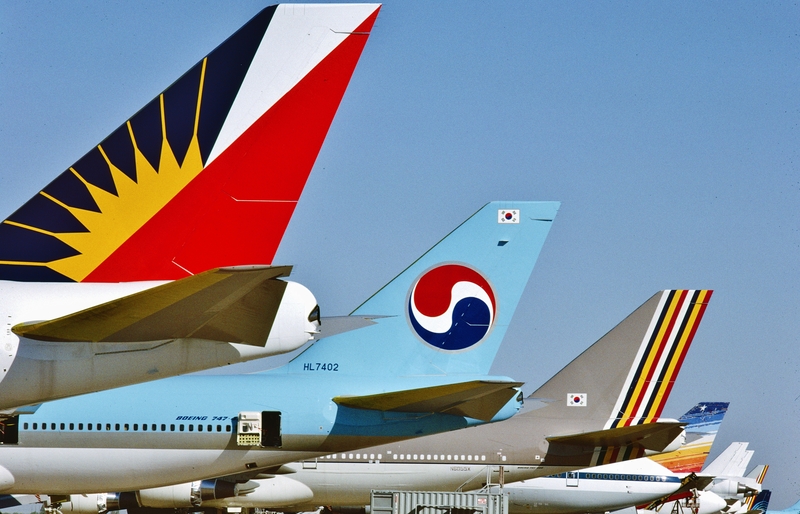
The most important correction to the original framing is this: Asiana Airlines is not waiting to be “taken over” by Korean Air in 2026. That takeover effectively happened in December 2024, when Korean Air completed its acquisition of a 63.88% stake and made Asiana a subsidiary.
What is happening now is the next phase. Korean Air is reportedly preparing to acquire the remaining 36.1% stake and simplify the ownership structure ahead of a full operational and brand integration. If that proceeds as expected, Asiana would stop existing as a separate airline brand and be folded into a single Korean Air structure centered on Seoul Incheon International Airport (ICN).
That is a very different story from a first-time acquisition headline. This is no longer about whether Korean Air will control Asiana. It already does. The real story is how quickly it wants to eliminate the remaining legal, financial, and branding separation.
Read our stories in your inbox
Two aviation newsletters. Zero fluff.
The End of the Asiana Brand Is Coming Into View
Korean Air has already made clear that the Asiana brand will not survive long term. The company said last year that Asiana would remain a subsidiary for a transition period before integrating fully under the Korean Air name and identity.
That timeline now appears to be tightening. Current reporting in South Korea suggests management is targeting December 2026 as the practical starting point for the final single-airline structure, with full integration under the Korean Air name expected from January 1, 2027.
For aviation readers, that matters because brand retirement is never just a cosmetic exercise. When a major full-service carrier disappears, the effects run through fleet planning, labor structures, alliance membership, airport slots, distribution systems, and customer loyalty programs. In this case, the main center of gravity will remain ICN, but the airline operating there will become much more singular in identity and structure.
This Is About More Than Governance
The reported move to buy out the remaining stake is partly about governance, but only partly.
A minority float can complicate decision-making, especially when the end goal is to build one carrier rather than manage a parent-subsidiary relationship indefinitely. Buying out the remaining shareholders would give Korean Air a cleaner path to complete the merger, retire the Asiana corporate entity, and standardize key systems faster.
But the bigger point is operational. Korean Air is not trying to run two large overlapping full-service airlines forever. It wants one airline with one management model, one corporate identity, and eventually a much more unified operation across long-haul, regional, and low-cost segments.
That is why the reported next step matters. It would not create the merger. It would make the merger easier to finish.
Korean Air Is Trying to Standardize the Business Before It Standardizes the Brand
One of the more revealing parts of the recent reporting is the emphasis on aligning internal standards before the final brand disappearance.
Korean Air management has reportedly been focused on bringing Asiana’s operating systems, HR structures, and job classifications into line with Korean Air’s own framework. That is exactly what one would expect at this stage. Airlines do not successfully merge by repainting aircraft first. They merge by standardizing the organization underneath the paint.
Compensation is part of that process as well. Korean media have highlighted a meaningful pay gap between the two airlines, and any move to narrow that gap will raise labor costs before the integration produces its full efficiency benefits. That makes the process more expensive in the short term, but probably unavoidable if Korean Air wants one coherent workforce rather than two parallel cultures.
In plain terms, this is the awkward middle phase of every major airline merger: the period when the strategic logic is clear, but the practical integration work is still messy and expensive.
The Fleet Logic Behind the Merger Is Powerful
The fleet story also helps explain why Korean Air is pushing ahead.
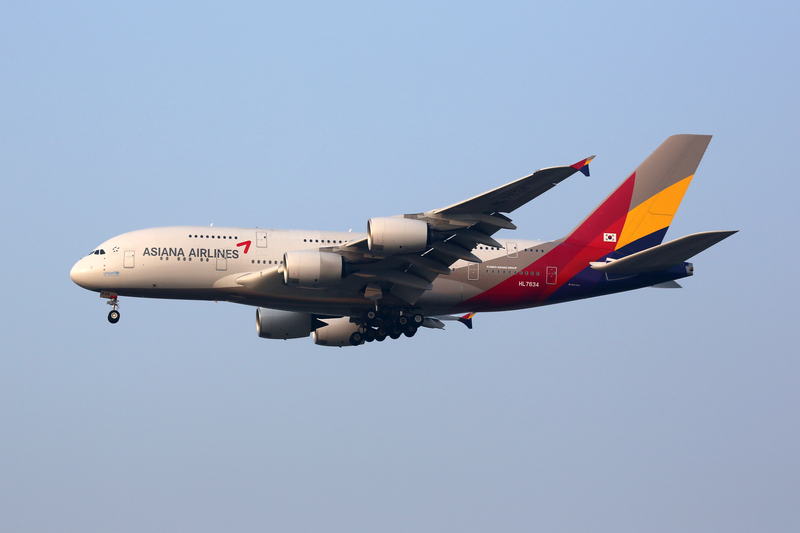
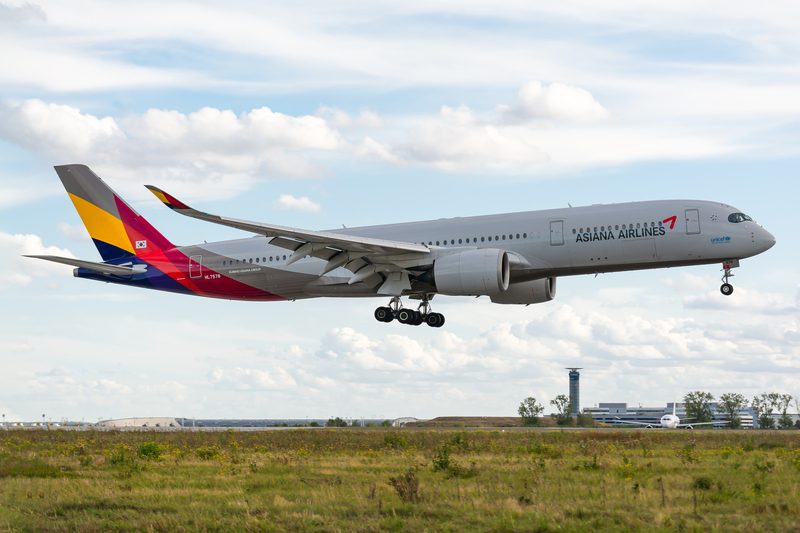
The combined group already controls one of the most varied widebody fleets in Asia. Korean Air brings aircraft such as the Boeing 787-10 and 777-300ER, while Asiana contributes types including the Airbus A350-900 and Airbus A380. In theory, that gives the merged airline enormous flexibility out of ICN and other South Korean gateways.
In practice, it also creates duplication. Two premium airlines based in the same country, with overlapping long-haul ambitions and partially overlapping fleets, are difficult to justify over the long term. Full integration gives Korean Air a chance to rationalize that structure gradually: not by shrinking the network outright, but by deciding more clearly which aircraft, routes, and hubs best fit one combined airline.
That is why this process matters beyond finance. It is about turning two carriers into one network system that can compete more effectively against other major Asian hubs.
The Competitive Stakes Are High
The merged Korean Air group is already large enough to matter far beyond South Korea. On international capacity, the combined operation is big enough to rank among the largest airline groups in Asia, and it gives ICN a stronger platform in its rivalry with Tokyo, Hong Kong, Singapore, and Taipei.
That is one reason the deal was so heavily scrutinized by regulators and why Korean Air had to make meaningful concessions to complete it. Now that the acquisition itself is done, the next challenge is proving that the operational integration can deliver the promised benefits without weakening service quality or destabilizing labor relations.
That will not be easy. The airline is trying to finish a historic merger while the wider industry is also dealing with fuel volatility, geopolitical risk, and uneven demand patterns. Even Korean Air has moved into emergency-management mode because of the latest fuel shock, and Asiana has faced the same pressure.
So while the integration may look inevitable, it is not happening in easy conditions.
Bottom Line
Korean Air is not preparing to take over Asiana Airlines in 2026. It is preparing to finish a takeover that already happened in 2024.
The remaining issue is whether the airline will acquire the last 36.1% it does not yet own and use that to clear the way for a final legal and brand integration. All signs point in that direction. If it happens, Asiana’s separate identity will fade through late 2026, with the combined airline expected to operate under the Korean Air name from the start of 2027.
For airline professionals, that is the real takeaway. This is no longer a merger story in principle. It is an integration story in execution, and the next 12 months will determine how cleanly Korean Air can turn majority control into one fully unified carrier centered on ICN.
Keep reading FlyMag
Get the Daily Brief in the morning or the Route Watch weekly recap on Fridays. Or both.