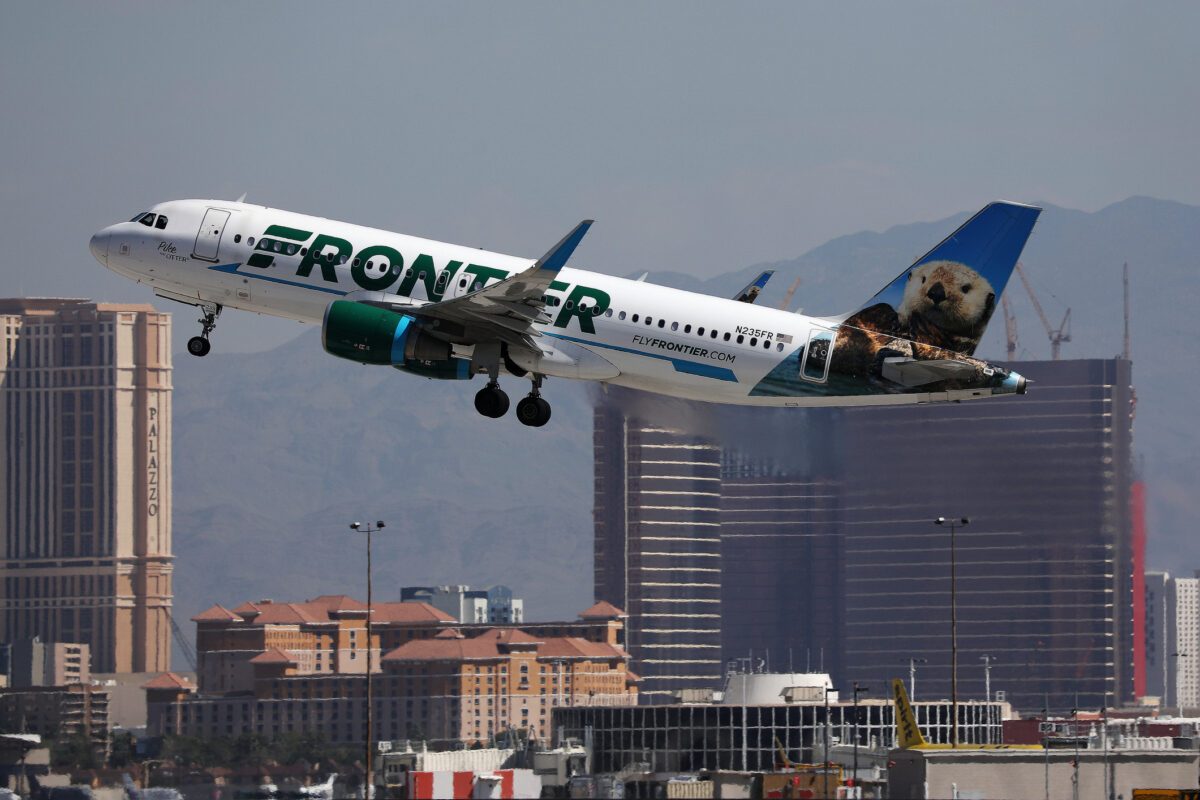
Frontier Airlines is removing 19 routes from Denver (DEN) during 2026, continuing a long-term reduction in the relative importance of its hometown operation as the carrier shifts aircraft among a wider group of bases and focus cities.

A FlyMag review of published schedules found that Frontier service has already ended on 17 of the routes. Flights from DEN to Madison (MSN) and Sioux Falls (FSD) remain scheduled into October before disappearing from the carrier’s forward timetable.
The changes are route withdrawals rather than a single round of cancellations. They were spread across the 2026 calendar as Frontier repeatedly adjusted its schedule, including the removal of domestic links, two Mexican leisure markets and service to Everett Paine Field (PAE), north of Seattle.
Read our stories in your inbox
Two aviation newsletters. Zero fluff.
The 19 Routes Leaving Frontier’s Denver Network
The affected routes are:
- Chicago Midway (MDW)
- New York John F. Kennedy (JFK)
- New York LaGuardia (LGA)
- Everett Paine Field (PAE)
- Los Cabos (SJD)
- Pittsburgh (PIT)
- Milwaukee (MKE)
- Puerto Vallarta (PVR)
- Tucson (TUS)
- Tulsa (TUL)
- Spokane (GEG)
- Corpus Christi (CRP)
- Knoxville (TYS)
- Little Rock (LIT)
- Richmond (RIC)
- Boise (BOI)
- Cedar Rapids (CID)
- Madison (MSN)
- Sioux Falls (FSD)
The cuts do not leave every market without a Denver nonstop. Current schedules, for example, show other operators remaining on routes including Chicago Midway, Spokane, Madison and Sioux Falls. Frontier’s withdrawal instead removes an ultra-low-cost competitor and, in several cases, a relatively low-frequency alternative to larger incumbent schedules.
Other deletions have a broader effect on Frontier’s network. The airline’s Denver service had provided a western connection point for smaller stations such as Corpus Christi, Knoxville, Little Rock and Cedar Rapids. Without DEN, those airports are more difficult to retain in a network increasingly organized around larger local markets and aircraft utilization rather than broad connecting coverage.
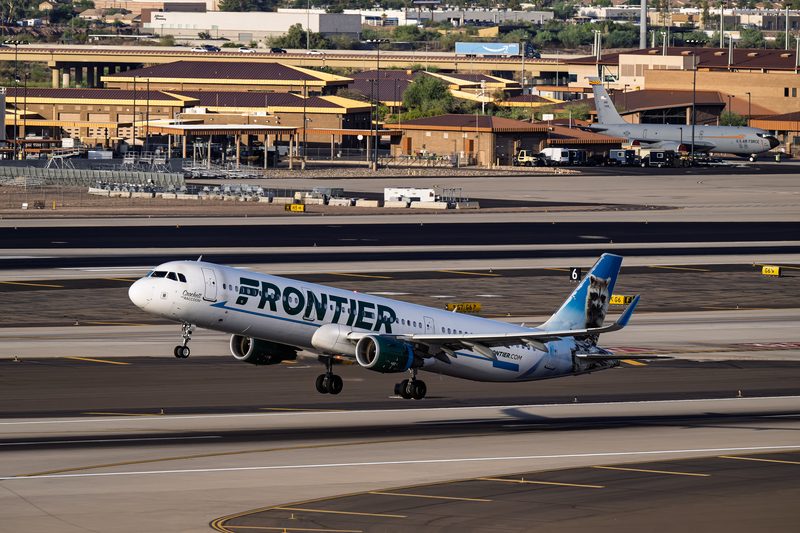
Denver’s Frontier Map Is Becoming More Concentrated
The reduction is significant when set against Frontier’s position at DEN. In 2019, the airline and airport celebrated Frontier reaching 100 nonstop destinations from Denver. Frontier said at the time that it was the only nonstop operator on 11 of those routes.
The current published Frontier route map shows a much smaller Denver footprint, while the airline’s system has become more dispersed among Atlanta, Dallas-Fort Worth, Las Vegas, Orlando, Philadelphia and other large metropolitan markets. DEN remains one of Frontier’s biggest individual operations, but it no longer defines the network to the degree it did before the carrier’s expansion into nationwide point-to-point flying.
Denver airport data underline the distinction between a reduced route map and an airport exit. Frontier accounted for 8.8% of DEN passengers during the first two months of 2026, according to the airport’s February airline traffic report. That placed it behind United and Southwest but comfortably ahead of the airport’s other individual carriers.
Frontier therefore still has the scale to support multiple daily departures on core routes from Denver. What is changing is the network’s outer edge: thinner spokes, seasonal experiments and destinations where a small number of weekly flights must compete for aircraft time with opportunities elsewhere.
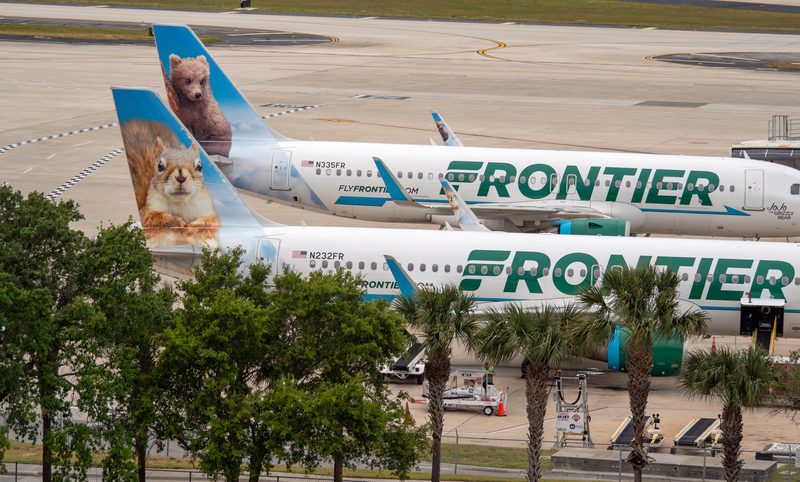
Fleet Changes Raise the Bar for Marginal Routes
The Denver cuts also come during a fleet restructuring. Frontier ended the second quarter with 165 aircraft after returning 24 Airbus A320neos early. The airline described that transaction as part of a plan to improve fleet productivity and right-size the operation.
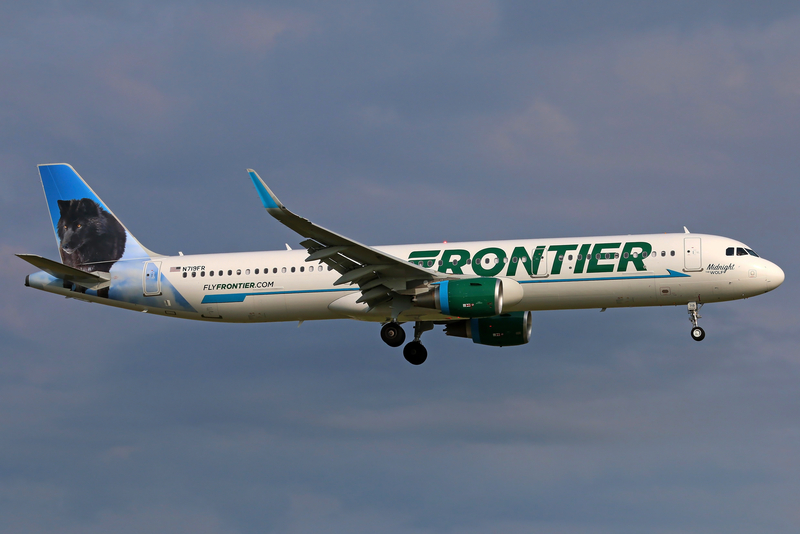
Frontier’s second-quarter fleet disclosure listed 72 Airbus A320neos with 186 seats and 66 Airbus A321neos with 240 seats, alongside a smaller number of A320ceos and A321ceos. It took delivery of six new-generation aircraft during the quarter but simultaneously completed the return of the 24 A320neos.
That high-density fleet gives Frontier low seat costs, but it also requires sufficient demand to fill at least 186 seats per departure. The A320neo is well suited to routes such as Denver-Madison and Denver-Sioux Falls from a range and operating-cost perspective; schedule data show it being used on both. The commercial challenge is generating enough fare and ancillary revenue in markets that may operate only a few times each week.
The larger A321neo strengthens Frontier’s economics on dense routes, but its 240-seat cabin is less naturally matched to marginal spokes. As A321neos form a larger share of the fleet, concentrating capacity in major leisure and metropolitan markets becomes more attractive than maintaining a long list of thin destinations from one connecting complex.
Growth Elsewhere Continues
The Denver pullback is not a systemwide contraction. Frontier said in July that it had expanded across Dallas-Fort Worth, Newark, Santa Ana, Fort Lauderdale, Washington Dulles, Nashville, Las Vegas, Boise and Oakland. Its 2026 route announcements also show continued additions outside Denver, including new international flying and growth from Detroit.
Boise illustrates the speed with which capacity can move. Frontier returned to the city with Denver service in May 2025, but the DEN route is gone from current schedules. The airline continues to use Boise through a Las Vegas link, preserving the station while changing the gateway through which it connects to the wider network.
That flexibility is central to Frontier’s model. Routes can enter the schedule with limited weekly frequencies, operate through a peak season and disappear if another market offers stronger aircraft returns. The scale of the 2026 Denver changes is notable, however, because the reductions affect a station that once functioned as the overwhelming center of Frontier’s system.
Bottom Line
Denver remains strategically important to Frontier, but the value of the operation increasingly lies in high-volume local routes rather than rebuilding the broad connecting map the airline promoted in the late 2010s. Travelers in large markets will continue to see Frontier capacity, while smaller communities face a higher threshold for retaining service when a 186-seat A320neo must be supported by limited weekly demand.
The principal beneficiaries are Frontier’s expanding operations in markets where aircraft can be rotated across several large origin-and-destination flows without relying heavily on connections. That approach can improve utilization and revenue quality, but it also makes the network less durable at smaller stations. A route that does not establish itself quickly has fewer strategic reasons to remain simply because it feeds Denver.
The next indicator will be whether Frontier restores any of the removed routes for summer 2027 or treats the cuts as permanent reallocations. Seasonal returns would show that DEN still has a role as a flexible summer platform. Continued expansion elsewhere, particularly with 240-seat A321neos, would confirm that Frontier’s center of gravity has moved decisively away from the single-hub structure that once defined the airline.
Keep reading FlyMag
Get the Daily Brief in the morning or the Route Watch weekly recap on Fridays. Or both.