JetBlue has unveiled the seat and service package for BlueFirst, the domestic first-class cabin it will install across aircraft and routes that do not offer Mint.

The first BlueFirst-equipped aircraft is due to enter service later in 2026, with bookings opening this fall. Initial routes, fares and the order in which aircraft will receive the cabin will be announced closer to launch.
The product gives JetBlue a conventional premium cabin between its EvenMore extra-legroom offering and Mint, which remains the airline’s lie-flat product on selected transcontinental, Caribbean and transatlantic services. BlueFirst will instead serve the broad domestic and short-haul network flown by JetBlue’s non-Mint Airbus fleet.
Read our stories in your inbox
Two aviation newsletters. Zero fluff.
BlueFirst Brings Three or Four Rows of Recliners
JetBlue said in its September 1 product announcement that BlueFirst seats will be arranged four abreast in a 2-2 configuration. The seats will offer five inches of recline and up to seven inches more legroom than the airline’s Main seats.
The cushions use Tuft & Needle’s T&N Flex foam, extending a supplier relationship already visible in JetBlue’s Mint product. The BlueFirst recliner is a distinct seat rather than a blocked-middle economy arrangement, giving the airline the wider seat and larger center console expected in the U.S. domestic first-class market.
An investor presentation filed with the Securities and Exchange Commission in March showed plans for three or four rows of BlueFirst on each non-Mint aircraft. That represents 12 to 16 seats, depending on the aircraft and final layout.
JetBlue told investors that the retrofit would leave the overall fleet seat count broadly similar while lifting premium seating to approximately 27% of capacity. The cabin plan therefore does more than add a partition and new seats at the front: it redistributes space among BlueFirst, EvenMore and Main while protecting the aircraft’s revenue-producing seat count.
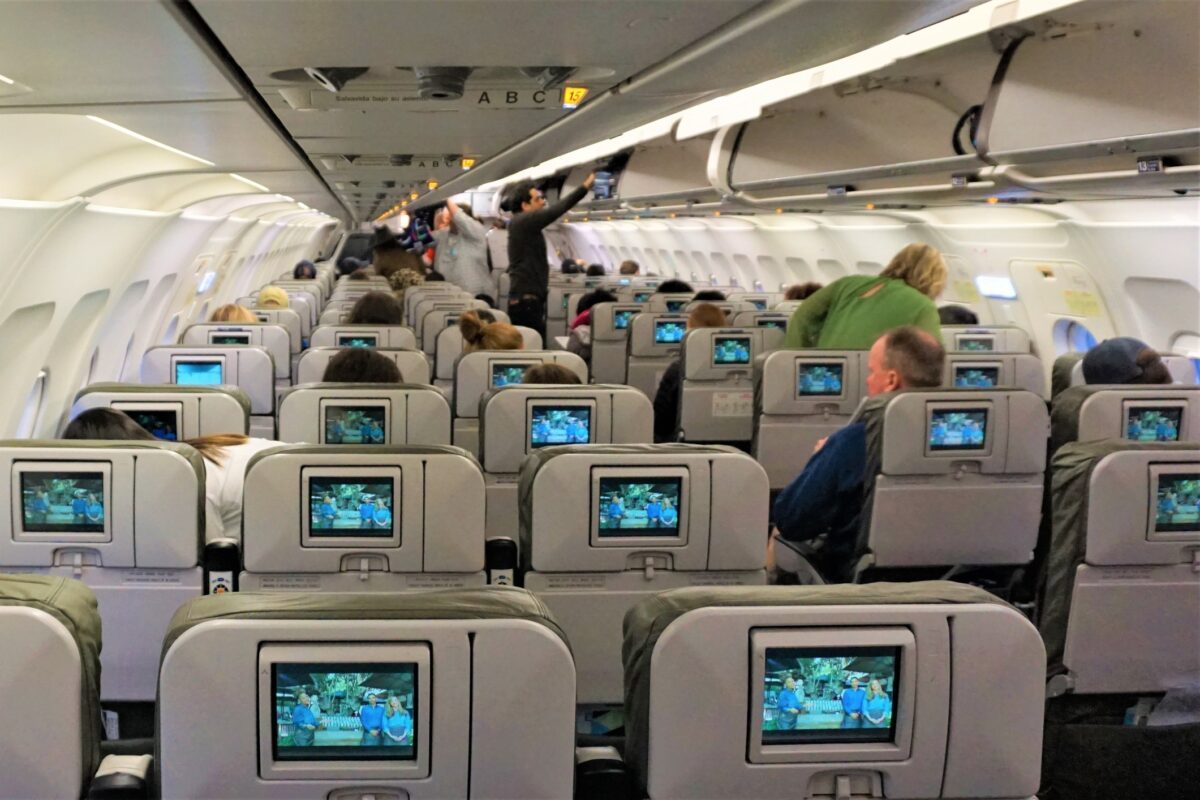
Each BlueFirst seat will have a 13.3-inch entertainment screen with Bluetooth connectivity. The system will run the latest version of Blueprint by JetBlue, the carrier’s personalized inflight entertainment platform. Power will include USB-A, USB-C and 110-volt AC outlets, while JetBlue’s complimentary Fly-Fi internet will remain available.
Meals Start at 899 Miles
JetBlue has set 899 miles as the threshold for a full BlueFirst meal. On qualifying flights, passengers will receive FirstFare, a bento-style box containing an entrée, side and dessert. The airline’s initial examples include sweet and savory crepes and sesame noodles with a choice of beef or tofu.

Shorter flights will retain a differentiated service through a rotating selection of premium snacks. JetBlue has named Sockerbit, Tosi, Wholesome Bakery, Pop Daddy Snacks and Cape Cod Chips among the suppliers, although the selection will vary by flight and route.
Passengers will be able to order food and drinks through the seatback screen. A “Mixologist Mode” will allow customers to select a spirit, mixer and flavoring before sending the completed cocktail order to the cabin crew. The wider beverage program includes wines selected by New York retailer Parcelle, coffee from Cometeer and Joe Coffee, and tea from Smith Teamaker.
Overnight flights will add a blanket and snooze kit. Those amenities, together with the five-inch recline, position BlueFirst as a premium recliner product rather than a replacement for Mint’s flat-bed seating.
Priority Benefits Extend Through the Airport
The BlueFirst ground package includes priority check-in, Group 1 boarding, dedicated overhead-bin space and access to expedited security lanes at more than 30 airports. BlueFirst and BlueFirst Flex fares will include two checked bags, priority baggage delivery and no change or cancellation fees, although benefits attached to the lower BlueFirst Base fare may differ.

The launch follows JetBlue’s overhaul of its branded fare structure. Customers now choose among Main, EvenMore, BlueFirst and Mint before selecting a Base, standard or Flex fare where available. Under the airline’s revised shopping model, standard BlueFirst includes seat selection and cancellation for a travel credit, while BlueFirst Flex provides eligible refunds to the original form of payment.
Separating the cabin from the fare conditions gives JetBlue more room to price and merchandise BlueFirst. A traveler can buy the physical first-class experience without necessarily purchasing the most flexible ticket, a structure increasingly important as the airline looks for revenue beyond the base fare.
Retrofit Program Covers Four Airbus Subfleets
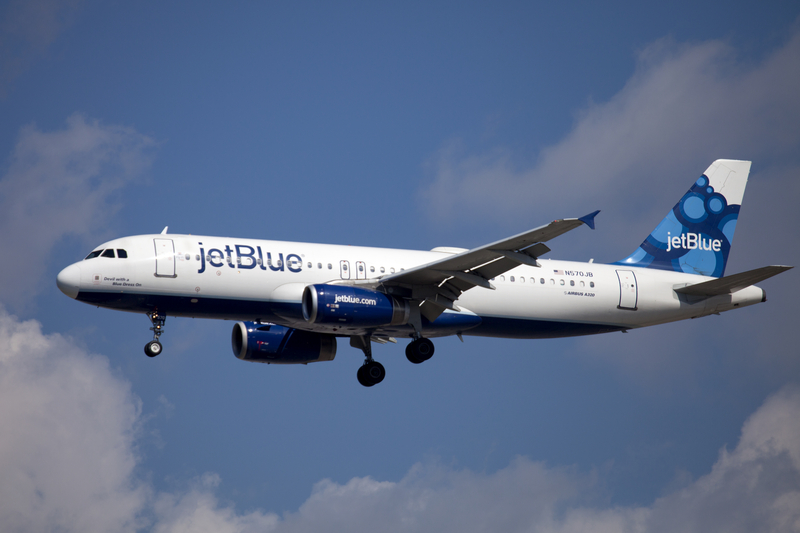
BlueFirst is intended for JetBlue’s Airbus A220s, A320s and non-Mint A321s. The airline’s June 30 fleet filing listed 65 Airbus A220s, 129 Airbus A320s, 28 non-Mint Airbus A321s and 16 non-Mint Airbus A321neos. Together, those subfleets accounted for 238 of JetBlue’s 296 aircraft at midyear.
The mix creates a substantial cabin-integration program. The A220 currently has a five-abreast Main cabin, while the A320 and A321 families use six-abreast seating. BlueFirst’s common 2-2 format will therefore have to be adapted to aircraft with different fuselage widths, cabin lengths and existing EvenMore layouts.
JetBlue told investors in March that it was targeting approximately 20% of the fleet for completion by the end of 2026, with the vast majority finished by the end of 2027. That schedule makes BlueFirst a rolling fleet transition rather than a single launch date, and customers will encounter multiple configurations while aircraft cycle through modification.
The retrofit is one component of JetBlue’s JetForward program. In its second-quarter results, the airline said premium revenue per available seat mile had increased approximately 13% and that BlueFirst sales were expected to begin in the fall. JetBlue expects the broader JetForward program to generate about $1.2 billion in annual incremental earnings before interest and taxes by 2028.
Bottom Line
BlueFirst fills the most obvious gap in JetBlue’s product range. The airline has built a strong reputation around Mint, but most of its aircraft operate without a cabin that can compete directly for conventional domestic first-class demand. Installing recliners across the non-Mint fleet gives corporate travelers, higher-tier leisure passengers and loyalty members a premium option on far more routes.
The more consequential change is the economics behind the seat. JetBlue plans to install up to four rows of four-abreast seating while keeping total fleet capacity broadly similar. That signals a tightly optimized cabin in which BlueFirst must produce a meaningful revenue premium without materially reducing the number of sellable seats. The balance among BlueFirst, EvenMore and Main will be as important as the recliner itself.
Initial aircraft assignments and route pricing will show how aggressively JetBlue intends to monetize the cabin. The A320 is likely to provide the clearest early test because it is the airline’s largest non-Mint subfleet, while the A220 will demonstrate whether JetBlue can deliver a consistent first-class proposition across a narrower, five-abreast airframe. Retrofit speed, operational consistency and access for Mosaic members will determine whether BlueFirst becomes a network-wide advantage or another variable in JetBlue’s growing collection of cabin configurations.
Keep reading FlyMag
Get the Daily Brief in the morning or the Route Watch weekly recap on Fridays. Or both.