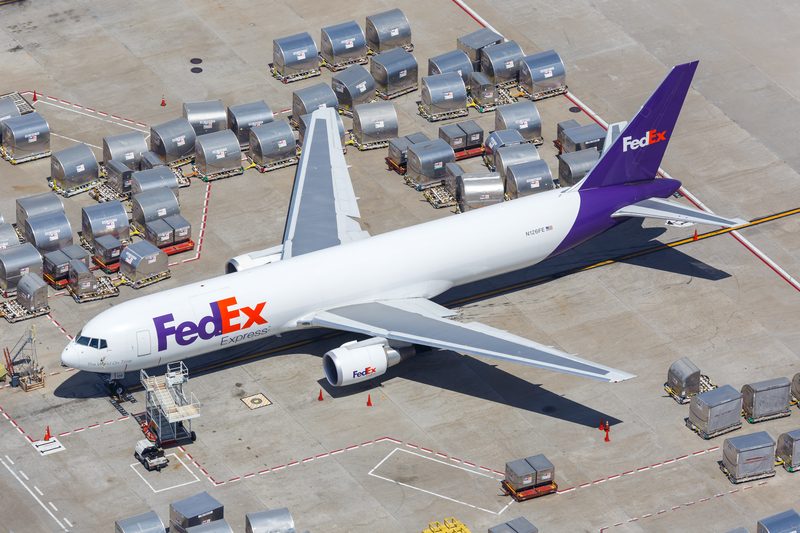
FedEx has now taken delivery of its last newly built Boeing 767-300 Freighter, bringing one of the most consequential fleet-renewal programs in cargo aviation to its conclusion.
The aircraft, N244FE, departed Paine Field (PAE) for Indianapolis (IND) as its delivery flight, and it is expected to become the 152nd Boeing 767-300F in the FedEx Express fleet. That makes this more than just one more freighter joining service. It marks the end of FedEx’s long-running 767 acquisition campaign and one of the final visible milestones before Boeing ends 767 freighter production next year.
For aviation readers, the significance is not just the serial number. It is what this aircraft says about how modern express cargo networks have evolved.
Read our stories in your inbox
Two aviation newsletters. Zero fluff.
The 767 Became FedEx’s Middle-Ground Freighter
The reason this delivery matters so much is that the 767-300F turned out to be exactly the airplane FedEx needed.
It sits in a very useful middle space:
- more capable than smaller domestic freighters
- more efficient than older widebody cargo aircraft
- easier to use across a wide range of airports than larger freighters
That combination is why FedEx leaned so heavily into the type. It gave the airline an aircraft well suited to domestic trunk routes and medium-haul international sectors without the heavier cost structure of something like a 777F.
In other words, the 767 became the backbone of the “middle market” in FedEx’s cargo network.
This Aircraft Finishes A Huge Fleet Program
The newly delivered aircraft, N244FE, closes out a multi-year order stream that has transformed FedEx’s fleet.
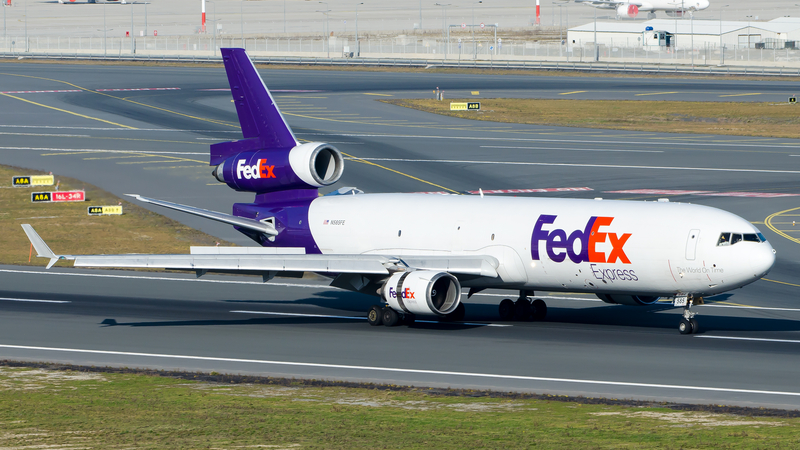
FedEx had long used the 767 to replace older types such as the MD-10, MD-11, and parts of the Airbus A300 fleet in roles where better economics were critical. The appeal was not only fuel burn, but also maintenance commonality, scheduling flexibility, and the ability to standardize a large part of the network around one aircraft family.
That is what makes this final delivery important. It is the completion of a strategic fleet shift, not just the arrival of one more airplane.
The Aircraft Still Makes Sense In 2026
That is part of what makes the 767 so interesting.
The passenger 767 is now an old design by modern airline standards, but the freighter remains extremely useful. For a carrier like FedEx, the type still offers a strong balance of payload, range, and airport compatibility. It is large enough to matter, but not so large that it becomes operationally awkward in the way bigger freighters sometimes can.
This is one reason the aircraft has lasted so long in production even after fading from the passenger market.
Production Is Ending, But The Type Still Has A Role
The delivery also matters because Boeing’s 767 line is nearing its end.
Once the remaining aircraft for UPS are completed, commercial 767 freighter production is expected to close in 2027. That gives this FedEx aircraft extra significance. It is not only the final 767 for FedEx. It is one of the last few examples of a production line that has spanned decades and served both the airline and cargo worlds in very different ways.
That gives the delivery a kind of industrial importance as well as a fleet one.
FedEx’s Cargo Logic Still Favors The 767
What the final delivery really underlines is that the 767 was never just a placeholder.
FedEx used the type because it fit its express model unusually well. The aircraft offers:
- a payload in the right range for dense overnight and medium-haul work
- lower operating costs than many older freighters
- good compatibility with busy or space-constrained airports
- strong maintenance and training efficiency, especially alongside the 757
That last point matters. The 767’s operational commonality with the 757 helped FedEx gain further efficiency across pilot training, tooling, and spare parts support. That gave the fleet program even more value than the aircraft’s economics alone would suggest.
The Delivery Flight Is Symbolic, Even If The Aircraft’s Work Hasn’t Started Yet
The ferry from Paine Field to Indianapolis is, in one sense, just another manufacturer handoff.
But in another sense, it is highly symbolic. The airplane left the factory as the last of its kind for the world’s biggest express operator and arrived at one of FedEx’s key hubs as the closing chapter of a fleet story that has reshaped the carrier’s widebody freighter mix.
Even if the aircraft did not immediately enter commercial service on arrival, its significance is already set. It is the endpoint of an acquisition strategy that helped modernize the airline.
Bottom Line
FedEx’s delivery of N244FE, its final newly built Boeing 767-300F, is a major milestone because it completes one of the most important cargo fleet-renewal programs of the past decade. The aircraft is expected to bring the FedEx 767 freighter fleet to 152 units, underscoring just how central the type became to the airline’s express network.
As Boeing’s 767 production line heads toward closure in 2027, this final FedEx handoff also marks the beginning of the end for a freighter aircraft that proved far more enduring than many expected.