Southwest Airlines has 23 new and returning nonstop routes scheduled between August 2026 and February 2027, giving the carrier a broad mix of domestic leisure, Austin growth, California flying, Florida winter demand, and two new international links from Las Vegas.

The additions are not random. They show how Southwest Airlines is increasingly using its all-Boeing 737 fleet to reinforce focus cities, rebuild selected former markets, and test thinner routes where low weekly frequency can still make sense.
The 23-route group includes 21 domestic routes and two international services. The two international routes are from Harry Reid International Airport (LAS) in Las Vegas to Puerto Vallarta (PVR) in Mexico and San José Juan Santamaría International Airport (SJO) in Costa Rica.
Read our stories in your inbox
Two aviation newsletters. Zero fluff.
Most of the new flying is domestic, however, and that is where the network story is most interesting. Southwest is adding routes from Austin (AUS), Nashville (BNA), Long Beach (LGB), San Diego (SAN), Burbank (BUR), Fort Lauderdale (FLL), Denver (DEN), Orlando (MCO), and several Northeast and Midwest airports, while leaning heavily into winter sun demand in Florida.
The 23 Routes In Southwest’s Upcoming Launch Batch
| Start Date | Route | Notes |
|---|---|---|
| August 4, 2026 | Long Beach (LGB) – Portland (PDX) | Returning Southwest market |
| August 4, 2026 | Long Beach (LGB) – Seattle/Tacoma (SEA) | Pacific Northwest growth from LGB |
| August 4, 2026 | San Diego (SAN) – Santa Barbara (SBA) | Intra-California service |
| August 8, 2026 | Burbank (BUR) – Honolulu (HNL) | New LA-area Hawaii link |
| September 24, 2026 | Austin (AUS) – Knoxville (TYS) | Seasonal Austin growth |
| October 1, 2026 | Austin (AUS) – Memphis (MEM) | Returns to Southwest’s map |
| October 1, 2026 | Nashville (BNA) – Manchester, NH (MHT) | Returning long-absent market |
| October 1, 2026 | Nashville (BNA) – Reno/Tahoe (RNO) | Brand-new nonstop market |
| October 1, 2026 | Las Vegas (LAS) – Puerto Vallarta (PVR) | International Mexico route |
| October 1, 2026 | Las Vegas (LAS) – San José, Costa Rica (SJO) | Brand-new international market |
| October 3, 2026 | Austin (AUS) – Destin/Fort Walton Beach (VPS) | Returning Southwest market |
| October 3, 2026 | Austin (AUS) – Santa Rosa/Sonoma County (STS) | Brand-new nonstop market |
| November 21, 2026 | Denver (DEN) – West Palm Beach (PBI) | Florida winter demand |
| November 21, 2026 | Fort Lauderdale (FLL) – San Diego (SAN) | Long domestic leisure/business market |
| November 21, 2026 | Kansas City (MCI) – San Francisco (SFO) | West Coast link from MCI |
| November 21, 2026 | Orlando (MCO) – San José, California (SJC) | Long domestic transcontinental-style route |
| February 11, 2027 | Pittsburgh (PIT) – West Palm Beach (PBI) | Returning Southwest market |
| February 13, 2027 | Indianapolis (IND) – West Palm Beach (PBI) | Florida winter leisure route |
| February 13, 2027 | Manchester, NH (MHT) – Fort Myers (RSW) | Northeast-to-Florida leisure route |
| February 13, 2027 | Buffalo (BUF) – Miami (MIA) | South Florida winter route |
| February 13, 2027 | Rochester (ROC) – Fort Lauderdale (FLL) | Returning Southwest market |
| February 13, 2027 | Providence (PVD) – Sarasota/Bradenton (SRQ) | Returning Southwest market |
| February 13, 2027 | Portland, Maine (PWM) – Fort Myers (RSW) | Northeast-to-Southwest Florida route |
The list is a useful snapshot of how Southwest is thinking. There are big airports, but not only big airports. There are high-profile leisure destinations, but also niche city pairs. There are competitive markets, but also routes where Southwest may have the nonstop field to itself.

Austin Is Becoming A More Important Southwest Battleground
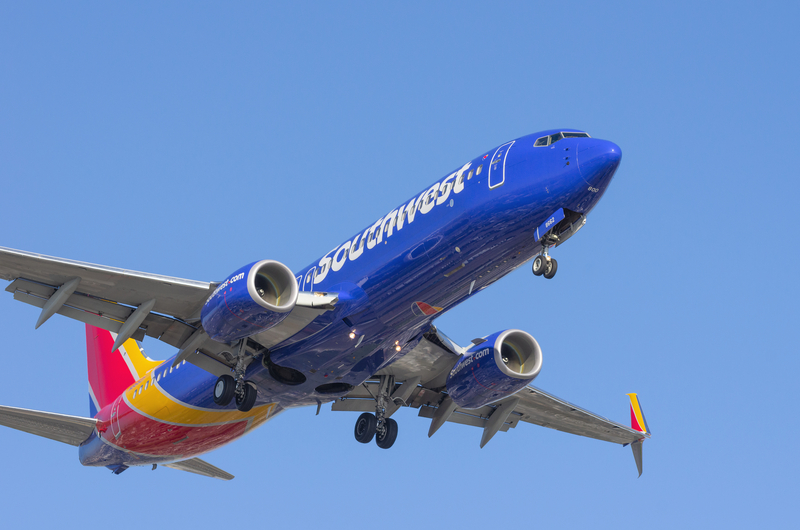
Austin-Bergstrom International Airport (AUS) is one of the clearest winners in this schedule wave.
Southwest is adding or restoring four routes from Austin: Knoxville (TYS), Memphis (MEM), Destin/Fort Walton Beach (VPS), and Santa Rosa/Sonoma County (STS). That gives the airline more reach from a city where it has already been building aggressively.
The Austin (AUS)–Memphis (MEM) route is especially notable because it arrives just as Delta is pulling back from some Austin flying. Memphis International Airport (MEM) announced that Southwest will begin six-weekly Austin service from October 1, 2026. That gives Southwest an opportunity to capture traffic between two growing music, culture, logistics, and business markets.
Austin (AUS)–Knoxville (TYS) is a different kind of play. It links Central Texas with East Tennessee and the gateway to the Great Smoky Mountains. The route is likely to lean leisure, university, visiting-friends-and-relatives, and lifestyle traffic rather than traditional corporate demand.
Austin (AUS)–Destin/Fort Walton Beach (VPS) is easier to understand. It is a beach route from one of the fastest-growing large U.S. metros to the Florida Panhandle. Austin (AUS)–Santa Rosa (STS), meanwhile, is one of the more creative routes in the group. It gives Texas travelers a nonstop path into Sonoma County wine country, while also positioning Southwest at STS as an alternative to the Bay Area’s larger airports.
For Southwest, the Austin routes are about more than local traffic. They reinforce AUS as a place where the airline can grow without operating a traditional hub.
Nashville Continues To Mature As A Connecting Platform
Nashville International Airport (BNA) is another major focus.
Southwest will add Nashville (BNA)–Manchester-Boston Regional Airport (MHT) and Nashville (BNA)–Reno/Tahoe International Airport (RNO) on October 1, 2026. The Manchester route restores a city pair Southwest last served many years ago, while Reno is a brand-new nonstop market.
Nashville has become far more than a local origin-and-destination airport for Southwest. The airline has been building BNA into one of its most important connecting and focus-city operations, with a growing list of east-west and north-south links. That is why routes such as BNA–MHT and BNA–RNO make sense.
Manchester (MHT) gives Southwest another Northeast spoke from Nashville without forcing travelers to use Boston Logan (BOS). It also supports New Hampshire travelers who want access to Nashville and beyond without driving to Boston.
Reno/Tahoe (RNO) is even more interesting. The local Nashville–Reno market is not huge by legacy hub standards, but the route has real leisure and connecting potential. Reno offers access to Lake Tahoe, northern Nevada, ski traffic, gaming, outdoor travel, and western leisure demand. Nashville gives Reno travelers a gateway into the Southeast and Southwest’s broader BNA network.
This is exactly the type of route Southwest can try because it does not need to operate every market daily from the start.
Las Vegas Adds Two International Routes
The two international routes in this 23-route group both come from Las Vegas (LAS).
Southwest is adding Las Vegas (LAS)–Puerto Vallarta (PVR) and Las Vegas (LAS)–San José, Costa Rica (SJO). The Puerto Vallarta route fits a proven U.S.–Mexico leisure pattern, while San José (SJO) is the more strategically interesting addition.
Las Vegas (LAS)–San José (SJO) creates a new nonstop link between Nevada and Costa Rica. San José’s Juan Santamaría International Airport (SJO) serves the Costa Rican capital region and provides access to the country’s central valley, Pacific beaches, adventure tourism, eco-tourism markets, and onward domestic travel.
For Southwest, Las Vegas is a natural international gateway because the airline already has a large operation at LAS and strong connectivity across the western United States. A passenger from California, the Pacific Northwest, the Mountain West, or the Midwest can connect through Las Vegas to reach Mexico or Costa Rica without using a traditional legacy hub.
That is the broader point. Southwest’s international network is smaller than those of American, Delta, and United, but it can be powerful when paired with the airline’s large domestic base at airports like LAS, Denver (DEN), Houston Hobby (HOU), Baltimore/Washington (BWI), and Orlando (MCO).
Long Beach And Burbank Strengthen The Greater LA Map
Southwest’s Greater Los Angeles strategy also gets more depth.
The airline will resume Long Beach (LGB)–Portland (PDX) and Long Beach (LGB)–Seattle/Tacoma (SEA) on August 4, 2026, with six weekly flights. It will also add Burbank (BUR)–Honolulu (HNL) on August 8.
These are not just California adds. They are airport-positioning decisions.
Long Beach (LGB) is a constrained, convenient airport with strong appeal for travelers in southeast Los Angeles County and northern Orange County. It does not have the scale of Los Angeles International Airport (LAX), but that is part of its value. For passengers who can use it, LGB is often easier, faster, and less stressful.
Burbank (BUR) is similarly valuable. It is one of the most convenient airports for much of the San Fernando Valley, Hollywood, Pasadena, Glendale, and parts of central Los Angeles. Adding Honolulu (HNL) from Burbank gives Southwest another LA-area Hawaii option without forcing all demand through LAX or Long Beach.
Southwest has long understood that Los Angeles is not a one-airport market. The airline’s ability to serve LAX, BUR, LGB, Ontario (ONT), and Orange County (SNA) gives it a broader Southern California footprint than a carrier focused only on LAX.
San Diego–Santa Barbara Adds Intra-California Depth
San Diego (SAN)–Santa Barbara (SBA) is a smaller route, but it fits Southwest’s California strategy.
The sector is short, but driving between San Diego and Santa Barbara can be time-consuming because of Southern California traffic. A nonstop flight offers a practical alternative for business travelers, university traffic, leisure travelers, and passengers connecting through San Diego.
Southwest is already a major airline in California, and the San Diego schedule has been growing around the airport’s new Terminal 1. Adding Santa Barbara (SBA) gives the airline another point on its intra-California map and builds on its strength in short-haul West Coast flying.
This kind of route is not about glamorous aircraft utilization. It is about building network convenience and keeping Southwest relevant for travelers who move around California frequently.
Florida Dominates The Winter Route Wave
The February 2027 additions are heavily focused on Florida, and that is no surprise.
Southwest will add or restore Indianapolis (IND)–West Palm Beach (PBI), Pittsburgh (PIT)–West Palm Beach (PBI), Manchester (MHT)–Fort Myers (RSW), Portland, Maine (PWM)–Fort Myers (RSW), Buffalo (BUF)–Miami (MIA), Rochester (ROC)–Fort Lauderdale (FLL), and Providence (PVD)–Sarasota/Bradenton (SRQ).
This is classic winter-sun flying. Northeast and Midwest markets produce strong seasonal demand to Florida, especially in February, when leisure travelers, retirees, snowbirds, school-break passengers, and visiting-friends-and-relatives traffic all move south.
The airports are carefully chosen. West Palm Beach (PBI) serves Palm Beach County and the northern side of the South Florida market. Fort Myers (RSW) serves Southwest Florida, including Naples, Cape Coral, Sanibel, and the broader Gulf Coast. Fort Lauderdale (FLL) gives access to Broward County, Miami-Dade, Palm Beach, cruises, and South Florida beach demand. Sarasota/Bradenton (SRQ) has become one of Florida’s fastest-growing leisure airports. Miami (MIA) gives Southwest another large South Florida gateway in a market long dominated by American Airlines.
These routes may not need daily service to work. Saturday-heavy or low-frequency winter flying can be commercially sensible if demand peaks around vacation weeks and if aircraft can be rotated into other markets on off days.
The Boeing 737 Fleet Makes The Strategy Possible
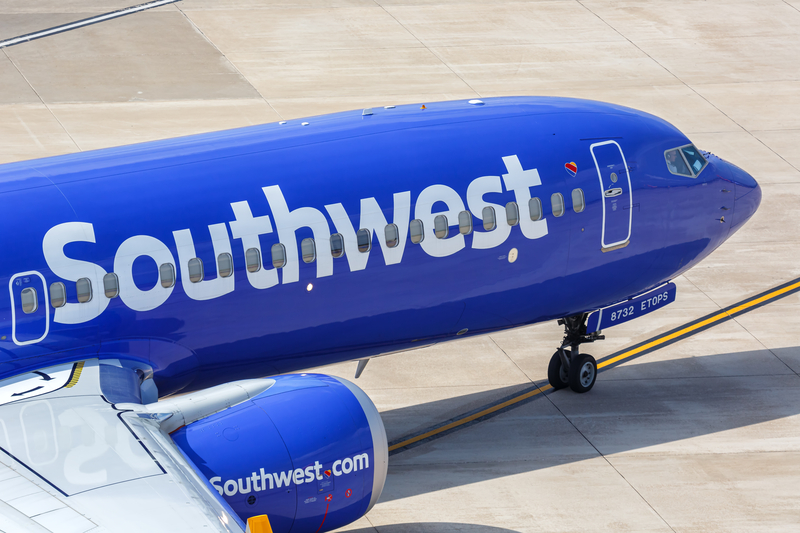
Every Southwest route is, by definition, a Boeing 737 route.
The airline remains an all-737 operator, using Boeing 737-700s, 737-800s, and 737-8/MAX 8 aircraft. That fleet simplicity has been central to Southwest’s operating model for decades. It simplifies pilot training, maintenance, spare parts, scheduling, and aircraft substitution.
The Boeing 737-700 is the smallest aircraft in the current Southwest fleet, now configured with 137 seats under the carrier’s newer seating layout. The 737-800 and 737-8 both carry 175 seats. The 737-8/MAX 8 is especially important for longer routes because it offers improved fuel burn, modern engines, and enough range for markets such as Burbank (BUR)–Honolulu (HNL), Orlando (MCO)–San José, California (SJC), and Las Vegas (LAS)–San José, Costa Rica (SJO).
Boeing lists the 737-8 with up to 3,500 nautical miles of range. That gives Southwest enough performance margin for most of its domestic and near-international network, including Hawaii, Mexico, Central America, and long mainland transcontinental routes.
The aircraft also matters because Southwest has changed its onboard model. Assigned seating and premium seating are now part of the airline’s product, and in-seat power is being added across the 737-8 fleet. That changes how some of these routes may be sold, especially longer sectors where passengers value seat choice, legroom, and device power more than they might on a one-hour hop.
More Routes Now Face Direct Competition
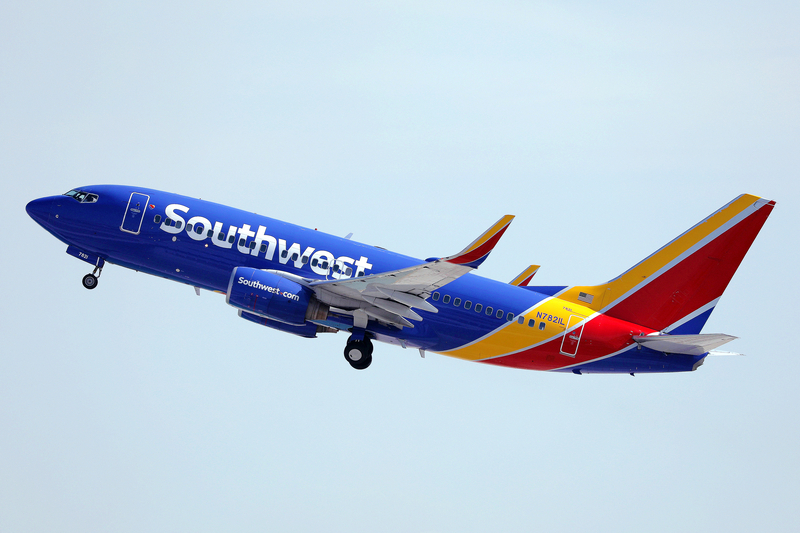
One notable feature of the 23-route group is that many of the markets will not be uncontested.
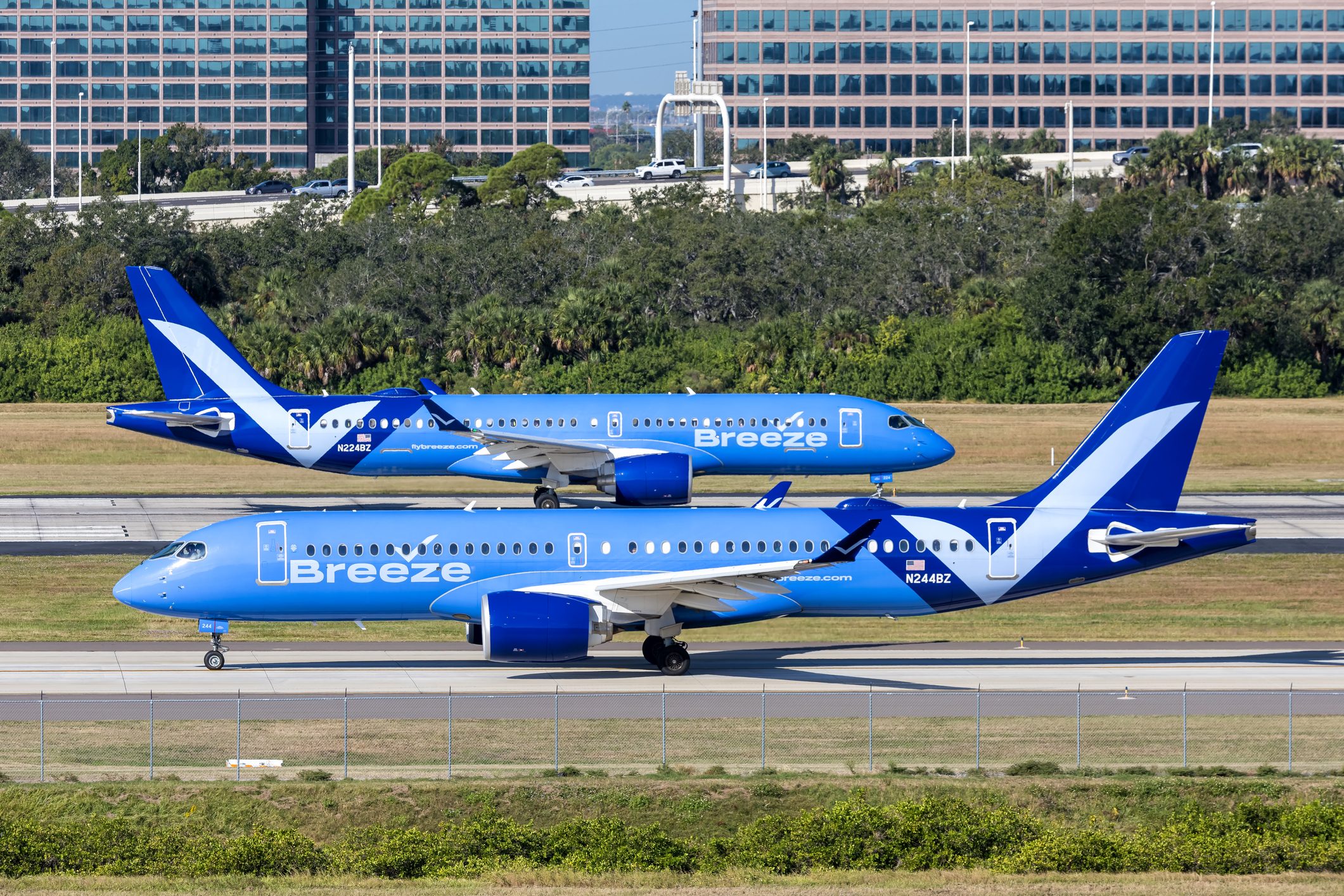
Some routes enter markets where Allegiant, Delta, Breeze, or other carriers are already present. Austin (AUS)–Knoxville (TYS), for example, brings Southwest into a market where Allegiant has already targeted leisure demand. Austin (AUS)–Memphis (MEM) gives Southwest an opportunity as Delta leaves the market, but that also means Southwest must prove there is enough local demand to sustain the route.
Competition is not always bad. In some markets, Southwest’s brand, loyalty base, schedule, and network can stimulate demand. In others, the carrier may be entering because another airline has demonstrated that the market exists.
That appears to be part of the February Florida strategy as well. Breeze has been active in several smaller-to-Florida leisure markets. Southwest’s move into routes such as Providence (PVD)–Sarasota (SRQ), Rochester (ROC)–Fort Lauderdale (FLL), and Portland (PWM)–Fort Myers (RSW) shows that it is willing to defend or enter markets where smaller leisure-focused carriers have created traffic.
Southwest does not always need to be first. Sometimes it can be more powerful as the second airline into a market, especially when it brings a larger brand and better network connectivity.
Returning Routes Tell Their Own Story
Several of the 23 routes have been in Southwest’s network before.
That includes Austin (AUS)–Memphis (MEM), Austin (AUS)–Destin/Fort Walton Beach (VPS), Nashville (BNA)–Manchester (MHT), Long Beach (LGB)–Portland (PDX), Orlando (MCO)–San José (SJC), Providence (PVD)–Sarasota (SRQ), and Rochester (ROC)–Fort Lauderdale (FLL).
A returning route is not a failure story. Airline networks change constantly. A route that did not work in 2016 may make sense in 2026 if the airport has grown, the competitive environment has changed, another carrier has exited, aircraft are more available, or the airline’s strategy has shifted.
Southwest will have historical performance data on these markets. It knows what fares looked like, what loads looked like, which end of the route was stronger, whether passengers connected beyond the nonstop, and why the route ended previously. That makes a relaunch less speculative than a first-time nonstop.
The key question is whether the market has changed enough to produce a better result this time.
Brand-New Markets Show Where Southwest Sees White Space
Three of the routes in this batch appear especially notable as first-time nonstop markets: Austin (AUS)–Santa Rosa (STS), Nashville (BNA)–Reno/Tahoe (RNO), and Las Vegas (LAS)–San José, Costa Rica (SJO).
Each has a different logic.
Austin–Santa Rosa is a lifestyle and leisure route linking one of the fastest-growing U.S. metros with Sonoma County wine country. Nashville–Reno connects a rapidly growing Southwest focus city with northern Nevada and Tahoe access. Las Vegas–San José gives Southwest a new Central America link from one of its largest operating bases.
These are not obvious hub-to-hub routes. They are the kind of markets Southwest can test because it has a large 737 fleet, a big domestic customer base, and enough schedule flexibility to try routes that might not make sense for a legacy network carrier.
That is where Southwest still has a distinct advantage. Even as the airline changes its product with assigned seating and premium options, its network DNA remains different from American, Delta, and United.
A More Measured Southwest
The larger takeaway from this 23-route wave is that Southwest is becoming more surgical.
The airline is not simply adding flights everywhere. It is choosing markets that fit specific themes: Austin growth, Nashville connectivity, Greater LA airport diversification, winter Florida demand, Las Vegas international expansion, and selected long domestic leisure routes.
This is also happening as Southwest changes the customer experience. The airline has moved into assigned seating, premium seat choices, free Wi-Fi for Rapid Rewards members where available, and in-seat power on 737-8 aircraft. Those changes make Southwest look more like a hybrid carrier than the open-seating airline many travelers remember.
That evolution matters on longer routes. A passenger flying Orlando (MCO)–San José (SJC), Burbank (BUR)–Honolulu (HNL), or Las Vegas (LAS)–San José (SJO) is spending several hours onboard. Seat assignment, legroom, Wi-Fi, and power are more important on those sectors than on a short Dallas (DAL)–Houston (HOU) hop.
The route map and product strategy are moving together.
Bottom Line
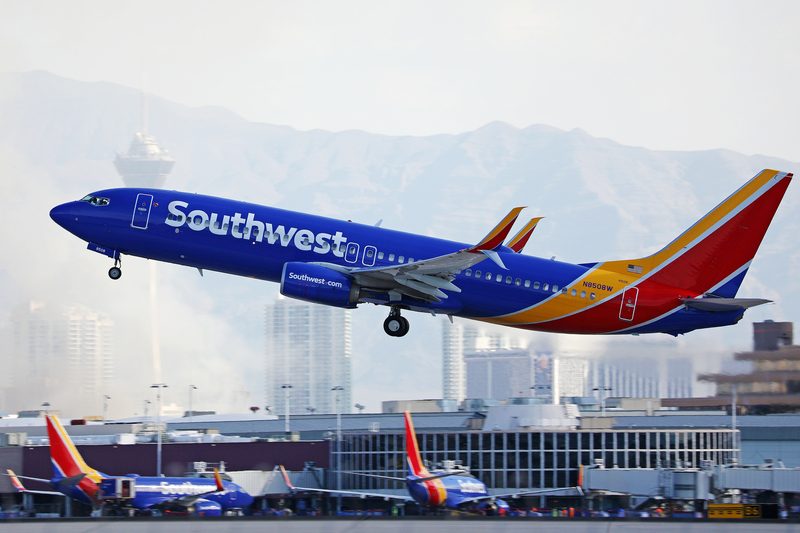
Southwest’s 23-route launch wave is a broad but focused expansion that says a lot about where the airline sees opportunity.
The carrier is adding new and returning flights from August 2026 through February 2027, with the strongest themes being Austin growth, Nashville connectivity, Florida winter leisure demand, Greater Los Angeles airport coverage, and new international links from Las Vegas.
The all-Boeing 737 fleet remains central to the strategy. The 737-700 gives Southwest smaller-gauge flexibility, while the 737-800 and 737-8/MAX 8 provide 175-seat capacity for larger domestic and near-international markets. The 737-8 is particularly important for longer routes such as Burbank (BUR)–Honolulu (HNL), Orlando (MCO)–San José (SJC), and Las Vegas (LAS)–San José, Costa Rica (SJO).
Not every route will be a year-round success. Some are seasonal by design, some are competitive, and some are low-frequency tests. But that is the point. Southwest is using its scale to probe markets where a few weekly flights can stimulate demand, defend against competitors, or restore links that make more sense now than they did before.
For travelers, the benefit is more nonstop choice in markets that often require a connection. For Southwest, the 23-route group shows a carrier still expanding — but doing so with more precision than in the past.
Keep reading FlyMag
Get the Daily Brief in the morning or the Route Watch weekly recap on Fridays. Or both.