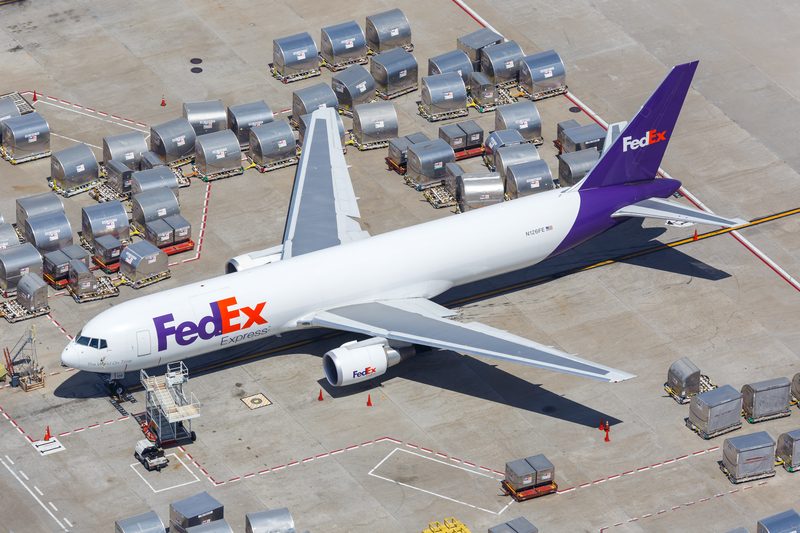
FedEx and China Southern Air Logistics have signed a strategic Memorandum of Understanding that could strengthen Guangzhou’s position as one of Asia’s most important air cargo gateways.
The agreement, signed in Guangzhou on June 2, 2026, brings together two major cargo players with deep operations at Guangzhou Baiyun International Airport (CAN). FedEx has long used CAN as a core Asia-Pacific hub, while China Southern Air Logistics is tied to China Southern’s home base and one of the largest airline networks in China.
The MoU focuses on five broad areas: international flight and hub connectivity, network planning, fleet resources, ground operations, and digitalization. Those categories may sound general, but for air cargo operators they cover the most important parts of the business: aircraft capacity, route structure, freight handling, data visibility, and the ability to move shipments through a hub quickly and predictably.
Read our stories in your inbox
Two aviation newsletters. Zero fluff.
This is not a merger, joint venture, or immediate fleet-sharing announcement. It is a framework for cooperation. Even so, the agreement is significant because it links FedEx’s global express network with China Southern Air Logistics’ domestic and international cargo platform at a time when supply chains are demanding more resilience, more speed, and more route flexibility.
Guangzhou Is The Center Of The Deal
The most important airport in this agreement is Guangzhou Baiyun International Airport (CAN).
FedEx operates its Asia-Pacific hub at CAN, while China Southern is based at the airport and has built Guangzhou into a major passenger and cargo platform. That shared geography is what makes the MoU meaningful. The two companies are not trying to create cooperation from opposite sides of the world. They are already major users of the same airport.
For FedEx, Guangzhou (CAN) is a strategic gateway into South China, the Greater Bay Area, and the broader export manufacturing base of Guangdong province. The airport links FedEx’s China network with wider Asia-Pacific operations and long-haul flows to North America and Europe. FedEx’s Guangzhou gateway also connects into major global points such as Anchorage (ANC), Memphis (MEM), Paris Charles de Gaulle (CDG), and Cologne/Bonn (CGN), giving South China shippers access to the company’s global express network.
For China Southern Air Logistics, Guangzhou (CAN) is the natural cargo base. The carrier has access to China Southern’s domestic scale, regional connectivity, and all-cargo operations. That combination makes CAN one of the few Chinese airports where an international express integrator and a large domestic airline group both have a major strategic interest in the same hub.
That overlap is the real story. Air cargo cooperation is most valuable when it improves flows at the point where networks meet. In this case, that point is Guangzhou.
What The MoU Covers
The agreement calls for FedEx and China Southern Air Logistics to explore cooperation across international flight connectivity, hub development, network planning, fleet resources, ground operations, and digitalization.
International flight and hub connectivity could mean better coordination between FedEx’s express network and China Southern Air Logistics’ cargo network. For shippers, the value would come from more predictable routings and improved access between China and overseas markets.
Network planning is equally important. Air cargo is not just about having aircraft. It is about placing capacity in the right lanes, at the right time, with the right ground handling and customs processes behind it. Cooperation in this area could allow the two companies to identify where their networks complement each other, especially on flows between South China, Southeast Asia, Europe, and North America.
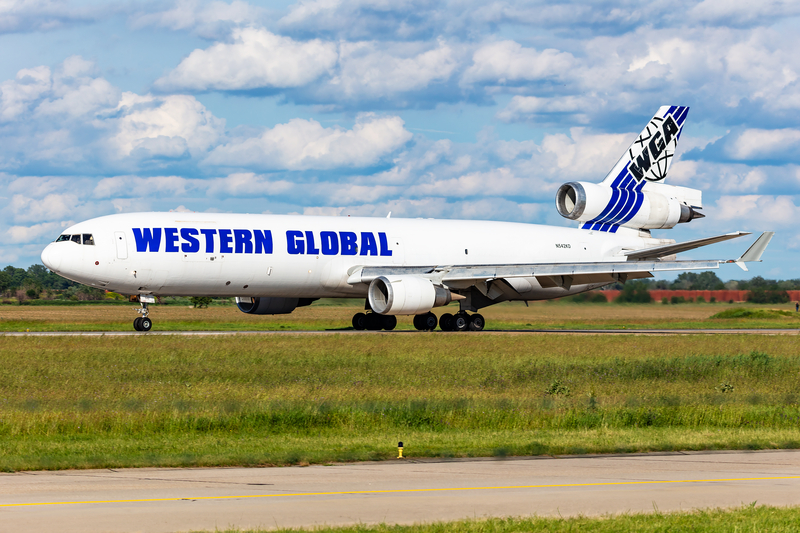
Fleet resources are another key area. FedEx operates a diverse freighter fleet in and around China, including Boeing 777, Boeing 767, Boeing 757, and MD-11 aircraft. China Southern Air Logistics operates a large Boeing 777 freighter fleet. The Boeing 777F is especially important in this context because it is one of the world’s most capable twin-engine freighters, able to carry heavy long-haul cargo missions with a revenue payload of about 102 tonnes.
Ground operations may prove to be one of the most practical parts of the cooperation. Cargo aircraft are only one piece of the system. Sorting, ramp handling, warehouse processing, customs interface, truck connections, and digital shipment visibility are just as important. A freighter can arrive on time, but if cargo does not move efficiently through the facility, the network loses value.
Digitalization is the final piece. Air freight customers increasingly expect end-to-end visibility, better data exchange, faster documentation, and more reliable exception management. For express operators and airline cargo divisions, digital cooperation can reduce friction in the shipment journey and improve service reliability.
FedEx Is Already Expanding At Guangzhou
The agreement comes as FedEx is preparing a major expansion at Guangzhou Baiyun (CAN).
The company’s South China Operations Center is expected to begin operations in 2027. The facility will cover more than 41,000 square meters and will more than double the size of FedEx’s existing Guangzhou gateway. It is designed to sort up to 25,000 packages and documents per hour, roughly three times the current sorting efficiency at the site.
That expansion gives the MoU added weight. FedEx is not simply signing a cooperation document while standing still at CAN. It is expanding its physical infrastructure at the same airport where China Southern Air Logistics has its strongest base.
For South China exporters, that matters. Guangdong province is one of the world’s most important manufacturing and cross-border e-commerce regions. Shippers in the region need fast access to North America, Europe, Southeast Asia, and other Asian markets. A stronger FedEx operation at CAN, combined with closer cooperation with China Southern Air Logistics, could improve capacity options and reduce bottlenecks during peak periods.
The timing is also important. E-commerce, high-value manufacturing, pharmaceuticals, electronics, and time-sensitive industrial supply chains all require reliable air logistics. Guangzhou’s location gives it a major advantage, but infrastructure and connectivity have to keep pace with demand.
China Southern Brings 777F Scale
China Southern Air Logistics gives the partnership a substantial all-cargo fleet base.
The company operates 19 Boeing 777 freighters and more than 80 scheduled international cargo flights per week. The 777F is a serious long-haul cargo aircraft, with enough range and payload to operate major intercontinental freight sectors efficiently. It is widely used on trunk cargo routes because it combines high payload, strong reliability, and lower operating complexity than older four-engine freighters.
For China Southern Air Logistics, the 777F fleet supports long-haul cargo growth from Guangzhou (CAN) to international markets. The aircraft can carry large volumes of general freight, e-commerce shipments, electronics, high-value goods, and other time-sensitive cargo. It also gives the carrier flexibility to develop new cargo lanes without relying only on passenger belly capacity.
That matters because air cargo demand is increasingly uneven. Passenger belly capacity has returned in many markets after the pandemic, but freighter capacity remains essential for express shipments, oversized cargo, high-yield goods, and routes where passenger frequencies do not match cargo demand.
A cooperation framework with FedEx gives China Southern Air Logistics a closer link to one of the world’s largest express transportation networks. FedEx gains stronger alignment with a major Chinese cargo operator based at the same airport. Both sides gain potential network depth.
FedEx Brings Global Express Reach
FedEx’s contribution is different. It brings a global express network with integrated air and ground capability.
FedEx serves more than 220 countries and territories worldwide and has operated in China since 1984. In China, the company serves major airports including Beijing Capital (PEK), Shanghai Pudong (PVG), Shenzhen Bao’an (SZX), Guangzhou Baiyun (CAN), Qingdao Jiaodong (TAO), and Xiamen Gaoqi (XMN). Its China operation includes more than 300 international weekly flights, with aircraft types listed as Boeing 777, Boeing 767, Boeing 757, and MD-11.
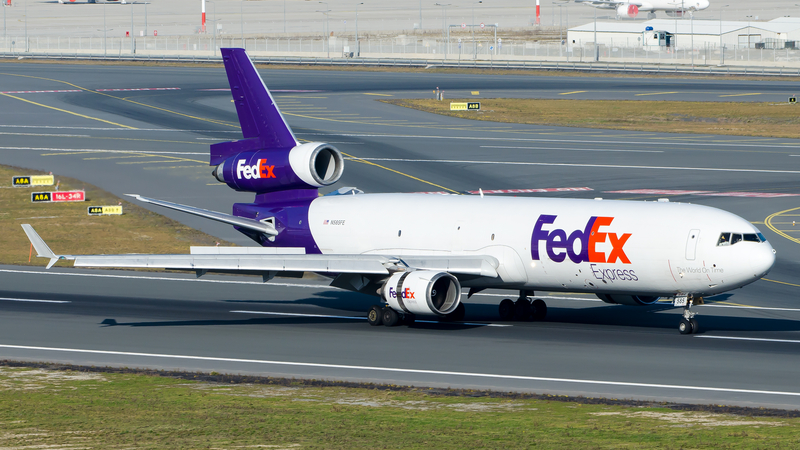
That aircraft mix is important. The Boeing 777F gives FedEx long-haul heavy cargo capability. The Boeing 767F is a medium-widebody freighter well suited for regional and medium-haul express lanes. The Boeing 757F remains useful on shorter, high-frequency routes where a narrowbody freighter is the right size. The MD-11F, while older and gradually being phased down across the global cargo industry, still provides large tri-jet freighter capacity where it remains in service.
FedEx’s value is not just aircraft count. It is the integration of aircraft, sort facilities, trucking, customs processes, customer systems, and time-definite service products. That is what makes express logistics different from traditional airport-to-airport cargo.
For China Southern Air Logistics, closer cooperation with FedEx could provide access to a more integrated global express environment. For FedEx, China Southern’s local network knowledge and cargo base at CAN can support stronger route connectivity and operational depth in China.
Why This Matters For Air Cargo
The MoU comes at a time when the air cargo market is still adjusting to several major forces.
Cross-border e-commerce continues to drive demand for fast international parcel and small-package movement. Manufacturers want more resilient supply chains after years of disruption. Shippers are looking for alternatives when ocean freight faces delays or geopolitical risk. At the same time, airlines and logistics companies are trying to manage capacity carefully after the unusual cargo demand spikes seen during the pandemic period.
In that environment, partnerships can be more efficient than building everything alone.
For FedEx, working more closely with China Southern Air Logistics could improve access to cargo flows within China and strengthen Guangzhou (CAN) as a transfer point. For China Southern Air Logistics, cooperation with FedEx could improve global reach, operational best practices, and access to express logistics expertise.
For Guangzhou Baiyun (CAN), the agreement reinforces its role as a cargo hub. CAN already benefits from China Southern’s home-base network and FedEx’s Asia-Pacific hub operation. A stronger relationship between the two companies could help the airport compete more effectively with other major Asian cargo gateways, including Hong Kong (HKG), Shanghai Pudong (PVG), Shenzhen (SZX), Incheon (ICN), and Singapore Changi (SIN).
Not A Route Launch, But Still Important
It is important not to read too much into the announcement too quickly.
The MoU does not list new routes, aircraft assignments, schedule changes, or a date when specific cooperative services will begin. It also does not say that FedEx and China Southern Air Logistics will combine fleets or jointly operate flights.
Instead, it sets the framework for deeper cooperation. That makes it less dramatic than a new freighter route announcement, but potentially more important over the long term. If the companies can improve hub connectivity, cargo handling, digital systems, and route planning, the benefits could show up gradually in better transit times, improved capacity access, and more resilient shipment flows.
For aviation professionals, that is the key distinction. The announcement is not about one new flight. It is about how two large cargo networks may begin aligning at one of China’s most important aviation hubs.
Bottom Line
FedEx and China Southern Air Logistics have signed a strategic MoU that could strengthen cargo cooperation at Guangzhou Baiyun International Airport (CAN), where both companies already have major operations.
The agreement focuses on international flight connectivity, network planning, fleet resources, ground operations, and digitalization. FedEx brings a global express network, major China operations, and aircraft including the Boeing 777, Boeing 767, Boeing 757, and MD-11. China Southern Air Logistics brings a Guangzhou-based cargo platform and a sizable Boeing 777F freighter fleet.
The timing is significant because FedEx is also preparing to open its expanded South China Operations Center at CAN in 2027, more than doubling its Guangzhou gateway footprint and sharply increasing sorting capability.
This is not a full joint venture or an immediate route launch. It is a strategic cooperation framework. But in air cargo, where network reliability depends on aircraft, hubs, ground handling, and digital visibility working together, that framework could matter. If implemented effectively, the agreement would give Guangzhou (CAN) a stronger claim as one of Asia’s most important international air logistics hubs.
Keep reading FlyMag
Get the Daily Brief in the morning or the Route Watch weekly recap on Fridays. Or both.