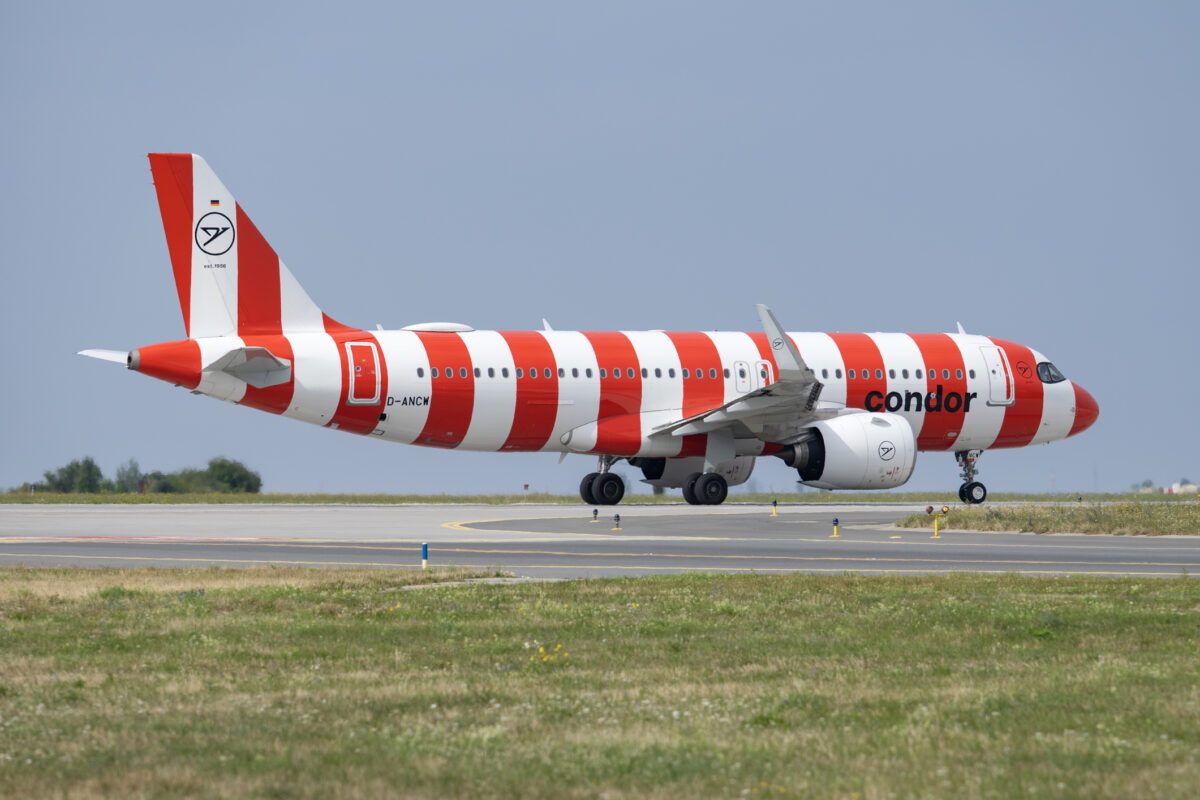
Condor will begin twice-daily, year-round service between Stockholm Arlanda (ARN) and Frankfurt (FRA) on May 13, 2027, extending its European feeder network into Scandinavia.


The airline confirmed Stockholm as one of three additions to its Frankfurt city network for 2027, alongside Athens (ATH) and Florence (FLR). The expansion will take Condor’s city portfolio to 16 European destinations, further developing a business that now extends well beyond the carrier’s traditional leisure routes.
Airport operator Swedavia said the Stockholm service will operate with Airbus A320-family aircraft configured for up to 180 passengers. Two rotations in each direction will give Condor as many as 360 one-way seats per day and approximately 131,000 annually if the full schedule operates throughout the year.
Read our stories in your inbox
Two aviation newsletters. Zero fluff.
Stockholm becomes Condor’s Scandinavian entry point
The new flights are intended to carry a mix of local Stockholm–Frankfurt traffic and connecting passengers using Condor’s long-haul operation at FRA. The airline said the timetable will be coordinated with services to North America, the Caribbean, Africa and Asia.
That connecting role is central to the route. A twice-daily pattern gives Condor considerably more utility than a leisure-oriented, less-than-daily operation, allowing it to address business demand and build traffic in both directions across different long-haul banks.
Stockholm also broadens the geographic reach of Condor’s feeder network. Its first wave of city flying concentrated on domestic German and central European markets, where shorter sectors could be scheduled around Frankfurt’s long-haul departures. ARN adds a larger northern European market on a sector taking about two hours.
Swedavia characterized the launch as a significant commitment to the Swedish market. Arlanda has recently recorded strong international demand: the airport operator reported that international passenger traffic reached a record in August 2026, its second consecutive monthly record.
Condor enters an established Frankfurt market
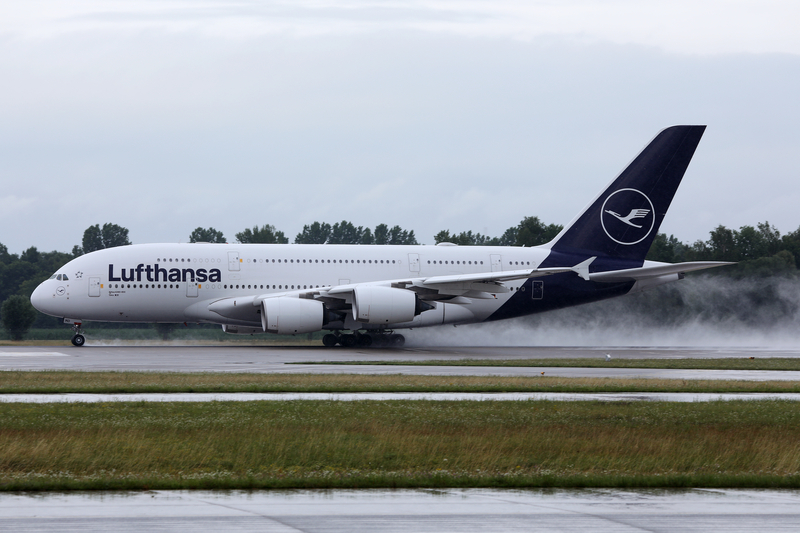
The airport pair is already competitive. Lufthansa currently lists 33 weekly Frankfurt–Stockholm flights, generally providing several departures each day, while SAS also markets nonstop service between Stockholm and Frankfurt.
Air France A320 Diverts To Amsterdam After Smoke Smell Triggers Precautionary Landing
Condor will therefore need connecting traffic and differentiated fares rather than relying exclusively on passengers traveling between the two cities. Its long-haul network offers an alternative set of connections at Frankfurt, particularly in leisure-heavy markets where Condor has established nonstop capacity of its own.
The route also gives travelers originating in Condor’s long-haul markets another way to reach Sweden without transferring to a partner airline. Keeping both sectors on Condor-operated flights gives the carrier more control over schedules, inventory and the transfer proposition while retaining the revenue associated with the European leg.
Condor has not positioned the city network solely as feed. It also sells these flights to local business and leisure passengers, using a two-class short-haul product and schedules designed to support same-day travel. That combination places it in more direct competition with established network airlines than its older model of flying predominantly from Germany to vacation destinations.
A320 capacity fits a frequency-led route
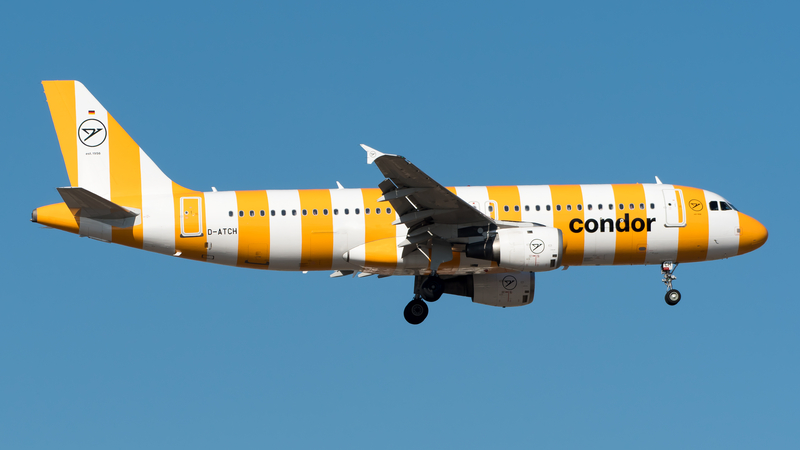
The 180-seat capacity announced for Stockholm corresponds with Condor’s A320 operation. The carrier’s Airbus A320neo seats 180 passengers in a flexible Business and Economy configuration, with up to 24 Business Class seats. The aircraft also offers larger overhead bins, onboard connectivity and entertainment streamed to personal devices.
Condor continues to renew its short- and medium-haul fleet with A320neo and A321neo aircraft. The A320neo is the more natural capacity match for Stockholm under the announced 180-seat ceiling, while still providing ample range for the roughly two-hour sector. Its size allows Condor to prioritize two daily frequencies without placing the heavier seat requirement of the 233-seat A321neo into the market.
As on other European city routes, Business Class uses the standard short-haul arrangement with the middle seat kept free. The flexible cabin allows the airline to change the number of rows sold as Business Class according to demand rather than operating a fixed premium cabin.
Part of Condor’s shift toward network flying
Condor began its current city-network push in March 2025 with the return of scheduled domestic German flying. It subsequently added several major European business and leisure markets. In July 2025, the airline said its first nine city destinations had established themselves sufficiently to support another round of growth, with additional routes planned for summer 2026.
The latest expansion adds Athens from April 28, 2027, Florence from May 6 and Stockholm from May 13. Athens will operate daily during the summer, Florence twice daily during the summer and Stockholm twice daily throughout the year.
The Stockholm launch will also coincide with a wider change to Condor’s Frankfurt operation. The carrier plans to move to Frankfurt’s new Terminal 3 in summer 2027. Condor and airport operator Fraport have emphasized shorter walking distances and more efficient passenger processing, both important to a schedule that increasingly depends on transfers between European narrowbody flights and long-haul Airbus A330neos.
Condor’s published summer 2027 timetable shows daily or near-daily long-haul flying from Frankfurt across major markets in North America, Africa, Asia and the Caribbean. Stockholm adds another source market to that operation while giving the airline a presence in one of northern Europe’s larger business and inbound tourism markets.
Bottom Line
Stockholm is a more consequential addition than a seasonal leisure route. Operating twice daily throughout the year commits Condor to competing for local corporate and city traffic while also building a dependable flow of passengers into its Frankfurt long-haul banks. That makes the route a test of whether the airline’s network model can travel beyond the German-speaking and central European markets where it first developed the concept.
Arlanda gains another network option at Frankfurt, but Condor will enter against airlines with established local sales, frequent-flyer bases and substantially greater frequency. Its strongest proposition is likely to be on itineraries where its own long-haul flights produce a competitive fare or a cleaner connection than the alternatives. Filling two daily A320s will depend on balancing those connecting passengers with enough local demand to sustain the route outside peak travel periods.
The operational picture will become clearer when Condor publishes the flight times and assigns the service to Frankfurt’s long-haul banks. The spacing of the two rotations, transfer performance at Terminal 3 and the share of traffic continuing beyond FRA will indicate whether Stockholm is primarily a feeder route or the next step toward Condor becoming a broader European network competitor.
Keep reading FlyMag
Get the Daily Brief in the morning or the Route Watch weekly recap on Fridays. Or both.