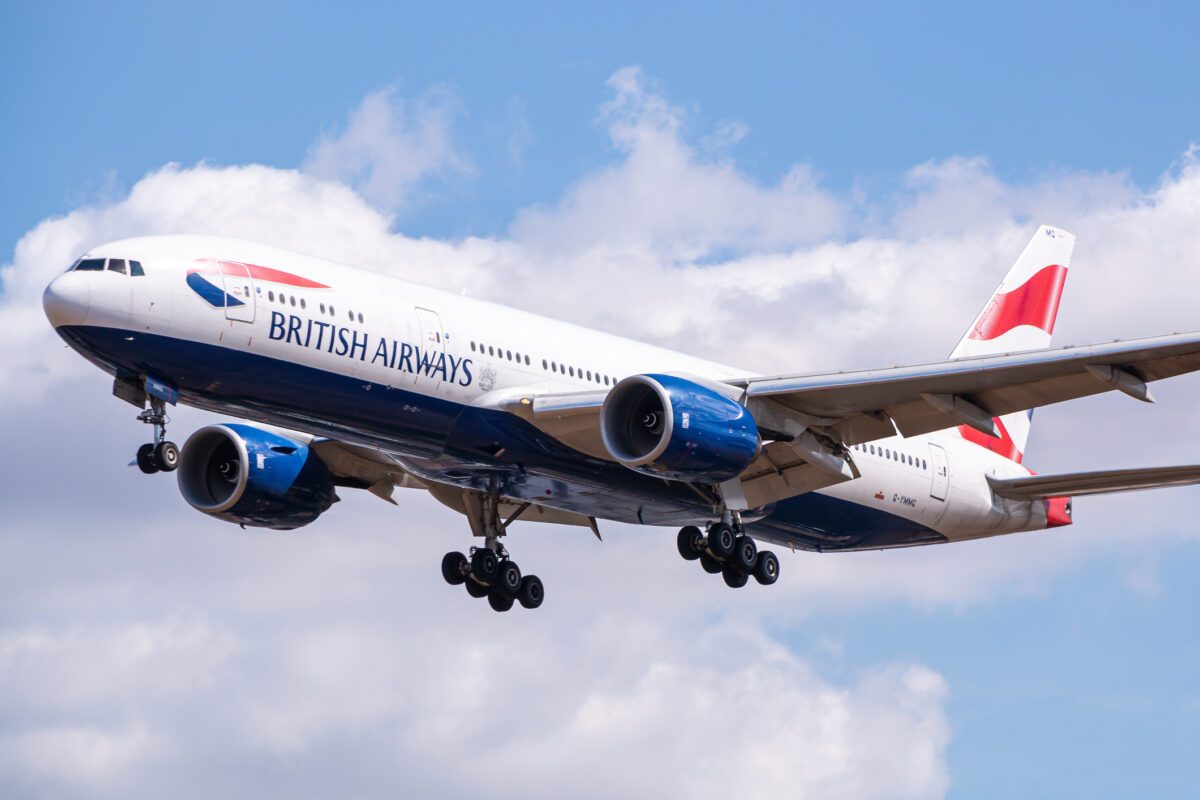
British Airways is preparing to return to Dubai International Airport (DXB) in November 2026, restoring one of its most important Middle Eastern routes after an absence of more than eight months.
The Oneworld carrier suspended service between London Heathrow Airport (LHR) and Dubai Airport (DXB) at the end of February as the conflict involving Iran triggered widespread airspace closures and disruption across the Gulf. British Airways’ own Middle East travel guidance continues to identify Dubai among the destinations affected by regional uncertainty and airspace restrictions.
The airline is now taking a considerably more cautious approach to Dubai than it did before the suspension. Instead of immediately restoring its normal three-daily winter schedule, British Airways will initially operate just one daily flight before adding a second service later in November.
Read our stories in your inbox
Two aviation newsletters. Zero fluff.
The Airbus A380 will also disappear from the route, with Boeing 777 and 787 Dreamliner aircraft handling the winter schedule.
British Airways Returns to Dubai on November 3
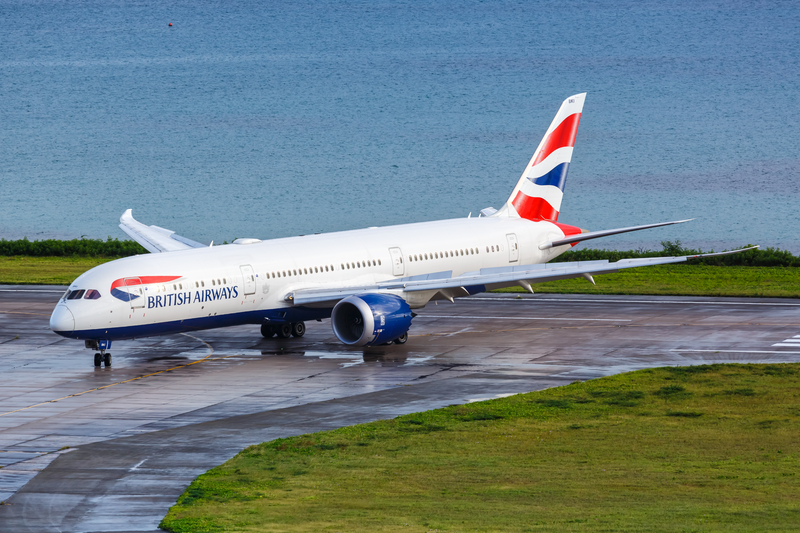
The first daily flight is scheduled to resume from London Heathrow Airport (LHR) on November 3, 2026.
BA105: London Heathrow Airport (LHR) 8:40 p.m. – Dubai International Airport (DXB) 7:40 a.m. the following day
BA104: Dubai International Airport (DXB) 10:00 a.m. – London Heathrow Airport (LHR) 2:10 p.m.
The Dubai-to-London return begins November 4.
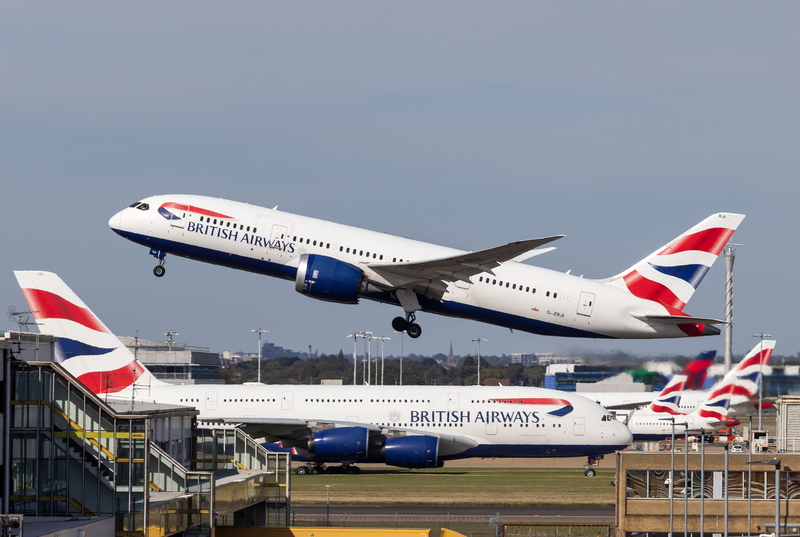
British Airways currently schedules the BA105/104 rotation with the Boeing 787-10 Dreamliner, the largest member of the 787 family. BA’s 787 Dreamliner fleet information lists 256 seats on the 787-10, including eight First seats, 48 Club World business-class seats, 35 World Traveller Plus premium-economy seats and 165 World Traveller economy seats.
The evening Heathrow departure and morning Dubai arrival are particularly useful for leisure travelers beginning vacations in the UAE, while the late-morning return from Dubai reaches London in time for some evening onward connections.
Second Daily Flight Arrives at the End of November
British Airways plans to restore a second daily flight from November 29.
BA107: London Heathrow Airport (LHR) 12:35 p.m. – Dubai International Airport (DXB) 11:45 p.m.
BA106: Dubai International Airport (DXB) 2:15 a.m. – London Heathrow Airport (LHR) 6:25 a.m.
BA107 begins November 29, with the corresponding BA106 return beginning November 30.
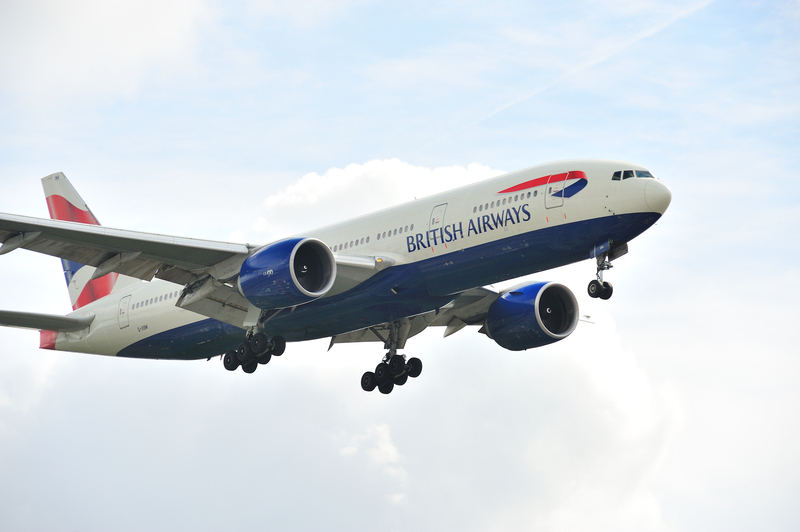
The airline’s winter schedule shows the second rotation operating with a mixture of Boeing 777-200ER and Boeing 787 aircraft, including the 787-8, 787-9 and 787-10. British Airways’ earlier winter Middle East schedule filing confirmed that Dubai would return with Boeing 777-200ER and 787 equipment while the planned A380 operation was removed.
Aircraft assignments remain subject to change, particularly several months in advance. The passenger experience could therefore vary considerably depending on which aircraft operates BA107/106 on a particular day.
The 787-8 is BA’s smallest Dreamliner with 214 seats, while the 787-9 has 216. The 787-10 carries 256 passengers and features BA’s newer Club Suite business-class product.
A Much Smaller Schedule Than Last Winter
The new schedule represents a substantial reduction from British Airways’ normal winter operation.
During the 2025/26 winter season, BA scheduled three daily round trips between London Heathrow Airport (LHR) and Dubai International Airport (DXB). Two were primarily operated with Boeing 787-10 aircraft, while BA107/106 used the Airbus A380. The previous winter aircraft schedule showed the A380 replacing the Boeing 777-300ER on that rotation.
Once both daily flights return this November, British Airways will still be operating one-third fewer daily frequencies than during a normal winter.
The seat reduction is even greater because the 469-seat Airbus A380 is being replaced by aircraft carrying roughly 214 to 256 passengers.
BA’s current Airbus A380 configuration contains 14 First seats, 97 Club World seats, 55 World Traveller Plus seats and 303 economy seats. One A380 therefore provides almost as many seats as two of the smaller Dreamliners that may appear on the revised Dubai schedule.
The reduced capacity should make it easier for British Airways to rebuild load factors and protect fares after months outside the market rather than immediately restoring nearly 1,000 seats per day in each direction.
The A380 Will Not Return to Dubai This Winter
The removal of the Airbus A380 is particularly notable because Dubai has historically been one of British Airways’ strongest A380 destinations.
The aircraft made sense in the market because London–Dubai combines enormous leisure demand with substantial premium traffic. Its 97-seat business-class cabin and 14-seat First cabin gave BA considerable premium capacity, while more than 300 economy seats allowed it to compete for high-volume vacation traffic.
However, BA is also beginning a major refurbishment program for its 12-aircraft A380 fleet.
The airline’s new First Class announcement confirmed that the A380s will receive a completely redesigned First cabin as part of a broader retrofit program beginning in 2026. The new configuration will eventually include updated premium cabins and BA’s door-equipped Club Suite product.
Fleet availability may therefore be one factor influencing the decision to keep the A380 away from Dubai, although British Airways has not publicly said that the retrofit program is the reason for the aircraft change.
The airline has also removed or reduced A380 flying on several other routes during the same period, including Los Angeles and Johannesburg.
London–Dubai Remains an Enormous Market
British Airways is returning to one of the largest long-haul city markets in the world.
Dubai Airports has consistently identified London as Dubai International Airport’s largest city market. During the first six months of 2025 alone, London generated approximately 1.8 million passengers at DXB, according to Dubai Airports traffic data. The United Kingdom as a whole accounted for roughly 3 million passengers during the same period.
Industry booking data cited for full-year 2025 estimates that more than 2.1 million passengers traveled between the London market and Dubai without continuing to another destination.
That local demand is extremely valuable to an airline such as British Airways. Connecting passengers can often be attracted only through lower fares because they have numerous possible hubs and airlines to choose from. A traveler who actually needs to travel between London and Dubai has fewer practical alternatives and is generally more valuable from a revenue-management perspective.
Dubai is also a major premium market. Finance, energy, professional services, real estate, tourism and the large expatriate population generate significant year-round demand for First and Business Class seats.
Even with the reduced schedule, British Airways will continue offering substantial premium capacity during the winter.
Emirates Will Remain Overwhelmingly Dominant
British Airways will return to a market where Emirates has continued to operate an enormous London schedule.
Emirates currently operates six daily Airbus A380 flights between Dubai International Airport (DXB) and London Heathrow Airport (LHR). Its Heathrow schedule lists 42 weekly flights on the route.
The airline also operates four daily services at London Gatwick Airport (LGW). Those flights use a combination of the Airbus A380, Airbus A350-900 and Boeing 777, with the fourth frequency introduced using the A350 in February 2026.
At London Stansted Airport (STN), Emirates operates another two daily Boeing 777 flights. The airline confirmed earlier this month that Stansted receives 14 weekly Dubai services.
That gives Emirates 12 daily flights between Dubai and London across Heathrow, Gatwick and Stansted before British Airways is added back into the market.
Once BA reaches two daily frequencies, Emirates will still operate six times as many London–Dubai flights.
British Airways is unlikely to challenge Emirates on total capacity. Its advantage is primarily access to Heathrow, a strong local customer base, corporate contracts, British Airways Club loyalty members and connections across its own London network.
Royal Brunei’s Return Has Been Delayed Again
Royal Brunei Airlines historically provided another London Heathrow Airport (LHR)–Dubai Airport (DXB) option as part of its Bandar Seri Begawan–Dubai–London operation.
The carrier had planned to restore the fifth-freedom sector in late October 2026. However, its latest August schedule update now says the Dubai stop will remain canceled through March 28, 2027, while London–Bandar Seri Begawan flights continue nonstop.
That means British Airways and Emirates are set to remain the principal nonstop choices between London and Dubai during the coming winter.
Boeing 787-10 May Be the Best Fit for the Restart
The Boeing 787-10 assigned to BA105/104 is a logical aircraft for the initial restart.
Its 256-seat capacity is large enough to provide meaningful volume without the enormous commitment required by a 469-seat A380. It also has one of British Airways’ strongest current long-haul products.
The aircraft includes eight First Class seats and the newer 48-seat Club Suite cabin, where every business-class passenger receives direct aisle access and a sliding privacy door.
Boeing lists the 787-10 with a maximum range of approximately 7,500 nautical miles, far beyond what is required for the roughly 3,400-mile journey between Heathrow Airport (LHR) and Dubai Airport (DXB).
Range is therefore irrelevant to the aircraft choice. The value of the 787-10 lies in its capacity, fuel efficiency and unusually large premium cabin.
For BA, that combination provides a way to protect its position in the premium-heavy Dubai market without immediately restoring the much greater seat capacity of the A380.
Bottom Line
British Airways is preparing to return to Dubai International Airport (DXB) in November 2026 after suspending service from London Heathrow Airport (LHR) at the end of February because of the conflict involving Iran and continuing Middle Eastern airspace instability.
The airline will initially restore one daily Boeing 787-10 flight on November 3, with the Dubai-to-London return beginning November 4.
A second daily rotation will follow from November 29 and 30, using a mixture of Boeing 777-200ER and 787 Dreamliner aircraft.
That remains substantially below British Airways’ traditional three-daily winter schedule, and the 469-seat Airbus A380 will not return to the route.
The strategy gives BA a more measured way to reenter one of its largest Middle Eastern markets while regional conditions remain uncertain. It also lets the airline concentrate on the premium and local traffic that makes London Heathrow Airport (LHR)–Dubai Airport (DXB) particularly valuable.
Emirates will remain overwhelmingly dominant in overall capacity, but British Airways does not need to match its rival flight for flight. With strong local demand, Heathrow slots and significant premium traffic, even a smaller two-daily operation can remain strategically important to BA’s long-haul network.