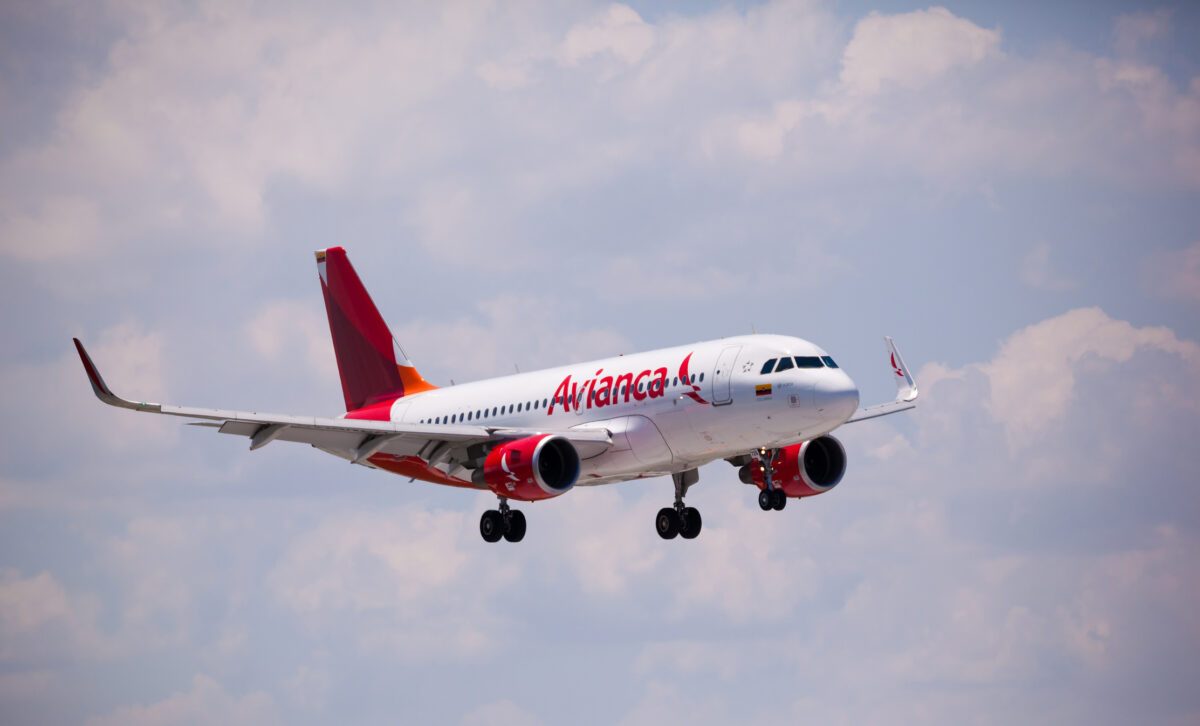
Avianca will take 12 Airbus A320neo aircraft on long-term leases from BOC Aviation, securing additional narrowbody capacity for delivery in 2029.

The Singapore-based lessor will purchase the aircraft directly from Airbus before placing them with the Colombian carrier. All 12 will use CFM International LEAP-1A engines, according to the agreement announced by BOC Aviation on September 10.
BOC Aviation and Avianca signed the purchase and lease agreements on September 9. The companies described Avianca as an existing customer but did not disclose the value or duration of the leases beyond identifying them as long-term contracts.
Read our stories in your inbox
Two aviation newsletters. Zero fluff.
Lease Deal Secures 2029 Delivery Positions
The structure gives Avianca access to Airbus production positions several years ahead of delivery while BOC Aviation assumes the aircraft purchase commitments and associated financing. Steven Townend, BOC Aviation’s chief executive and managing director, said pre-delivery payment financing is becoming more important as aircraft manufacturers increase output.
Pre-delivery payments are made in installments during aircraft production, requiring capital well before an airline receives the asset and begins generating revenue from it. Using a lessor can reduce that funding burden while allowing a carrier to lock in fleet capacity during a period of heavily committed narrowbody production.
BOC Aviation has the balance-sheet capacity to support that model. At June 30, the company had $6 billion in undrawn committed credit facilities and $319 million in cash and cash equivalents. Its first-half 2026 results showed an orderbook of 320 aircraft scheduled for delivery through 2032, within a total portfolio of 811 owned, managed and ordered aircraft and engines.
The transaction was large enough to require a Hong Kong Stock Exchange disclosure. In its regulatory filing, BOC Aviation said the applicable transaction ratios exceeded 5% but remained below 25%. It classified the agreement as a qualified aircraft leasing activity conducted in the ordinary course of business, exempting it from shareholder approval requirements.
Avianca Continues Building Around the A320neo
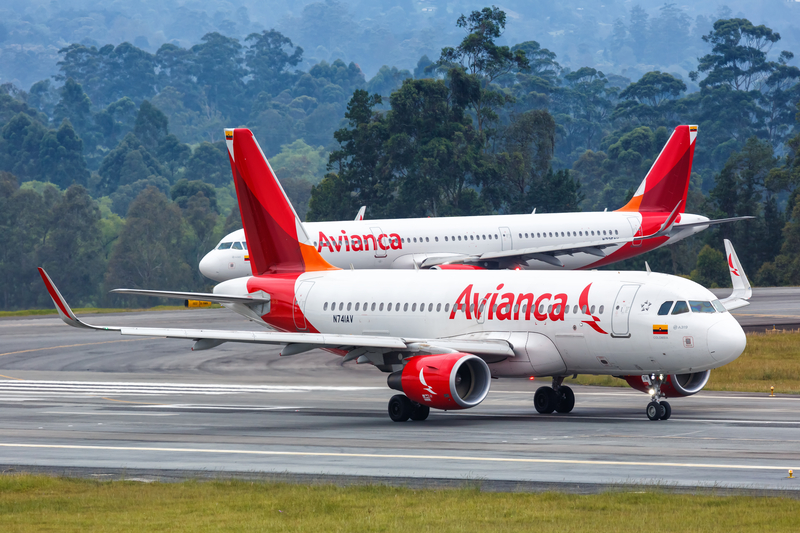
The 2029 aircraft extend Avianca’s investment in the A320neo as its principal short- and medium-haul platform. The airline has been simplifying its fleet around larger, higher-density narrowbodies while adding a differentiated forward cabin to selected aircraft.
In November 2025, Avianca received its first A320neo with the Airbus Airspace cabin. That interior introduced larger overhead bins, dynamic LED lighting and three rows of Recaro premium seats arranged two-by-two. Avianca said at the time that its narrowbody fleet totaled 135 aircraft and linked the delivery to Abra Group’s plan for 138 A320neos.
The A320neo can accommodate 150 to 180 passengers in a typical two-class layout and up to 194 in its maximum-density configuration. Airbus gives the aircraft a range of up to 3,400 nautical miles, placing most of Avianca’s network in the Americas within the type’s operating envelope. That combination of capacity and range allows the airline to use one core type across domestic sectors, regional services and longer flights between northern South America and North America.
Airbus says the A320neo reduces fuel consumption and carbon dioxide emissions per seat by about 20% compared with previous-generation single-aisle aircraft. For Avianca, the operating case also rests on commonality with its existing Airbus narrowbody fleet, including flight crews, maintenance processes, spare parts and ground equipment.
LEAP-1A Choice Fits Abra’s Engine Strategy
The engine selection is consistent with a broader procurement decision made by Avianca’s parent company. In July 2026, Abra and CFM International announced an order for 100 LEAP-1A engines to power 50 A320neo-family aircraft that had previously lacked an assigned engine supplier.
That agreement also covered spare engines and long-term support for both Avianca’s A320neo-family fleet and GOL’s Boeing 737 MAX operation. Abra said the package was intended to improve reliability, fuel efficiency and cost predictability across the group’s airlines.

Concentrating more of Avianca’s future A320neo fleet around the LEAP-1A gives the airline a larger common engine pool and a clearer basis for long-term maintenance planning. The benefits increase as the fleet grows: spare engines, tooling, technical training and maintenance inventory can support more aircraft without being divided between competing powerplant families.
The latest transaction also renews an established link among Avianca, BOC Aviation and Airbus. In January 2020, Airbus announced a BOC Aviation order for 20 A320neos, with as many as 12 intended for lease to Avianca. The new agreement therefore represents another 12-aircraft package between the carrier and lessor rather than a new financing relationship.
For BOC Aviation, the deal adds another placement for an aircraft family that dominates its forward investment program. The lessor ordered 80 A320neo-family aircraft in 2022 and another 70 in March 2025. At the time of the latter order, it said its remaining Airbus backlog had risen to about 200 aircraft and that its Airbus delivery total, including purchase-and-leaseback transactions, would exceed 700.
Bottom Line
The agreement gives Avianca a defined block of 2029 lift without requiring the airline to fund and own the aircraft directly. That matters in a market where access to delivery positions can be as important as the nominal purchase price. BOC Aviation gains a long-term placement with an established customer, while Avianca obtains current-generation narrowbodies aligned with the fleet and engine infrastructure it is already building.
The transaction also points to a more standardized Avianca operation by the end of the decade. A larger LEAP-powered A320neo fleet should improve the economics of crew planning, maintenance and spare-engine coverage while giving the carrier enough range and capacity flexibility to move aircraft between domestic, regional and North American markets.
Attention will now turn to Airbus’s delivery performance in 2029 and how Avianca uses the arriving capacity alongside retirements and growth. Cabin specification will also be significant: extending the Airspace interior and two-by-two premium section across the incoming aircraft would make the leased jets part of both a fleet renewal program and the airline’s continuing product repositioning.