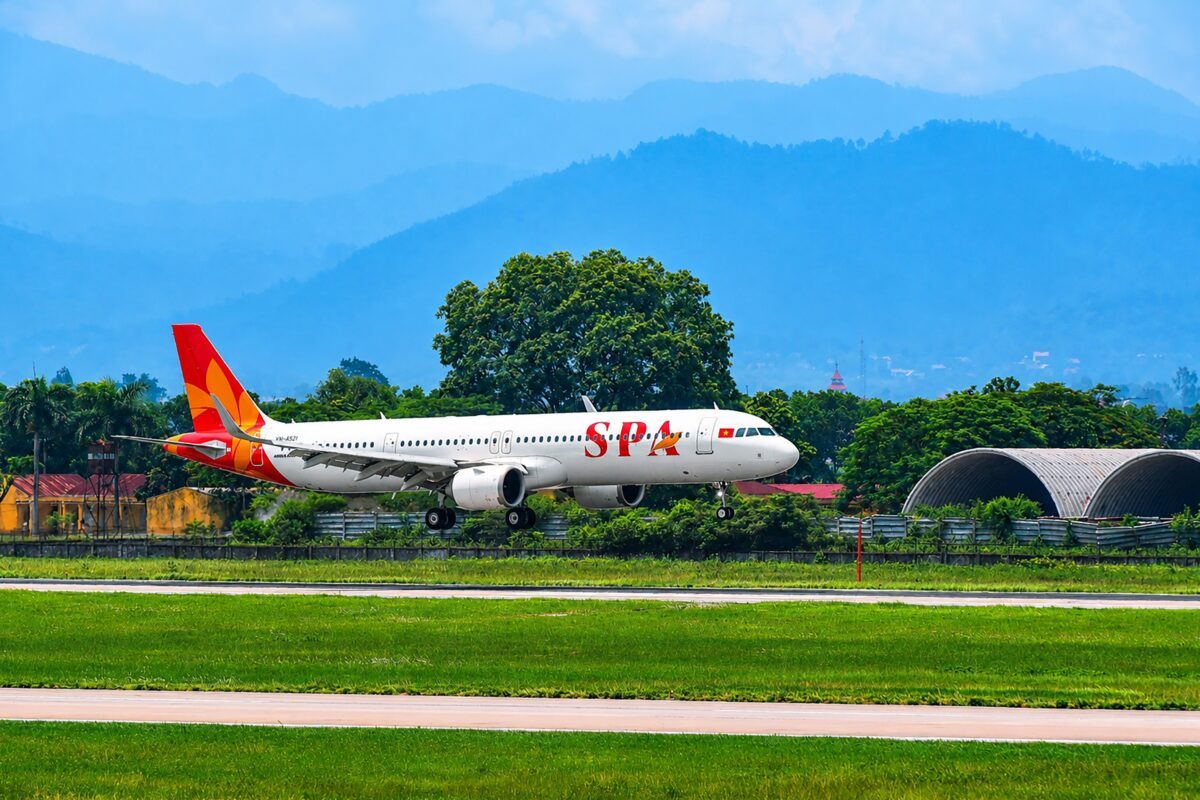
Sun PhuQuoc Airways has received regulatory approval to operate the Airbus A330, giving the young Vietnamese carrier the widebody capability needed for its planned expansion from Phu Quoc into Russia, Central Asia and other longer-range markets.
The Civil Aviation Authority of Vietnam approved the type and extended the airline’s authorized operating area to Europe on September 30, parent Sun Group said. The decision came less than six months after Sun PhuQuoc Airways submitted its application on April 16.
The certification program covered flight operations, crew training, maintenance, dispatch and ground handling. The authority also assessed emergency evacuation procedures and demonstration flights before adding the A330 to the airline’s operating scope.
Read our stories in your inbox
Two aviation newsletters. Zero fluff.
It is a rapid expansion of authority for a carrier that received its initial air operator certificate on September 25, 2025, and began commercial flying on November 1 that year. The airline said it has since carried nearly 3.4 million passengers and secured approvals covering more than 10 international destinations across Northeast Asia, Southeast Asia and Central Asia.
First A330 Starts on Domestic Trunk Route
Sun PhuQuoc Airways received its first A330, registered VN-A969, at Phu Quoc (PQC) on September 22. The aircraft is the first of eight A330s scheduled to join the fleet between September 2026 and April 2027.
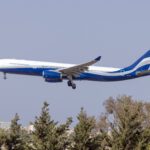
VN-A969 is due to begin commercial service on October 3 between Hanoi (HAN) and Ho Chi Minh City (SGN). Initial operation on Vietnam’s principal domestic trunk route will give the carrier a controlled environment in which to build aircraft, crew and ground-handling experience before assigning the type to longer international sectors.
The airline plans to place the A330 on its first international route on November 13, linking Phu Quoc with Moscow Sheremetyevo (SVO). Sun PhuQuoc Airways is also examining Prague and intends to use the type on services to Almaty and Astana in Kazakhstan.
Japan is scheduled to enter the A330 program from January 2027, followed by Australia from May. The European operating-area approval gives the airline room to develop additional destinations beyond Moscow, although each route will still depend on bilateral, airport and destination-specific operating requirements.
Sun Group’s fleet induction announcement said the first A330 brought the carrier to 21 aircraft. An Airbus A321LR arrived one day earlier, adding another range layer between the airline’s standard narrowbodies and its new widebody fleet.
Three-Class Cabin Targets Long-Haul Leisure Traffic
The Airbus A330-200 is configured with 247 seats in three classes, close to the upper end of the manufacturer’s typical 210-to-250-seat range for the variant. The relatively low-density layout gives Sun PhuQuoc Airways a distinct premium component for long leisure routes rather than maximizing volume with a high-density cabin.
Business class has 20 seats in a 1-2-1 arrangement, providing direct aisle access throughout the cabin. Each seat converts into a fully flat bed. Premium economy contains 21 seats with pitch of up to 38 inches, while the 206-seat economy cabin uses the A330’s standard 2-4-2 layout with pitch ranging from 31 to 34 inches.
All three cabins have individual entertainment screens and inflight Wi-Fi. The product is designed around the airline’s Phu Quoc leisure positioning, with reddish-brown and sand-colored cabin finishes inspired by the island.
The Vietnamese aviation authority’s aircraft announcement cites a range of up to 13,450 kilometers for the A330. Airbus lists approximately the same figure for the A330-200, a shorter-fuselage member of the original A330 family that combines a mid-sized cabin with greater range than the A330-300. That balance suits long, comparatively thin leisure markets where a larger widebody could introduce too much capacity.
For Sun PhuQuoc Airways, the 247-seat layout is particularly relevant on routes such as Phu Quoc–Moscow. It offers enough economy capacity for tour traffic while preserving business and premium economy inventory for higher-yield leisure passengers and long-stay visitors carrying more baggage.
Eight A330s Form the Next Fleet Layer
Sun PhuQuoc Airways expects five A330s to be in service by the end of 2026, with the eight-aircraft intake completed in April 2027. The airline is targeting a total fleet of 33 aircraft at the end of this year and 60 by the close of 2027.
The carrier describes its fleet plan as a layered structure. Airbus A320 and A321 aircraft support domestic and shorter regional flying, the A321LR opens medium-range international markets, and the A330 provides the capacity and endurance for Russia, Central Asia, Japan, Australia and parts of Europe. Boeing 787-9 aircraft are intended to add another long-range tier later.
The widebody approval follows the authority’s earlier certification work with the airline. Sun PhuQuoc Airways received both its AOC and approved training organization certificate in September 2025. The regulator subsequently approved the carrier as a maintenance organization in January 2026, giving it a basis for developing more technical work internally as the fleet expands.
The airline’s growth is being coordinated with work at PQC, where Sun Group has assumed the airport operating role and is expanding passenger infrastructure ahead of APEC 2027. Terminal 1 capacity is being raised from 6 million to about 9 million passengers annually, while a new Terminal 2 is planned to open in April 2027 with first-phase capacity for 20 million passengers per year.
Bottom Line
The A330 approval moves Sun PhuQuoc Airways beyond the narrowbody-led model with which most new Asian carriers begin. Its challenge now is not aircraft range but building enough dependable demand from a resort island to support several widebodies across markets with pronounced seasonal peaks. Moscow will provide the first meaningful test of whether the airline can combine tour operator volume, direct sales and premium leisure demand at the scale required.
The timing also shows how tightly Sun Group is integrating airline capacity with its tourism and airport investments. Control of resorts, destination marketing, an expanding airport and a Phu Quoc-centered airline can reduce some of the coordination problems faced by standalone carriers opening long-haul leisure routes. It also concentrates exposure: weaker visitor growth would affect several parts of the same business ecosystem at once.
Operational execution will be the immediate measure of the strategy. Five A330 inductions by year-end require trained crews, maintenance support, spare coverage and consistent long-haul ground handling in quick succession. The points to watch are the pace at which later aircraft enter service, whether Moscow begins on schedule on November 13, and which of the proposed Central European, Japanese and Australian markets becomes the second sustained widebody operation from Phu Quoc.