Condor will open routes from Frankfurt Airport (FRA) to Athens (ATH) and Florence (FLR) in spring 2027, adding two seasonal markets alongside a new year-round service to Stockholm Arlanda (ARN).

The airline’s latest European expansion will take its Frankfurt city network to 16 destinations. The additions deepen Condor’s shift from a predominantly leisure-focused carrier toward a network airline with its own short-haul feed for long-haul flights.
Read our stories in your inbox
Two aviation newsletters. Zero fluff.
Athens Starts in April, Followed by Florence
Frankfurt–Athens will begin on April 28, 2027, operating once daily during the summer season. Athens will be the first of the three additions to launch and gives Condor another sizeable European origin market for connections through FRA, as well as a route with substantial local leisure demand in both directions.
Florence follows on May 6 with two flights per day during the summer. The higher frequency is significant: rather than operating Florence as a conventional low-frequency leisure destination, Condor is scheduling enough service to address local traffic, short business trips and more than one Frankfurt connecting bank.

Stockholm begins one week later, on May 13. Condor will operate FRA–ARN twice daily throughout the year, making it the most strategically important of the three additions from a network perspective. Its year-round schedule will supply feed during the winter as well as the peak transatlantic summer and provide more itinerary options than a single daily flight.
Together, the three routes represent 35 weekly departures from Frankfurt when all are operating: seven to Athens and 14 each to Florence and Stockholm. Condor said the schedules are being coordinated with its long-haul operation, including services to North America, the Caribbean, Africa and Asia.
City Network Expands for a Third Consecutive Summer
The 2027 additions continue a city-route program that Condor launched in 2025. The initial network linked Frankfurt with major German and European cities, giving the airline more control over traffic flowing onto its long-haul flights rather than relying entirely on interline partners and surface connections.
For summer 2026, Condor added Barcelona (BCN), Budapest (BUD) and Venice (VCE) to the original group of city routes. The carrier said those flights would operate at different points during the day, reflecting a schedule built around both local demand and connections. London Gatwick (LGW), launched with three daily flights in April 2026, subsequently increased the network to 13 destinations.
The addition of Athens, Florence and Stockholm brings the total to 16. The progression from nine city markets in 2025 to 13 in 2026 and 16 in 2027 shows a measured build-up rather than a single large deployment of capacity. Condor is adding markets while also increasing frequency where it sees scope for business traffic and connecting flows.
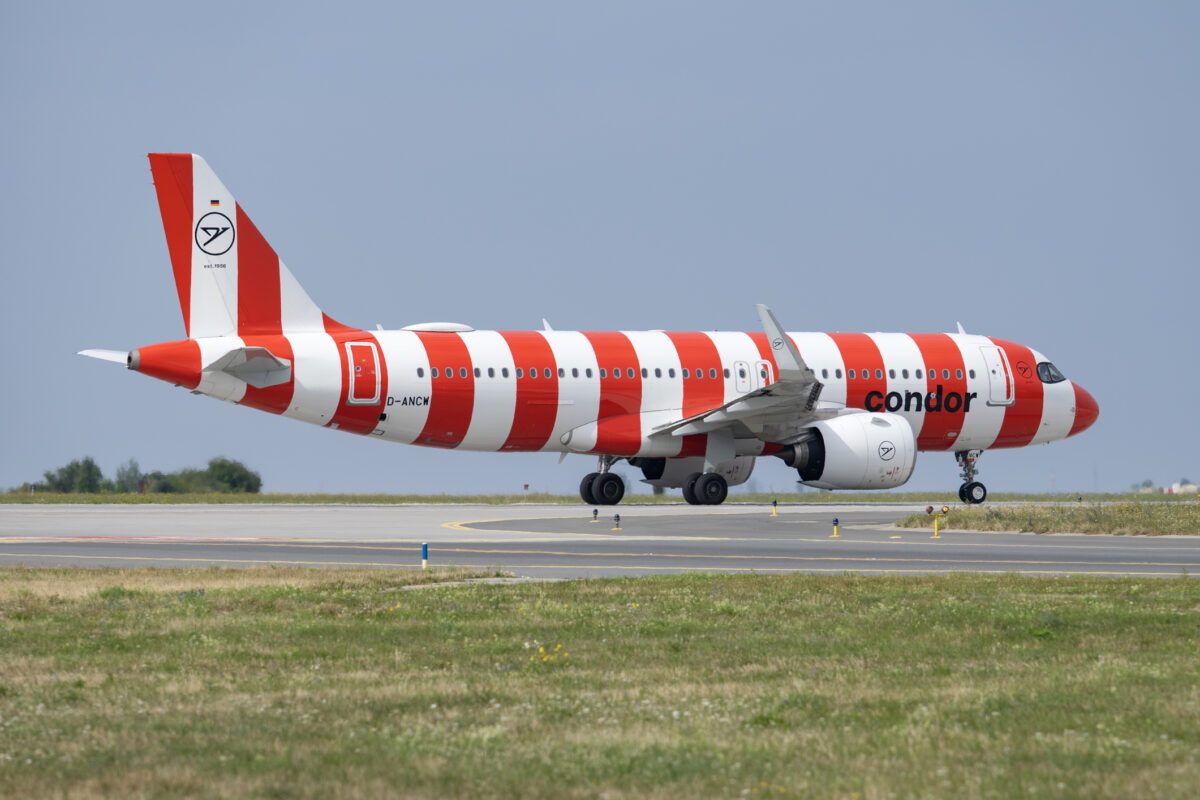
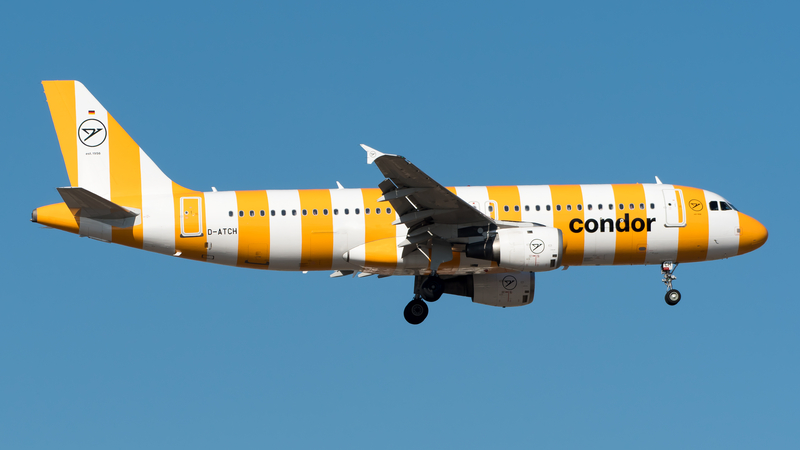
The earlier 2026 expansion announcement said the airline intended to use increasing numbers of new Airbus A320neo aircraft on city services. Condor’s A320neo accommodates 180 passengers, with a movable divider allowing up to 24 seats to be marketed as European-style Business Class with the middle seat left empty.
New Narrowbodies Support the Feeder Strategy
Condor has not tied a specific aircraft variant to each of the three new routes. Its short- and medium-haul renewal, however, is central to the economics of the city network. According to the airline’s current fleet plan, it expects to receive 43 Airbus A320neo-family aircraft by 2029.
The 180-seat Airbus A320neo is the more moderately sized of Condor’s new narrowbodies and has a published range of 3,400 nautical miles. The Airbus A321neo seats 233 and has a published range of about 2,860 nautical miles in Condor’s specification. Both are configured with Economy and a flexible Business Class cabin, while passengers can stream entertainment to their own devices and purchase internet access through Condor’s FlyConnect portal.
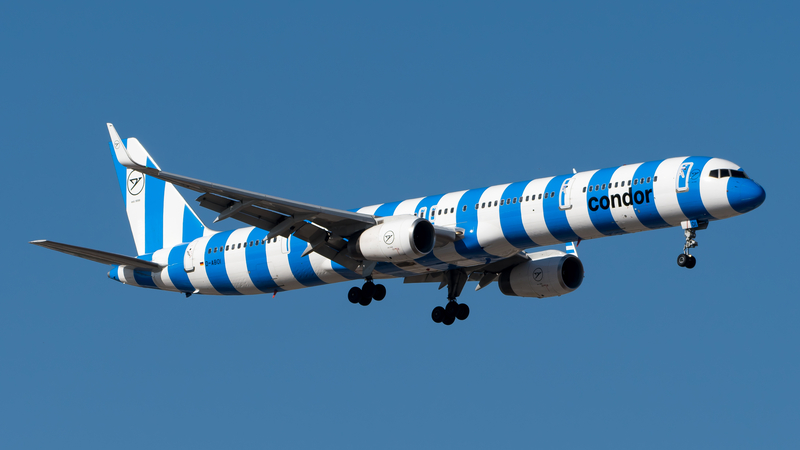
Those aircraft give the airline two capacity bands for routes of roughly one to three hours, the core operating environment for its Frankfurt city network. The A320neo is better suited to thinner frequencies or markets where schedule depth matters more than maximum seats, while the A321neo can absorb heavier leisure demand and lower unit costs when loads justify the larger cabin.
Condor began its narrowbody renewal in 2024 after replacing its long-haul fleet with Airbus A330neo aircraft. The airline now operates 18 A330neos and plans to increase that fleet to 25 by 2031. The combination gives Condor a standardized long-haul product and a growing pool of new-generation aircraft to deliver passengers to and from FRA.
Expansion Coincides With Terminal 3 Move
The three routes are also scheduled to begin during the year in which Condor plans to move its Frankfurt operation to Terminal 3. The airline and airport operator Fraport confirmed the planned relocation in February 2026, describing Condor as Frankfurt’s second-largest airline.
Terminal 3 offers additional room for Condor to develop a connecting operation outside the Lufthansa-centered facilities at Terminal 1. Fraport has highlighted automated baggage facilities, CT security scanners, improved apron links and shorter passenger routes among the terminal’s operating features.
The overlap between the terminal move and the expanded summer 2027 schedule is consequential. Condor will need reliable transfers between its European arrivals and A330neo departures if the feeder strategy is to generate more than point-to-point traffic. Twice-daily service to Florence and Stockholm provides useful schedule coverage, but the performance of the network will also depend on connection times, baggage delivery and the consistency of the wider short-haul operation.
Bottom Line
Athens, Florence and Stockholm are more than three additions to Condor’s route map. They show the airline becoming increasingly willing to deploy aircraft and crews in markets where it will compete for local business traffic while also carrying passengers into a long-haul bank. That is a different commercial model from simply feeding vacation destinations with weekly or seasonal flights.
Stockholm is the clearest statement of intent because it combines twice-daily frequency with year-round operation. Florence’s two daily flights suggest Condor also sees value in schedule utility even on a seasonal route, while Athens provides a larger leisure market with a lower initial frequency. The varying patterns give the airline room to test how much traffic comes from local sales and how much is generated by its own connections.
The next measure will be schedule quality rather than the number of dots on the map. Condor’s new A320neo-family fleet and move to Terminal 3 provide the physical platform for a second sizeable connecting operation at Frankfurt. Whether that network can sustain its frequencies through multiple seasons will depend on how effectively the airline fills those aircraft beyond the summer peak and converts its long-haul customer base into European connecting traffic.
Keep reading FlyMag
Get the Daily Brief in the morning or the Route Watch weekly recap on Fridays. Or both.