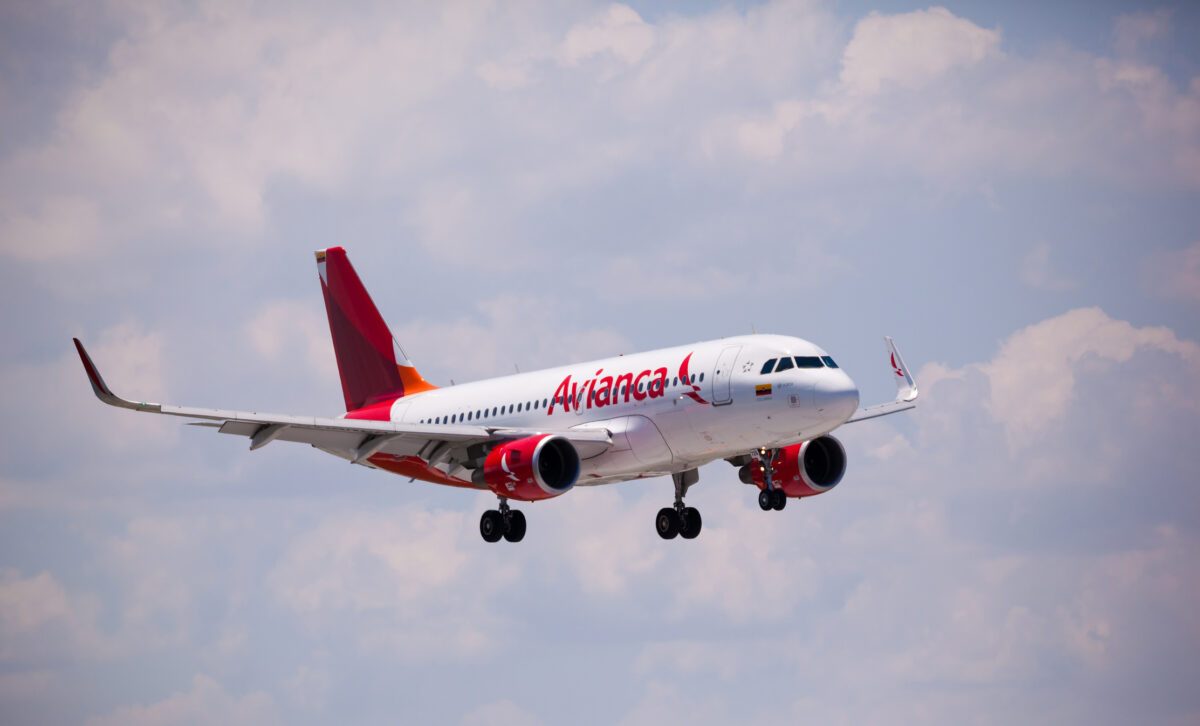
An Avianca Airbus A320 operating from Medellín to New York diverted to Miami early Friday after encountering severe turbulence that injured six passengers and three cabin crew members.

Flight AV42 landed safely at Miami (MIA) at approximately 3:25 a.m. on October 9. The flight had departed Medellín (MDE) on Thursday night and was scheduled to operate nonstop to New York John F. Kennedy (JFK).
Avianca described the encounter as unexpected turbulence and said the diversion was made as a precaution under its safety procedures. The airline’s staff and airport medical services met the aircraft after landing.
Read our stories in your inbox
Two aviation newsletters. Zero fluff.
Eight People Transported From MIA
Avianca counted nine people affected by the turbulence: six passengers and three cabin crew members. Miami-Dade Fire Rescue transported eight people from the airport to medical facilities, including one patient taken to a trauma center.
The difference between the airline’s total and the number transported reflects one injured person who did not require ambulance transportation. Fire Rescue escalated the response to a Level One mass-casualty incident because multiple patients required assessment and treatment.
MIA has dedicated aircraft rescue and firefighting coverage. The Miami-Dade Fire Rescue Aviation Fire Rescue Division operates two stations at the airport, placing medical and firefighting resources on the airfield for aircraft emergencies and other incidents.
The remaining travelers received assistance from Avianca and continued toward New York later Friday morning. The diversion left the aircraft, injured occupants and responding medical teams in Miami while the airline reorganized the interrupted journey to JFK.
A320 Was Operating the Medellín-New York Sector
Avianca identified the aircraft as an Airbus A320, the core narrowbody type in its short- and medium-haul fleet. The carrier uses A320-family aircraft extensively across Colombia and on services linking its Latin American network with the United States, the Caribbean and Central America.
The Medellín-New York operation fits the type’s normal mission profile. According to Airbus specifications, the current A320 typically accommodates 150 to 180 passengers, with the A320neo offering a maximum range of about 3,400 nautical miles. The type combines sufficient transcontinental range with single-aisle economics for routes linking major Colombian markets with the eastern United States.
The flight’s arrival in Miami was a diversion following an in-flight injury event, rather than evidence that the aircraft had lost control. Large altitude changes shown after a turbulence encounter can include a crew-commanded descent and the subsequent approach to the diversion airport; an altitude trace by itself does not establish that an aircraft plunged through the full difference.
The Federal Aviation Administration said the crew reported severe turbulence before landing and that the agency would investigate. Such a review can include the crew’s reports, air traffic control communications, dispatch and meteorological information, and available aircraft data.
Cabin Crew Face Greater Exposure During Turbulence
The involvement of three cabin crew members is operationally significant. Flight attendants spend substantial periods outside their jumpseats while checking the cabin or providing service, leaving them more exposed than passengers who remain secured in their seats.
An NTSB study of turbulence-related injuries found that wearing a seat belt reduces the risk of serious injury for aircraft occupants. The study also identified flight attendants as particularly vulnerable because their duties often require them to be standing or moving through the cabin when conditions change.
Unexpected encounters are especially difficult to manage because they can develop before the flight deck has enough warning to suspend service and seat the cabin crew. Forecasts, pilot reports and onboard weather radar can help crews avoid or prepare for some turbulence, but not every area of disturbed air produces a clear advance indication.
The FAA’s turbulence guidance advises passengers to keep their seat belts fastened whenever seated, including when the sign is off. A properly tightened lap belt limits vertical movement during a sudden encounter and reduces the chance of striking the ceiling or other cabin fittings.
AV42’s diversion also illustrates why an airport with full medical and rescue coverage may be selected even when another destination remains technically reachable. Once the crew learns that several occupants are injured, access to trauma care, ambulance capacity, runway availability and ground support can outweigh the disruption caused by landing short of the scheduled destination.
Bottom Line
The immediate operational issue is the condition of the injured passengers and crew, followed by Avianca’s inspection and return-to-service process for the A320. A severe turbulence encounter does not automatically imply structural damage, but airlines typically carry out checks guided by the crew report, recorded acceleration loads and any damage found in the cabin.
The event also puts the focus on cabin exposure rather than aircraft controllability. Three of the nine people affected were cabin crew, reinforcing a persistent challenge for operators: service routines and cabin checks place flight attendants at risk during turbulence that arrives with little or no warning. Decisions about when to stop service and seat the crew remain among the most consequential real-time judgments made on routine flights.
The FAA investigation should clarify the location and circumstances of the encounter and whether useful warnings were available to the crew. Until that work advances, the established facts are that AV42 diverted safely, Miami responders transported eight people, and Avianca had to recover a long international operation after multiple occupants were injured.
Keep reading FlyMag
Get the Daily Brief in the morning or the Route Watch weekly recap on Fridays. Or both.