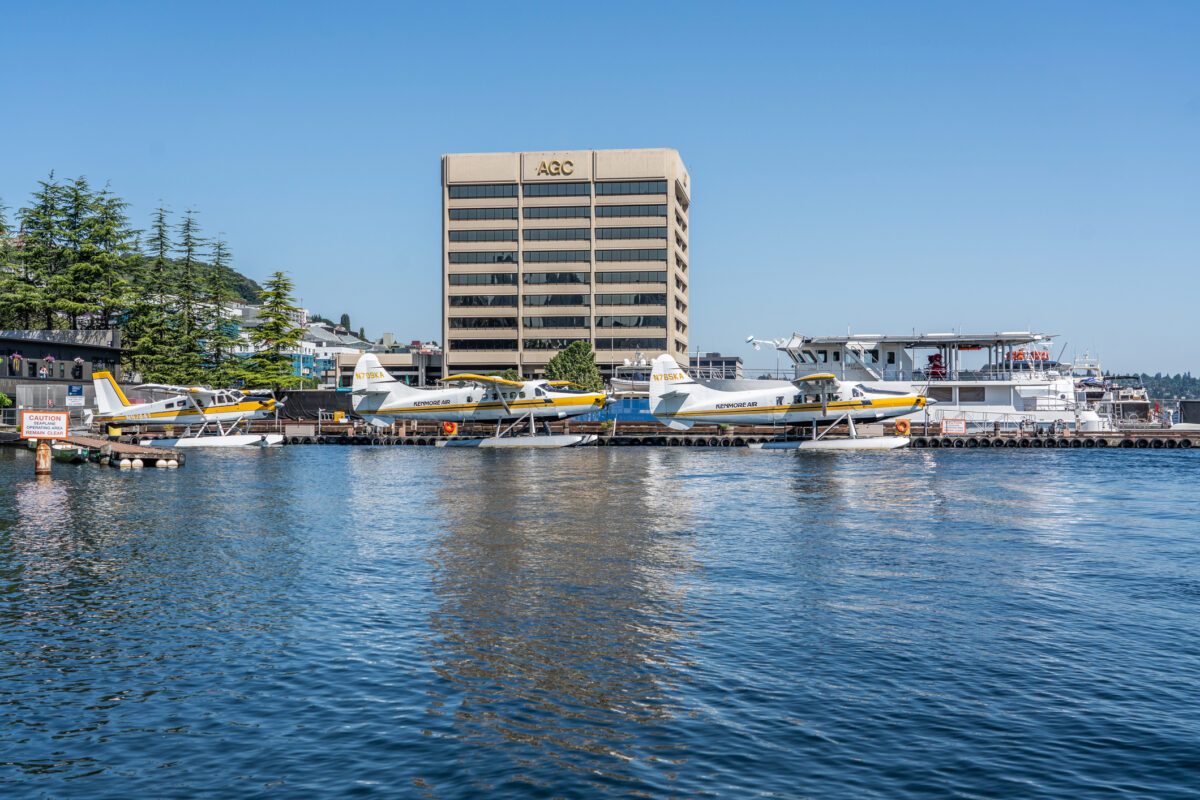
All 11 people aboard a Kenmore Air seaplane survived after the aircraft crashed against the rocky shoreline of Sucia Island in Washington State and was engulfed in flames.

The de Havilland Canada DHC-3T Turbine Otter, registered N709KA, was operating Kenmore Air flight 140 from Seattle Lake Union Seaplane Base (LKE) to Roche Harbor Seaplane Base (RCE) on July 23, 2026.
The aircraft was carrying 10 passengers and one pilot when it went down in Shallow Bay at approximately 5:15 p.m. local time. Nearby boaters reached the occupants before an extensive response involving U.S., Canadian, state and local agencies transported everyone for medical evaluation and treatment.
Read our stories in your inbox
Two aviation newsletters. Zero fluff.
Several occupants suffered injuries including head trauma, broken bones and lacerations. As of Friday afternoon, three passengers remained hospitalized in satisfactory condition, while the pilot had been released.
The cause remains under investigation. Kenmore Air has confirmed that the pilot adjusted the flight path in response to weather in the area, but neither the airline nor federal investigators has determined whether weather caused or contributed to the accident.
Flight 140 Crashed Near the Shore of Shallow Bay
Kenmore Air flight 140 departed Seattle Lake Union Seaplane Base (LKE) at approximately 4:30 p.m. for the relatively short flight north to Roche Harbor Seaplane Base (RCE) on San Juan Island.
The aircraft was approaching the northern San Juan Islands when its flight path changed near Sucia Island, a marine state park located several miles north of Orcas Island and close to the Canadian border.
According to Kenmore Air, weather radar showed a weather system in the area, and the pilot altered the route in response. Public flight-tracking information indicated that N709KA made a sharp turn toward Sucia Island approximately three minutes before the crash.
Video recorded by people aboard nearby boats shows the Turbine Otter flying at low altitude over Shallow Bay. The aircraft appears to turn before making initial contact with the water on one float, briefly becoming airborne again and then striking the island’s rocky shoreline.
The aircraft came to rest partially submerged beside a large rock. Passengers could be seen leaving the airplane as dark smoke developed, followed by flames that quickly spread across the fuselage.
The sequence is more accurately described as a crash during an attempted or forced landing than a routine emergency water landing. Investigators have not disclosed whether the pilot reported an engine problem, flight-control issue or other emergency before the impact.
Nearby Boaters Played a Critical Role in the Rescue
The accident occurred in a remote location without immediate road access, making the response from nearby recreational boaters especially important.
Several vessels moved toward the aircraft immediately after it crashed. The U.S. Coast Guard said Good Samaritans and medical professionals boating in the area rescued occupants, assessed injuries and provided stable platforms where emergency personnel could begin treatment.
The wider response included the U.S. Coast Guard, U.S. Navy, Canadian Coast Guard, San Juan County Sheriff’s Office, local fire departments, Washington State Parks personnel and Airlift Northwest.
Four occupants were transported by a San Juan County Sheriff’s Office boat to Peace Island Medical Center in Friday Harbor. Several others were taken to Coast Guard Station Bellingham, where emergency medical personnel were waiting.
A Coast Guard MH-65 Dolphin helicopter from Air Station Port Angeles hoisted one injured occupant from a sheriff’s boat and flew the patient to PeaceHealth St. Joseph Medical Center in Bellingham. Airlift Northwest also transported patients from the accident area.
A U.S. Navy MH-60S Seahawk from Naval Air Station Whidbey Island delivered backboards, remained available for additional medical evacuations and helped manage the aircraft operating around the accident site.
The Coast Guard’s final transportation breakdown accounted for all 11 occupants, although the agency referred to them collectively as passengers. Kenmore Air confirmed that the group consisted of 10 passengers and one pilot.
Three Passengers Remained Hospitalized
The injuries were more serious than the initial description that everyone had simply been “rescued” might suggest.
The San Juan County Sheriff’s Office reported injuries that included head trauma, fractures and cuts. All 11 occupants were taken to hospitals or medical facilities for evaluation and treatment.
By Friday afternoon, three passengers remained hospitalized—two at Harborview Medical Center in Seattle and one at PeaceHealth St. Joseph Medical Center in Bellingham. All three were listed in satisfactory condition. The pilot and the other passengers had been released.
The fact that every occupant survived is particularly notable considering the aircraft’s impact with the shoreline and the speed at which the post-crash fire spread.
Floatplane cabins are comparatively compact, and an impact can deform doors or restrict access to exits. The rapid response by passengers, the pilot and nearby boaters appears to have prevented the developing fire from becoming fatal.
N709KA Was a 1960 de Havilland DHC-3
The aircraft involved was a de Havilland Canada DHC-3 Otter with manufacturer serial number 410.
The FAA aircraft registry identifies N709KA as a 1960 airframe owned by Kenmore Air Harbor LLC. Although the registry retains the original DHC-3 model designation, it lists the aircraft as being powered by a Pratt & Whitney Canada PT6A-34 turboprop engine rather than its original piston engine.
The aircraft is commonly described as a DHC-3T or Vazar Turbine Otter following its turbine conversion.
The original DHC-3 was developed as a larger and more powerful companion to the de Havilland Canada DHC-2 Beaver. It is a single-engine, high-wing aircraft designed for short takeoffs and landings from water, gravel, snow and other locations with limited infrastructure.
According to De Havilland Canada’s history of the DHC-3 Otter, the type can accommodate approximately 10 or 11 passengers, depending on its interior and operating configuration.
Kenmore Air uses its Turbine Otters in a 10-passenger layout. The airline describes the type as the largest and most powerful aircraft in its seaplane fleet, with a normal cruise speed of approximately 134 mph and a range of about 500 miles.
Those capabilities make the Turbine Otter particularly suitable for services from Seattle Lake Union Seaplane Base (LKE) to destinations such as Roche Harbor Seaplane Base (RCE), where passengers can arrive directly at waterfront communities without using a conventional runway.
A Turbine Conversion Gives the Otter a Second Life
N709KA was manufactured more than six decades ago, but the aircraft’s current powerplant and many of its operating systems are substantially different from those installed when the airframe was built.
The original DHC-3 used a Pratt & Whitney R-1340 radial piston engine. Turbine-conversion programs replace that engine with a lighter and more powerful turboprop, commonly from the Pratt & Whitney Canada PT6A family.
The PT6A-34 installed on N709KA provides improved performance, reliability and parts support while allowing operators to continue using an airframe known for its large cabin, substantial useful load and low-speed handling characteristics.
An aircraft’s production year alone does not determine its airworthiness. Older commercial aircraft remain in service through repetitive inspections, component replacement, structural maintenance and compliance with mandatory regulatory requirements.
At the same time, legacy aircraft require specialized maintenance knowledge. Many components may have been overhauled or replaced several times during the life of the airframe, while modifications must be carefully integrated with the original design.
Kenmore Air Says the Aircraft Was Current on Inspections
Kenmore Air said N709KA was current on its required maintenance inspections before the accident.
The airline’s maintenance records showed that the aircraft completed its most recent 100-hour inspection on June 25, 2026. Its annual inspection was completed on January 26.
A 100-hour inspection is generally required for aircraft used to carry passengers for hire under applicable operating rules. It involves a detailed examination of the airframe, engine, flight controls, systems and required documentation.
The existence of a recent inspection does not establish that a mechanical problem was impossible. It does, however, mean that investigators will need to examine the aircraft’s maintenance history, recent work and condition alongside the pilot’s actions, weather and accident sequence.
Kenmore Air has said it will not speculate about the cause and is cooperating fully with the National Transportation Safety Board.
Weather Is Part of the Investigation, Not Yet the Explanation
Weather conditions around Sucia Island deteriorated rapidly near the time of the accident.
Witnesses described lightning, heavy rain and changing conditions around Shallow Bay. Kenmore Air has confirmed that the pilot changed course because of a weather system visible on available radar information.
That does not prove weather caused the crash.
Investigators will need to establish what conditions the pilot could see, what information was available in the cockpit, whether the aircraft encountered turbulence or reduced visibility and why the pilot descended toward Shallow Bay.
They will also review whether the maneuver was an intentional precautionary landing, a response to a technical problem or the result of another developing situation.
Public video will be particularly valuable. It provides investigators with views of the aircraft’s altitude, bank angle, pitch, water contact and movement immediately before the shoreline impact.
Flight-tracking data, weather radar, witness interviews, pilot testimony and examination of the recovered aircraft should allow the NTSB to reconstruct much of the final flight even if the aircraft was not equipped with the type of flight data and cockpit voice recorders carried by larger airliners.
A Separate DHC-3 Crash Led to Mandatory Inspections
The accident is likely to draw comparisons with the September 2022 crash of another DHC-3 Otter near Mutiny Bay, Washington, which killed all 10 people aboard.
That aircraft was operated by West Isle Air for Northwest Seaplanes and had no connection to Kenmore Air.
The NTSB’s investigation into the Mutiny Bay accident determined that a missing lock ring allowed part of the horizontal stabilizer trim actuator to become unthreaded. The stabilizer moved to an extreme position, making the aircraft’s pitch uncontrollable.
Following the preliminary findings, the FAA issued Airworthiness Directive 2022-23-08, requiring operators of all U.S.-registered DHC-3 aircraft to inspect the stabilizer actuator lock ring and confirm that it was present and correctly installed.
There is currently no evidence that the Sucia Island accident involved the same system or failure mode.
The comparison is relevant because it concerns the same basic aircraft type and resulted in fleet-wide regulatory action. It should not be used to suggest a cause before investigators have examined N709KA’s flight-control system and maintenance records.
Wreckage Was Recovered From Shallow Bay
Salvage contractors hired by Kenmore Air removed the aircraft from Shallow Bay on Friday and placed the wreckage on a barge.
Recovering the airplane quickly will allow investigators to examine the engine, propeller, controls, floats, structural damage and areas affected by the fire.
The Coast Guard said N709KA was carrying approximately 100 gallons of fuel. Responders observed a small, unrecoverable sheen, but officials reported no significant environmental threat and no continuing hazard to marine navigation.
The Coast Guard Cutter Blue Shark and the San Juan County Sheriff’s Marine Unit remained at the scene during the salvage operation to protect the area and keep other vessels clear.
Kenmore Air Canceled Its Friday Schedule
Kenmore Air canceled all scheduled flights on July 24 while it assisted the passengers, pilot and their families and supported the emergency response.
Affected customers were offered rebooking or refund options. The temporary suspension also allowed the airline to focus personnel on the accident and assess its operation before resuming service.
The disruption was significant for communities that rely on Kenmore Air’s aircraft for fast transportation between Seattle and the San Juan Islands.
Founded in 1946, Kenmore Air describes itself as the largest seaplane airline in the United States. It carries more than 90,000 passengers annually and serves more than 45 water-based destinations across the Pacific Northwest and British Columbia.
Its scheduled network uses de Havilland Beaver and Otter seaplanes, while Kenmore Air Express operates land-based Cessna Caravan aircraft from Boeing Field (BFI).
Bottom Line
All 11 occupants survived after Kenmore Air flight 140 crashed on the rocky edge of Shallow Bay near Sucia Island on July 23.
The de Havilland DHC-3T Turbine Otter, registered N709KA, had departed Seattle Lake Union Seaplane Base (LKE) for Roche Harbor Seaplane Base (RCE) with 10 passengers and one pilot.
Video shows the aircraft contacting the water on one float, becoming airborne again and then striking the shoreline before catching fire. Nearby boaters reached the occupants almost immediately, while U.S., Canadian and local responders completed a complex rescue and medical transportation operation.
Three passengers remained hospitalized in satisfactory condition on Friday afternoon, while the pilot and the remaining passengers had been released.
Kenmore Air has confirmed that the pilot altered the flight path because of weather in the area. That is an important part of the investigation, but it is not yet a determination of cause.
N709KA was a 1960 DHC-3 airframe converted to turbine power with a Pratt & Whitney Canada PT6A-34 engine. Kenmore Air said the aircraft was current on its required inspections, including a 100-hour inspection completed less than a month before the crash.
The NTSB will now examine the recovered wreckage, pilot and witness accounts, weather information, flight-tracking data and extensive video of the accident. Until that work is complete, explanations involving weather, mechanical failure or pilot decision-making remain unconfirmed.
Keep reading FlyMag
Get the Daily Brief in the morning or the Route Watch weekly recap on Fridays. Or both.