Algeria has closed its airspace to civil and military aircraft registered in the United Arab Emirates, adding an aviation restriction to the diplomatic break between Algiers and Abu Dhabi.

The measure took effect at 00:00 on Sept. 11, 2026. However, it does not immediately suspend UAE airline service to Algiers Houari Boumediene (ALG). Algeria has granted a temporary exception for Emirati commercial flights arriving at or departing from the capital through the end of 2026.
In its Sept. 10 order, Algeria’s Ministry of National Defense said the wider restriction covers UAE-registered aircraft operating from or to the UAE. The ministry described the end of 2026 as the expiration point of the contract governing the exempt Algiers services.
Read our stories in your inbox
Two aviation newsletters. Zero fluff.
The wording makes the measure narrower than a blanket prohibition on UAE airlines, at least during the transition period. It also gives the order a broader operational reach than simply closing Algerian airports to those carriers: affected aircraft cannot use Algerian airspace on other UAE-linked flights.
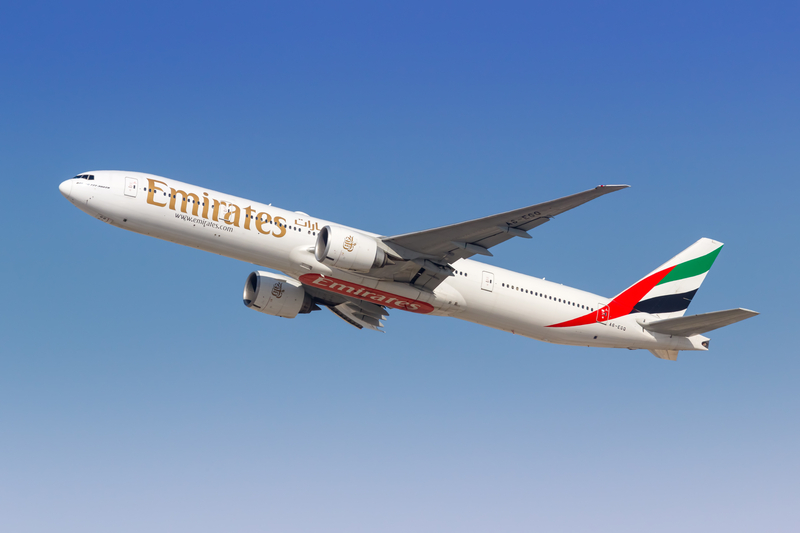
The Restriction Follows the Aircraft Registration
Algeria based the restriction on aircraft nationality rather than the identity of the operator alone. The UAE’s Aeronautical Information Publication assigns the nationality mark A6 to aircraft registered in the country, making those registrations the central consideration for airline operations and flight planning.
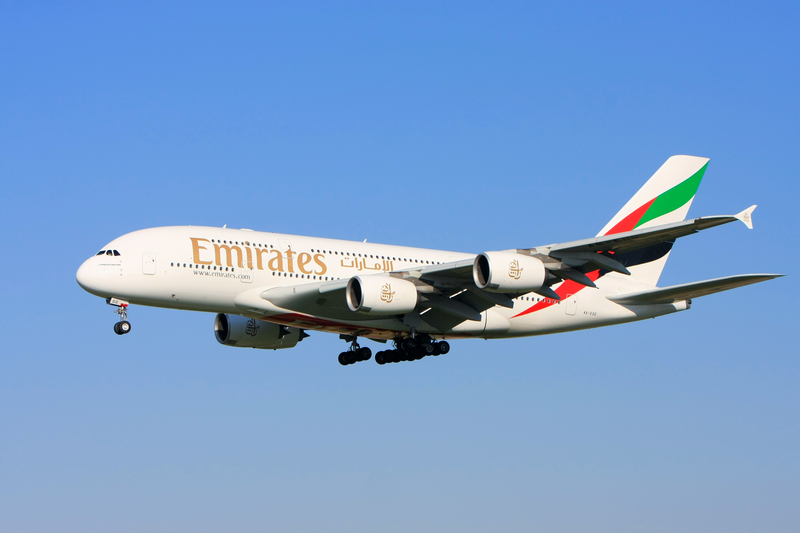
That distinction matters in a sector where aircraft can be leased, chartered or operated under commercial arrangements involving more than one company or jurisdiction. An airline’s brand is not necessarily the same thing as the nationality of every aircraft available to it.
The Algerian order nevertheless specifically preserves Emirati commercial operations serving ALG until year-end. That carveout allows the existing passenger link with the UAE to continue temporarily while preventing other qualifying A6-registered movements through Algerian airspace.
Any affected flight that would otherwise cross Algeria must use an alternative track. The resulting distance and fuel penalty will depend on the origin, destination and available airways, but Algeria’s geographic position gives its flight information region significance for traffic moving between the Gulf, North Africa and points farther west.
The legal basis for controlling access is straightforward. Article 1 of the Chicago Convention recognizes each state’s complete and exclusive sovereignty over the airspace above its territory, while scheduled international services require the permission of the state being overflown. Those provisions are reproduced in ICAO’s guidance on international air transport regulation.
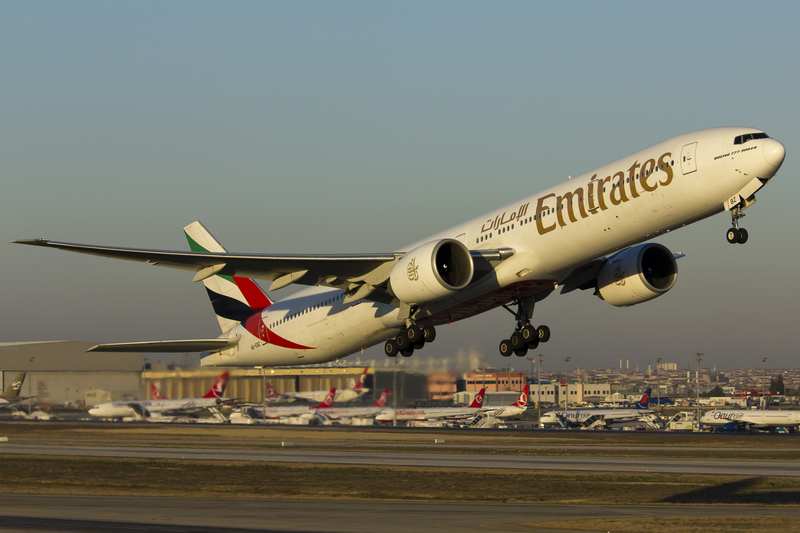
Emirates’ Algiers Service Gets a Temporary Reprieve
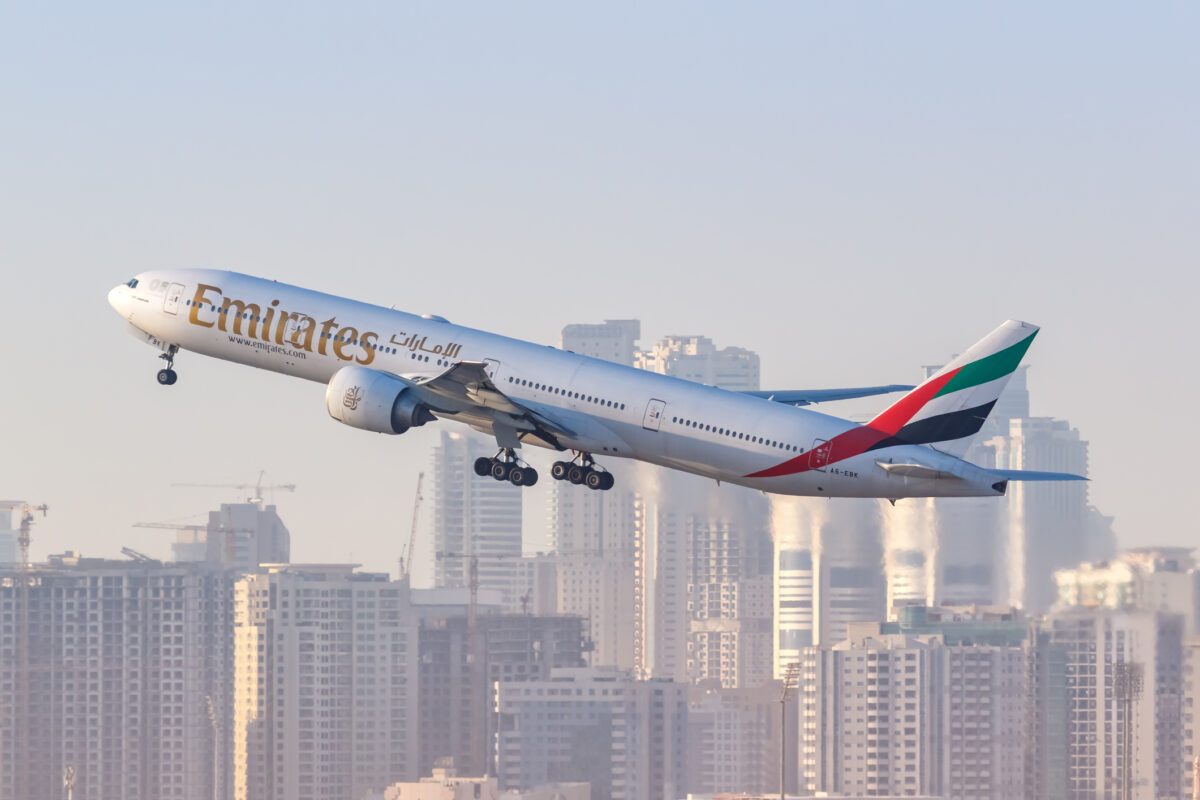
Emirates is continuing to market daily flights to Algiers via Dubai. The government exemption means that Dubai International (DXB)-ALG service is not immediately caught by the wider airspace closure.
The airline has historically assigned the Boeing 777-300ER to the route. When Emirates expanded its Algiers schedule in 2022, it said the additional service would use the type and highlighted the aircraft’s belly capacity as an important part of the market. The airline said at the time that a fifth weekly frequency would add approximately 30 to 40 metric tons of cargo capacity.
The 777-300ER gives Emirates substantial passenger and freight volume on a single rotation. Across the carrier’s fleet, the type accommodates between 354 and 364 passengers in three-class layouts, or between 427 and 442 in two-class versions. Emirates lists a maximum range of 7,880 nautical miles for the GE90-powered aircraft in its published fleet specifications.
That capacity supports both local Algeria-UAE traffic and connections over DXB. Emirates’ network model also makes the route useful for passengers traveling between Algeria and destinations in Asia, the Indian Ocean and Australia without using a European transfer point.
The exemption is explicitly time-limited. Unless Algeria changes the order or grants further authority, UAE-registered commercial aircraft will lose the Algiers carveout when the transition expires. Emirates’ public destination page was still advertising daily service after the restriction took effect, but the carrier will have to align its schedule with the government’s year-end deadline if no replacement authorization is agreed.
Airspace Action Extends the Diplomatic Dispute
Algeria announced the airspace closure after severing diplomatic relations with the UAE on Sept. 10. In a Foreign Ministry statement, the Algerian government accused the UAE of increasingly provocative and hostile conduct and said earlier warnings had failed to resolve the dispute.
The ministry said the UAE ambassador was formally notified on Sept. 10 and given 48 hours to comply with the decision. The statement did not confine the rupture to a single policy disagreement, instead presenting it as the result of a broader deterioration in relations.
The aviation order converts that political break into an immediate operating constraint. It affects both civil and military aircraft, separates temporary Algiers access from wider overflight rights and establishes a defined decision point for the remaining commercial service at the end of 2026.
Bottom Line
The Algiers exception protects near-term bookings and preserves a direct Gulf connection during the transition, but it is a reprieve rather than a settlement. Emirates gains time to manage passengers, cargo commitments and onward connections, while Algeria avoids an abrupt cutoff before the authority governing the service expires.
The larger signal is that aircraft registration has become an instrument of the diplomatic dispute. Dispatch teams operating A6-registered fleets must now treat Algeria as a restricted airspace environment unless a flight falls within the stated ALG exception, with any rerouting costs concentrated on services for which the Algerian FIR offered the most efficient track.
The next operational markers will be any amendment to the year-end deadline, changes to Emirates’ published Algiers inventory and a possible UAE response affecting Algerian operators. Without a new authorization, the temporary carveout points toward the end of UAE-operated service at ALG after 2026 rather than a return to normal bilateral access.