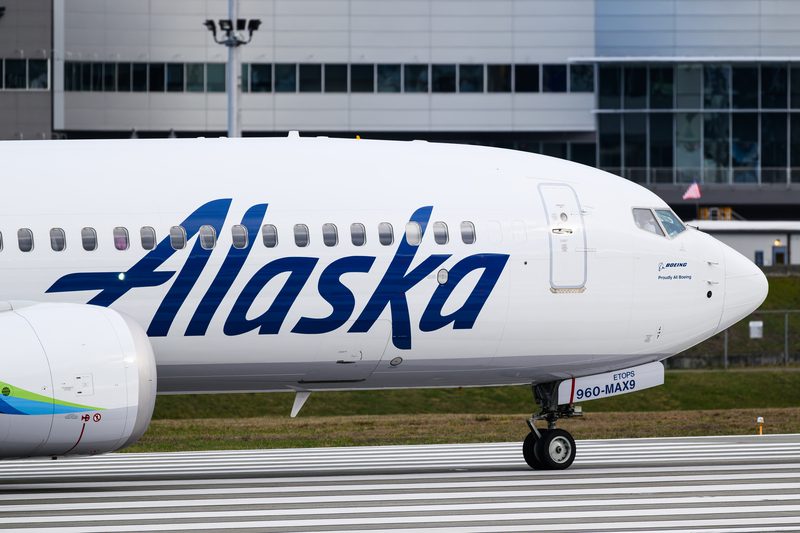
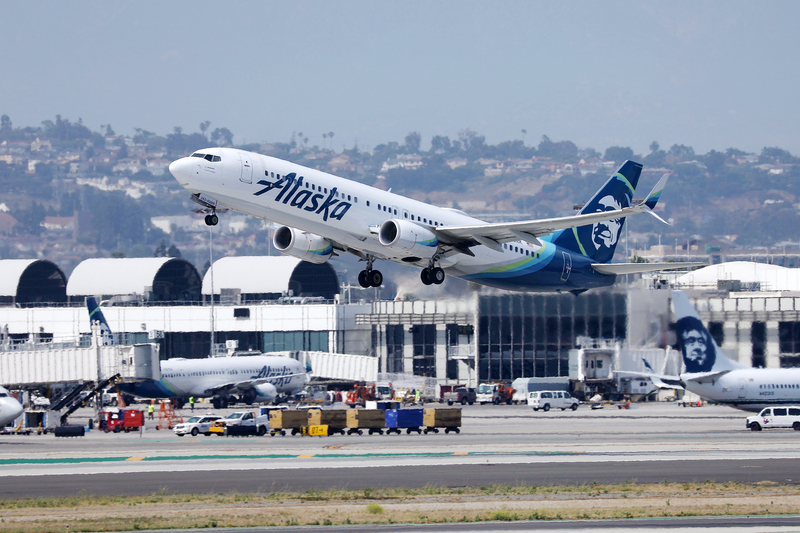
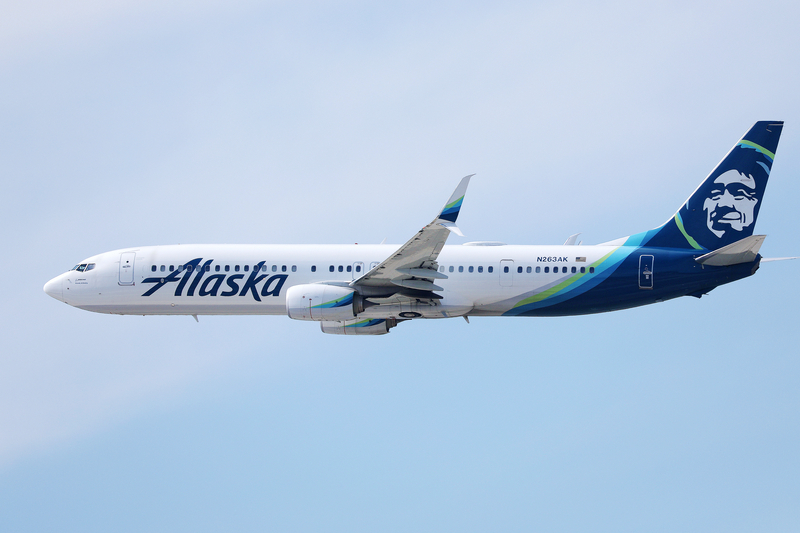
Alaska Airlines will place an Alaska-branded Boeing 737-800 on Hawaiian Airlines’ interisland network from Oct. 3, assigning the aircraft to three daily round trips between Honolulu (HNL) and Kahului (OGG).

The flights will supplement Hawaiian’s existing Boeing 717-200 operation and add passenger and cargo capacity on the combined company’s largest Neighbor Island market. Alaska and Hawaiian said in a Sept. 18 operational update that Hawaiian’s 717 fleet will continue serving every interisland destination, with approximately 140 flights scheduled each day.
That makes the 737 deployment a targeted addition rather than an immediate fleet change across the network. Customers will be able to identify whether a flight uses a 737 or 717 during booking on the Alaska and Hawaiian websites and in the combined Alaska Hawaiian app.
Read our stories in your inbox
Two aviation newsletters. Zero fluff.
Three Daily Round Trips With More Seats
The interim aircraft will come from Alaska’s existing 737-800 fleet and retain its Alaska exterior and cabin. Alaska Air Group’s July 2026 fleet listing shows the type configured with 161 seats: 16 in First Class, 36 in Premium Class and 109 in the remainder of the Main Cabin.
Hawaiian’s 128-seat 717-200s have eight First Class seats, 17 extra-comfort seats and 103 standard Main Cabin seats. The 737 therefore provides 33 more seats on each departure, doubles the number of First Class seats and substantially expands the inventory available for premium-seat sales and loyalty upgrades.
The larger aircraft also offers more lower-deck cargo volume, an important distinction on a route carrying local freight alongside passenger baggage. Alaska has specifically identified additional room for items such as surfboards as one advantage of the 737 platform.
The 737-800 is considerably more aircraft than the short Honolulu-Kahului sector requires in range terms. Boeing lists the CFM56-7B-powered type with a range of up to 2,800 nautical miles and a maximum passenger capacity of 189. Its relevance in Hawaii is instead its capacity, availability within the wider Alaska fleet and ability to withstand a schedule built around repeated short sectors and high daily cycle counts.
Alaska Cabin Introduces a Different Interisland Product
Passengers booked on the 737 flights will receive Alaska’s current narrowbody product rather than the familiar Hawaiian 717 cabin. The aircraft has reclining leather Recaro seats, in-seat power, USB charging and a larger premium section.
First Class passengers will receive complimentary beverages and a snack, while the Main Cabin service will include beverages. Free Starlink connectivity will be available when the assigned aircraft has been equipped; Alaska is installing the system progressively across its 737 fleet.
The product differences are significant on paper even if the airborne portion of an interisland trip is brief. More premium seats create additional space for Atmos Rewards and Huakaʻi by Hawaiian upgrades, while power and connectivity move the short-haul service closer to the standard Alaska offers on mainland sectors.
Huakaʻi benefits will apply on both brands’ interisland flights. Eligible Hawaii residents will continue to receive benefits including two free checked bags and periodic companion discounts.
Check-In Deadline Moves to 50 Minutes
The 737 launch coincides with a wider change to Hawaiian’s interisland ground procedures. From Oct. 3, every Neighbor Island passenger must complete check-in and drop checked baggage at least 50 minutes before departure, an increase from the current 30-minute cutoff.
The revised deadline applies across the interisland schedule, not only to passengers traveling on the larger aircraft. The airlines said the change is intended to improve baggage handling and support on-time departures.
At HNL, passengers on both 717 and 737 interisland flights will continue to use Terminal 1, Lobby 3. Self-service bag-tag stations will be available there. At OGG, Honolulu-bound customers traveling on the 737 must use Alaska’s counters, which are next to Hawaiian’s facilities.
Hawaiian will also move check-in and bag drop for all international departures at HNL from Terminal 1, Lobby 3 to Terminal 2, Lobby 4 on Oct. 3. The move releases space in the interisland lobby as the 737 operation begins.
A Bridge to Hawaiian’s 2028 Fleet
The Alaska-liveried aircraft is a near-term measure ahead of a much larger fleet transition. In July, Alaska Air Group selected the Boeing 737-800 as the future Hawaiian interisland aircraft, with the first permanent aircraft planned to enter service in 2028.
Those airplanes will carry Hawaiian branding and will ultimately replace the 717-200 fleet. The planned cabins will include twice as many First Class seats as the 717, more than 30 Premium Class seats, Starlink Wi-Fi, power outlets, USB charging and device holders.
Alaska Air Group listed 19 Boeing 717s in service as of July 2026, with an average age of 24.2 years. The group said the 737-800 was chosen for its durability in a high-cycle operation and its ability to handle the salt-air environment encountered in Hawaii. The future aircraft will be based at HNL and flown by Honolulu-based pilots and flight attendants, with maintenance support retained in Hawaii.
The cross-brand deployment also reflects how far the Alaska-Hawaiian integration has progressed behind the customer-facing identities. The airlines received a single FAA operating certificate on Oct. 29, 2025, placing both operations under Alaska’s certificate while preserving Hawaiian as a separate commercial brand.
Bottom Line
The Oct. 3 deployment gives Alaska Air Group a controlled way to introduce the 737 into Hawaiian’s interisland environment before committing a dedicated fleet. Honolulu-Kahului offers sufficient traffic to use the larger cabin while allowing the airline to test ground handling, baggage flows, cargo loading and passenger communication on a limited number of daily sectors.
For travelers, the immediate gain is capacity and a larger premium cabin, although the most consequential customer change may be on the ground: the new 50-minute check-in and bag-drop deadline applies to the entire Neighbor Island operation. That adjustment indicates the group is already standardizing processes around a network that will eventually accommodate larger aircraft alongside Hawaiian’s rapid-turn 717 schedule.
The aircraft’s Alaska colors should be temporary, but their appearance on a core Hawaiian market is a visible sign of the group’s dual-brand fleet strategy. The next points to watch are how quickly Hawaiian-branded 737-800s arrive from 2028, whether the type expands beyond Honolulu-Kahului early in the transition and how the airline preserves interisland frequency as the smaller 717s leave the fleet.
Keep reading FlyMag
Get the Daily Brief in the morning or the Route Watch weekly recap on Fridays. Or both.