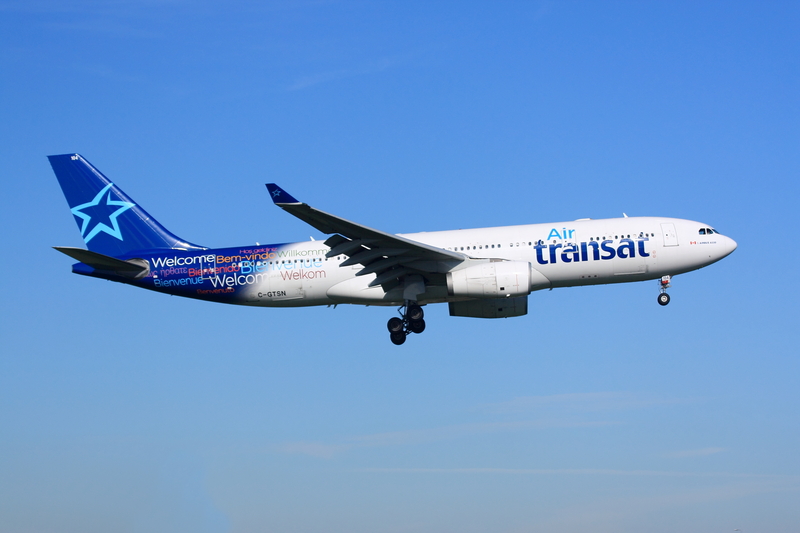
Air Transat has opened its new nonstop route between Montreal Trudeau (YUL) and Istanbul (IST), giving the Canadian leisure carrier a second gateway to Türkiye’s largest city.

The first Montreal-origin service, flight TS314, departed on October 29 for an overnight crossing to Istanbul. Air Transat’s flight-status and schedule system identifies the route as an Airbus A330 operation, with the eastbound flight scheduled for approximately nine hours and 15 minutes.
Air Transat announced the Montreal-Istanbul route in May, presenting it as a year-round service that would operate on Tuesdays and Thursdays. The timetable now filed for the opening months is more conservative: one weekly Thursday departure through December 10, followed by Tuesday and Thursday flights during the holiday period from December 15 through January 7. The schedule then returns to one weekly frequency for much of the remaining winter season.
Read our stories in your inbox
Two aviation newsletters. Zero fluff.
That makes the launch a phased capacity addition rather than an immediate move to the two weekly flights originally outlined. The year-round designation describes Air Transat’s intention to retain the city pair across seasons, but frequency will vary according to demand.
Airbus A330-200 Handles the 4,800-Mile Route
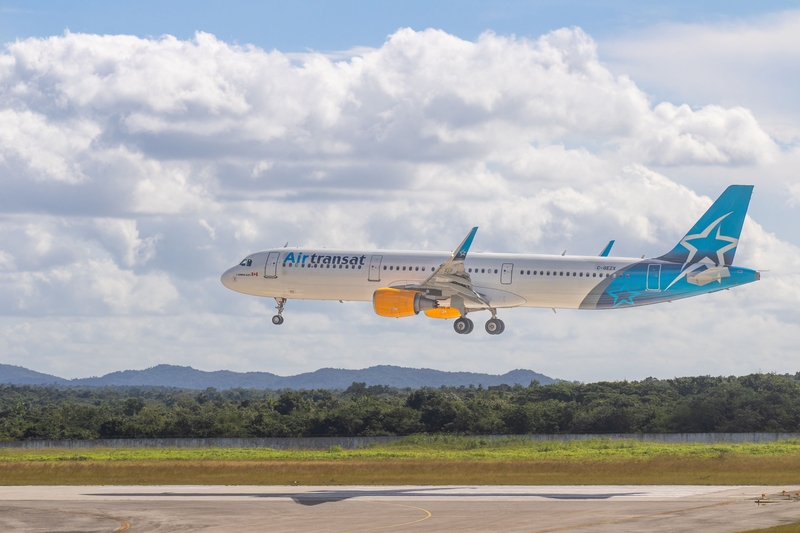
The Montreal flights use the Airbus A330-200, Air Transat’s smaller long-haul widebody and an established type in the airline’s transatlantic operation. The roughly 4,800-mile sector is well within the aircraft’s capabilities while being long enough to favor a widebody over Air Transat’s Airbus A321LR fleet.
Air Transat lists three A330-200 cabin configurations, seating 330, 332 or 345 passengers. Each version has 12 Club Class seats, with the balance in Economy Class. The aircraft are powered by Rolls-Royce Trent 772B engines, cruise at Mach 0.82 and have a carrier-stated maximum range of 6,000 nautical miles.
The A330-200 therefore gives Air Transat substantial range margin on YUL-IST without placing one of its larger A330-300s into a market opening at only one weekly frequency. It also provides belly capacity for a route intended to serve leisure passengers, visiting-friends-and-relatives traffic and commercial links between Quebec and Türkiye.
The eastbound schedule calls for an evening departure from Montreal and an afternoon arrival in Istanbul the following day. The westbound TS315 leaves Istanbul in the late afternoon and reaches Montreal in the evening, with a scheduled block time of about 10 hours and 40 minutes. The difference between the two directions reflects the prevailing winds across the North Atlantic.
Second Air Transat Gateway to Istanbul
Montreal follows Toronto Pearson (YYZ), where Air Transat inaugurated Istanbul flights in December 2025. The Toronto route subsequently grew to three weekly services, giving the airline a base from which to test demand for Istanbul before adding its Montreal home hub.
Air Transat initially said the two gateways would provide up to five weekly Istanbul departures. Under the current Montreal schedule, the combined total will generally be four flights per week, rising to five when YUL operates twice weekly during the December holiday peak.
The Montreal addition also changes the competitive structure of the city pair rather than creating a previously unserved market. Turkish Airlines already links YUL and IST with its own widebody service. Air Transat is entering with a higher-density leisure configuration and a limited weekly schedule, giving it a different capacity and pricing profile from the Turkish flag carrier.
Partnership Extends the Route Beyond Istanbul
The commercial case is broader than local Montreal-Istanbul demand. Air Transat and Turkish Airlines put interline and codeshare agreements into effect in November 2025, allowing eligible itineraries to combine the two carriers on one ticket with checked baggage transferred to the final destination.

That arrangement gives Air Transat access to Turkish Airlines’ extensive Istanbul network without requiring the Canadian airline to build its own operation beyond IST. The partnership covers connections across Türkiye, Europe, Asia and the Middle East, making the Montreal flight relevant to passengers whose final destination is well beyond Istanbul.
The codeshare relationship also reduces some of the commercial risk associated with opening a long-haul route at low frequency. Air Transat can draw passengers from its Canadian network while Turkish Airlines supplies onward connectivity at IST. At the same time, the Turkish carrier gains additional Canadian feed and can sell seats on an Air Transat-operated transatlantic service.
A Measured Expansion From Montreal
The route fits Air Transat’s recent pattern of using partnerships and selective long-haul additions to broaden a network historically concentrated on Europe and southern vacation markets. Istanbul offers a combination of destination demand and connecting traffic, while the existing Toronto service gives the airline operational experience in the market.
Starting with one weekly Montreal rotation limits the amount of capacity exposed during the route’s first winter. The temporary increase to twice weekly over the holidays provides a test of how the market responds when passengers have more scheduling flexibility, without committing that capacity across the full season.
For YUL, the result is a second operator to Istanbul and additional long-haul capacity from a Montreal-based airline. For Air Transat, it is a controlled extension of an established Toronto route rather than an isolated new destination.
Bottom Line
Air Transat gains most from the network role of Istanbul, not simply from selling seats between Montreal and Türkiye. A once-weekly nonstop has limited utility for time-sensitive local passengers, but it becomes more commercially useful when combined with domestic feed in Canada and Turkish Airlines connections beyond IST. The partnership lets Air Transat participate in markets that would otherwise be difficult to serve with its own aircraft.
The restrained opening schedule is equally significant. Deploying a 330- to 345-seat A330-200 once weekly keeps the initial capacity commitment modest, while the short-lived December increase gives the airline a clear demand test. If Montreal performs as Toronto did, additional frequencies can be added without introducing another destination or aircraft type.
The next point to watch is whether the Tuesday flight returns on a sustained basis after the holiday peak. A stable twice-weekly pattern would make the route more attractive to local passengers and improve connection options at Istanbul; continued weekly operation would show that Air Transat views Montreal primarily as a supplementary spoke within its wider Canada-Türkiye partnership.