Air Canada will begin year-round nonstop service between Vancouver (YVR) and Guangzhou (CAN) in May 2027, adding its third mainland China destination and another long-haul spoke to its Vancouver trans-Pacific hub.

The airline is adding one route from YVR, rather than launching 14 new services. The figure of 14 represents Air Canada’s broader portfolio of announced Asia-Pacific routes from Vancouver, including seasonal markets that do not all operate at the same time.
According to Air Canada’s Summer 2027 network announcement, flights are available for sale and remain subject to final government approval.
Read our stories in your inbox
Two aviation newsletters. Zero fluff.
Guangzhou Flights Start May 4
Flight AC77 will leave Vancouver at 12:35 a.m. on Tuesdays, Thursdays and Sundays, reaching Guangzhou at 5 a.m. the following day. The first departure is scheduled for May 4, 2027.
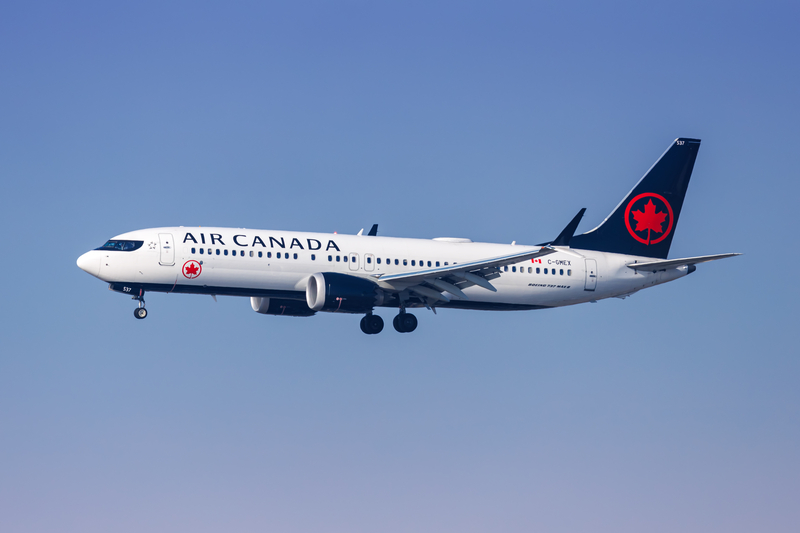
AC76 will depart Guangzhou at 9:45 a.m. on Mondays, Wednesdays and Fridays and arrive at YVR at 6:30 a.m. the same day, beginning May 5. The published timings produce a scheduled journey of about 13 hours and 25 minutes outbound and 11 hours and 45 minutes on the return.
The overnight departure from Vancouver allows Air Canada to feed AC77 with arrivals from its domestic and U.S. network. The early-morning arrival of AC76 at YVR similarly places passengers into the carrier’s morning connection banks.
Guangzhou becomes Air Canada’s third mainland China gateway after Beijing (PEK) and Shanghai (PVG). The carrier says the three markets will support as many as 24 weekly Air Canada frequencies between Canada and mainland China.
The route also restores Air Canada’s own presence in one of the largest commercial centers in the Pearl River Delta. China Southern already links Guangzhou and Vancouver, meaning Air Canada will introduce additional competition rather than open an entirely unserved city pair. China Southern’s Vancouver station information identifies CAN–YVR as part of its network.
Boeing 787 Assigned to the Route
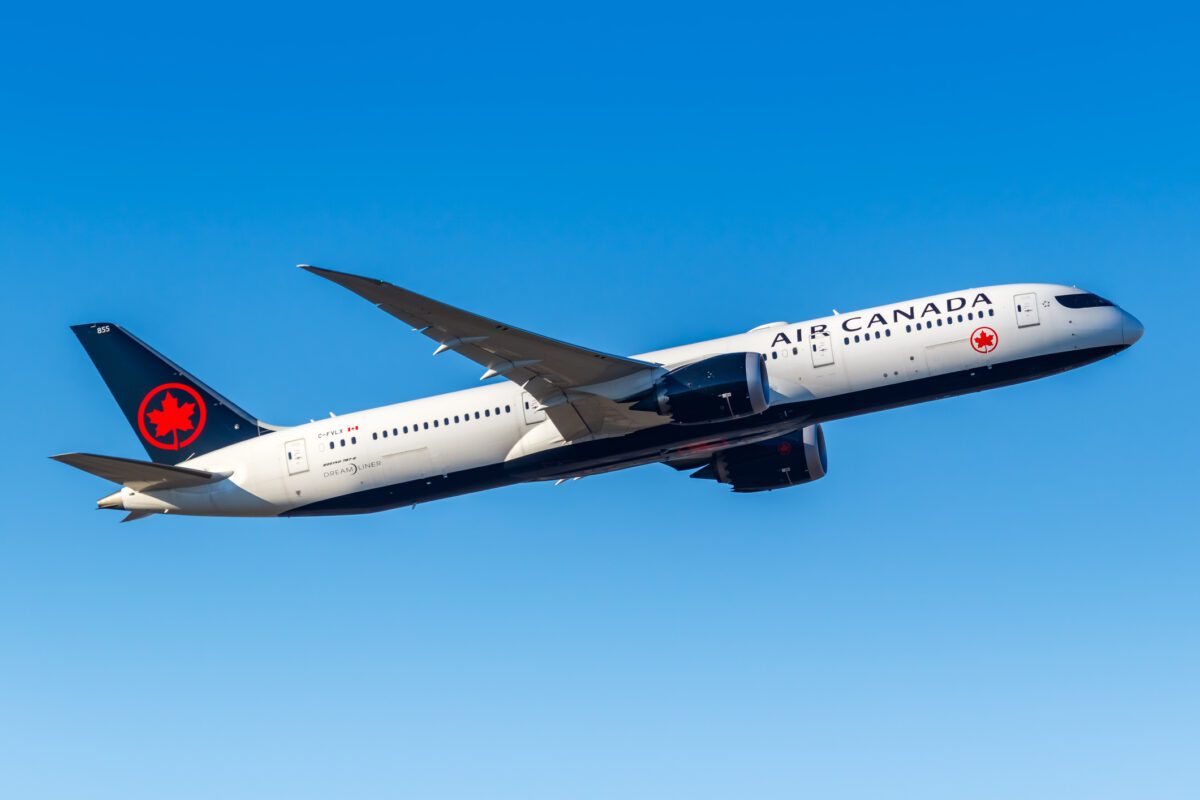
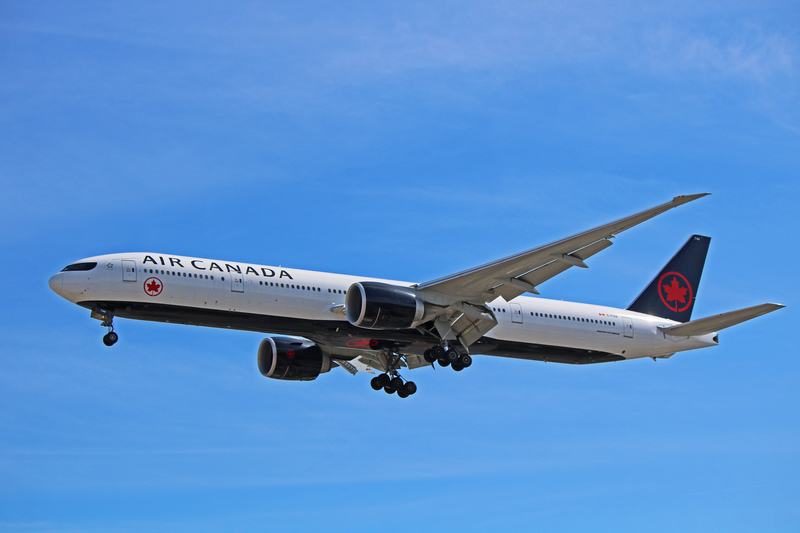
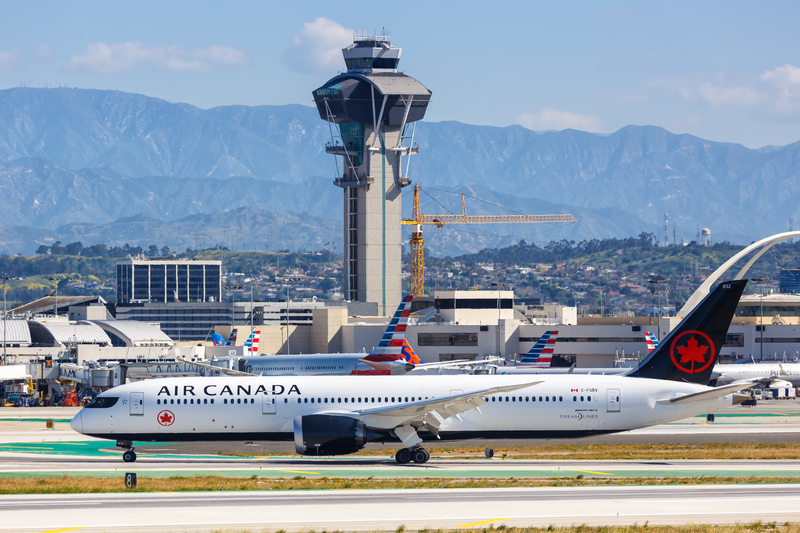
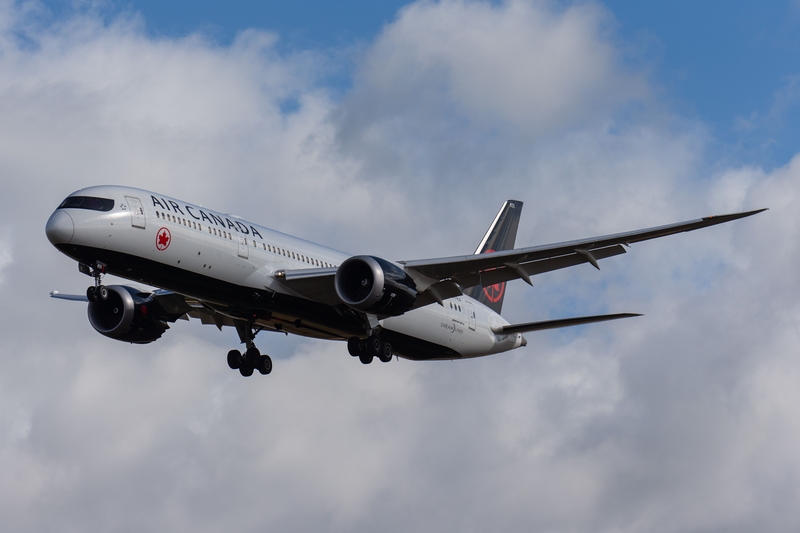
Air Canada will operate the service with Boeing 787 Dreamliner aircraft carrying Signature Class, Premium Economy and Economy cabins. Signature Class provides direct-aisle-access, lie-flat seating, placing a full long-haul business-class product into a market likely to draw a mix of corporate, visiting-friends-and-relatives and connecting traffic.
The airline’s mainline fleet includes Boeing 787-8 and 787-9 aircraft, although its initial Guangzhou announcement refers to the Dreamliner fleet rather than one specific variant. Both types provide the range needed for the Pacific crossing, with Boeing publishing maximum ranges of up to 8,000 nautical miles for the 787-8 and 8,300 nautical miles for the 787-9 in its technical specifications.
The 787 is also central to the route’s cargo proposition. Guangzhou anchors a manufacturing and technology region with substantial demand for time-sensitive freight, while Air Canada can distribute passengers and cargo beyond Vancouver over its North American network. The three-times-weekly opening schedule limits initial capacity while establishing a direct link that can be increased if demand supports it.
How Guangzhou Takes the Vancouver Portfolio to 14 Routes
Air Canada described Manila (MNL) as its 12th Asia-Pacific destination from YVR when that service launched in April 2025. The airline subsequently announced winter-season flights to Sapporo (CTS), which YVR says will operate three times weekly from December 17, 2026, through March 2027.
Guangzhou is therefore the next addition and takes the announced portfolio to 14 routes. Counted by destination, Air Canada’s Vancouver Asia-Pacific network comprises:
- Beijing, Shanghai and Guangzhou in mainland China;
- Hong Kong (HKG);
- Tokyo Narita (NRT), Osaka (KIX) and Sapporo in Japan;
- Seoul (ICN);
- Bangkok (BKK), Singapore (SIN) and Manila in Southeast Asia;
- Sydney (SYD) and Brisbane (BNE) in Australia; and
- Auckland (AKL) in New Zealand.
That total is best viewed as the size of Air Canada’s announced trans-Pacific portfolio, not a claim that all 14 destinations will operate concurrently during Summer 2027. Sapporo is scheduled to end before Guangzhou begins, while some other routes have historically followed seasonal patterns.
The count nevertheless illustrates the pace of Air Canada’s YVR development. When the airline inaugurated Manila, it said its summer Pacific seat capacity had more than doubled compared with 2022. Bangkok has since been extended to year-round operation, while Guangzhou adds another permanent route rather than a peak-season experiment.
China Capacity Returns to Vancouver
The announcement follows a broader rebuilding of YVR’s mainland China connectivity. The airport’s 2025 annual report said demand for China travel continued to exceed available capacity and that the airport ended the year with 23 weekly mainland China flights. It also recorded the return of Air Canada to Beijing, China Southern to Guangzhou and China Eastern to Shanghai during 2025.
Air Canada’s entry into Guangzhou deepens that recovery while giving the carrier control of another major China flow over YVR. Unlike an interline-only option, its own metal allows Air Canada to coordinate fares, schedules, Aeroplan inventory and connections across the full journey.
Bottom Line
Vancouver gains most from Guangzhou’s role as a network route rather than simply another point-to-point service. The schedule is built around connections, extending the addressable market from British Columbia to cities across Canada and the United States. Guangzhou, meanwhile, gives Air Canada direct access to another major economic center in southern China without relying on a connection through Beijing, Shanghai or Hong Kong.
The three-times-weekly frequency is a measured starting point in a market where bilateral approvals, aircraft allocation and recovering China demand all matter. Competition from China Southern will test Air Canada’s ability to command connecting traffic and premium demand, but the Canadian carrier has the advantage of a large behind-YVR network and a consistent three-cabin product.
The next indicators will be regulatory approval, the specific 787 variant assigned and whether Air Canada can build Guangzhou beyond three weekly flights. An increase would signal that the airline sees CAN not as a niche addition, but as a durable third pillar of its mainland China schedule alongside PEK and PVG.
Keep reading FlyMag
Get the Daily Brief in the morning or the Route Watch weekly recap on Fridays. Or both.