Fire Warning Grounds American Airlines 737 Before Fresno-Dallas Departure
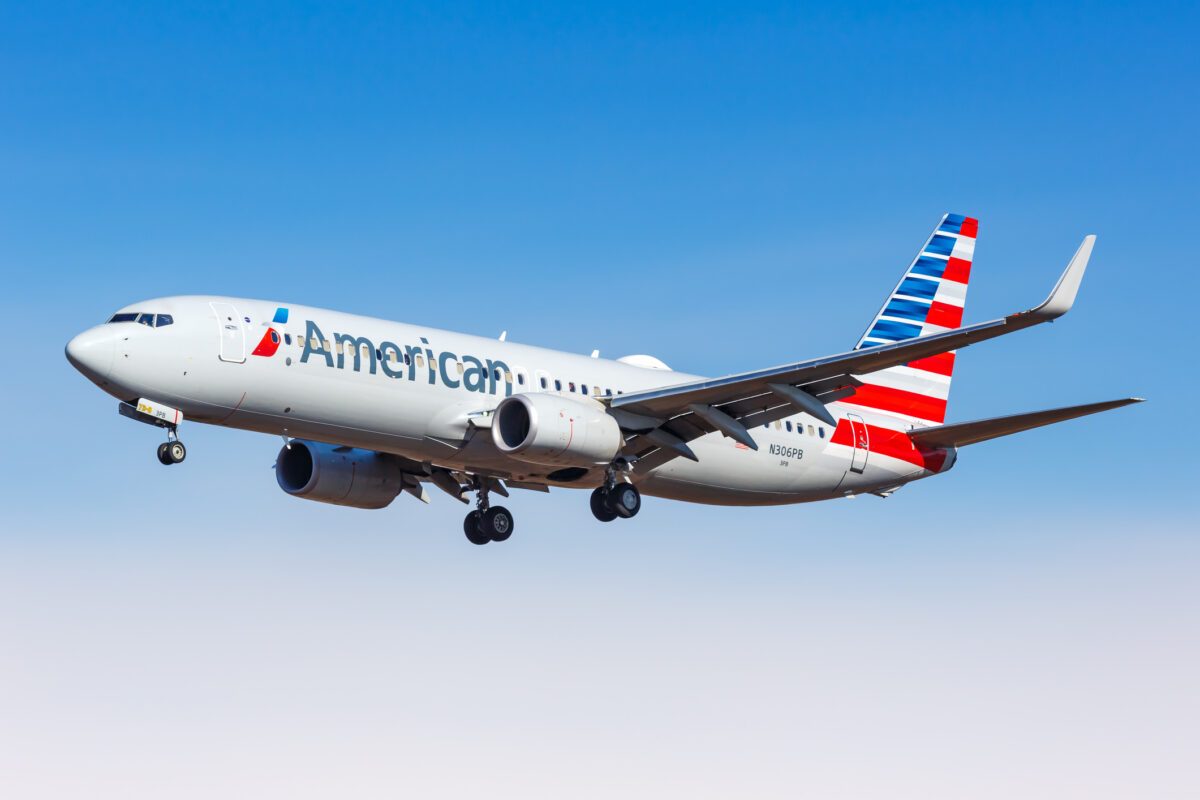
An American Airlines Boeing 737-800 was removed from service at Fresno Yosemite International Airport (FAT) early Friday after its crew received a fire-related cockpit indication shortly after leaving the gate for Dallas/Fort Worth International Airport (DFW).

Flight AA2653 had begun its departure process when the warning prompted the pilots to discontinue the operation and return the aircraft to the terminal area. The Fresno Fire Department inspected the jet but found no visible fire, smoke, or other evidence that an active fire had developed.
Passengers left the aircraft normally, and no injuries were reported. Local officials said a replacement aircraft was brought to Fresno Yosemite International Airport (FAT) so the affected travelers could continue to Dallas/Fort Worth International Airport (DFW). The original Boeing 737-800 was held for further examination. (FOX26)
Read our stories in your inbox
Two aviation newsletters. Zero fluff.
AA2653 Did Not Become Airborne
American Airlines flight AA2653 was scheduled to depart Fresno Yosemite International Airport (FAT) at 5:41 a.m. Pacific time on July 17 and arrive at Dallas/Fort Worth International Airport (DFW) at 10:59 a.m. Central time.
The scheduled block time was three hours and 18 minutes for the approximately 1,139-nautical-mile, or 1,310-statute-mile, route.
The aircraft reportedly pushed back only a few minutes after its scheduled departure time. The crew then received the fire indication while beginning the taxi process and returned to the gate before takeoff.
Public flight-tracking records do not show an airborne segment for N920NN on the affected departure. That distinguishes this incident from an air return or diversion: the crew was able to address the warning while the airplane remained on the ground at Fresno Yosemite International Airport (FAT). (Flightradar24 flight history)
| Flight | Route | Scheduled Departure | Scheduled Arrival | Scheduled Aircraft |
|---|---|---|---|---|
| AA2653 | Fresno (FAT)–Dallas/Fort Worth (DFW) | 5:41 a.m. PDT | 10:59 a.m. CDT | Boeing 737-800 |
Some early reports described AA2653 as canceled, while the local fire-department account said a replacement airplane was brought in to continue the journey. The clearest description is that American did not operate the original departure with N920NN and reaccommodated the passengers using replacement arrangements.
American has not publicly identified the substitute aircraft, the number of passengers aboard, or the time at which all affected travelers reached Dallas/Fort Worth International Airport (DFW).
An Engine Backfire Has Not Been Confirmed
The incident has been widely described as a suspected engine backfire, but neither American Airlines nor the Fresno Fire Department has publicly confirmed that diagnosis.
The official local account establishes three facts:
The pilots received a fire-related indication, emergency personnel responded, and inspectors found no evidence of an active fire.
That does not reveal what caused the warning.
“Backfire” is also not a particularly precise term when applied to a modern turbofan. In aviation reports, the word is sometimes used informally to describe a loud bang, flame from an exhaust, an abnormal engine start, or a compressor stall or surge.
A compressor stall occurs when airflow through part of a turbine engine’s compressor becomes disrupted. It can produce a loud report, vibration, changing engine indications, a temporary loss of thrust, or a visible flash. It does not necessarily mean that the engine has sustained a continuing fire.
The Federal Aviation Administration notes that turbine-engine malfunctions can present themselves with a loud bang and vibration, but determining the cause requires analysis of the engine indications, recorded data, and physical condition of the powerplant. (FAA turbofan malfunction guidance)
Other possible explanations could include an abnormal engine-start event, heat detected near the nacelle, a sensing-system fault, damaged wiring, or another maintenance condition. There is not enough publicly available information to favor one possibility over another.
The absence of visible flames or smoke means responders did not find evidence of an active external fire. It does not, by itself, prove that the cockpit warning was erroneous or establish that an engine backfire occurred.
Why Fire Crews Responded Immediately
A fire indication aboard a transport-category aircraft is treated seriously even when the airplane remains near the terminal and no flames are visible.
Large commercial aircraft use dedicated systems to monitor areas around their engines and auxiliary power units for abnormal heat. Transport aircraft generally use continuous-loop sensing elements positioned through designated fire zones around the powerplant.
When temperatures reach the system’s warning threshold, the flight crew receives visual and audible indications. These systems are designed to detect a developing fire before it becomes readily visible from outside the aircraft.
The FAA’s aircraft-maintenance guidance explains that continuous-loop systems are used extensively on commercial aircraft because they provide broad coverage in the harsh environment surrounding a turbofan engine. The sensors can distinguish between normal temperatures, an overheat condition, and temperatures high enough to trigger a fire warning. (FAA engine fire protection guidance)
That is why the Fresno Fire Department responded despite the aircraft being only minutes into its ground movement.
Emergency crews could inspect the engines, nacelles, landing gear area, auxiliary power unit, and surrounding pavement while remaining ready to apply extinguishing agents if the situation deteriorated.
Finding no fire allowed the passengers to deplane normally at the gate rather than through an emergency evacuation.
An evacuation using slides introduces its own risks, including injuries from falls, collisions, and passengers attempting to carry baggage onto the slides. When there is no smoke, flame, or immediate danger inside the cabin, keeping passengers aboard until the airplane reaches a controlled deplaning position can be the safer option.
What Maintenance Teams Would Examine
American Airlines has not disclosed the results of its inspection or identified which warning appeared in the cockpit.
A maintenance investigation following a fire-related indication would normally begin with the aircraft’s recorded fault messages and the crew’s written account. Engineers would need to determine precisely when the warning appeared, whether it remained active, what the engine instruments displayed, and whether anyone outside the aircraft heard or saw anything unusual.
Depending on those findings, technicians could examine the engine fire-detection loops, electrical connectors, wiring, nacelle areas, fuel and oil lines, bleed-air components, ignition system, and engine exhaust.
The sensing elements themselves are installed in areas exposed to vibration, heat, fluids, and maintenance activity. FAA guidance identifies abrasion, dents, damaged clamps, contamination, broken sections, and electrical shorts among the conditions that can affect fire-detection components.
If the crew or ground personnel heard a bang, maintenance could also review engine parameters for evidence of an abnormal start, compressor stall, or momentary surge. A borescope inspection may be used if engineers suspect internal compressor or turbine damage.
The aircraft would not be released simply because firefighters found no external fire. American’s maintenance organization would have to determine the source of the indication, complete the applicable inspection and troubleshooting procedures, and establish that the aircraft met all airworthiness requirements before returning it to passenger service.
N920NN Is a 2013 Boeing 737-800
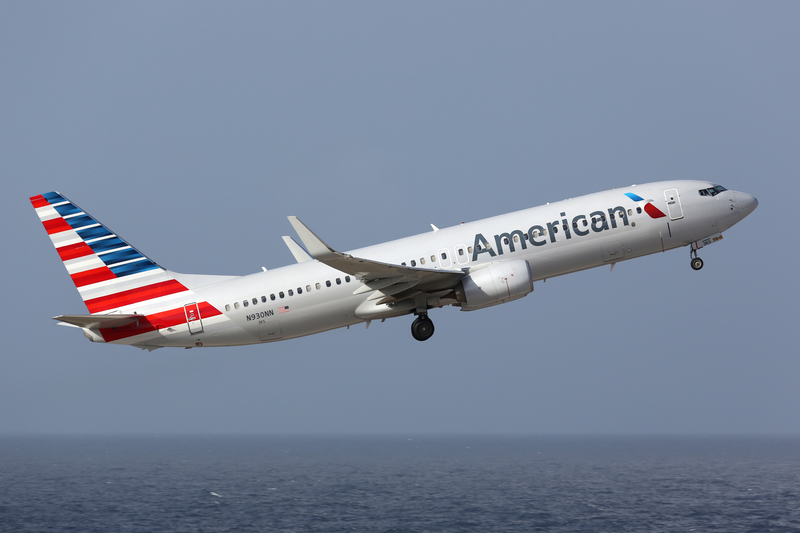
The aircraft involved was N920NN, a Boeing 737-823 with manufacturer serial number 31165.
The jet was manufactured in 2013, making it approximately 13 years old at the time of the incident. FAA records list it as a fixed-wing, multiengine transport aircraft powered by CFM International CFM56-7B24E turbofan engines. (FAA aircraft registry)
The “737-823” designation does not identify a significantly different version of the 737-800. The final two digits are Boeing’s historical customer code for aircraft originally produced for American Airlines. Operationally, N920NN is part of American’s standard 737-800 fleet.
It is also important not to confuse the aircraft with a Boeing 737 MAX.
The 737-800 belongs to the 737 Next Generation family and uses CFM56-7B engines. American’s Boeing 737 MAX 8s are newer aircraft powered by CFM International LEAP-1B engines and are identified separately in the airline’s fleet.
American configures its Boeing 737-800s with 172 seats:
| Cabin | Seats |
| First Class | 16 |
| Main Cabin Extra | 24 |
| Main Cabin | 132 |
| Total | 172 |
The source article’s description of 16 First Class and 156 Main Cabin seats combines Main Cabin Extra with the remainder of Economy. American markets Main Cabin Extra as a separate extra-legroom seating category, although it remains part of the Economy cabin rather than a distinct class of service. (American Airlines aircraft guide)
The 737-800 cabin includes streaming entertainment, onboard Wi-Fi, and power access. First Class has a published seat pitch of 37 inches, Main Cabin Extra generally offers 34 inches, and regular Main Cabin seats have approximately 30 inches.
The Aircraft Is Younger Than American’s Average 737-800
Aircraft age alone does not determine whether an airplane is safe or reliable.
Airline aircraft operate under inspection and maintenance programs based on flight hours, flight cycles, calendar intervals, component condition, and mandatory regulatory requirements. Older aircraft can remain safely in service for decades when properly maintained.
In fact, N920NN is younger than the average aircraft in American’s 737-800 fleet.
As of December 31, 2025, American Airlines operated 303 Boeing 737-800s with an average age of 16.1 years. The type was the largest single aircraft subfleet at the airline, exceeding its 218 older-generation Airbus A321s and 132 Airbus A319s.
American’s total mainline fleet stood at 1,013 aircraft, including 89 Boeing 737 MAX 8s. The airline therefore operates 392 aircraft across its 737-800 and 737 MAX 8 fleets, making Boeing narrowbodies central to its domestic and short-haul international schedule. (American Airlines 2025 annual report)
The scale of the fleet gives American substantial maintenance experience with the 737-800 and its CFM56 engines. It also generally provides the carrier with more substitution options than a smaller airline would have when one aircraft is removed from service.
Those substitution options become more limited at an outstation such as Fresno Yosemite International Airport (FAT), where American does not maintain the volume of aircraft and crews available at Dallas/Fort Worth International Airport (DFW).
A replacement jet may need to be flown into Fresno, reassigned from another scheduled departure, or sourced from an aircraft that had arrived on a different flight.
The 737-800 Remains a Core American Airlines Aircraft
American’s 303-aircraft 737-800 fleet is among the largest subfleets of its type operated by any airline.
The aircraft serves domestic routes of widely varying lengths, from short flights between neighboring states to transcontinental and near-international sectors. Its 172-seat capacity places it between American’s 150-seat Airbus A320 and its 190- to 196-seat Airbus A321 variants.
That makes the 737-800 particularly useful on a route such as Fresno Yosemite International Airport (FAT)–Dallas/Fort Worth International Airport (DFW).
The market needs enough seats to carry local Central Valley passengers and travelers connecting through Dallas, but it does not necessarily require the greater capacity of an Airbus A321 on every departure.
The 737-800 also provides more range and cargo capacity than the regional jets used on thinner American Eagle routes.
Its CFM56-7B engines are part of one of the most widely operated commercial turbofan families. The size of the worldwide installed base has created an extensive supply chain for replacement components, maintenance services, technical expertise, and engine overhauls.
None of that identifies the cause of the Fresno warning. It does mean the aircraft and engine combination is extremely familiar to American’s maintenance organization.
Fresno–Dallas Is an Important Hub Connection
Flight AA2653 is more than a point-to-point service between California’s Central Valley and northern Texas.
Dallas/Fort Worth International Airport (DFW) is American Airlines’ principal connecting hub. Passengers arriving from Fresno can continue to destinations throughout the eastern United States, the Southeast, Latin America, the Caribbean, and Europe.
The early-morning departure is particularly valuable because it reaches Dallas/Fort Worth International Airport (DFW) before midday. That places passengers into several afternoon connection banks and gives American more opportunities to reroute customers if an onward flight is disrupted.
American also serves Fresno Yosemite International Airport (FAT) from Phoenix Sky Harbor International Airport (PHX), but the two hubs perform different network functions.
Phoenix provides strong access to the western United States and selected Mexican destinations. Dallas offers a much larger selection of connections toward the central, southern, and eastern parts of the country.
The loss of the morning Dallas flight can therefore affect passengers far beyond the Fresno–Dallas market. Travelers may miss onward flights, arrive too late for the final connection of the day, or require rerouting through Phoenix Sky Harbor International Airport (PHX), Los Angeles International Airport (LAX), or another American gateway.
Removing the Aircraft Was the Conservative Decision
A fire warning does not need to be accompanied by visible flames before a flight is discontinued.
Had the crew continued toward the runway without resolving the indication, the airplane could have departed with an uncertain fire-protection or engine condition. Returning to the gate kept the aircraft near emergency equipment, maintenance personnel, airport infrastructure, and a controlled passenger-deplaning point.
Because the warning occurred before takeoff, the pilots also avoided the additional complications of returning after departure. An airborne return could require fuel planning, air traffic priority, an overweight-landing assessment, and the positioning of emergency vehicles along the runway.
The operational cost was a canceled or substantially disrupted departure and the need to reaccommodate passengers. That is preferable to accepting an unresolved indication involving one of the aircraft’s most critical warning systems.
American has not reported any damage, and the FAA has not publicly announced a separate investigation. For many ground events that do not involve injuries, significant damage, or an emergency evacuation, the initial investigation is handled through the airline’s maintenance and safety systems, with findings reported to regulators when required.
No Wider 737 Safety Conclusion Can Be Drawn
The event does not provide evidence of a fleetwide problem involving American’s Boeing 737-800s.
Only one aircraft has been publicly connected to the incident, and no cause has been released. A warning could ultimately be traced to the engine, another aircraft system, a detector, wiring, or a transient condition that did not damage the airplane.
It would therefore be premature to connect the Fresno event with unrelated engine incidents involving other Boeing 737s or other airlines.
The available evidence supports a much narrower conclusion: N920NN produced a fire-related cockpit indication during ground operations, the crew returned to the gate, firefighters found no evidence of an active fire, and the aircraft was held for inspection.
The maintenance findings will determine whether the suspected backfire description was accurate.
Bottom Line
American Airlines flight AA2653 did not depart Fresno Yosemite International Airport (FAT) as planned on July 17 after the crew of Boeing 737-800 N920NN received a fire-related cockpit indication shortly after pushback.
The pilots returned the aircraft to the gate, where the Fresno Fire Department conducted an inspection. Responders found no visible fire or smoke, passengers deplaned normally, and no injuries were reported.
Although the incident has been described as a suspected engine backfire, that explanation has not been confirmed by American Airlines or local emergency officials. In turbofan terminology, a loud bang or flash could have several causes, including a compressor stall, an abnormal engine-start event, or another transient condition. A sensing-system or wiring issue also cannot be excluded without maintenance findings.
N920NN is a 2013 Boeing 737-823 powered by two CFM56-7B24E engines. It is configured with 172 seats and is one of 303 Boeing 737-800s American reported operating at the end of 2025.
The warning occurred at the least operationally complicated stage of the flight: on the ground, close to the gate and emergency services. The crew’s decision prevented an aircraft with an unresolved fire indication from taking off and allowed passengers to leave through the terminal rather than through an emergency evacuation.
Until American releases the inspection results, the precise cause remains unknown. What is established is that the warning was handled conservatively, no fire was found, and the aircraft was removed from the operation before it could leave Fresno.
Keep reading FlyMag
Get the Daily Brief in the morning or the Route Watch weekly recap on Fridays. Or both.