Spanish aviation investigators are examining a serious loss-of-separation incident involving an Iberia Airbus A321XLR and an Air Europa Boeing 787-9 that were flying toward each other at the same altitude over the Atlantic Ocean.


The encounter occurred at approximately 01:23 UTC on July 10, 2026, in the oceanic sector of Spain’s Canary Islands Flight Information Region. Both aircraft were established at Flight Level 360—approximately 36,000 feet on the standard pressure setting—and were traveling in opposite directions along airway N857.
The aircraft’s Traffic Collision Avoidance Systems issued coordinated Resolution Advisories, instructing the Iberia A321XLR to descend and the Air Europa 787-9 to climb. Both crews followed the commands, established vertical separation, and continued safely to their scheduled destinations.
Read our stories in your inbox
Two aviation newsletters. Zero fluff.
Spain’s Commission for the Investigation of Civil Aviation Accidents and Incidents, known as CIAIAC, has opened investigation IN-017/2026. The investigation will examine how two opposite-direction aircraft came to occupy the same airway at the same flight level and why the conflict was not resolved before the onboard collision-avoidance systems intervened.
What Investigators Have Confirmed
The northbound aircraft was Iberia flight IB140 from Recife/Guararapes–Gilberto Freyre International Airport (REC) to Adolfo Suárez Madrid–Barajas Airport (MAD).
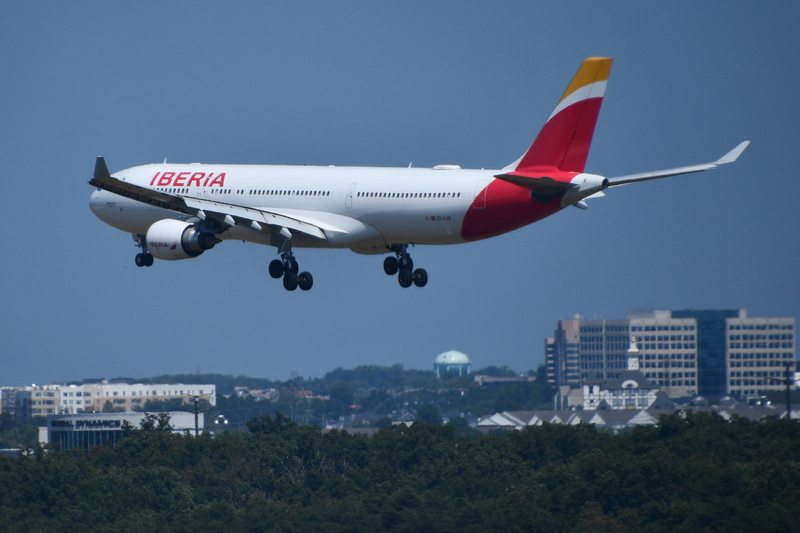
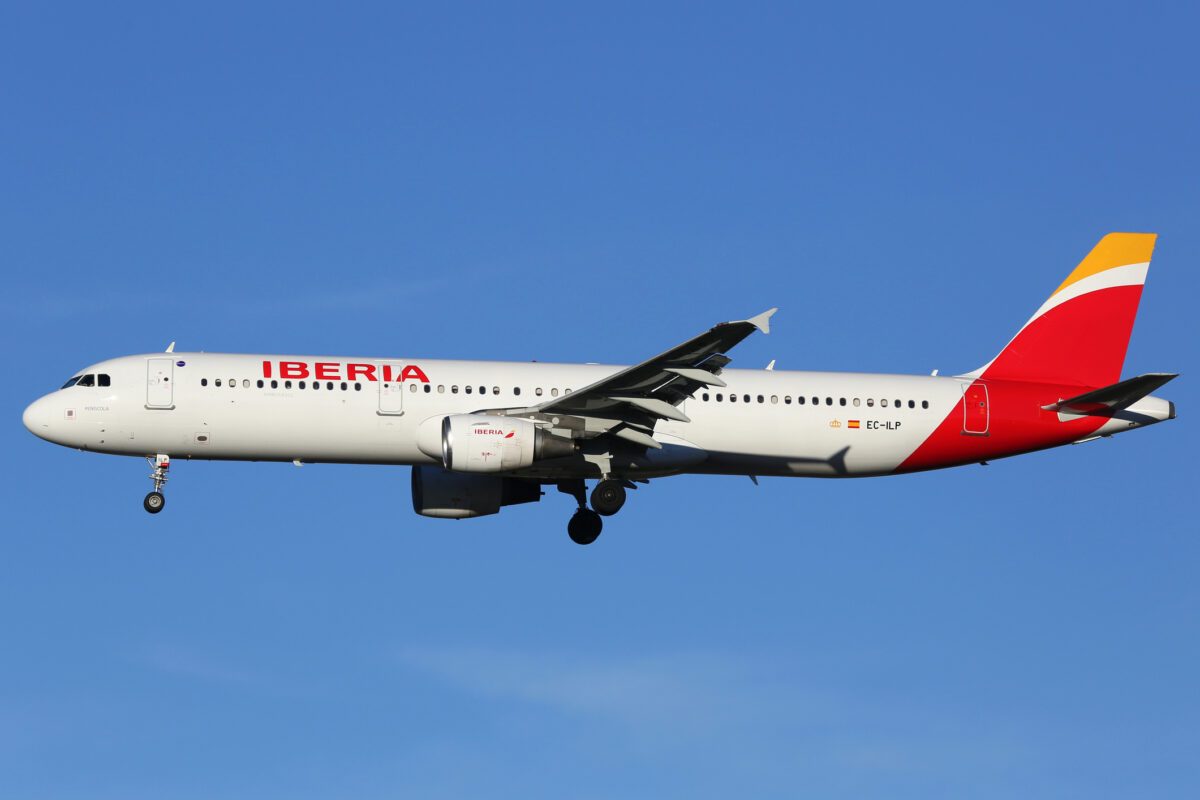
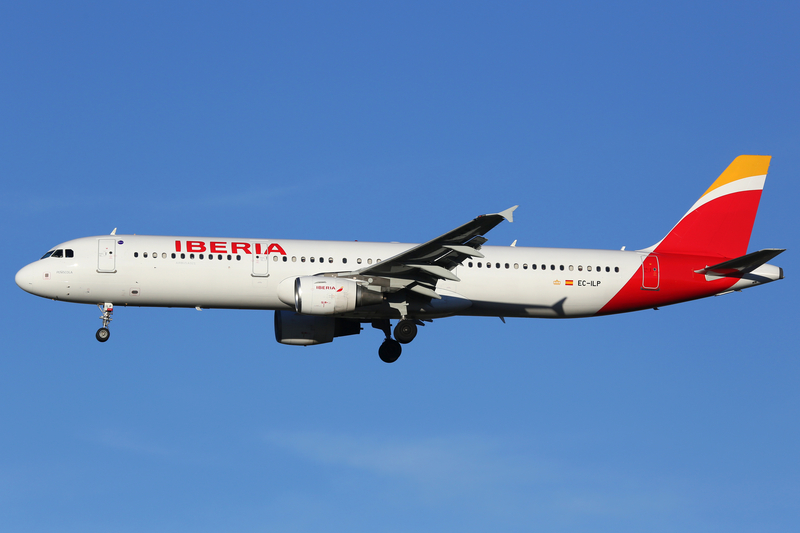
It was operated by EC-OLE, an Airbus A321-253NY XLR. The aircraft was flying northeast along airway N857 at FL360 between the oceanic reporting points ETIBA and BIPET.
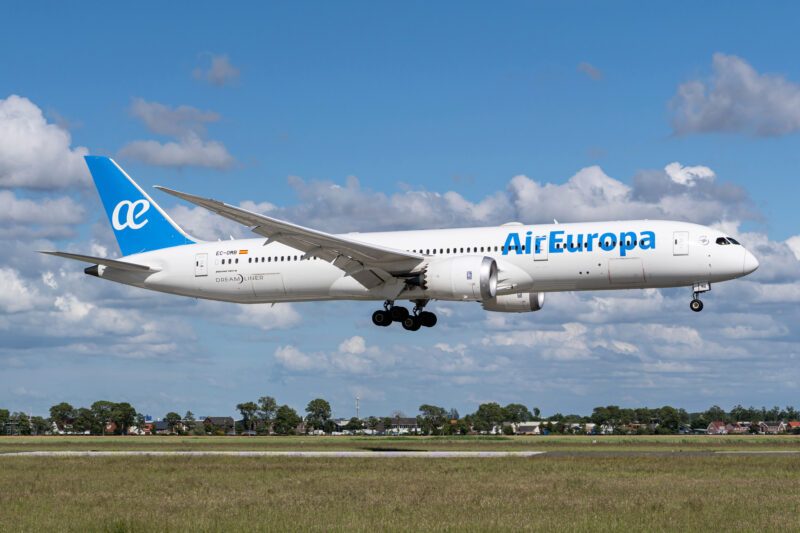
The opposing aircraft was an Air Europa Boeing 787-9 traveling from Adolfo Suárez Madrid–Barajas Airport (MAD) to São Paulo/Guarulhos International Airport (GRU). Public flight-tracking records identify the scheduled service as UX57, while CIAIAC refers to its operational call sign as AEA05.
| Flight | Route | Aircraft | Registration | Position Before TCAS Response |
|---|---|---|---|---|
| Iberia IB140/IBE0140 | Recife (REC)–Madrid (MAD) | Airbus A321XLR | EC-OLE | Northeastbound at FL360 |
| Air Europa UX57/AEA05 | Madrid (MAD)–São Paulo (GRU) | Boeing 787-9 | EC-NBM | Opposite direction at FL360 |
CIAIAC’s opening notice identifies the Air Europa aircraft as EC-NBM. Flight-tracking history also shows EC-NBM operating UX57 from Madrid Airport (MAD) to São Paulo Airport (GRU) on July 10. Earlier reports naming EC-ODH appear to have relied on preliminary or incorrect aircraft-identification information.
The official sequence was:
- The Iberia crew received a TCAS Traffic Advisory.
- That was followed by a “TCAS RA DESCEND” command.
- The Iberia A321XLR descended approximately 500 feet.
- The Air Europa 787 received a coordinated “TCAS RA CLIMB” command.
- The Boeing climbed approximately 400 feet.
- Both systems subsequently issued instructions to level off and then reported the aircraft clear of conflict.
Neither flight reported injuries or aircraft damage, and both continued to their destinations.
The Incident Occurred in the Canary Islands Oceanic Sector
The encounter was sometimes described simply as occurring near the Western Saharan coast. CIAIAC’s description provides a more precise operational location: airway N857 between reporting points ETIBA and BIPET, inside the oceanic portion of the Canary Islands FIR/UIR.
That distinction matters because the aircraft were not operating in uncontrolled airspace or within the organized North Atlantic Track system commonly used between Europe and North America.
The route structure southwest of the Canary Islands carries substantial traffic between Europe and South America. Flights between Madrid Airport (MAD) and airports in Brazil frequently follow the Atlantic side of the African coast before crossing the narrower central portion of the South Atlantic.
Iberia flight IB140 was traveling toward Europe from Recife Airport (REC), while Air Europa’s Madrid–São Paulo flight was moving southwest toward Brazil. Their routes therefore placed them on opposing flows through the same oceanic corridor.
Oceanic air traffic management can involve a combination of surveillance, position reports, controller coordination, voice communications, and data-link messages. The precise surveillance and communications services available to the two flights at the time will be among the issues investigators can establish from air traffic records.
Both Aircraft Were at the Same Flight Level
The most concerning confirmed detail is not merely that the airplanes were close enough to generate TCAS alerts. It is that they were flying in opposite directions on the same airway at the same assigned altitude.
FL360 is within Reduced Vertical Separation Minimum airspace. Between FL290 and FL410, appropriately approved aircraft can normally be separated by 1,000 feet vertically rather than the former 2,000-foot standard. RVSM allows more aircraft to use fuel-efficient cruise altitudes while preserving a defined separation margin.
Two aircraft both maintaining FL360 have no planned vertical separation. Controllers must therefore protect them through another approved method, such as longitudinal or lateral separation, until one aircraft is moved to a different altitude or route.
The investigation will need to determine whether the conflict resulted from:
- Conflicting altitude clearances
- An incorrect readback that went undetected
- A coordination error between air traffic control sectors
- A flight-plan or call-sign display problem
- A delayed climb or descent instruction
- Incorrect position estimates
- A communications failure
- Another operational or technical factor
Those are investigative possibilities, not established causes. CIAIAC has not yet attributed responsibility to an air traffic controller, either flight crew, or an aircraft system.
It would also be misleading to conclude that one crew simply selected the “wrong” altitude. Airline crews fly the levels authorized by air traffic control, including nonstandard levels when controllers can provide the required separation through another method.
The central question is how the planned separation between the two flights was lost or became insufficient.
TCAS Issued Complementary Escape Commands
TCAS is known internationally as the Airborne Collision Avoidance System, or ACAS. It operates independently of the air traffic control system and monitors transponder-equipped aircraft in the surrounding airspace.
The system does not rely solely on the distance between two airplanes. It calculates their relative altitude, vertical movement, closure rate, and predicted time to the point of closest approach.
A TCAS Traffic Advisory alerts pilots to a developing threat and helps them visually and instrumentally identify the other aircraft. If the conflict becomes more urgent, TCAS issues a Resolution Advisory that instructs the crew to climb, descend, reduce a climb or descent, or maintain a required vertical rate.
When two TCAS II-equipped aircraft are involved, their systems communicate through the aircraft’s Mode S transponders and coordinate complementary commands. That prevents both systems from independently instructing their crews to move in the same direction.
In this case, the coordination worked as designed:
- EC-OLE received the descent command.
- EC-NBM received the climb command.
- The aircraft moved away from each other vertically.
The FAA’s TCAS II guidance describes the system as an airborne safety layer that functions independently of ground-based air traffic services. ICAO guidance similarly treats ACAS as a final safety net against midair collision when normal separation barriers are no longer adequate.
The Pilots Were Required to Follow the TCAS Instructions
A Resolution Advisory takes priority over an air traffic control instruction that conflicts with it.
That is a critical operating principle. Controllers may not have the same immediate picture of vertical closure that the two coordinated onboard systems are calculating. Attempting to follow the original clearance instead of the RA could defeat the coordinated escape maneuver.
The pilots are expected to respond promptly while avoiding excessive control inputs. Once clear of the conflict, the aircraft returns to the assigned altitude or follows a revised clearance from air traffic control.
The recorded changes were relatively contained. The Iberia aircraft moved approximately 500 feet below FL360, while the Air Europa aircraft climbed about 400 feet above it. The combined maneuver created roughly 900 feet of additional vertical displacement between their respective positions, although that figure should not be interpreted as their exact minimum separation.
Their altitude changes did not necessarily begin at precisely the same instant, and the publicly released information does not include the aircraft’s vertical profiles, lateral spacing, ground speeds, or closest-point geometry.
How Close Did the Aircraft Come?
The currently available information does not answer that question.
CIAIAC has not published the minimum horizontal distance between the airplanes, their minimum vertical separation as they passed, or the predicted time to collision calculated by TCAS.
A Resolution Advisory confirms that the system assessed the traffic geometry as requiring pilot action. It does not, on its own, prove that the aircraft passed within a particular number of feet or that impact was only seconds away.
TCAS warning thresholds are dynamic. They vary with altitude, closure rate, relative movement, and the type of encounter. Two high-speed aircraft traveling toward each other can trigger an RA while still separated by a significant horizontal distance because that distance is closing rapidly.
This is why descriptions such as “near collision,” “almost crashed,” or “narrowly avoided catastrophe” should be used cautiously until investigators release the closest-point data.
The event was unquestionably serious because two airliners were operating opposite one another at the same flight level and required coordinated evasive action. The degree of immediate collision risk cannot yet be quantified from the public record.
The Airbus A321XLR Was Operating One of Its Core Missions
EC-OLE is an Airbus A321XLR, the longest-range version of the A321neo family.
Airbus markets the aircraft with a maximum range of approximately 4,700 nautical miles, enabled partly by an increased maximum takeoff weight and a permanent rear center fuel tank. That capability allows airlines to operate long, relatively thin intercontinental routes with a single-aisle aircraft.
Iberia became the launch operator of the A321XLR in 2024. Its aircraft have 182 seats in two cabins, including 14 lie-flat Business Class seats with direct aisle access and 168 Economy seats.
The cabin is substantially smaller than Iberia’s Airbus A330 and A350 widebodies, allowing the airline to open or expand long-haul routes without introducing several hundred seats on each departure.
The roughly 3,900-statute-mile route between Recife Airport (REC) and Madrid Airport (MAD) is representative of the operation for which the A321XLR was designed: an intercontinental sector long enough to require substantial range but potentially too thin for year-round widebody capacity.
EC-OLE is specifically identified by tracking databases as an Airbus A321-253NY XLR with the ICAO type designator A21N.
Air Europa’s 787-9 Is a Much Larger Aircraft
The opposing aircraft, EC-NBM, was a Boeing 787-9 Dreamliner.
Unlike the single-aisle Airbus, the 787-9 is a twin-aisle widebody designed for high-capacity long-haul service. Air Europa uses the type extensively from Madrid Airport (MAD) to destinations in North and South America.
Air Europa’s 787-9 fleet carries between 333 and 339 passengers, depending on the individual configuration. Its Business Class cabins use a 1-2-1 layout with direct aisle access, while the larger Economy cabin supplies the capacity required for major markets such as São Paulo Airport (GRU).
Boeing designed the Dreamliner with extensive composite structures, advanced aerodynamics, more-electric systems, and modern engines intended to reduce fuel consumption and provide long-range flexibility.
The substantial difference in aircraft size had no bearing on which flight received the climb or descent command. TCAS calculates the safest coordinated vertical solution based on the encounter geometry, aircraft performance, existing vertical movement, and available escape options—not which aircraft is larger.
Why TCAS Is Considered the Final Safety Layer
Commercial aviation uses multiple defenses to prevent two aircraft from occupying the same airspace.
The first layers include route design, flight planning, assigned cruising levels, controller clearances, pilot readbacks, sector coordination, surveillance systems, and ground-based conflict alerts.
TCAS is intended to remain independent of those layers. It does not replace air traffic control, nor is regular TCAS intervention an acceptable substitute for maintaining separation. Its purpose is to provide a final airborne defense when a conflict develops despite the normal system.
The July 10 event indicates that at least one of the earlier barriers did not prevent the two aircraft from reaching a geometry requiring Resolution Advisories.
It also demonstrates that the final barrier functioned:
- Both aircraft detected the threat.
- The systems coordinated opposite vertical commands.
- Both crews responded.
- The conflict was resolved without injury or damage.
Investigators will look beyond the successful TCAS response and examine why the aircraft reached that point in the first place.
The Investigation Will Depend Heavily on ATC Records
Because neither aircraft was damaged and both completed their flights, the most useful evidence will likely come from recorded operational data rather than physical examination.
CIAIAC can seek:
- Air traffic control audio and data-link communications
- Flight plans and requested cruise levels
- Clearance and readback records
- Surveillance tracks
- Controller workstation information
- Short-term conflict alert data
- Coordination messages between sectors
- TCAS and transponder records
- Flight data recorder information
- Reports submitted by both flight crews
- Internal airline safety reports
The records should establish which altitude each flight requested, which levels were approved, when each sector assumed responsibility, and whether the developing conflict was visible to controllers before TCAS intervened.
They should also establish the minimum separation and provide a timeline precise enough to determine how long the aircraft remained in conflict.
The investigation may ultimately identify a straightforward human error, a coordination breakdown, a technical problem, or a combination of factors. Aviation investigations generally examine why the system did not detect and correct an error rather than focusing only on the person who made the initial mistake.
The Official Aircraft Identification Matters
The discrepancy involving the Air Europa registration is more than a minor editorial issue.
Aircraft registrations allow investigators, airlines, and readers to identify the exact airframe, equipment standard, maintenance history, and recorded flight activity involved in an occurrence.
Initial reporting identified the Air Europa 787 as EC-ODH. CIAIAC’s official occurrence page instead identifies EC-NBM, and public tracking data show EC-NBM operating UX57 between Madrid Airport (MAD) and São Paulo Airport (GRU) on the relevant date.
The official identification should be used unless CIAIAC later amends its notice.
The flight designation also requires precision. UX57 is the commercial flight number visible to passengers and reservation systems. AEA05 is the call sign listed by CIAIAC for air traffic control purposes during the occurrence.
Those identifiers can differ without representing different flights.
Both Airlines Continued Operating Normally
The two aircraft continued after receiving “clear of conflict” indications.
Iberia flight IB140 completed its journey to Adolfo Suárez Madrid–Barajas Airport (MAD), while the Air Europa service continued to São Paulo/Guarulhos International Airport (GRU).
Continuing to the destination after a TCAS RA is not inherently unusual. If the aircraft remains fully serviceable, no passengers or crew members are injured, and no further operational concern exists, a diversion may provide little safety benefit.
The flight crews would normally report the event to air traffic control and complete company safety reports after landing. The operators can then preserve relevant flight data and assist the investigating authority.
No public information indicates that either aircraft experienced a technical malfunction during the encounter. TCAS appears to have performed its intended function on both airplanes.
A Serious Incident Without a Confirmed Cause
The basic event is now established with more precision than the earliest reports suggested:
Two Spanish passenger aircraft were flying in opposite directions along airway N857 at FL360. TCAS issued coordinated Resolution Advisories. The Iberia A321XLR descended 500 feet, the Air Europa Boeing 787-9 climbed 400 feet, and both flights continued safely.
What remains unknown is more important than what has already been reported.
CIAIAC has not yet explained:
- How both aircraft came to occupy FL360
- Whether both crews were following valid clearances
- Whether a clearance was misunderstood
- Whether sector coordination contributed to the event
- When controllers first detected the conflict
- How far apart the aircraft ultimately passed
- Whether any ground-based warning activated
- Whether procedural or technical changes will be recommended
Until those questions are answered, assigning blame or describing the event as a last-second escape would go beyond the evidence.
Bottom Line
An Iberia Airbus A321XLR and an Air Europa Boeing 787-9 received coordinated TCAS Resolution Advisories over the Atlantic on July 10 after encountering one another in opposite directions at FL360.
The Iberia aircraft, EC-OLE, was operating flight IB140 from Recife Airport (REC) to Madrid Airport (MAD). The Air Europa aircraft was EC-NBM, not EC-ODH as initially reported, and was operating the Madrid Airport (MAD)–São Paulo Airport (GRU) service identified commercially as UX57 and by CIAIAC as AEA05.
The Iberia A321XLR descended approximately 500 feet, while the Air Europa 787-9 climbed approximately 400 feet. Both crews followed the coordinated TCAS commands, received clear-of-conflict indications, and continued without injuries or aircraft damage.
The occurrence demonstrates exactly why TCAS exists, but it should not be treated solely as a success story. The onboard systems became necessary only after two opposite-direction airliners reached the same airway and flight level without sufficient separation.
Spain’s CIAIAC has opened investigation IN-017/2026. Its eventual findings should establish the clearances issued, the role of air traffic control coordination, the aircraft’s actual closest point, and which earlier safety barriers failed before TCAS provided the final airborne defense.
An alert can track CIAIAC’s preliminary and final reports as they are published.
Keep reading FlyMag
Get the Daily Brief in the morning or the Route Watch weekly recap on Fridays. Or both.