Cabo Verde Airlines Restores Sal-Recife Link as Its Brazil Network Rebuilds
Cabo Verde Airlines is preparing to restore nonstop service between Amílcar Cabral International Airport (SID) on Sal and Recife/Guararapes–Gilberto Freyre International Airport (REC), giving the Brazilian city two direct links to the Cabo Verde archipelago.
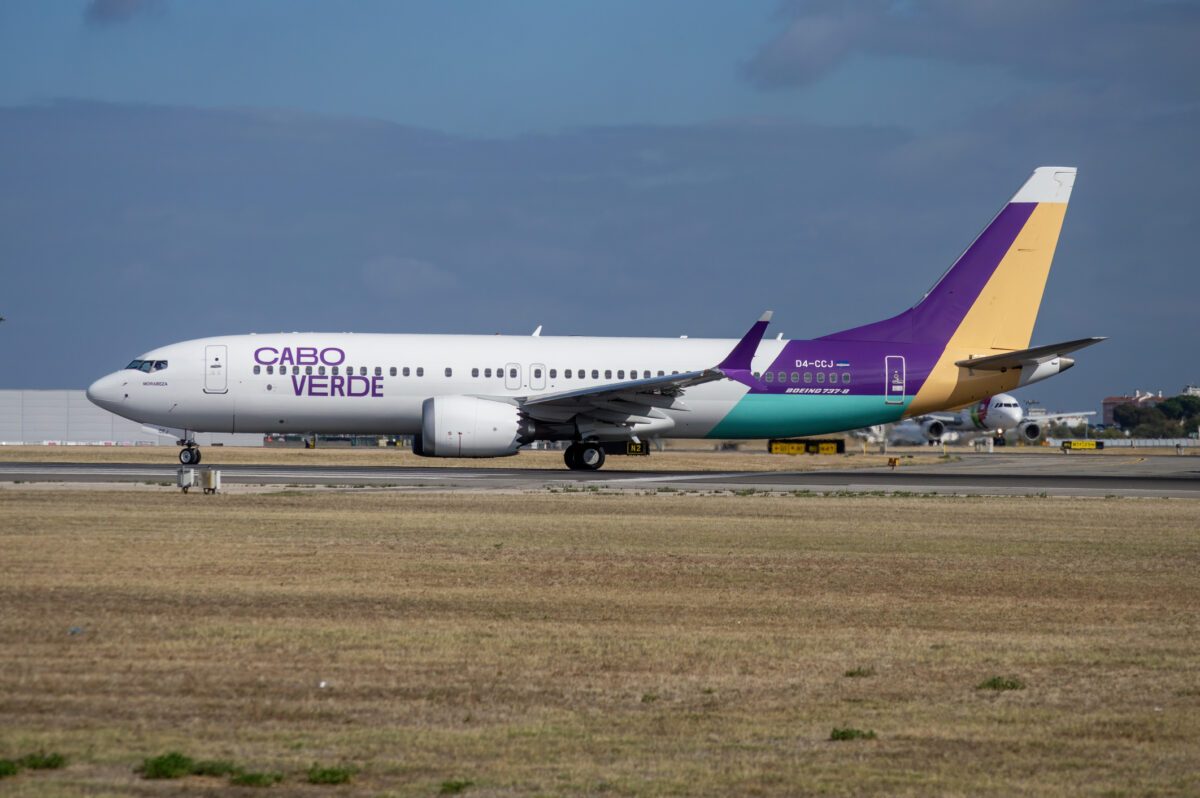
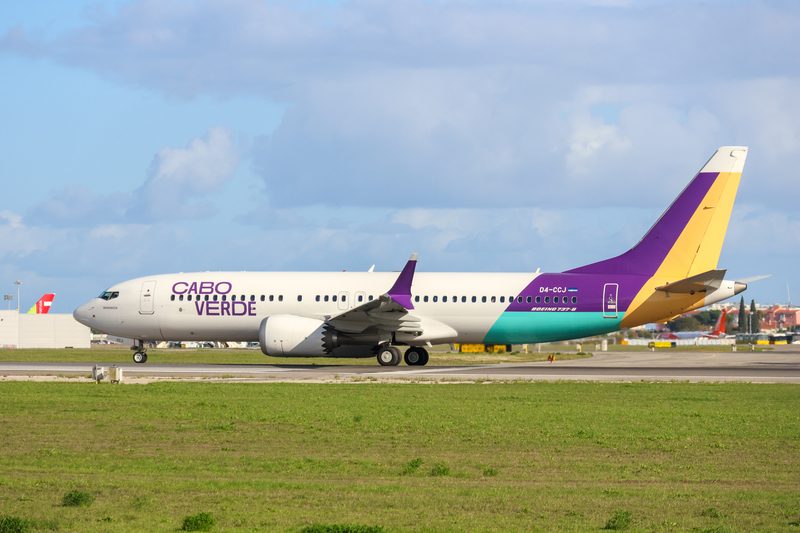
The once-weekly service is scheduled to begin on October 31, 2026, using a Boeing 737. Current schedule data lists a 138-seat Boeing 737-700, although the airline’s small fleet also includes a Boeing 737-8, more commonly known as the 737 MAX 8, and operational substitutions remain possible.
The route has appeared in Cabo Verde Airlines’ reservation system and the OAG schedule database for travel between late October 2026 and March 2027. However, as of mid-July, the carrier had not released a standalone corporate announcement providing a complete timetable, cabin configuration, connecting schedule, or confirmation that the service will continue beyond the northern winter season. (Cabo Verde Airlines)
Read our stories in your inbox
Two aviation newsletters. Zero fluff.
Cabo Verde Airlines’ Proposed Sal–Recife Schedule
The flight is scheduled to leave Amílcar Cabral International Airport (SID) on Saturday evening and return from Recife/Guararapes–Gilberto Freyre International Airport (REC) shortly after midnight on Sunday.
| Flight | Operating Day | Route | Departure | Arrival | Scheduled Duration |
|---|---|---|---|---|---|
| VR667 | Saturday | Sal (SID)–Recife (REC) | 7:00 p.m. | 9:10 p.m. | 4 hours, 10 minutes |
| VR668 | Sunday | Recife (REC)–Sal (SID) | 12:05 a.m. | 6:05 a.m. | 4 hours |
All times are local. Cabo Verde is two hours ahead of Recife during this period, which explains why the outbound flight appears to cover the South Atlantic in only two hours and 10 minutes when comparing the clocks at the two airports.
Flight VR667 will cover approximately 1,650 nautical miles, or about 1,900 statute miles, between Amílcar Cabral International Airport (SID) and Recife International Airport (REC).
The aircraft is scheduled to spend two hours and 55 minutes on the ground in Recife. That provides time for passengers to disembark, the cabin to be serviced, baggage and cargo to be exchanged, fuel to be uploaded, and Brazilian and Cabo Verdean departure requirements to be completed before VR668 leaves shortly after midnight.
The entire rotation keeps the aircraft away from Amílcar Cabral International Airport (SID) for approximately 11 hours. From an aircraft-utilization perspective, the schedule allows Cabo Verde Airlines to complete the South Atlantic round trip overnight and return the Boeing 737 to Sal early Sunday morning.

The times should still be treated as provisional. The service is several months from launch, and airlines frequently adjust departure times, aircraft types, or operating dates before the beginning of a new scheduling season.
This Is a Restored Route, Not a New Market
Although the service is being presented as a new addition to Cabo Verde Airlines’ current network, Sal–Recife is not an entirely new city pair for the carrier.
Cabo Verde Airlines’ own strategic-planning documents state that the airline opened Recife service in June 2015, at the same time that it introduced flights to Rhode Island T.F. Green International Airport (PVD) in Providence.
The airline had already been serving Brazil for 15 years by that point. Its first Brazilian operation began in 2000, linking Sal with Fortaleza–Pinto Martins International Airport (FOR) using aircraft and crews supplied by other airlines under ACMI arrangements.
Cabo Verde Airlines suspended its entire operation in March 2020 during the COVID-19 pandemic and remained largely inactive for 21 months. The proposed October launch therefore represents the restoration of an established transatlantic market following a lengthy absence, rather than Cabo Verde Airlines’ first attempt to connect Amílcar Cabral International Airport (SID) with Recife International Airport (REC).
That historical distinction matters because Cabo Verde Airlines already has experience selling Brazil–Cabo Verde traffic. It is rebuilding a market involving tourism, cultural connections, trade, and the Cabo Verdean diaspora rather than attempting to create demand between two previously unconnected regions.
Recife Will Have Two Cabo Verde Gateways
The Sal route will complement Cabo Verde Airlines’ existing service between Recife International Airport (REC) and Nelson Mandela International Airport (RAI) in Praia.
The Praia route resumed on May 6, 2026, after a six-year interruption. It was introduced with two weekly frequencies using a Boeing 737 with capacity for approximately 180 passengers, although later schedules have generally shown a reduced weekly operation.
The two routes serve different geographic and commercial purposes.
Nelson Mandela International Airport (RAI) is located on Santiago, Cabo Verde’s most populous island and the site of the national capital, Praia. That route is likely to generate a greater proportion of government, business, visiting-friends-and-relatives, and diaspora demand.
Amílcar Cabral International Airport (SID), by comparison, serves Cabo Verde’s largest international leisure destination. Sal is known for the resort community of Santa Maria, extensive beaches, water sports, and a substantial inventory of hotels catering to European package-tour markets. (Sal’s official tourism portal)
Giving Recife International Airport (REC) separate nonstop access to Praia and Sal allows Cabo Verde Airlines to target both sides of the market. Travelers with family or business in Praia can use Nelson Mandela International Airport (RAI), while leisure passengers can fly directly to Sal without adding a domestic connection within Cabo Verde.
The arrangement may also reduce pressure on Cabo Verde Airlines’ limited inter-island capacity. A Brazilian tourist whose final destination is Sal would otherwise need to travel through Praia and connect to another flight, adding time, baggage handling, and the risk of a missed connection.
The Boeing 737-700 Is a Sensible Aircraft for the Route
Current schedule information identifies a 138-seat Boeing 737-700 for the new flight.
The 737-700 is part of Boeing’s Next Generation family, which preceded the 737 MAX. It is powered by two CFM International CFM56-7B turbofans rather than the LEAP-1B engines fitted to the 737-8.
The CFM56 engine family has accumulated extensive worldwide support, and CFM reports that it powers both the Boeing Next Generation 737 and Airbus A320ceo families. That broad maintenance and parts network is valuable for a small airline operating across several continents.
At roughly 1,650 nautical miles, Amílcar Cabral International Airport (SID)–Recife International Airport (REC) is comfortably within the normal operating capability of a 737-700. Actual payload performance will still depend on winds, weather, routing, reserve-fuel requirements, cargo, and the specific aircraft’s approved operating weights.
The 138-seat configuration also limits the amount of capacity Cabo Verde Airlines must sell.
A single weekly round trip would offer 138 seats in each direction, or 276 total directional seats per week. Over the currently filed late-October-through-March operating period, the route would provide roughly 3,000 seats in each direction.
That is a relatively conservative market entry. Rather than attempting to fill a 180-seat aircraft several times per week, Cabo Verde Airlines can concentrate demand onto one departure and evaluate fares, seasonal patterns, tour-operator interest, and connecting traffic before considering additional capacity.
The smaller aircraft could be especially useful during the route’s first winter. Passenger demand between Brazil and Cabo Verde may be sufficient to support a nonstop service but not yet deep enough to fill the larger 737-8 consistently at commercially attractive fares.
A 737-8 Could Still Appear
Cabo Verde Airlines’ official planning documents identify a core jet fleet consisting of one Boeing 737-700 and one Boeing 737-8.
The airline has operated with those two jets since July 2023 while rebuilding its scheduled network. Its small fleet means aircraft assignments are likely to remain fluid. If the 737-700 requires maintenance or is needed on another route, the larger 737-8 could operate the Recife service instead.
The 737-8 would offer newer engines, improved fuel efficiency, and additional seats, but the greater capacity would also increase the commercial risk on a once-weekly route.
Recent Cabo Verde Airlines flights between Nelson Mandela International Airport (RAI) and Recife International Airport (REC) have frequently used the 737-8. That provides the airline with current operational experience flying the type across the same general section of the South Atlantic.
Passengers should therefore rely on the aircraft shown for their specific departure rather than assuming that every Sal–Recife flight will operate with the 138-seat 737-700.
The Route Requires Long Overwater Capability
Although the scheduled flight is only around four hours, the route crosses a significant stretch of the South Atlantic with limited diversion options.
Operations of this type require appropriate extended-range twin-engine operational performance standards, commonly known as ETOPS. ETOPS planning addresses matters including diversion-airport availability, fuel, weather, maintenance reliability, communications, crew procedures, and the maximum time an aircraft may operate from a suitable alternate airport.
Cabo Verde Airlines has a long history of extended overwater flying. Its corporate documents state that the airline obtained ETOPS approval in 2005 before operating its first transatlantic flight with its own Boeing 757-200 between Amílcar Cabral International Airport (SID) and Boston Logan International Airport (BOS).
The airline subsequently used Boeing 757s and 737s on routes linking Cabo Verde with Europe, North America, and Brazil.
Historical experience does not remove the need for current aircraft, crews, maintenance systems, and dispatch procedures to satisfy all applicable approvals. It does demonstrate that South Atlantic and North Atlantic narrowbody flying is not a new operating concept for Cabo Verde Airlines.
Sal’s Tourism Market Is the Main Opportunity
The most apparent commercial opportunity is Brazilian leisure demand for Sal.
Cabo Verde offers a Portuguese-speaking African destination with beaches, warm weather, resort accommodations, diving, windsurfing, kitesurfing, and cultural attractions. Sal’s relatively compact geography also makes it suitable for packaged vacations in which flights, hotel rooms, airport transfers, and excursions are sold together.
A once-weekly Saturday departure fits the traditional structure of leisure travel. Tour operators can build seven-, 14-, or 21-night packages around a fixed weekly flight, enabling them to contract hotel inventory and transfers more predictably.
The Saturday evening departure from Amílcar Cabral International Airport (SID) and early Sunday return from Recife International Airport (REC) also allow Cabo Verde Airlines to devote the aircraft to other routes during most of the week.
For Brazilian travelers, the nonstop removes the need to connect through Lisbon Airport (LIS), another European gateway, or Nelson Mandela International Airport (RAI). The flight time of approximately four hours makes Sal closer in practical air-travel terms to northeastern Brazil than many destinations in Europe or North America.
The challenge will be awareness. Cabo Verde is well established among European travelers but remains a less familiar leisure destination in much of the Brazilian market. Cabo Verde Airlines, tourism authorities, hotels, and travel agencies will need to explain the destination and package it effectively rather than relying on the existence of the nonstop flight alone.
Recife Is a Stronger Gateway Than Its Geography Suggests
Recife International Airport (REC) is more than a local airport for Pernambuco.
Airport operator Aena describes Recife as the principal aviation hub in northeastern Brazil. The airport handled 1,015,692 passengers in January 2026, the first time it exceeded one million travelers during a single month. Aena expects annual traffic to surpass 10 million passengers in 2026. (Recife International Airport flight information)
That scale gives Cabo Verde Airlines access to passengers from across Brazil’s Northeast rather than Recife alone.
Travelers could potentially reach Recife International Airport (REC) on domestic services from cities such as Fortaleza (FOR), Salvador (SSA), Natal (NAT), João Pessoa (JPA), Maceió (MCZ), São Luís (SLZ), and other Brazilian markets before continuing to Cabo Verde.
However, Cabo Verde Airlines has not announced a Brazilian codeshare or domestic interline partnership specifically supporting the Sal route.
Without a through-ticket agreement, connecting passengers may need to purchase separate reservations, collect and recheck baggage at Recife International Airport (REC), and accept the risk that one airline may not protect them if a delay causes a missed connection.
A local airline partnership could materially improve the route. It would place Sal in Brazilian reservation displays beyond Recife, permit through baggage, and expand the catchment area without Cabo Verde Airlines adding more South American destinations.
Connections at Sal Are Not Yet Fully Developed
The early-morning arrival at Amílcar Cabral International Airport (SID) could support onward connections to other Cabo Verde Airlines destinations.
In theory, passengers arriving from Recife International Airport (REC) at 6:05 a.m. could continue later that day to another island, Europe, or North America, depending on the airline’s schedule.
The initial sales setup does not yet appear to offer the full range of those opportunities.
When the route entered Cabo Verde Airlines’ reservation system, tickets were initially available primarily as round trips originating in Recife. A through itinerary from Recife International Airport (REC) to Lisbon Airport (LIS) via Sal was not yet offered in the same booking flow.
That may change before October. Schedule coordination, fare construction, minimum connection times, baggage transfer procedures, and reservation-system programming can be added as a route approaches launch.
For the service to function as more than a point-to-point leisure flight, Cabo Verde Airlines will need to build reliable connections around VR667 and VR668.
The airline’s geography provides an opportunity. Cabo Verde sits between South America, West Africa, Europe, and the eastern United States. The challenge is creating enough frequency and schedule consistency to make Amílcar Cabral International Airport (SID) a practical connecting point rather than merely a convenient location on a map.
A once-weekly Recife flight has limited value for passengers connecting beyond Sal if the onward service operates on an incompatible day or if a disruption creates a wait of several days.
A Two-Aircraft Jet Fleet Creates Operational Risk
The scale of Cabo Verde Airlines’ fleet is likely to be the route’s greatest operational vulnerability.
The airline’s strategic-planning documents list only one 737-700 and one 737-8 in its jet fleet. Each aircraft must support a network spanning Cabo Verde, Europe, North America, and Brazil.
A carrier with dozens of Boeing 737s can substitute another aircraft when one jet experiences a technical problem. Cabo Verde Airlines has far fewer options.
If one airplane becomes unavailable, the airline may need to delay a flight, combine services, substitute the other 737 variant, lease an aircraft and crew, or cancel part of the schedule.
This issue is particularly significant on a once-weekly route. Canceling one flight does not simply create a delay of several hours; it can eliminate the only nonstop departure for seven days.
The long ground time at Recife International Airport (REC) provides some schedule recovery margin, but it does not solve a shortage of available aircraft at Sal.
Cabo Verde Airlines will therefore need disciplined maintenance planning and sufficient operational reserves if it intends to expand its Brazil operation while preserving reliability on its European and North American services.
The Praia Route Provides an Early Market Test
The performance of Nelson Mandela International Airport (RAI)–Recife International Airport (REC) will provide useful information before the Sal service begins.
That route gives Cabo Verde Airlines current data on Brazilian booking patterns, distribution costs, preferred travel dates, baggage demand, cargo potential, average fares, and the proportion of passengers connecting beyond each endpoint.
The results may also explain why Sal is being introduced with only one weekly flight.
Cabo Verde Airlines can place a relatively small amount of additional capacity into Recife International Airport (REC), compare the performance of the Praia and Sal markets, and determine whether Brazil is more valuable as a diaspora market, a leisure destination, a connecting point, or some combination of the three.
The two routes may complement each other rather than compete directly. Praia can attract travelers with family, business, or government interests, while Sal is more naturally positioned around resorts and vacation packages.
They could also enable open-jaw itineraries. A passenger might arrive at Nelson Mandela International Airport (RAI), travel between the islands, and return to Brazil from Amílcar Cabral International Airport (SID), provided the airline eventually sells a suitable itinerary.
Cargo Could Provide Additional Revenue
Passenger demand will determine whether the route survives, but belly cargo could improve its economics.
A Boeing 737 does not offer the freight volume of a dedicated cargo aircraft or a widebody passenger jet. It can still carry time-sensitive goods in the lower hold after passenger baggage and operational requirements have been accommodated.
Potential traffic could include seafood, agricultural products, textiles, mail, commercial samples, spare parts, and other higher-value shipments moving between northeastern Brazil and Cabo Verde.
Cargo capacity will vary by flight. On a long overwater route, fuel and passenger baggage take priority, and payload restrictions may limit the amount of freight accepted under certain weather or wind conditions.
Even modest cargo revenue can be valuable on a route operating only once per week, particularly when passenger fares are highly seasonal.
The Initial Schedule Is Deliberately Conservative
A weekly route can be difficult to market to business passengers, but it is a rational way for a small airline to reopen an uncertain market.
The limited frequency gives Cabo Verde Airlines several advantages:
It concentrates demand onto one flight, reduces the number of seats that must be sold, limits exposure during weak weeks, and leaves most of the aircraft’s schedule available for established routes.
The disadvantage is a lack of flexibility. Travelers whose plans do not fit the Saturday and Sunday schedule must wait another week or use a connecting itinerary on another airline.
A mechanical cancellation would also create significant disruption because Cabo Verde Airlines could not simply move passengers to its flight the following day.
The route will therefore depend heavily on leisure passengers who can organize their trip around a fixed schedule, along with travelers whose family or business plans are flexible enough to accommodate the weekly operation.
If bookings and fares are strong, the airline could eventually add a second frequency, extend the service beyond March, or deploy the larger 737-8. If performance is weak, the current seasonal structure allows Cabo Verde Airlines to withdraw without committing year-round capacity.
Bottom Line
Cabo Verde Airlines plans to begin once-weekly service between Amílcar Cabral International Airport (SID) and Recife/Guararapes–Gilberto Freyre International Airport (REC) on October 31, 2026.
Flight VR667 is initially scheduled to leave Sal at 7:00 p.m. on Saturdays and reach Recife at 9:10 p.m. Flight VR668 will depart Recife at 12:05 a.m. on Sundays and return to Sal at 6:05 a.m. All times are local.
Current schedule data lists a 138-seat Boeing 737-700, although Cabo Verde Airlines also operates a 737-8 and could substitute the larger aircraft when required.
The route should be viewed as a restoration rather than a first-time launch. Cabo Verde Airlines opened Recife service in 2015 and has a longer history of connecting Sal with northeastern Brazil dating to its Fortaleza operation in 2000.
The new flight will complement the carrier’s restored service between Recife International Airport (REC) and Nelson Mandela International Airport (RAI), giving Recife direct access to both Cabo Verde’s capital and its largest leisure island.
Sal–Recife has several commercial advantages: a manageable four-hour flight time, strong tourism potential, shared linguistic and cultural links, and access to one of northeastern Brazil’s largest aviation gateways.
The main risks are equally clear. Cabo Verde Airlines has only two core jet aircraft, the route operates just once per week, domestic feed in Brazil is not yet supported by a publicly announced codeshare, and the initial reservation setup does not appear to offer a fully developed connecting network through Sal.
The service is a cautious but strategically logical step. Rather than overwhelming the market with capacity, Cabo Verde Airlines is using its smaller 737-700 to test whether Brazilian tourism, diaspora traffic, connections, and cargo can support the restoration of a permanent South Atlantic link.
Keep reading FlyMag
Get the Daily Brief in the morning or the Route Watch weekly recap on Fridays. Or both.