Budapest Ferenc Liszt International Airport (BUD) is entering Summer 2026 with one of its most strategically important schedule expansions in years, combining the return of North American service with deeper Asian connectivity and a broader short-haul buildout across Europe. The result is not simply a bigger timetable. It is a more balanced one.
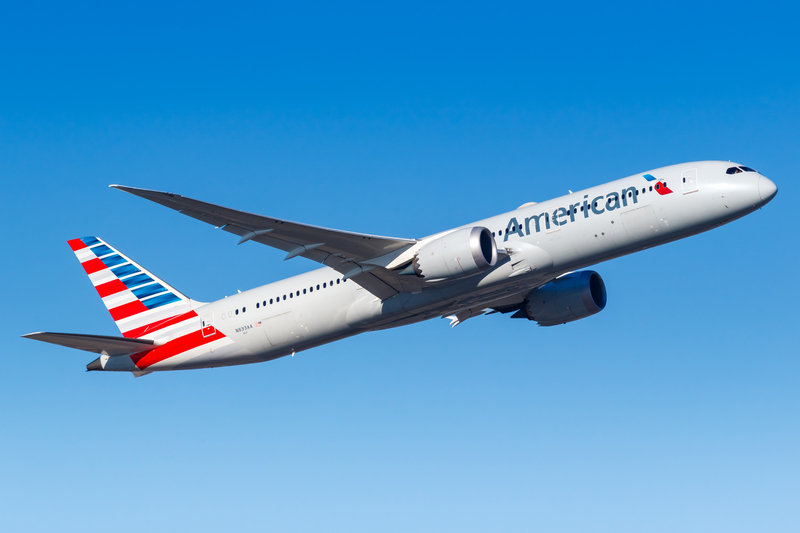
The most eye-catching development is the return of transatlantic service. American Airlines will launch daily flights between Philadelphia International Airport (PHL) and BUD in May, restoring a nonstop U.S. link to the Hungarian capital. The route is scheduled with the Boeing 787-8, an aircraft that has become a highly effective tool for thinner long-haul markets. Its economics allow airlines to open or re-enter routes that would have been harder to sustain with older-generation widebodies, particularly where premium demand exists but does not justify larger aircraft every day.
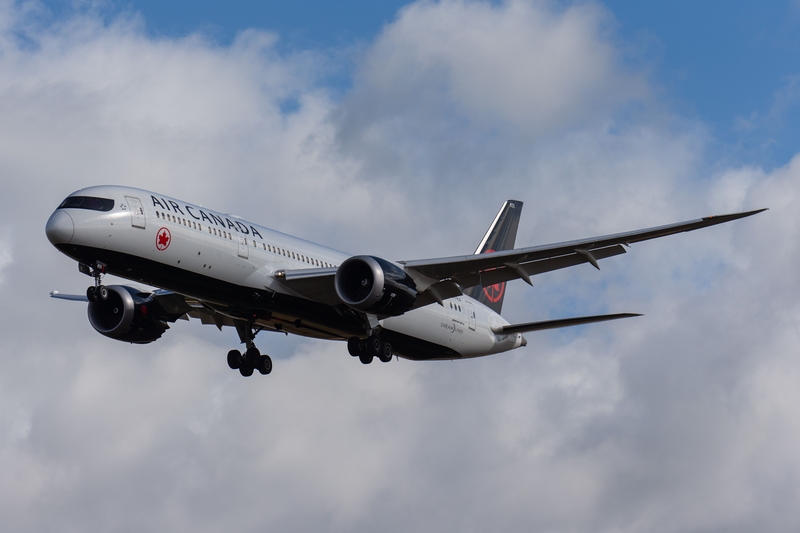
Air Canada is also returning to Budapest, resuming service between Toronto Pearson International Airport (YYZ) and BUD with four weekly flights from June. That route is planned with the Boeing 787-9, which gives the carrier a slightly larger long-haul platform with stronger cargo and premium cabin capability. For Budapest, the significance is obvious. These are not just two long-haul flights. They re-establish direct access to North America through two powerful alliance hubs, giving BUD far better connectivity to the United States, Canada, and a wide range of onward markets.
Read our stories in your inbox
Two aviation newsletters. Zero fluff.
Asia Growth Is Becoming a Core Part of the Story
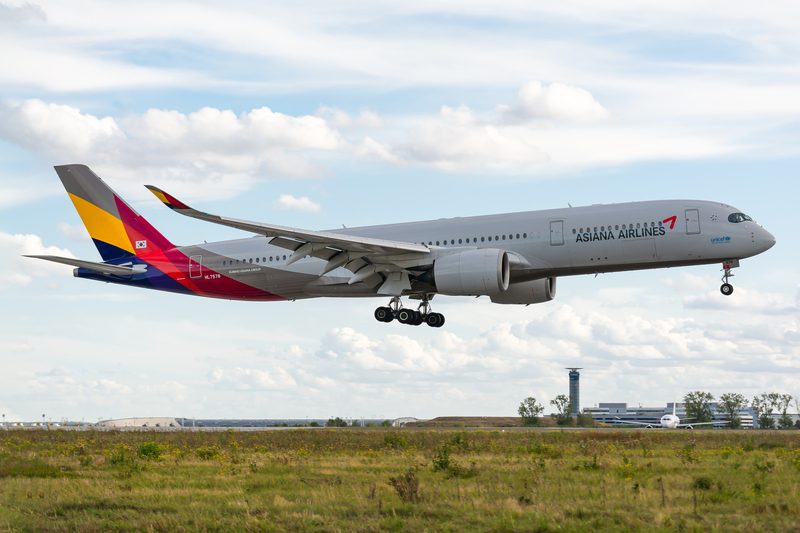
Budapest’s Asian profile is strengthening at the same time. Asiana Airlines is set to launch service between Seoul Incheon International Airport (ICN) and BUD in April 2026, adding another major Northeast Asian carrier to the airport’s long-haul portfolio. The route is filed with the Airbus A350-900, one of the most efficient long-range twin-engine aircraft in service. For a market like Budapest, that matters. The A350-900 offers the range, cargo capability, and operating efficiency needed to make long-haul point-to-point routes more resilient, especially in markets where passenger demand is growing alongside trade and investment flows.
The Seoul addition is especially important because it deepens an already developing South Korea market rather than creating one from scratch. Budapest has been steadily building its relevance in East Asia, and the latest move suggests that BUD is evolving beyond a peripheral Central European station into a more useful long-haul node for selected Asian markets.
China is part of that same trend. Passenger traffic on direct China services is continuing to rise sharply, and Budapest Airport has highlighted that a notable share of those travelers are using BUD as a transfer point rather than simply an origin-and-destination airport. That is a meaningful detail. It suggests the airport’s Asia growth is no longer just about local demand. It is also beginning to support connecting flows, which is where network value becomes much more interesting from an airline and airport planning perspective.
European Growth Is Broad, but It Is Also Tactical
The short-haul side of the schedule is expanding aggressively as well, but the important point is that the growth is not random. Budapest says its Summer 2026 program will offer 160 destinations, 220 routes, and more than 15 million seats, making this one of the most extensive summer schedules in the airport’s history.
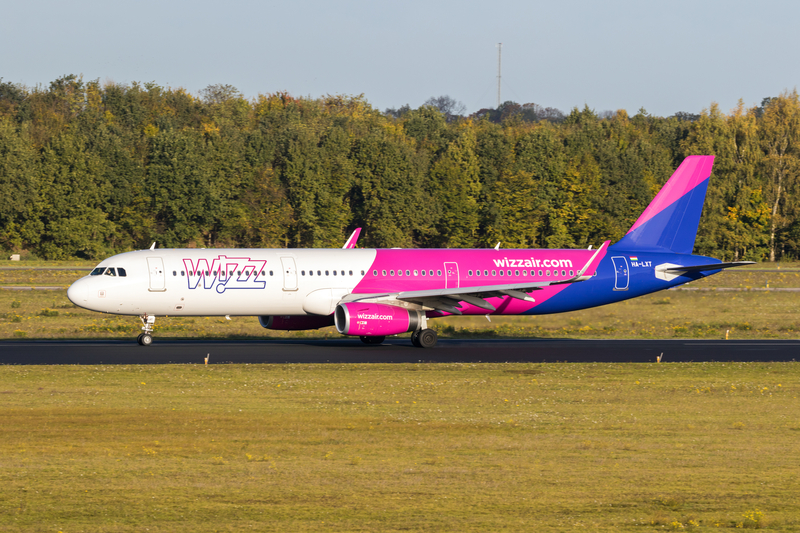
Low-cost carriers are doing much of the heavy lifting. Wizz Air is adding a series of new European links, including markets such as Ankara Esenboğa Airport (ESB), Bergen Airport (BGO), and Kefalonia International Airport (EFL), while Ryanair is expanding further on routes including Kraków John Paul II International Airport (KRK), Lamezia Terme Airport (SUF), and Dubrovnik Airport (DBV). That combination tells its own story. Budapest is not relying on one segment alone. It is widening both its business and leisure mix while still leaning into the aircraft economics that have made Central and Eastern Europe such a competitive short-haul market.
Operationally, this expansion is being supported by exactly the aircraft families one would expect. Wizz Air’s Airbus A320-family fleet and Ryanair’s Boeing 737-family operation remain central to the airport’s seat growth. For BUD, that means more capacity delivered through high-density narrowbody platforms that are well suited to sub-four-hour European sectors. The advantage is scale without excessive complexity.
Frankfurt Competition Adds Another Layer
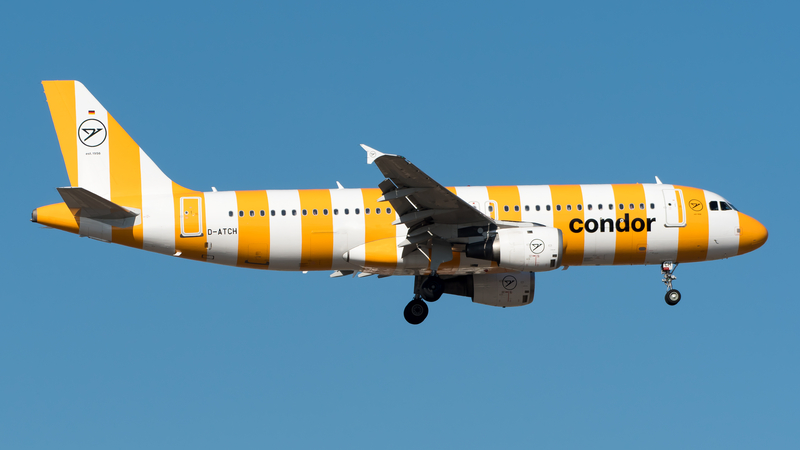
One of the more interesting developments in the Summer 2026 schedule is not a new destination at all, but a denser competitive market. Condor will enter the Budapest–Frankfurt sector, linking BUD with Frankfurt Airport (FRA) alongside Lufthansa. Condor plans to use Airbus A320-family aircraft on the route, and the added capacity means the Budapest–Frankfurt market will move to roughly 10,000 weekly seats.
That is notable because Frankfurt is not just another German city pair. FRA is one of Europe’s most important global hubs, and stronger Budapest–Frankfurt capacity improves both local business access and long-haul connectivity. When a route like that becomes more competitive, the upside is not only more seats. It is also improved schedule utility and greater network optionality for travelers.
Diversification, Not Just Expansion, Is the Real Strategy
The bigger picture at Budapest Airport is that the Summer 2026 schedule reflects a deliberate move toward diversification. The airport is adding long-haul service back into the mix, expanding its Asian relevance, and still allowing low-cost carriers to push deeper into the European market. That is a healthier network profile than one built too heavily around a single region or a single airline model.
There are also some telling subplots within the numbers. Budapest expects especially strong performance in Scandinavia and the Baltics, while Mediterranean leisure demand remains a major contributor, particularly for Greece and Croatia. That spread matters because it shows BUD building breadth across business, visiting-friends-and-relatives, leisure, and long-haul connecting traffic all at once.
For airport strategists, that is often the most durable form of growth. It is less vulnerable to a downturn in one segment, and it gives airlines multiple reasons to stay committed to the market.
Bottom Line
Budapest Airport’s Summer 2026 schedule is about more than adding flights. It marks a more mature phase in the airport’s network development, with North America back on the board, Asia gaining depth, and Europe becoming both broader and more competitive.
The return of Philadelphia International Airport (PHL) and Toronto Pearson International Airport (YYZ) gives Budapest Ferenc Liszt International Airport (BUD) long-haul credibility again. The addition of Seoul Incheon International Airport (ICN) through Asiana strengthens its Asian profile with modern long-range aircraft. And the expansion across Europe, from Frankfurt Airport (FRA) to leisure and regional points across the continent, shows that short-haul growth remains just as important to the airport’s overall strategy.
Taken together, the Summer 2026 schedule does not just make Budapest bigger. It makes the airport more balanced, more connected, and more competitive.
Keep reading FlyMag
Get the Daily Brief in the morning or the Route Watch weekly recap on Fridays. Or both.