United Opens Cartagena From Houston And Dulles In Latest Colombia Expansion
United Airlines is adding Cartagena to its Latin America network, launching new nonstop flights from both Houston and Washington Dulles to Colombia’s Caribbean coast.

Beginning December 17, 2026, United will operate four weekly flights from Houston George Bush Intercontinental Airport (IAH) and Washington Dulles International Airport (IAD) to Rafael Núñez International Airport (CTG) in Cartagena. Both routes are scheduled for Tuesdays, Thursdays, Saturdays, and Sundays.
The new service gives United its third destination in Colombia, joining Bogotá El Dorado International Airport (BOG) and Medellín José María Córdova International Airport (MDE). It also gives Cartagena (CTG) two new nonstop U.S. gateways from hubs that can feed traffic from across North America.
Read our stories in your inbox
Two aviation newsletters. Zero fluff.
For United, this is not just another winter leisure route. Cartagena (CTG) adds a high-profile Caribbean destination to a Colombia network that has been part of the airline’s Latin America strategy for more than 30 years.
Cartagena Becomes United’s Third Colombian City
United already serves Colombia through Bogotá (BOG) and Medellín (MDE), but Cartagena (CTG) brings a different kind of demand profile.
Bogotá (BOG) is Colombia’s capital and largest air market. Medellín (MDE) has grown into a major business, tourism, and visiting-friends-and-relatives market. Cartagena (CTG), by contrast, is Colombia’s most internationally recognizable Caribbean leisure gateway, known for its walled Old Town, colonial architecture, beaches, forts, Afro-Caribbean culture, cruise traffic, restaurants, and high-end hospitality market.
That makes Cartagena a natural addition for United. The route is leisure-driven, but not simply a beach add. Cartagena has become a global tourism brand, and it attracts a mix of premium leisure travelers, diaspora traffic, destination weddings, cruise passengers, and cultural tourism.
United’s Senior Vice President of Network Planning and Global Alliances, Patrick Quayle, described Cartagena as giving customers access to a different side of Colombia while making it easier for travelers across North America to reach one of the Caribbean’s most iconic destinations.
That is the right framing. United is not duplicating Bogotá or Medellín. It is rounding out Colombia with a coastal market that appeals to a different customer base.
Houston–Cartagena Schedule
United’s Houston (IAH)–Cartagena (CTG) service will operate four times weekly from December 17.
The southbound flight departs Houston Intercontinental (IAH) at 09:35 and arrives in Cartagena (CTG) at 14:50. The return departs Cartagena (CTG) at 14:20 and lands back in Houston (IAH) at 17:45.
The schedule is somewhat unusual at first glance because the published local times show the Cartagena (CTG) departure earlier than the inbound arrival time from Houston (IAH). That reflects the separate aircraft rotation pattern and should be read as United’s published directional schedule rather than a same-aircraft quick turn in the way passengers might assume from a simple timetable.
For Houston, the route fits perfectly into United’s Latin America gateway strategy. George Bush Intercontinental (IAH) is one of the carrier’s most important gateways to Mexico, Central America, South America, and the Caribbean. United says it offers nonstop service to 57 Latin America destinations from Houston (IAH), giving the new Cartagena flight a large connecting base.
That is central to the route’s economics. Houston-originating travelers will matter, but so will passengers connecting from cities across Texas, the Midwest, the West Coast, the Mountain West, and the southern United States.
Washington Dulles–Cartagena Schedule
United’s Washington Dulles (IAD)–Cartagena (CTG) service also begins December 17 and operates four times weekly.
The southbound flight departs Washington Dulles (IAD) at 08:20 and arrives in Cartagena (CTG) at 13:10. The return leaves Cartagena (CTG) at 16:00 and arrives back at Dulles (IAD) at 20:40.
The IAD schedule is clean and commercially useful. A morning departure from Washington Dulles (IAD) gets travelers to Colombia’s Caribbean coast in the early afternoon, while the late-afternoon return from Cartagena (CTG) gives passengers a usable final day before returning to the Washington region in the evening.
Dulles is a particularly interesting gateway for this route. United already has a strong international and domestic operation at IAD, and the Washington region has a large base of affluent leisure travelers, government-linked travelers, international organizations, contractors, universities, and Latin America demand.
United says it offers nonstop service to 18 Latin America destinations from Washington Dulles (IAD). Cartagena (CTG) adds a leisure-heavy market that can still draw premium demand, especially during peak winter travel periods.
The Aircraft: Boeing 737 MAX 8
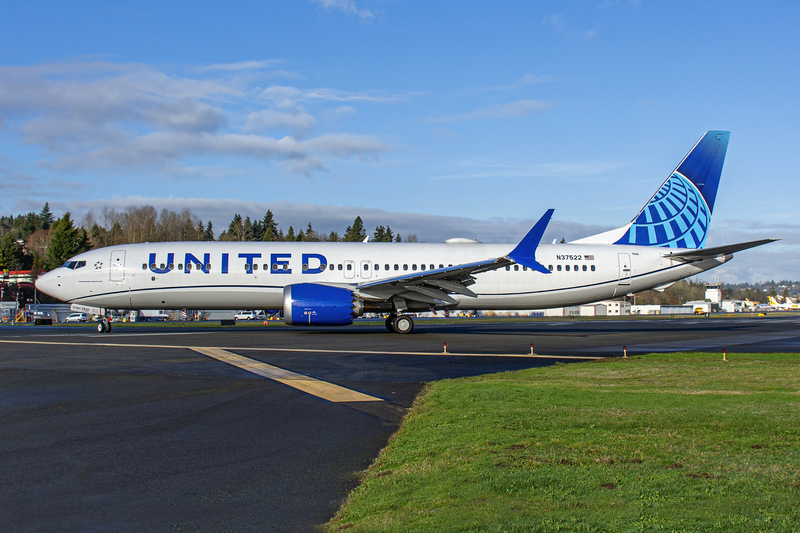
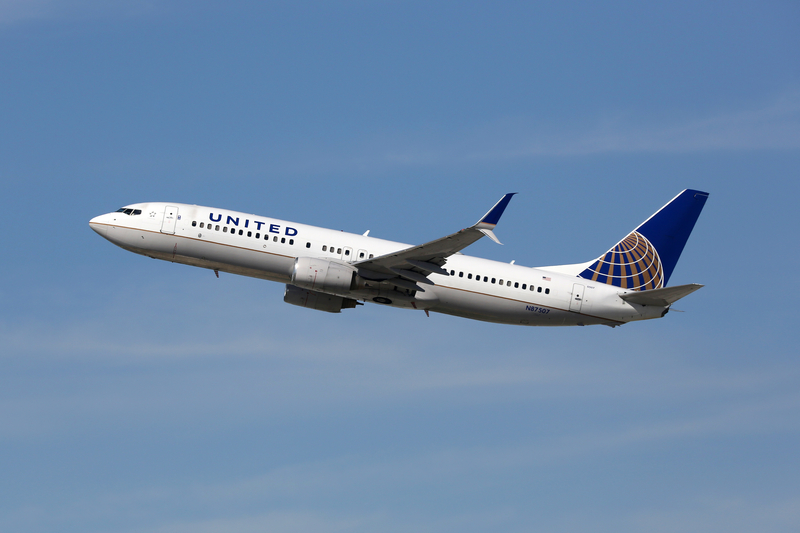
United’s official release lists the Cartagena flights as Boeing 737 service, while route reporting identifies the planned aircraft as the Boeing 737 MAX 8.
The MAX 8 is a logical aircraft for both routes. It gives United the range and economics to serve medium-haul international leisure markets without using a widebody or a larger narrowbody. The aircraft is also well suited to routes that are too long for older, less efficient narrowbodies to operate as economically, but not large enough to justify a Boeing 767, 787, or higher-capacity aircraft.
United’s standard Boeing 737 MAX 8 configuration has 166 seats: 16 in United First and 150 in Economy, including 54 Economy Plus seats. The cabin includes seatback screens, Bluetooth connectivity, larger overhead bins, and United’s newer narrowbody interior features. United has also been rolling out Starlink Wi-Fi across its fleet, with MileagePlus members expected to receive free access as the program expands.
For a route like Houston (IAH)–Cartagena (CTG) or Washington Dulles (IAD)–Cartagena (CTG), that cabin mix matters. Cartagena is a leisure destination, but it is not purely a low-yield market. A First Class cabin and a sizable Economy Plus section allow United to capture higher-value travelers while still offering enough standard economy capacity to compete on price.
The MAX 8 also gives United operational flexibility. If demand grows, the airline can add frequency, adjust seasonal capacity, or potentially substitute other 737-family aircraft depending on availability and payload needs.
Year-Round Service, Not Just A Winter Experiment
One of the more important details in United’s announcement is that the new Cartagena service is described as year-round.
The routes will start with four weekly flights during the winter season, but United is not positioning the flights as a short seasonal trial that disappears after spring. That is meaningful because Cartagena (CTG) has demand beyond the traditional northern winter escape period.
Winter will likely be strongest for U.S.-originating leisure traffic, but Cartagena also has year-round appeal. The city attracts cultural travelers, cruise traffic, regional tourism, diaspora demand, weddings, and premium leisure trips outside the peak holiday months.
Year-round service also gives United more time to build awareness in both markets. A seasonal-only route can be harder to sell because travelers may not know when it returns. A year-round schedule gives the airline, tourism partners, travel agencies, and corporate sales teams a more stable product to promote.
That said, the starting frequency is careful. Four weekly flights give United a meaningful presence without flooding the market. If demand supports it, additional frequencies would be the natural next step.
No Nonstop Competition From IAH Or IAD
United will be the first U.S. airline to offer nonstop flights from both Houston (IAH) and Washington Dulles (IAD) to Cartagena (CTG).
That does not mean Cartagena lacks U.S. service. The airport already has links to major U.S. markets through airlines serving Florida, New York, and Atlanta. But Houston and Washington Dulles are new nonstop gateways, and that gives United a first-mover advantage in both city pairs.
The competitive value is especially strong at Houston (IAH), where United can use its hub to pull traffic from dozens of domestic markets. A traveler from Denver (DEN), Austin (AUS), San Antonio (SAT), Dallas/Fort Worth (DFW), Phoenix (PHX), Kansas City (MCI), Las Vegas (LAS), or Los Angeles (LAX) could connect over Houston (IAH) to reach Cartagena (CTG).
At Washington Dulles (IAD), the route gives United a Mid-Atlantic gateway to Cartagena. That matters for travelers in Washington, D.C., Northern Virginia, Maryland, and parts of Pennsylvania and West Virginia who otherwise might connect through Miami (MIA), Fort Lauderdale (FLL), Atlanta (ATL), New York (JFK), Panama City (PTY), or Bogotá (BOG).
The nonstop advantage is simple: fewer moving parts. For a leisure trip, removing a connection can be enough to change destination choice.
Why Cartagena Fits United’s Latin America Strategy
United has been adding selective Latin America and Caribbean routes from multiple hubs, and Cartagena fits neatly into that strategy.
The airline is not relying on one gateway alone. Houston (IAH) remains the core Latin America platform, but Washington Dulles (IAD), Newark (EWR), Denver (DEN), Chicago O’Hare (ORD), and other hubs all play roles depending on geography and demand.
Cartagena (CTG) becomes United’s 156th international destination and brings its Latin America footprint to 69 destinations. It also joins other recent regional additions such as Caracas (CCS), Tuxtla Gutiérrez (TGZ), and St. Croix (STX).
That mix is revealing. United is not only chasing the biggest capital-city markets. It is filling out a more diverse network that includes leisure destinations, visiting-friends-and-relatives markets, secondary cities, and politically or economically significant routes.
Cartagena is exactly the kind of destination that works in that model. It is well known, visually distinctive, and increasingly popular with U.S. travelers. It also has enough international recognition to support marketing beyond Colombia specialists and frequent Latin America travelers.
Cartagena’s Airport Is Convenient For The City
Rafael Núñez International Airport (CTG) is one of the more convenient major tourism airports in Latin America because it sits close to the city it serves.
Travelers arriving at CTG can usually reach Cartagena’s historic center, Getsemaní, Bocagrande, or nearby hotel districts relatively quickly compared with many larger metropolitan airports. That proximity improves the passenger experience and strengthens the destination’s appeal for shorter trips.
For United, that is useful. A nonstop flight from Houston (IAH) or Washington Dulles (IAD) that lands early in the afternoon gives passengers time to reach their hotel, begin sightseeing, or make evening plans the same day.
Cartagena’s appeal is also broad. The city can sell as a beach trip, a food trip, a cultural trip, a history trip, a cruise add-on, or a romantic long weekend. That diversity helps airlines because the route is not tied to one narrow passenger type.
Colombia’s Three-City United Map
With Cartagena (CTG), United’s Colombia network becomes more balanced.
Bogotá (BOG) gives United access to Colombia’s capital, corporate market, government demand, and largest hub. Medellín (MDE) gives the airline access to one of the country’s most dynamic cities and a strong tourism and business market. Cartagena (CTG) adds the Caribbean leisure gateway.
That three-city structure is more useful than simply adding another frequency to an existing route. It gives MileagePlus members and United’s corporate customers more ways to reach different parts of Colombia without relying entirely on domestic connections inside the country.
It also helps inbound tourism. Colombian travelers can use Houston (IAH) and Washington Dulles (IAD) to connect across the United States and beyond, while U.S. travelers gain new nonstop access to one of Colombia’s most visited cities.
From a network planning standpoint, Cartagena rounds out the portfolio.
A Route Built On Connections And Premium Leisure
The success of the Cartagena routes will likely depend on both local and connecting traffic.
Houston (IAH) and Washington Dulles (IAD) each have meaningful local demand, but four weekly flights are easier to support when the hub can feed passengers from across the network. United’s release notes that the new routes will connect Cartagena to more than 70 destinations across the U.S. through Houston and Washington.
That is the key advantage of launching the route from hubs rather than from a purely point-to-point airport. United can sell Cartagena not only to Houston and Washington travelers, but also to passengers starting in smaller U.S. cities that would never support nonstop Colombia service on their own.
Premium leisure will also matter. Cartagena is not necessarily a bargain-basement destination. Hotels, restaurants, weddings, cruises, and cultural tourism can support higher fares, especially during peak periods. United’s First Class and Economy Plus cabins give the airline a way to monetize that demand.
Bottom Line
United’s new Houston (IAH)–Cartagena (CTG) and Washington Dulles (IAD)–Cartagena (CTG) flights are a smart, targeted expansion of the airline’s Colombia network.
Both routes begin December 17, 2026, with four weekly flights on Tuesdays, Thursdays, Saturdays, and Sundays. United says the service will operate year-round, starting with four weekly flights during the winter season, and the schedule remains subject to government approval.
Cartagena becomes United’s third Colombian city after Bogotá (BOG) and Medellín (MDE), giving the carrier a major Caribbean leisure destination that complements its existing business and metropolitan Colombia markets.
The Boeing 737 MAX 8 is the right aircraft for the job. It gives United enough range, a strong 166-seat cabin, First Class, Economy Plus, and modern onboard amenities without overcommitting widebody capacity.
For travelers, the appeal is straightforward: nonstop access from two major United hubs to one of Colombia’s most recognizable destinations. For United, the route is another example of a broader Latin America strategy built around hub strength, premium leisure demand, and carefully chosen destinations that add depth to the network.
Keep reading FlyMag
Get the Daily Brief in the morning or the Route Watch weekly recap on Fridays. Or both.