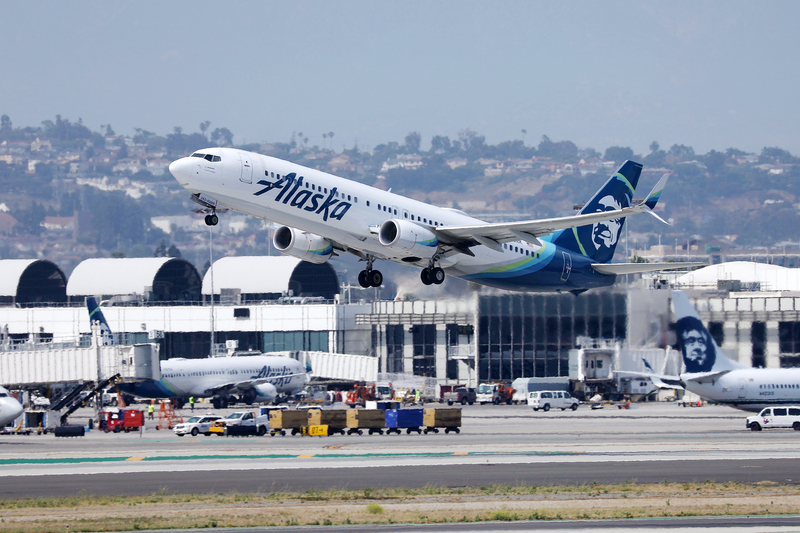
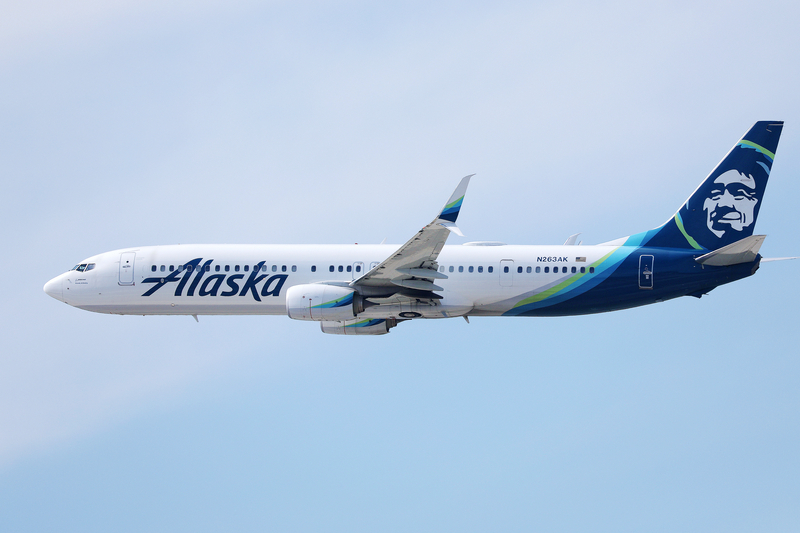
Alaska Airlines has removed nine international routes from its network when comparing the period from January 2025 through May 2026 with what is currently scheduled from June 2026 through March 2027.

That sounds dramatic, and in pure route-count terms it is. But the more important takeaway is that this is not a broad international retreat. It is a selective pruning of weaker or more marginal markets at the same time Alaska continues to expand elsewhere, including internationally.
For aviation readers, that distinction matters. Alaska is not walking away from international flying. It is tightening where it thinks the returns were not strong enough.
Read our stories in your inbox
Two aviation newsletters. Zero fluff.
The 9 International Routes Alaska Has Cut
The nine routes no longer in the forward schedule snapshot are:
- Los Angeles – Monterrey
- Los Angeles – Kelowna
- Los Angeles – Nassau
- Kansas City – Cancún
- Kansas City – Puerto Vallarta
- St. Louis – Puerto Vallarta
- Fresno – Guadalajara
- San Francisco – Mazatlán
- Seattle – Nassau
That is the clean list. What ties most of them together is not geography alone, but performance.
Spirit’s Boston Winter Pivot: New Cancun and Santo Domingo Nonstops Join the Schedule
Los Angeles Was The Biggest Source Of Cuts
Three of the removed routes came from Los Angeles International Airport (LAX):
- Monterrey
- Kelowna
- Nassau
That tells you something important about Alaska’s international position at LAX. Los Angeles is a huge market, but it is also one where Alaska lacks the natural advantage it enjoys in places like Seattle or parts of the Pacific Northwest. Competing internationally from LAX can be harder if the airline does not have enough scale, pricing power, or connecting relevance to make thinner routes work well.
In that sense, these cuts look less like a surprise and more like a recognition that not every Alaska route out of Los Angeles was worth defending.
Kansas City And St. Louis Couldn’t Hold Their Mexico Flying
Three other routes that disappeared were:
- Kansas City – Cancún
- Kansas City – Puerto Vallarta
- St. Louis – Puerto Vallarta
These are exactly the kinds of routes that can look attractive on paper — leisure-heavy, sun-destination flying from mid-continent U.S. cities — but still be hard to sustain if demand is too seasonal or if fares do not support the operation well enough.
The route analysis behind these cuts suggests the load factors were weak, which helps explain why Alaska chose to pull back. A route does not need to be tiny to fail. It only needs to be insufficiently profitable relative to the aircraft time it consumes.
The Remaining Three Cuts Round Out The Pattern
The last three routes removed were:
- Fresno – Guadalajara
- San Francisco – Mazatlán
- Seattle – Nassau
These cuts are useful because they show the pullback is not concentrated in one airport alone. It touches California, the Midwest, and even Seattle. But it is still selective. Alaska is not cutting its core international identity. It is cutting specific routes that appear not to have justified their place.
Seattle–Nassau is especially notable because it was one of Alaska’s longer and more unusual 737 international missions. That alone made it interesting. It did not necessarily make it sustainable.
This Is A Performance Story More Than A Strategy Reversal
The route list can make the network change look bigger than it really is.
What Alaska appears to be doing is cleaning out underperforming or weakly aligned international sectors rather than backing away from international growth overall. That is an important distinction because the airline is simultaneously expanding in other areas, including transatlantic flying and stronger long-haul leisure markets.
So the broader message is not “Alaska tried international and failed.” It is “Alaska is being more selective about which international routes deserve aircraft.”

Alaska’s International Strategy Is Still Evolving
Alaska’s network is in an unusual phase right now.
The airline is larger than it used to be, more ambitious internationally than before, and increasingly shaped by its relationship with Hawaiian and its wider long-haul aspirations. In that context, route pruning is not necessarily bad news. It can be a sign that management is trying to sharpen the network before committing more deeply to the markets it actually believes in.
That is often what mature network discipline looks like.
Bottom Line
Alaska Airlines has cut nine international routes, mostly from Los Angeles and a handful of leisure-focused U.S. cities, including services to Monterrey, Kelowna, Nassau, Cancún, Puerto Vallarta, Guadalajara, and Mazatlán.
The cuts are significant, but they do not amount to a broad international retreat. They look more like a cleanup of weaker-performing markets at a time when Alaska is still expanding elsewhere. The real story is not that Alaska is shrinking internationally. It is that the airline is becoming more selective about where international flying actually works.
Keep reading FlyMag
Get the Daily Brief in the morning or the Route Watch weekly recap on Fridays. Or both.