Tulsa International Airport has finally crossed a milestone that had eluded it for decades: scheduled commercial international service.
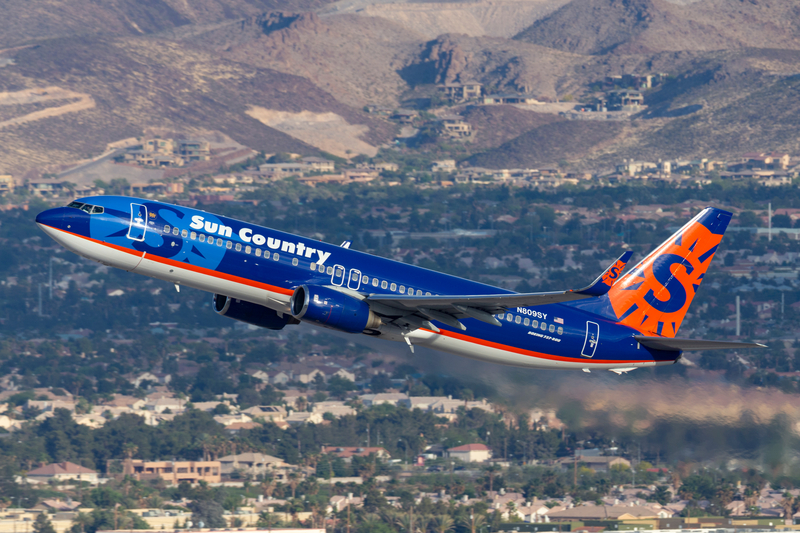
On May 21, 2026, Sun Country Airlines launched nonstop flights between Tulsa (TUL) and Cancún (CUN), making it the first time Tulsa has had a scheduled international commercial route. For an airport approaching its centennial, that is more than a route launch. It is a structural shift in what the airport can now be.
For aviation readers, the most important point is not just the destination. It is that Tulsa is no longer entirely dependent on larger U.S. hubs to reach an overseas market that local travelers were already using in large numbers.
Read our stories in your inbox
Two aviation newsletters. Zero fluff.
Cancun Was The Obvious First Route
If Tulsa was ever going to get its first international flight, Cancún made the most sense.
The market was already the airport’s largest unserved international destination, supported by strong leisure demand and a travel pattern that had long required passengers to connect through hubs in Texas or elsewhere. That meant the route did not need to invent demand. It only needed to capture traffic that was already there.
Spirit’s Boston Winter Pivot: New Cancun and Santo Domingo Nonstops Join the Schedule
That is exactly the kind of market where a first international service can work best: familiar, proven, and easy to explain to both airlines and passengers.
The Route Is Seasonal And Focused
Sun Country is operating the service twice weekly, on Thursdays and Sundays, using the Boeing 737-800.
That is a disciplined way to launch a market like this. It gives Tulsa a real international link while keeping frequency aligned with the route’s core use case — leisure demand rather than daily business travel. For a first-ever international service, that kind of measured entry is usually smarter than trying to prove too much too fast.
This is not a symbolic one-off. But it is also not an oversized gamble.
The Real Enabler Was The New Customs Facility
What made the route possible was not just demand. It was infrastructure.
Tulsa has recently completed a new 45,000-square-foot international customs and arrivals facility, finally giving the airport the ability to process arriving commercial international passengers properly. That is the real turning point in the story. Without customs infrastructure, the route could not exist. With it, Tulsa now has a platform for future international growth.
That means Cancún is not only the first route. It is the proof of concept for what could come next.
Tulsa Has Long Had International Demand — Just Not International Flights
One reason this launch matters so much is that Tulsa was never isolated from international travel demand. It was only isolated from nonstop international service.
Airport data has shown that Tulsa-area travelers were already flying in significant numbers to destinations such as Cancún, Los Cabos, Punta Cana, Puerto Vallarta, Montego Bay, Nassau, London, Tokyo, Vancouver, and Rome. The difference was that every one of those trips required a connection through another U.S. gateway.
That is why this route is important. It does not create Tulsa’s international demand. It finally gives part of that demand a nonstop option.
Sun Country Also Added Minneapolis
The same day it launched Cancún, Sun Country also began nonstop service between Tulsa and Minneapolis–Saint Paul (MSP).
That matters because it shows the airline is not treating Tulsa as a one-route novelty. It is entering the airport with a small but meaningful network footprint rather than simply dropping in one international leisure flight and stopping there.
That gives the launch more credibility. It suggests Sun Country sees Tulsa as a market worth developing, not just testing.
This Could Be The Start Of Something Bigger
Airport officials have already made clear that they do not view Cancún as the finish line.
The new customs facility was built with broader international ambitions in mind, particularly to support future flying to Mexico and the Caribbean. That is a sensible direction. Those are the markets most likely to work first from Tulsa because they already attract meaningful leisure demand and can be served with single-aisle aircraft at manageable economics.
So while Cancún is historic on its own, the bigger significance may be that it opens the door to a new category of route planning for Tulsa.
Bottom Line
Tulsa’s first scheduled international commercial flight is finally here, and the choice of Cancún tells you a lot about why it worked. The demand already existed, the airport now has the customs infrastructure to support it, and Sun Country has launched the route in a frequency pattern that matches the market realistically.
This is not just a celebratory first. It is a practical sign that Tulsa can now start thinking like an airport with genuine international potential.
Keep reading FlyMag
Get the Daily Brief in the morning or the Route Watch weekly recap on Fridays. Or both.