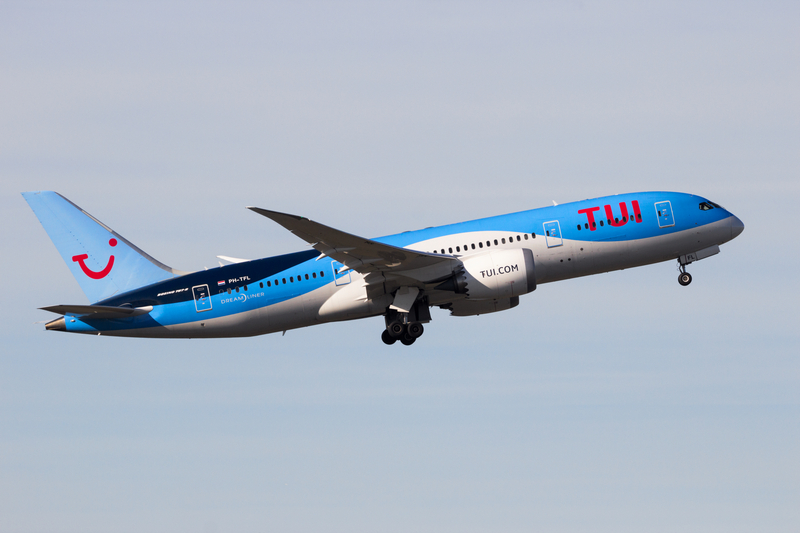
A TUI Airways flight from Cancun International Airport (CUN) to Manchester Airport (MAN) diverted to Gander International Airport (YQX) after a disruptive passenger incident on board.

Flight BY143 departed Cancun (CUN) on June 4. The aircraft was a Boeing 787-9 Dreamliner, registered G-TUIM.
The flight was scheduled to operate overnight to Manchester (MAN). Instead, the crew diverted to Gander (YQX) in Newfoundland and Labrador, Canada.
Read our stories in your inbox
Two aviation newsletters. Zero fluff.
The diversion caused a long delay for passengers. The aircraft later continued from Gander (YQX) to Manchester (MAN) on June 6.
A Serious Disruption Over The North Atlantic
According to reported passenger accounts, a man on board became increasingly aggressive during the flight.
Passengers said he tried to leave his seat several times. They also alleged that he made alarming comments about a knife. Those comments caused concern in the cabin, especially because many families and children were on board.
Cabin crew responded to the situation. A doctor on the flight reportedly helped the crew restrain the passenger.
The aircraft was approaching the North Atlantic portion of the journey. At that point, the flight deck had a clear operational decision to make.
Continuing across the ocean with an unstable cabin situation would have carried additional risk. The crew instead diverted to Canada.
Why Gander Was The Logical Diversion Airport
Gander (YQX) may be a small community, but the airport has a long history in transatlantic aviation.
It sits in a useful position for aircraft crossing between North America and Europe. The airport also handles technical stops and unscheduled diversions, including medical, mechanical, and unruly-passenger events.
That made it a practical choice for BY143.
For a crew dealing with a disruptive passenger, the best diversion airport is not always the closest point on a map. It must also be suitable for the aircraft, the passengers, law enforcement, ground handling, and onward recovery.
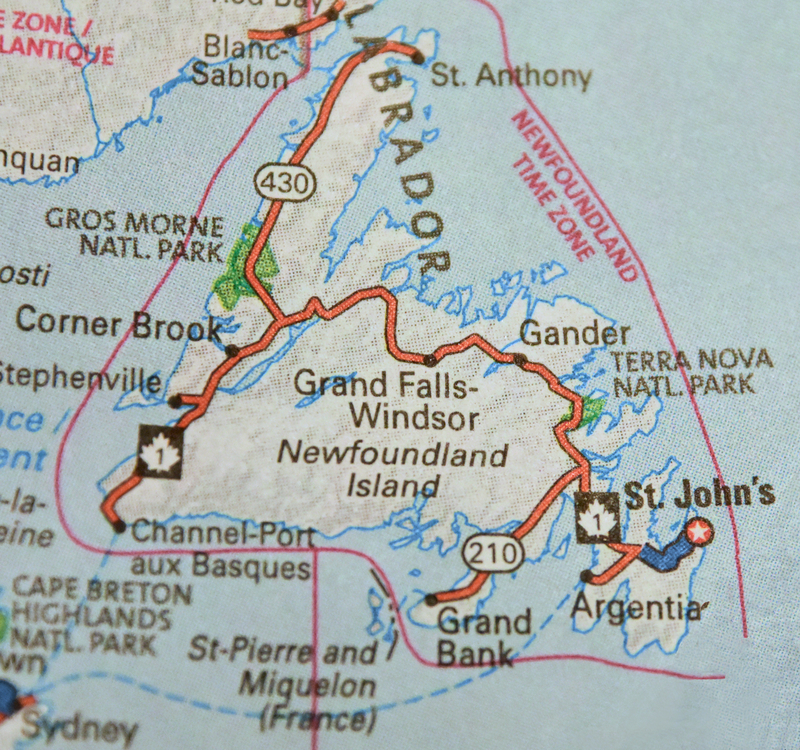
Gander (YQX) meets those requirements. It has experience with widebody diversions and North Atlantic traffic. It also gives airlines a safe place to remove a passenger before a flight continues across the ocean.
The Aircraft Was A Boeing 787-9
The aircraft involved was G-TUIM, a TUI Airways Boeing 787-9 Dreamliner.
The 787-9 is the stretched version of the original 787-8. Boeing lists the type with a range of 7,565 nautical miles. It is designed for long-haul routes and is widely used on transatlantic, transpacific, and leisure-heavy intercontinental services.
TUI uses the Dreamliner on long-haul holiday routes. The airline says its UK fleet includes 13 Dreamliners, with both 787-8 and 787-9 aircraft.
The 787-9 is well suited to Cancun (CUN)–Manchester (MAN). The route is a long overnight leisure sector. It links one of Mexico’s biggest holiday markets with one of TUI’s major UK bases.
In this case, the aircraft was not the issue. The diversion was driven by the reported behavior of a passenger.
Passenger Claims Should Be Treated Carefully
Some of the most serious details come from passenger accounts.
One passenger said the man’s wife suggested his behavior may have been linked to diazepam allegedly bought from a taxi driver in Mexico. That claim has not been officially confirmed.
It should be treated as an allegation, not a verified medical explanation.
That distinction matters. Airlines and police rarely release detailed medical or personal information after this kind of incident. Passenger accounts can help describe the cabin environment, but they do not establish a confirmed cause.
What is clear is that the situation was serious enough for the crew to divert.
A 14-Hour Disruption For Passengers
The diversion caused a major delay.
Passengers were stranded in Canada for several hours before the aircraft could continue to Manchester (MAN). Flight-tracking data shows G-TUIM later operated the continuation sector from Gander (YQX) to Manchester (MAN).
That onward flight departed Gander in the early hours of June 6 and arrived in Manchester later that morning.
For passengers, the delay was frustrating. Many were returning from holiday. Instead of arriving in the UK as planned, they spent hours in an unexpected stopover in Newfoundland.
Still, once a serious passenger disturbance develops over the Atlantic, the airline has limited options. Safety comes first. The schedule becomes secondary.
Diversions Are Expensive And Disruptive
An unruly passenger diversion is not a minor event for an airline.
It can affect crew duty limits, fuel planning, airport handling, passenger care, catering, maintenance checks, and onward aircraft rotations. It can also create missed connections, hotel costs, and compensation issues.
For TUI, the disruption was especially difficult because the aircraft was operating a long-haul leisure service. These flights often carry families, tour-package passengers, and holidaymakers with fixed travel plans.
The cost of a diversion can be significant. But airlines do not usually make this decision unless the captain believes the risk of continuing is greater than the disruption of landing.
In this case, diverting before the full Atlantic crossing was the safer choice.
Cabin Crew Faced A Difficult Situation
Cabin crew are trained to manage disruptive passengers. Even so, incidents like this can escalate quickly.
A long-haul aircraft is a confined space. Crew members must protect passengers, keep the cabin calm, and support the flight deck. They also need to avoid making the situation worse.
Reports indicate the TUI crew restrained the passenger with help from a doctor on board. That suggests the crew had to manage both safety and possible medical factors.
Once a passenger is restrained, the crew must continue monitoring the situation. The captain then decides whether to continue, return, or divert.
Given the aircraft’s position and the reported behavior, Gander (YQX) was a sensible diversion point.
The Route Continued To Manchester
After the passenger was removed in Canada, the flight eventually continued to Manchester (MAN).
The aircraft remained G-TUIM. It operated the Gander (YQX)–Manchester (MAN) sector as BY143.
That is important. The same aircraft completed the journey after the disruption was handled on the ground.
For passengers, that still meant a long and exhausting trip. For the airline, it allowed the aircraft and passengers to continue to the planned destination once the immediate safety issue was resolved.
Bottom Line
TUI Airways flight BY143 from Cancun (CUN) to Manchester (MAN) diverted to Gander (YQX) after a serious unruly passenger incident on board.
The Boeing 787-9 Dreamliner, registered G-TUIM, was operating a long-haul leisure flight when the crew decided it was not safe to continue across the Atlantic with the situation unresolved.
The diversion caused a major delay for passengers. It also disrupted the aircraft’s schedule. However, the decision was operationally sound.
Gander (YQX) is well placed for North Atlantic diversions. It has the runway, handling experience, and law-enforcement access needed for this type of event.
For passengers, it was a difficult end to a holiday. For the crew, the priority was clear: land safely, remove the risk, and continue only when the aircraft was secure.
Keep reading FlyMag
Get the Daily Brief in the morning or the Route Watch weekly recap on Fridays. Or both.