Wizz Air is restoring 12 routes between Europe and the Middle East for the 2026-27 winter season, rebuilding service to the United Arab Emirates, Saudi Arabia and Jordan through a phased restart extending into late October.

The program comprises 49 weekly frequencies across 12 city pairs, representing 98 flight sectors in a full week when return services are included. Wizz Air expects to offer about 470,000 seats over the winter schedule.
Milan Malpensa (MXP)-Jeddah (JED) returned on September 6, followed by Rome Fiumicino (FCO)-Jeddah on September 7. Budapest (BUD)-Amman (AMM) is scheduled to restart on September 22, while the remaining nine routes will resume with the change to the northern winter timetable on October 25 and 27.
Read our stories in your inbox
Two aviation newsletters. Zero fluff.
Abu Dhabi Accounts for Six of the Returning Routes
The published Wizz Air program is weighted toward Abu Dhabi (AUH), which will receive 20 weekly frequencies from six European cities. Dubai (DXB) will have 12 frequencies across two routes, while Jeddah receives 14 across three routes and Amman three from Budapest.
The full schedule is:
- Milan Malpensa-Jeddah: seven times weekly from September 6.
- Rome Fiumicino-Jeddah: four times weekly from September 7.
- Budapest-Amman: three times weekly from September 22.
- Budapest-Abu Dhabi: four times weekly from October 25.
- Budapest-Dubai: five times weekly from October 25.
- Katowice (KTW)-Abu Dhabi: five times weekly from October 25.
- Bucharest (OTP)-Dubai: daily from October 25.
- Larnaca (LCA)-Abu Dhabi: three times weekly from October 27.
- Sofia (SOF)-Abu Dhabi: three times weekly from October 27.
- Cluj-Napoca (CLJ)-Abu Dhabi: twice weekly from October 27.
- Krakow (KRK)-Abu Dhabi: three times weekly from October 27.
- Budapest-Jeddah: three times weekly from October 27.
Budapest is the largest European component, with 15 weekly frequencies spread among all four Middle Eastern destinations. The airline will operate nine weekly frequencies from Romania, eight from Poland and 11 from its two Italian gateways. Larnaca and Sofia each contribute three.
Opening fares published by Wizz Air range from €24.99 on Larnaca-Abu Dhabi to €79.99 on Krakow-Abu Dhabi and Bucharest-Dubai. Those prices are one-way base fares and will vary by departure date and remaining inventory.
Capacity Returns After Regional Airspace Disruption
The restart follows several months of disruption to Wizz Air’s Middle East flying. In its March 2026 traffic report, the airline said its growth had continued despite Middle East capacity cuts, reflecting the effect of regional conflict and airspace restrictions on its schedule.
The European Union Aviation Safety Agency subsequently revised its regional guidance. On July 8, EASA allowed its broader Middle East and Persian Gulf conflict-zone bulletin to expire after ceasefire agreements and a reduction in short-term tensions. It replaced the bulletin with more targeted guidance covering residual risks, while retaining separate warnings for higher-risk airspace including Iran, Iraq and Lebanon.
EASA continues to advise operators to account for regional risks in their own assessments and routing decisions. Wizz Air said the restored services remain subject to ongoing operational and security reviews.
The staggered return reflects that approach. The two Italian-Jeddah routes came back first, followed by Amman later in September. The larger UAE program waits until the winter timetable begins, allowing Wizz Air to introduce the capacity as part of a broader seasonal aircraft and crew rotation rather than through isolated additions during the closing weeks of summer.
A321neo Provides the Capacity for Longer Sectors
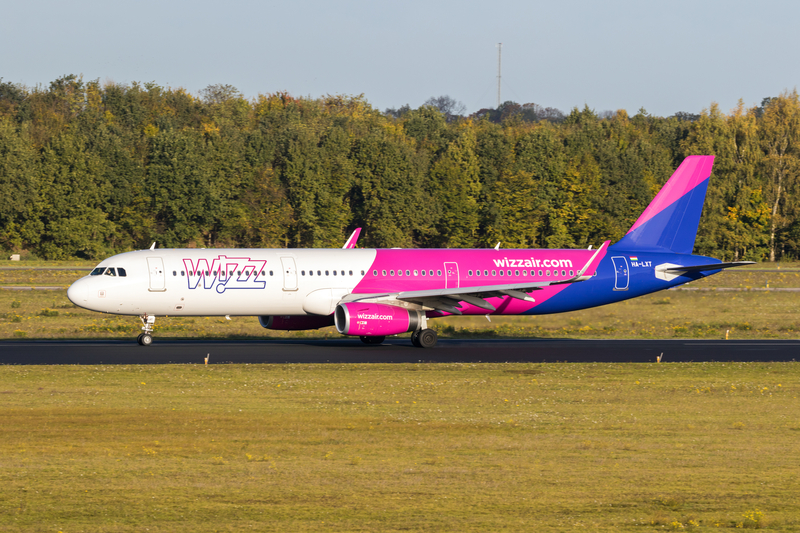
The routes sit within the core mission profile of Wizz Air’s Airbus A321neo fleet. The airline’s standard A321neo carries 239 passengers in a single-class layout, giving it the seat density required to spread operating costs across sectors of roughly four to six hours.
That combination is particularly important on routes such as Katowice-Abu Dhabi and Milan-Jeddah, where a high-capacity narrowbody allows Wizz Air to pursue a low-fare model without the trip costs of a widebody. The aircraft also gives the airline enough range to reach the Gulf directly from Central and Eastern Europe while preserving the fleet commonality on which its operating model depends.
Wizz Air said in April that more than three-quarters of its fleet consisted of A321neos. Its corporate fleet figures now show 267 aircraft with an average age of 4.6 years. The carrier is working toward an all-neo fleet by 2029.
The A321neo’s 239-seat cabin also puts the announced winter capacity into context. At 49 frequencies in each direction, a fully A321neo-operated week would provide up to 23,422 seats before accounting for substitutions or schedule variations. Across the core winter period, that broadly supports the airline’s planned 470,000-seat total.
Wizz Air says the aircraft’s Pratt & Whitney geared turbofan engines and Sharklets can cut fuel burn and carbon dioxide emissions per seat by as much as 20% compared with the A321ceo. The high-density cabin remains central to that per-seat performance, as well as to the economics of long, price-sensitive leisure and visiting-friends-and-relatives routes.
Bottom Line
The largest immediate gain is in the UAE, which accounts for 32 of the program’s 49 weekly frequencies. Abu Dhabi regains links with six Wizz Air markets, including both southern Poland gateways and two cities in Romania, while Dubai receives daily Bucharest service and five weekly Budapest flights. That gives Wizz Air a meaningful Gulf presence without rebuilding a broad locally based network.
The route pattern also shows where the airline sees the strongest balance of demand and operational support. Budapest alone receives four restored Middle East routes, while Italy supplies 11 weekly Jeddah frequencies and Romania nine weekly UAE frequencies. Concentrating the flying at established European bases lets Wizz Air rotate the A321neo through the rest of its network and limit exposure if regional conditions change.
The next measure will be how much of the 49-frequency schedule survives beyond the peak winter travel period. Daily Milan-Jeddah and Bucharest-Dubai services represent firm capacity commitments, while the thinner Cluj-Napoca, Larnaca, Sofia and Krakow routes provide room to test demand. Performance through the winter will determine whether Wizz Air treats the restoration as a seasonal rebuild or the foundation for another sustained push into the Middle East.