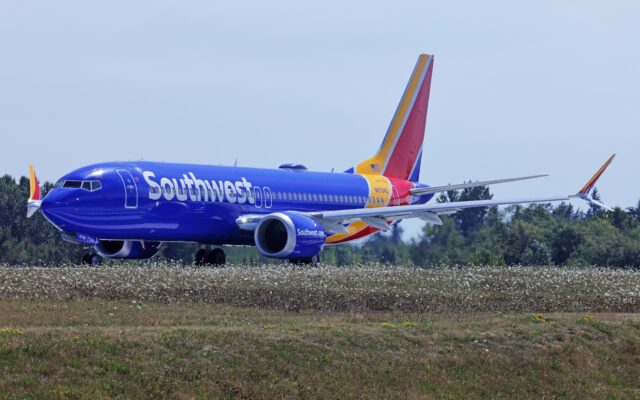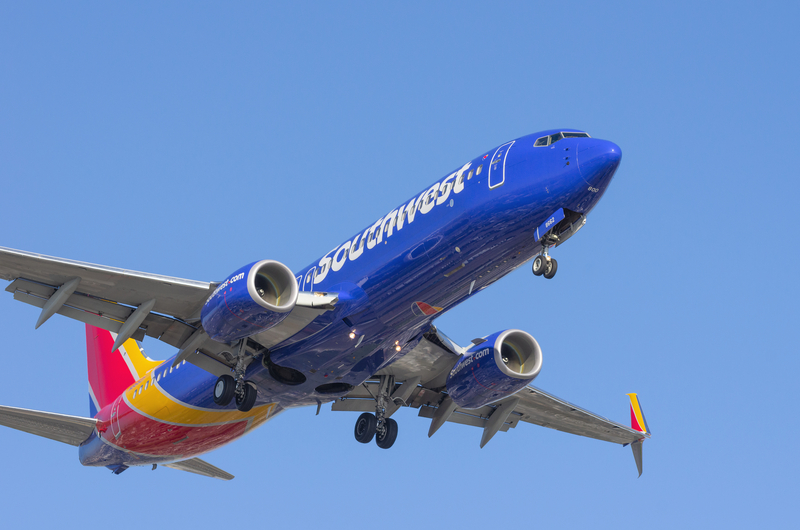
Southwest Airlines has spent the past few years moving steadily away from its old one-size-fits-all identity. It now sells more differentiated fares, is adding extra-legroom seating across the fleet, and is increasingly talking like an airline that wants a bigger share of premium travelers. The obvious next question is whether a real first class cabin eventually follows.

On paper, that sounds simple. Other U.S. airlines already operate Boeing 737s with domestic first class. In practice, Southwest’s fleet and onboard setup make that transition much more complicated than it might appear.
The issue is not whether a 737 can physically hold first class seats. It can. The issue is that Southwest’s version of the 737 was built for a very different operating philosophy, one centered on all-economy layouts, fast turns, and dense seating rather than premium service.
Read our stories in your inbox
Two aviation newsletters. Zero fluff.
Southwest’s Cabin Was Designed Around Simplicity, Not Premium Service
Southwest has long structured its aircraft around one core idea: carry as many economy passengers as possible while keeping the operation simple and quick.
That design philosophy shows up everywhere in the cabin. The airline’s 737s were not built with a domestic first class product in mind, and that means introducing one now is not just about swapping out a few rows of seats. It would require a broader rethink of how the front of the cabin works operationally.
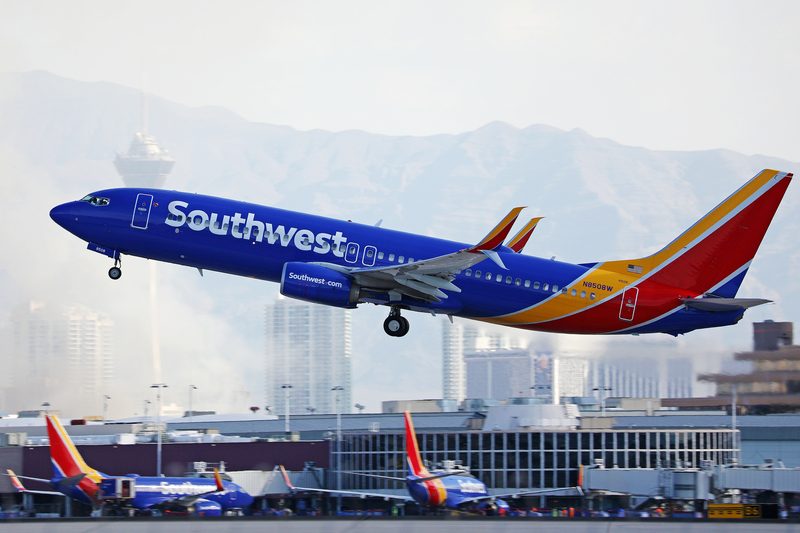
A true premium cabin is not just a seat. It is a service platform.
The Biggest Problem Is Not The Seats — It Is The Galleys
The most important obstacle is not the seat map itself. It is the galley layout.
Southwest’s 737s were configured without the kind of full-size forward galleys that legacy carriers rely on to support first class catering. That matters because domestic first class in the United States is not only about wider seats and extra legroom. It is also about a different food-and-beverage service standard, often including hot meals, more substantial catering, and more complex trolley service.
Southwest’s current setup is optimized for drinks and light snacks, not for a full premium-cabin meal service.
Adding ovens is possible. But ovens alone do not solve the problem if the surrounding galley space is too limited to support the extra carts, storage, and workflow that first class requires.
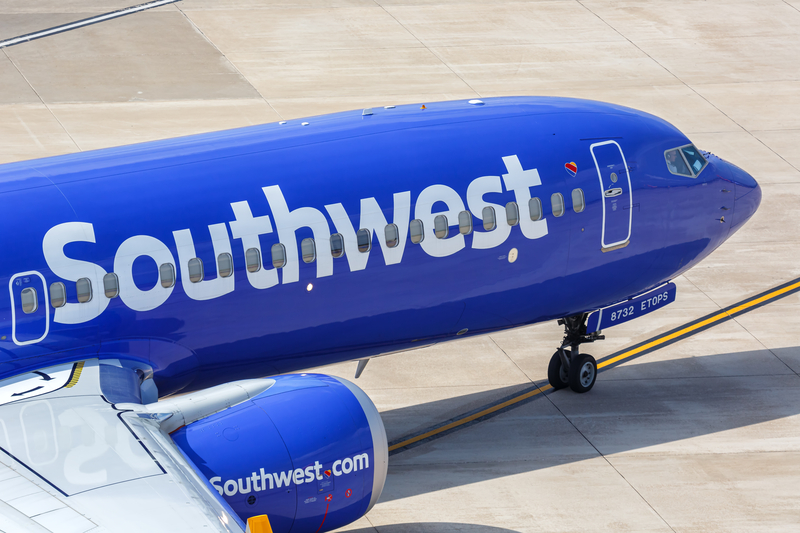
Southwest Would Almost Certainly Have To Lose Seats
This is where the economics become real.
To install a proper first class cabin and the galley infrastructure needed to support it, Southwest would likely have to remove a meaningful number of economy seats from its 737s. That is not a small decision for an airline whose cost structure and operating model have long depended on high seat counts and relatively low unit costs.
Today, Southwest’s aircraft are denser than those of most legacy competitors. That density helps keep costs per seat down. A first class conversion would change that equation immediately.
The airline would be giving up seats not just for bigger chairs, but for more galley space and a very different front-cabin layout.
The 737-700 Would Be Especially Difficult
The challenge would be particularly acute on the 737-700.
That aircraft has less space to work with, and Southwest’s version already uses a smaller galley arrangement. If the airline wanted to introduce a meaningful premium product on that subfleet, the reconfiguration burden would be even heavier than on the larger 737-800 or 737 MAX 8.
In practical terms, that may be one reason Southwest’s premium evolution has so far focused first on extra-legroom seating and other monetization changes rather than a full first class rollout.
It is much easier to charge more for better economy seats than to rebuild the front of the airplane from the ground up.
A Lie-Flat Cabin Is Even Less Likely
Southwest management has occasionally left the door open rhetorically to more ambitious premium concepts, even including lie-flat seats. But in real network terms, that idea looks much harder to support.
Lie-flat products only make consistent economic sense on a narrow range of U.S. domestic routes, usually premium-heavy transcontinental markets such as New York to Los Angeles or San Francisco. Those are not the markets that define Southwest’s network, and they do not fit the airline’s traditional operating model especially well.
Even if Southwest wanted to go that far, the seat count reduction, weight penalty, and service requirements would make it a major structural change rather than a simple product upgrade.
That is why a recliner-style domestic first class remains far more plausible than anything fully flat.
The More Likely Alternative Is A “Blocked Middle” Premium Product
If Southwest eventually introduces a premium cabin, the more realistic first step may not be a traditional domestic first class seat at all.
A more likely option would be something closer to the European short-haul business class model or a U.S. “extra space plus blocked middle” concept. That kind of product would let the airline create a more premium front cabin without sacrificing quite as many seats as a true recliner-based first class section would require.
It would also fit better with Southwest’s current product evolution, where the airline seems more focused on revenue layering than on becoming a full legacy-style premium carrier overnight.
The downside, of course, is value perception. If the product looks too close to economy, passengers may not accept premium pricing unless the service and ground experience improve substantially too.
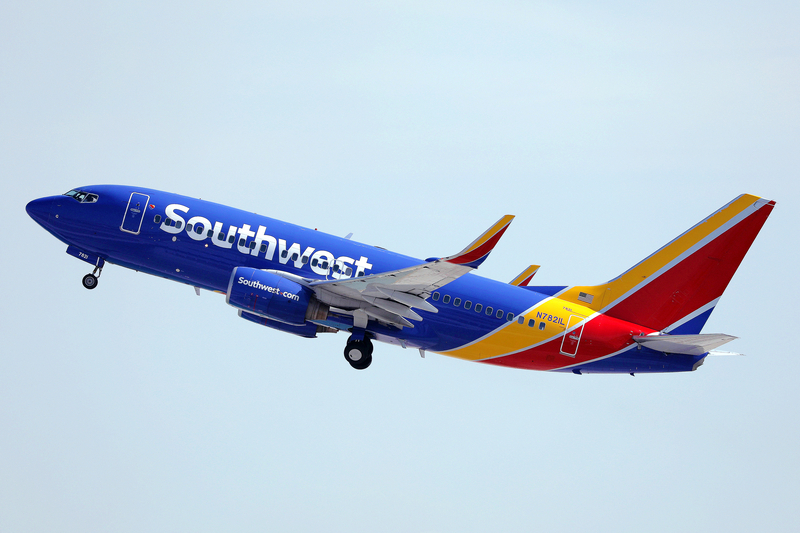
Ground Product Matters More Than Ever
This is where Southwest’s other moves become more relevant.
The airline’s reported lounge plans, premium credit card strategy, power-port additions, and broader fare segmentation all suggest that Southwest is trying to build the ecosystem around a more premium traveler before it commits to the full cabin product. That would be a logical sequence.
A first class seat is easier to sell if the airline already offers a stronger airport and loyalty proposition around it.
In other words, Southwest may be building the supporting structure first because the aircraft changes will be the hardest part.
The Real Constraint Is That Southwest Built A Very Different Airline
Ultimately, the reason first class is hard to build on Southwest’s 737s is not that Boeing 737s cannot support premium cabins. It is that Southwest built its fleet, service style, and economics around the assumption that they would not need one.
That worked for decades. But as the airline moves closer to legacy-style segmentation and tries to capture more premium revenue, those old design choices now matter more. They are not impossible to overcome. They are just expensive and operationally disruptive to reverse.
Bottom Line
Southwest can eventually build a true first class cabin on its 737 fleet, but doing so would require much more than installing bigger seats in the first few rows. The airline’s galley layouts, seat density, and all-economy operating model were designed for simplicity, not premium service.
That means a real first class product would likely require larger forward galleys, more catering capability, and fewer total seats — a significant change for an airline that has long prioritized low costs and fast turns. A more modest premium product is easier to imagine in the near term. A full legacy-style cabin is possible, but only if Southwest is willing to redesign more of the airplane than most people realize.
Keep reading FlyMag
Get the Daily Brief in the morning or the Route Watch weekly recap on Fridays. Or both.