Boeing launched the 777X program back in 2013 with a simple promise to long-haul planners: a bigger, quieter, more efficient “big twin” that could replace aging 777-300ER fleets and, in many cases, do the job airlines once reserved for four-engine flagships. Thirteen years later, the aircraft is still not in airline service, and Boeing’s delivery target has moved from 2020 to 2027—with certification still not in hand.
The uncomfortable truth is that the 777X isn’t delayed for one dramatic reason. It’s delayed because the program has repeatedly failed the industry’s hardest test: proving design maturity—then proving it again, to regulators, in production configuration, with all the paperwork and process discipline that has become non-negotiable in the post-MAX era.
What the 777X is trying to be
The 777X family is built around three core upgrades that matter to airline economics:
Read our stories in your inbox
Two aviation newsletters. Zero fluff.
-
A new carbon-composite wing with folding wingtips
-
GE9X engines (the only engine option)
-
A revised cabin and systems package influenced by 787-era lessons
Boeing’s published numbers for the two passenger variants are:
-
777-8: 395 passengers (two-class), 8,745 nm range
-
777-9: 426 passengers (two-class), 7,285 nm range
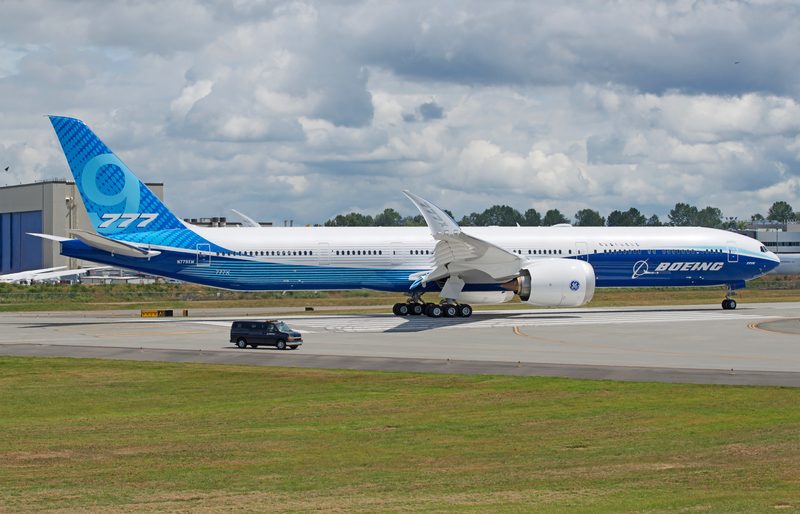
The wing is the signature. Extended, it spans 71.8 m—too wide for many legacy Code E gates. Folded on the ground, it’s 64.9 m, keeping the jet compatible with existing airport infrastructure and stands at major global hubs such as London Heathrow (LHR) and Dubai (DXB) without forcing an airport-wide rebuild. That folding-tip solution is brilliant engineering—and a major certification and operational integration challenge.
The real bottleneck is certification in production configuration
Boeing has been flight-testing the 777-9 since its first flight in January 2020, but flight hours alone don’t equal certification readiness. The program has been slowed by repeated “stop-and-fix” events and by the sheer volume of compliance documentation required to move through the FAA’s Type Inspection Authorization (TIA) phases.
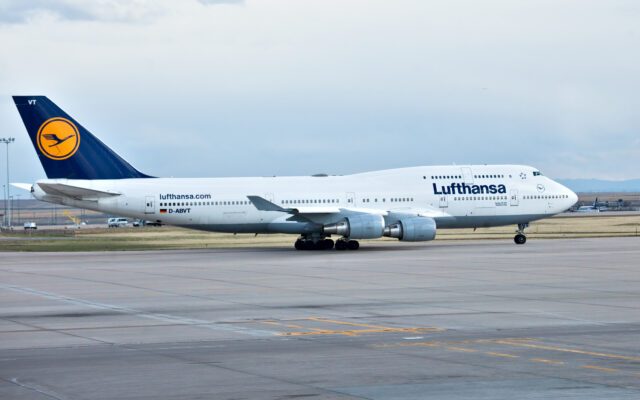
A key milestone now is shifting from heavily instrumented test aircraft to a production-standard jet that represents what customers will actually receive. Boeing plans to fly a production 777X from Paine Field (PAE) in Everett, Washington, with the first production-model flight targeted for April 2026. That aircraft is expected to be a Lufthansa (LH) frame—important because Lufthansa’s hub at Frankfurt (FRA) is widely seen as the likely early “day-one” proving ground for the type.
The sequence matters for airlines: until regulators sign off on the production configuration, operators can’t lock training, spares, and route economics with full confidence—even if the jet has been flying tests for years.
The setbacks: not one failure, but a pattern of “not quite ready”
The 777X’s delay story is best understood as a chain of issues that repeatedly forced Boeing to pause, inspect, redesign, and re-validate. Several of the most consequential events have been:
-
Everett (PAE) ground test failure (2019): a cargo door failure during high-pressure structural testing was an early warning that the certification path would be long and exacting.
-
Flight-control anomaly (December 2020): an “uncommanded pitch event” during a test flight—serious enough to raise regulatory eyebrows and extend the time needed to validate flight-control logic and system behavior.
-
GE9X/engine-related disruptions (multiple years): the GE9X itself received FAA engine certification in 2020, but in-service maturity is more than a certificate. The program has dealt with recurring engine and installation-related findings.
-
Test fleet grounding (August 2024): cracks/failures in thrust link structures triggered another significant pause—exactly the kind of finding that forces a program to slow down and prove the fix across the fleet, not just on one airframe.
-
Durability concern resurfacing (early 2026): Boeing and GE have been analyzing a potential GE9X seal durability issue. Even if Boeing maintains the 2027 target, durability topics late in the program are never “free”—they create engineering work, paperwork, and, potentially, retrofit planning.
None of these on their own kills a program. The problem is cumulative. Each fix reopens a set of questions: was this isolated, systemic, or a symptom of something deeper? And every time that question is asked, the schedule slips.
The FAA “trust gap” is real—and it’s slowing everything Boeing touches
It’s impossible to separate 777X timelines from Boeing’s broader regulatory reality.
Since the 737 MAX crashes of 2018–2019—and reinforced by more recent quality incidents like the 737 MAX 9 door plug failure in January 2024—Boeing is operating in an environment where the FAA is far less willing to accept “we’ll clean it up later.” The agency has been explicit about shifting toward tighter oversight and deeper scrutiny of compliance evidence.
On the 777X, that shows up as time spent not only fixing hardware, but proving the fix and documenting it. For airline professionals, this is the core reason “2027” is still not a guarantee: certification risk is no longer just engineering risk. It’s process and confidence risk.
Production isn’t the problem—rework is
One of the strangest features of the 777X program is that Boeing has already built a sizeable number of aircraft that it cannot deliver. As of 2025, reporting indicated Boeing had produced around two dozen 777X airframes, many stored around Paine Field (PAE) while the program progresses.
That has two implications:
-
The “inventory” isn’t immediately deliverable. Early-built frames often require modification to align with the final certified configuration—meaning stored airplanes can become a rework workload.
-
Boeing is betting on a fast ramp after certification. Building ahead can reduce post-certification lead time—if the rework burden doesn’t explode and if supply chains behave.
This is where airlines get nervous. A program can exit certification only to hit an “industrialization wall” where paperwork is done but delivery flow is slow.
What 2027 really means for airlines and fleets
If Boeing hits a 2027 first delivery, it still won’t look like a clean, instant global rollout. Early operators will likely phase it in carefully:
-
proving dispatch reliability on predictable trunk routes,
-
validating maintenance intervals and spares consumption,
-
and training crews and technicians while aircraft are still relatively few.
For Emirates (EK) at Dubai (DXB)—the program’s largest customer by a wide margin—the 777X is a cornerstone replacement and growth platform. For Lufthansa (LH) at Frankfurt (FRA), it’s about flagship long-haul capability and fleet modernization. For cargo operators watching the 777-8F, the timeline is even longer; industry expectations point to first freighter deliveries closer to the end of the decade.
Bottom Line
The 777X is delayed because Boeing has struggled to demonstrate consistent design maturity—and because today’s certification environment demands exhaustive proof, in production configuration, with minimal tolerance for “we’ll address it later.” The aircraft’s most valuable innovations—GE9X propulsion and the folding composite wing—are also the very features that multiply certification complexity.
Boeing’s next big hurdle is getting a production-standard 777X flying out of Paine Field (PAE) and through the remaining FAA evaluation gates. If that goes smoothly, 2027 is plausible. If it doesn’t, the 777X story continues to be what it’s been for airlines since 2020: a highly desirable airplane that’s still not quite ready to be an airline fleet plan.