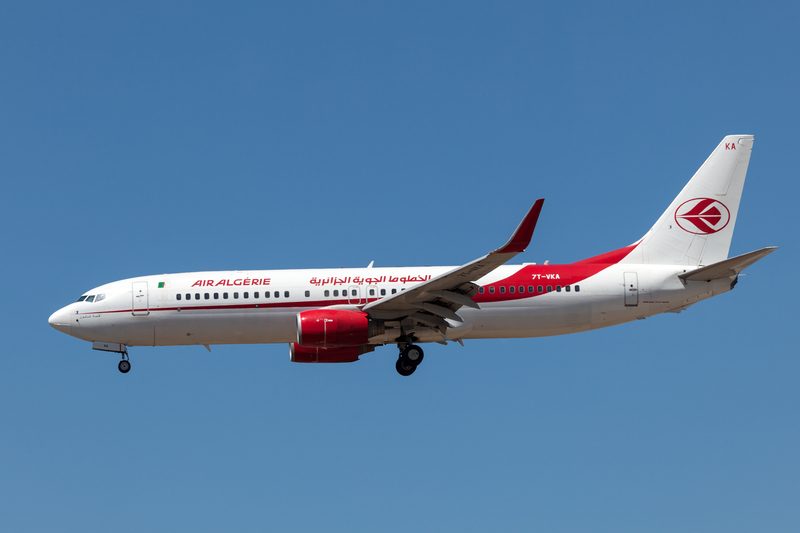
Air Algérie has confirmed an order for 10 Boeing 737 MAX 8 aircraft, adding fresh momentum to a fleet renewal program that is now taking shape across both its short-haul and long-haul operations. The first five aircraft are expected from July 2026, with the remaining five scheduled for 2027.
For Air Algérie, this is not just a numbers exercise. It is a move that strengthens the airline’s core narrowbody fleet while giving it more flexibility to grow from Algiers Houari Boumediene Airport (ALG), the center of its network. For a carrier balancing domestic coverage with international expansion, the 737 MAX 8 is a practical aircraft choice: large enough to support trunk routes, efficient enough to protect margins, and familiar enough to integrate without major disruption.
Why the 737 MAX 8 Fits Air Algérie
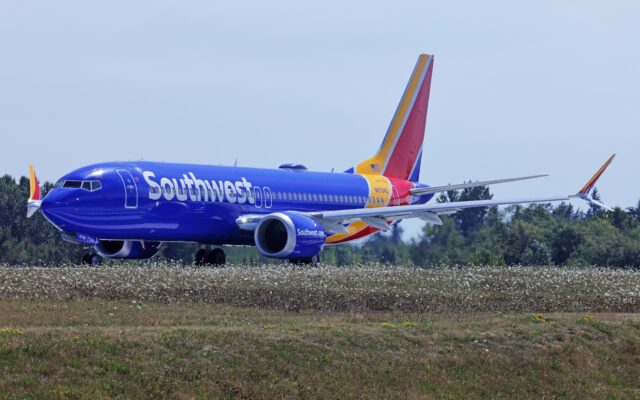
The Boeing 737 MAX 8 sits in one of the most commercially useful segments of the narrowbody market. In a typical two-class configuration, the aircraft seats around 178 passengers and offers a range of roughly 3,500 nautical miles. That gives Air Algérie a versatile platform for domestic and regional flying, while also supporting longer missions from ALG that do not require widebody economics.
Read our stories in your inbox
Two aviation newsletters. Zero fluff.
The type is powered by CFM International LEAP-1B engines and brings clear operating advantages over earlier-generation 737 variants. Boeing says the 737 MAX family delivers a meaningful reduction in fuel burn and emissions, while also lowering the aircraft’s noise footprint. Those are not abstract marketing points. For an airline, they translate into lower trip costs, stronger environmental performance, and a more durable economics case on competitive routes.
There is also an important fleet commonality benefit. Air Algérie already has deep experience with Boeing single-aisle aircraft, so bringing in the MAX 8 allows the airline to modernize without introducing the complexity of an entirely new narrowbody platform. That matters in pilot training, engineering support, spare parts planning, and day-to-day operational reliability. In aviation, the best fleet decisions are often the ones that improve economics without creating unnecessary complexity, and this order fits that logic well.
A Better Tool for Network Planning From ALG
From a network planning perspective, the 737 MAX 8 gives Air Algérie more precision. It can be used to replace older narrowbodies on established routes from ALG, while also creating room to add frequencies where schedule depth matters as much as total seat count. That is especially useful for an airline serving a mix of business, VFR, and connecting traffic.
Just as importantly, the aircraft gives the carrier room to expand while staying disciplined. A next-generation narrowbody is often the most effective way to grow in stages: add capacity where demand is proven, open new city pairs carefully, and improve fleet productivity without overcommitting. For Air Algérie, that means the MAX 8 should be viewed as both a replacement aircraft and a growth aircraft.
From the passenger side, the type also brings a more modern cabin standard. The 737 MAX platform includes Boeing’s latest Sky Interior, larger overhead bins, and upgraded cabin lighting. None of that changes the economics of the order, but it does help lift the onboard experience on routes where passengers increasingly expect a newer-generation product.
Part of a Wider Renewal Program
The 737 MAX 8 order is more significant because it is arriving alongside progress on the widebody side of the fleet. Air Algérie took delivery of its first Airbus A330-900 in November 2025, with the aircraft flown from Toulouse-Blagnac Airport (TLS) to Algiers Houari Boumediene Airport (ALG). Airbus said the A330-900 would support the airline’s long-haul development from ALG, particularly as it looks at new transatlantic and Asian opportunities.
That first A330-900 was configured with 18 full-flat Business Class seats, 24 Premium Economy seats, and 266 Economy seats, underlining that Air Algérie is not only adding capacity but also refining product segmentation. A second A330-900 joined the fleet in January 2026, confirming that the renewal program is moving from announcement phase into actual fleet induction.
Seen together, the strategy is increasingly clear. The A330-900 is the long-range growth aircraft for higher-capacity missions, while the 737 MAX 8 is the efficient narrowbody workhorse for the regional and medium-haul backbone of the network. That kind of fleet separation usually signals a more mature planning framework, where each aircraft type is assigned a clear operational role rather than being stretched across missions it was not optimized to perform.
What This Means for Air Algérie’s Competitive Position
Air Algérie serves 43 international and 32 domestic destinations across four continents, so fleet discipline matters. An airline with that kind of network breadth cannot rely on legacy aircraft indefinitely if it wants to remain cost-competitive and operationally resilient. The 737 MAX 8 order helps address that challenge directly.
It also gives the airline a stronger platform for the next phase of competition. Across North Africa and the wider Mediterranean market, airlines are being pushed to modernize fleets, sharpen cost structures, and offer more consistent product standards. Air Algérie’s response is now becoming more visible. Rather than pursuing growth with mismatched aircraft or aging assets, it is building a cleaner fleet structure around aircraft types with stronger economics and better long-term usefulness.
That matters not only for route development, but also for schedule credibility. Newer aircraft generally support better dispatch reliability, more predictable maintenance planning, and a stronger customer proposition. For a national carrier with a large domestic responsibility and an expanding international profile, that is a meaningful advantage.
Bottom Line
Air Algérie’s order for 10 Boeing 737 MAX 8s is a smart narrowbody decision with broader strategic implications. It gives the airline a more efficient aircraft for growth and replacement, strengthens the operating base at Algiers Houari Boumediene Airport (ALG), and complements the long-haul fleet renewal already underway with the Airbus A330-900.
More importantly, it shows an airline moving with clearer fleet logic. The widebodies are being positioned for long-haul expansion, while the narrowbodies are being modernized for the day-to-day backbone of the network. For industry readers, that is the real takeaway: Air Algérie is not simply adding aircraft. It is building a more coherent fleet for the next stage of its development.
Keep reading FlyMag
Get the Daily Brief in the morning or the Route Watch weekly recap on Fridays. Or both.