The United States is threatening to tighten pressure on Iranian aviation, with Treasury Secretary Scott Bessent warning that Washington intends to restrict what he described as “both Iranian airlines’” access to landing rights, refueling, and ticket sales.

The statement, made as part of the U.S. government’s wider “Economic Fury” campaign against Tehran, immediately raised questions across the airline and sanctions-compliance sectors. The most important one is simple: which carriers did Bessent mean?
Iran has far more than two active airlines. Industry fleet data shows dozens of Iranian carriers operating at least one large aircraft, including state flag carrier Iran Air, privately owned Mahan Air, ATA Airlines, Iran Aseman Airlines, Qeshm Air, Varesh Airlines, Meraj Air, and others. But in sanctions terms, the phrase is widely understood to point toward Iran’s most prominent international operators: Iran Air and Mahan Air.
Read our stories in your inbox
Two aviation newsletters. Zero fluff.
Neither the Treasury Department nor Bessent’s public remarks have provided a detailed implementation plan. That ambiguity matters. Both Iran Air and Mahan Air are already under U.S. sanctions, and both have continued operating selected international services despite years of restrictions. The next phase, if carried out, would likely focus less on direct U.S. dealings and more on foreign airports, service providers, ticketing channels, refueling companies, sales agents, and other intermediaries that make international airline operations possible.
The Threat Goes Beyond Aircraft Sanctions
The latest warning is not a conventional aircraft embargo announcement.

Iranian airlines have lived under aviation restrictions for decades. U.S. sanctions have long limited access to aircraft, engines, spare parts, maintenance support, leasing channels, financing, insurance, and technology containing U.S.-origin content. That has helped shape one of the world’s most unusual commercial aircraft fleets, with Iranian carriers continuing to operate older Airbus, Boeing, Fokker, ATR, BAe, and other aircraft types long after many have disappeared from most major airline markets.
Bessent’s comments target a different layer of airline operations: access.
Landing rights, refueling, and ticket sales are not aircraft components. They are the commercial and operational infrastructure that allows an airline to fly internationally. If those channels are restricted more aggressively, the pressure on Iranian airlines could become more immediate than a parts embargo alone.
An airline can sometimes keep older aircraft flying through cannibalization, third-party maintenance, grey-market parts channels, and careful fleet management. It cannot operate an international route without permission to land, fuel to depart, ground handling, ticket distribution, payment processing, and some level of local commercial support.
That is why the wording of the warning is significant.
Why Iran Air And Mahan Air Are The Likely Focus
The U.S. statement did not name the carriers, but Iran Air and Mahan Air are the logical focus.
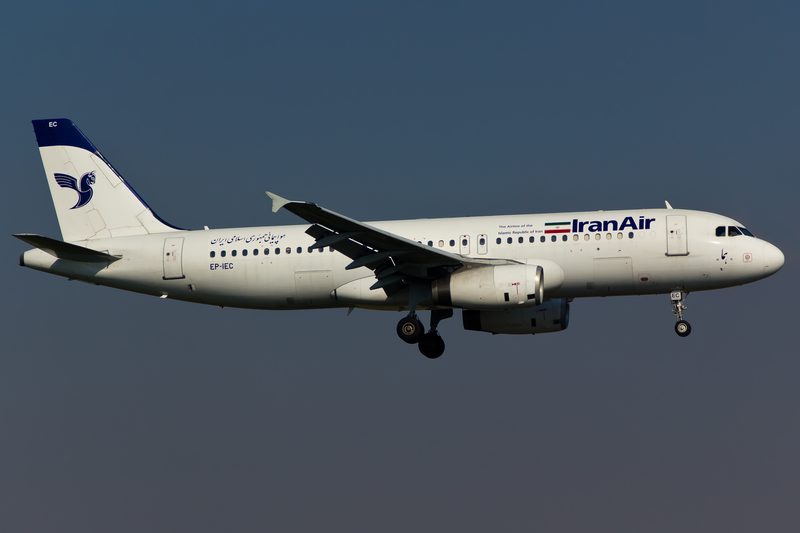
Iran Air is the national flag carrier and the most internationally recognizable Iranian airline. It has historically represented Iran’s civil aviation system overseas, operating scheduled services across the Middle East, Europe, and parts of Asia. Its fleet includes older Airbus A300 and A310 widebodies, Airbus A320-family aircraft, Airbus A330-200s, ATR 72-600 turboprops, and Fokker 100 regional jets.
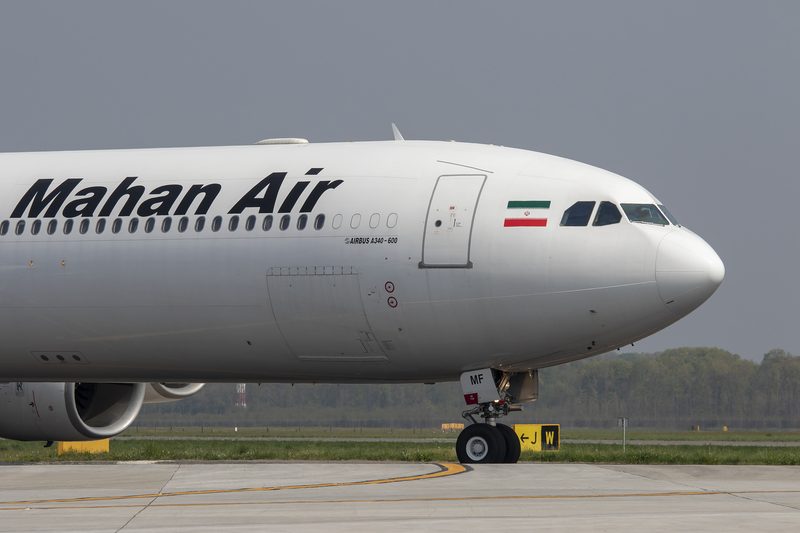
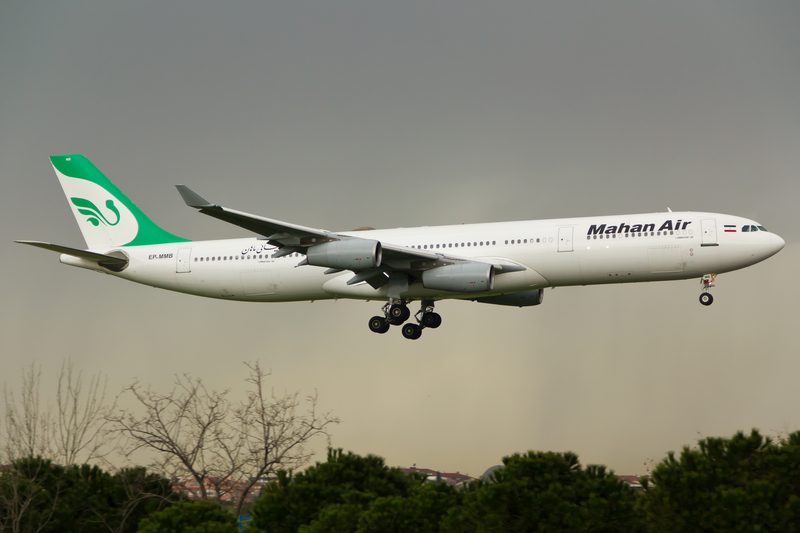
Mahan Air is Iran’s largest private airline and has long been one of Washington’s primary aviation sanctions targets. The carrier has operated a distinctive fleet that includes Airbus A340 long-haul aircraft, Airbus A300 widebodies, BAe 146/Avro regional jets, Fokker 50 turboprops, and other older types. In a global passenger market where four-engine Airbus A340s have become increasingly rare, Mahan remains one of the aircraft family’s most visible operators.
From a sanctions perspective, both airlines matter for different reasons. Iran Air is the state flag carrier and a symbol of Iran’s international connectivity. Mahan Air has been repeatedly accused by U.S. authorities of supporting Iranian military and proxy activity, allegations the airline and Iranian authorities have historically rejected or framed as politically motivated.
For airline professionals, the distinction is important. This is not simply about two commercial carriers. It is about the intersection of civil aviation, state policy, sanctions enforcement, and regional security.
Existing Sanctions Have Not Grounded The Airlines
One reason Bessent’s statement drew attention is that both Iran Air and Mahan Air have already been heavily restricted.
Mahan Air was designated by the U.S. Treasury in 2011. Iran Air was relisted under U.S. sanctions after Washington withdrew from the Iran nuclear deal and reimposed sanctions in 2018. Those actions restricted U.S. persons from dealing with the carriers and created secondary-sanctions risk for non-U.S. companies providing certain support.
Yet sanctions have not fully grounded either airline.
Iranian carriers have continued operating domestically and internationally, though with severe limitations. They have been forced to rely on older aircraft, difficult supply chains, and a narrower set of foreign destinations willing or able to handle their flights. European restrictions, U.S. sanctions pressure, banking limitations, aircraft-insurance issues, and parts shortages have all constrained the network.
That is why the latest U.S. threat appears aimed at the supporting ecosystem rather than the airlines alone.
If Washington can make foreign airports, fuel providers, travel agents, online ticket platforms, payment companies, general sales agents, and maintenance providers more reluctant to work with sanctioned Iranian carriers, the practical effect could be much larger than another designation notice.
Ticket Sales Are A Critical Pressure Point
Ticket sales may be one of the most powerful pieces of the threat.
International airlines depend on distribution. Even if an airline operates its own website, it usually benefits from travel agents, global distribution systems, payment processors, bank settlement mechanisms, and local sales representation. Sanctions can disrupt those channels by making intermediaries unwilling to handle bookings or payments.
For Iran Air and Mahan Air, this has been a long-running problem. U.S. sanctions already make many mainstream aviation and payment providers cautious. A sharper warning from Treasury could further reduce the number of partners willing to sell or process tickets.
The operational effect could vary by market. In some countries, Iranian airlines may still be able to sell directly or through local agents. In others, the compliance risk could become too high for service providers. If ticketing becomes harder, the airline may still technically be able to operate but may struggle to fill aircraft through ordinary commercial channels.
That would be especially damaging on international routes, where passengers often compare multiple airlines, book through third-party platforms, or rely on travel agencies.
Refueling Restrictions Could Be Even More Immediate
Refueling is the most direct operational vulnerability.
A foreign airport can allow an aircraft to land, but if no fuel supplier is willing to refuel it, the route becomes impractical unless the aircraft can tanker enough fuel for the entire round trip. On shorter routes, tankering may sometimes be possible. On longer sectors, especially those operated by older widebodies such as the Airbus A340, A300, or A310, the economics and performance limitations become much more difficult.
This matters because Iran’s long-haul and medium-haul international operations often rely on older aircraft with higher fuel burn. Mahan Air’s Airbus A340 fleet, for example, remains capable but is materially less efficient than newer twin-engine aircraft such as the Boeing 787, Airbus A350, or Airbus A330neo. Tankering extra fuel on such aircraft adds weight, increases burn, and can erode payload.
If refueling access is restricted at key foreign airports, Iranian airlines would have to adjust routings, reduce payload, rely on fewer approved stations, or suspend certain flights.
That is why Bessent’s mention of refueling was not incidental. It goes directly to the physical feasibility of international operations.
Landing Rights Are Politically Harder
Landing rights are the most complex part of the statement.
The United States cannot simply cancel another country’s airport permissions by itself. Foreign governments control access to their own airports and airspace. However, Washington can use sanctions pressure, diplomatic channels, and secondary-sanctions warnings to influence foreign authorities and service providers.
That makes the practical effect harder to predict.
Some countries may align closely with U.S. sanctions policy and restrict Iranian airline access. Others may resist U.S. pressure, prioritize bilateral ties with Tehran, or allow flights under humanitarian, religious, diplomatic, or commercial exceptions. Still others may permit the flights formally but see private-sector providers withdraw services because of compliance risk.
For airlines, the result can be a patchwork. A route may be legally permitted but commercially difficult. A destination may remain bookable locally but disappear from international sales channels. A flight may operate seasonally or irregularly depending on ground-service arrangements.
That uncertainty itself can be damaging.
The Fleet Problem Behind The Sanctions Problem
Iranian airlines are already operating under severe fleet constraints.
Iran Air’s fleet includes older Airbus A300-600R and A310 aircraft, Airbus A320-family narrowbodies, Airbus A330-200s delivered during the brief post-JCPOA opening, ATR 72-600 turboprops, and Fokker 100s. Many of these types require careful parts planning, and some are increasingly difficult to support globally.
Mahan Air’s fleet is even more unusual by global standards. It has relied on Airbus A340s, Airbus A300s, BAe 146/Avro regional jets, and other older aircraft. The A340 in particular gives Mahan long-haul capability, but it is a fuel-intensive four-engine aircraft that has largely disappeared from most scheduled passenger fleets outside niche operators.
Sanctions amplify every one of those fleet challenges.
Aircraft maintenance is not just about having mechanics. It requires access to parts, approved repair data, component overhaul, engine support, avionics updates, software, tooling, and documentation. The more isolated an airline becomes from global support channels, the harder it becomes to maintain dispatch reliability and safety margins.
That does not mean Iranian carriers cannot operate. They have demonstrated extraordinary persistence in keeping older fleets active. But the cost, complexity, and operational risk increase over time.
What This Could Mean For Passengers
For passengers, the immediate impact depends on whether the U.S. follows through with detailed measures and whether foreign governments and suppliers act on them.
If ticket-sales channels are disrupted, travelers may find it harder to book Iran Air or Mahan Air flights through mainstream platforms or travel agencies. If refueling or ground handling becomes more restricted, airlines may cancel routes, reduce frequencies, change aircraft, or limit sales. If landing permissions are affected, some international destinations may disappear entirely from the schedule.
The people most affected would likely include Iranian diaspora travelers, students, business travelers, religious travelers, medical travelers, and families who rely on limited air links between Iran and foreign markets.
That is one of the difficult realities of aviation sanctions. Measures aimed at governments or sanctioned entities can quickly affect ordinary travelers because airlines are part of basic international mobility.
Humanitarian And Diplomatic Exceptions May Matter
Sanctions programs often include exceptions or licensing pathways for humanitarian, diplomatic, or safety-related activity. Aviation is no different.
Aircraft safety, medical travel, religious pilgrimage, evacuation flights, and humanitarian movements can complicate blanket restrictions. If Washington moves ahead with further measures against Iranian airlines, the exact wording of any exemptions will matter.
There is also a safety consideration. Sanctions that restrict maintenance and parts access have long been criticized for potentially affecting civil aviation safety. U.S. officials have historically argued that sanctions are targeted at specific entities and military-linked activity, while critics argue that restrictions on aviation supply chains can spill over into civilian risk.
For airline professionals, that is a central tension in any aviation sanctions regime. Restricting aircraft support can be a powerful policy tool, but commercial aviation is also a safety-critical industry.
The Regional Aviation Backdrop Is Already Volatile
The warning comes during a period of broader regional instability affecting aviation.
Airlines operating in and around the Middle East have faced airspace closures, route diversions, insurance concerns, elevated fuel prices, and changing security assessments. Iranian airspace, Gulf airspace, and nearby routes have all been subject to heightened operational scrutiny.
Against that background, additional pressure on Iranian airlines could have effects beyond Iran’s own aviation sector. It could influence regional connectivity, overflight planning, airport service-provider behavior, travel-agency compliance, and international airline risk assessments.
The more sanctions and conflict risks overlap, the harder it becomes for airlines to maintain predictable schedules.
What To Watch Next
The key question is whether Bessent’s statement turns into a formal sanctions action, advisory, executive measure, or coordinated diplomatic campaign.
A social media statement signals intent, but the details will determine the impact. The aviation industry will be watching for several things: whether Treasury names the airlines, whether OFAC issues new designations or guidance, whether foreign fuel suppliers are warned directly, whether ticketing platforms remove inventory, whether airports restrict operations, and whether any humanitarian exemptions are specified.
The distinction between a public warning and an enforceable measure is critical. Airlines, airports, fuel suppliers, and travel agents respond to formal legal risk. Once OFAC or another U.S. agency issues detailed guidance, compliance departments can act quickly.
Until then, the statement creates uncertainty but not a complete picture.
Bottom Line
The U.S. Treasury’s warning that it will shut down “both Iranian airlines’” access to landing spots, refueling, and ticket sales marks a potentially significant escalation in Washington’s aviation-related pressure on Tehran.
The statement did not clearly identify the two carriers, but Iran Air and Mahan Air are the likely focus because both are major Iranian international operators and both are already under U.S. sanctions. Iran Air remains the state flag carrier, while Mahan Air is Iran’s largest private airline and a long-standing target of U.S. sanctions actions.
The most important point is that this would not be a first round of sanctions. It would be an attempt to tighten the operational environment around airlines that are already restricted. Landing access, refueling, and ticketing are the practical infrastructure of international aviation. If those channels are squeezed more aggressively, the impact on Iranian carriers could be more immediate than another aircraft-parts restriction.
For now, the industry is waiting for clarification. The Treasury Department has not publicly detailed which airlines are covered, how the measures would be implemented, or what exceptions may apply. Until that happens, the statement is best understood as a serious policy signal rather than a fully defined aviation sanctions package.